

1 Michelin Star · Guía Repsol 1 Sol
Our verdict
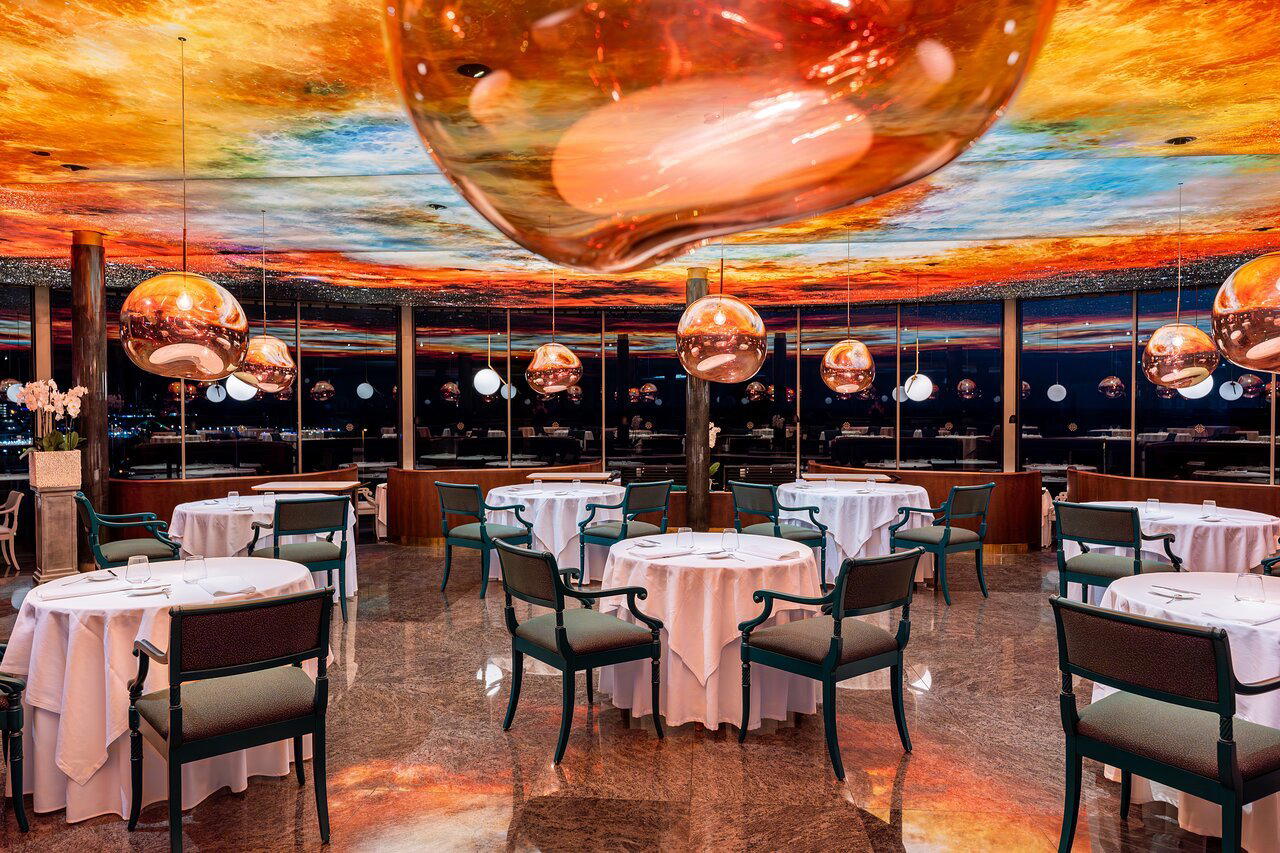
Donaire holds a Michelin star inside the Hotel GF Victoria on the Costa Adeje coastline, where a glass-fronted semi-circular room frames Atlantic views across the dinner service. Chef Jesús Camacho blends Canary Island ingredients with French technique across an à la carte and two tasting menus, with pastry-trained precision shaping how each plate is constructed and presented.

Pearl is the En Primeur Club membership app — saves, bookings, and concierge access live there. Same editors, same standards.
- Address
- C. Fernando Lopez Arvelo, 1, 38660 Costa Adeje, Santa Cruz de Tenerife, Spain
- Phone
- +34 922 98 71 77
- Hours
- Mon ClosedTue–Sat 6:30–9 PMSun Closed
- Website
- restaurantedonaire.com
- Directions
- Get directions
- Booking
- Book on TheFork
The menu
What to order
- Beetroot with macho vinegar
- Smoked sardine with green mojo
- Tomato dish
Glass, Atlantic light, and the question of what Canarian fine dining can be
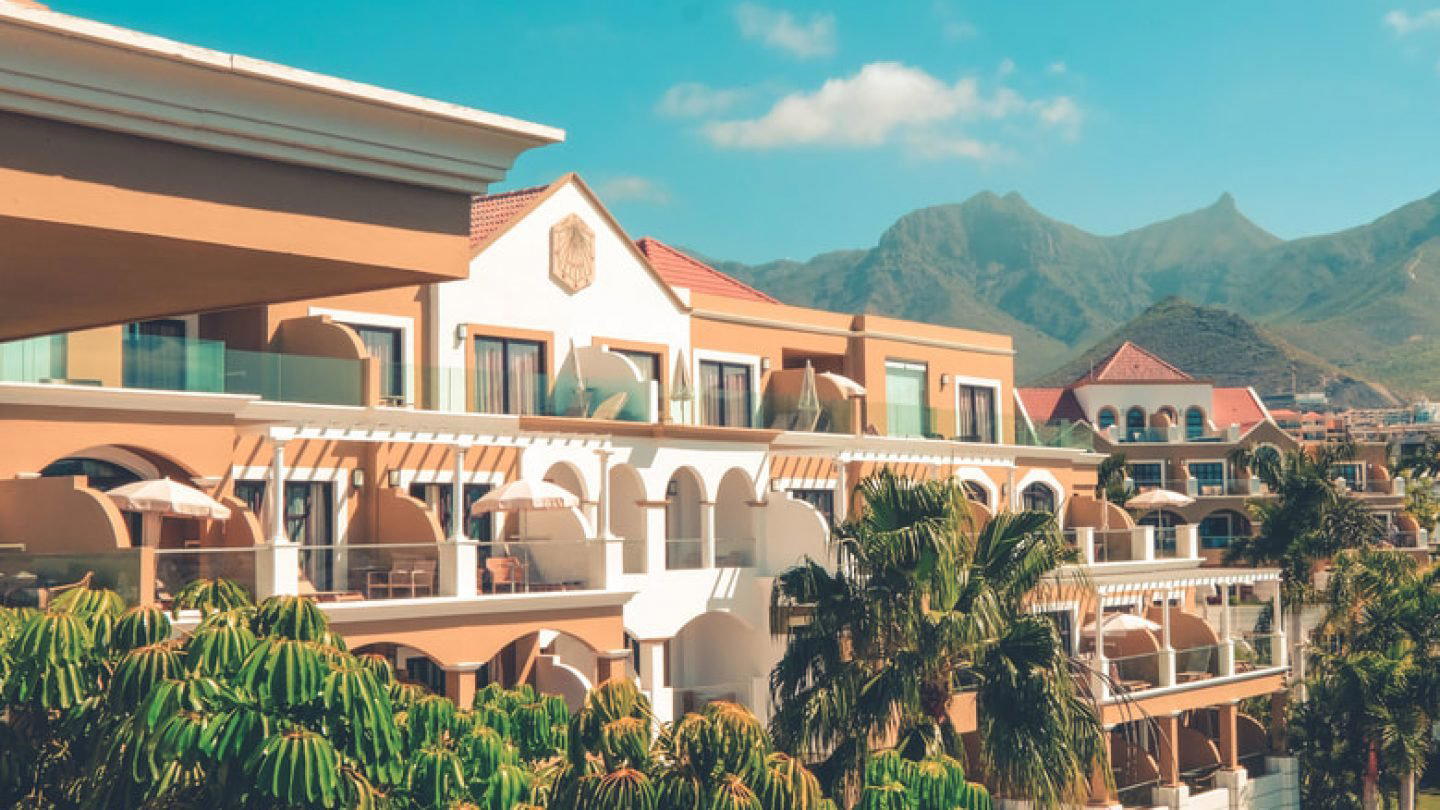
The semi-circular, glass-fronted dining rooms that Tenerife's resort hotels began commissioning in the 2000s were largely designed for panoramic effect rather than culinary ambition. Most became pleasant backdrop restaurants, where the view carried more weight than the plate. Donaire, the fine-dining address inside the Hotel GF Victoria on Costa Adeje, represents a different proposition: a room built on the same architectural logic — floor-to-ceiling glass, Atlantic coastline in every sightline — but with a kitchen operating at Michelin one-star level since the 2024 guide. The distinction matters because it repositions a familiar resort format as a serious argument about what Canarian ingredients, handled with precision, can produce.
Where the food comes from, and why that shapes everything
The Canary Islands occupy an unusual position in Spanish gastronomy. Geographically African, politically European, and historically shaped by trade routes connecting the Atlantic to the Mediterranean, the archipelago produces ingredients that carry a character unavailable on the mainland: Aquanaria sea bass farmed in the cold, high-salinity waters of Gran Canaria; goat's milk from island herds with distinct mineral profiles; local vinegars derived from mojos and fermentation traditions that predate modern restaurant culture. At Donaire, these are not decorative touches or origin-story footnotes, they form the structural logic of the menu.
Chef Jesús Camacho trained in pastry before moving into a broader contemporary kitchen practice, and that background shows in how the menu is constructed. Pastry discipline is fundamentally about precision: ratios, temperature control, the patience required to let a preparation develop on its own terms rather than forcing it. A dish noted in the restaurant's recognition record, beetroot with "macho" vinegar, Aquanaria sea bass, and goat's milk Chantilly, illustrates the approach clearly. The Aquanaria bass is a specific, traceable product from a specific producer. The goat's milk Chantilly is a technique imported from French classical training and adapted to an island dairy tradition. The macho vinegar, a sharp, funky Canarian condiment, provides the kind of acid note that a mainland kitchen might have reached for with lemon or sherry vinegar. The result is a plate that reads as contemporary but is deeply rooted in where it was made.
This sourcing philosophy puts Donaire in a broader current running through serious Spanish restaurants right now. At Aponiente in El Puerto de Santa María, the argument is built entirely around marine ingredients overlooked by traditional Andalusian cooking. At Azurmendi in Larrabetzu, Basque agricultural systems are woven into the menu's conceptual architecture. In each case, the kitchen is asking the same question Donaire asks on the Atlantic edge of Tenerife: what happens when fine-dining technique is applied not to imported luxury product but to what this specific place actually grows and catches?
The menu structure and how to read it
Donaire operates with an à la carte supported by two tasting menus, one named Donaire, one named Victoria after the host hotel. The tasting menu format has become the standard vehicle for this kind of ingredient-led fine dining across Spain, from El Celler de Can Roca in Girona to Cocina Hermanos Torres in Barcelona, because it gives the kitchen control over the sequence and pacing required to build an argument across multiple courses. The à la carte option at Donaire matters, though: it allows a diner who already knows the kitchen's language to pick the plates most relevant to the evening rather than committing to the full narrative.
The dual French and Canarian influence running through the menu is not a contradiction. The French classical tradition, from which Camacho's pastry training descends, provides technical vocabulary: emulsification, controlled acidity, the logic of sauce construction. The Canarian tradition provides vocabulary of another kind: specific ingredients, specific flavor relationships, the island's particular relationship with fish, goat, and root vegetables. The menu sits at the intersection of both, which is a more specific and honest position than the generic "Mediterranean with local touches" framing common across Tenerife's resort fine-dining sector.
Donaire in Adeje's broader fine-dining context
Adeje holds a concentration of Michelin-recognised restaurants that is disproportionate for a resort town of its size. El Rincón de Juan Carlos operates at the two-star level in the same price tier above Donaire's €€€. Nub and San-Hô both hold one star and sit in the same €€€ bracket, making the immediate competitive set tighter than in most Spanish cities outside Madrid and San Sebastián. Il Bocconcino by Royal Hideaway adds another one-star Italian contemporary option at the same price point.
Within this set, Donaire's particular angle is the most explicitly Canarian. Cráter - Identidad Canaria works the island identity argument from a different direction. Internationally, the contemporary idiom Donaire works in has peers at César in New York City and Jungsik in Seoul, kitchens where a specific national or regional ingredient tradition is filtered through precision technique rather than simply celebrated in decorative form. Closer to home on the Spanish mainland, that conversation runs through houses like Arzak in San Sebastián and DiverXO in Madrid, though at different price levels and with different degrees of formality.
The room, the setting, the practical shape of an evening
The semi-circular glass room positions the Atlantic as a constant presence throughout the meal. In a tasting menu format, where the pace of service stretches across two or more hours, that environmental continuity becomes part of how the evening feels: the light changes as courses progress, the coastline shifts from late-afternoon brightness into the darker tones of the evening. Whether that atmospheric progression registers consciously or not, it separates the experience from a basement or interior dining room in a way that matters.
Donaire opens Tuesday through Saturday, with evening service running from 6:30 PM to 9:30 PM. The restaurant is closed Sunday and Monday. Given the tasting menu format and the Michelin profile, booking in advance is the practical approach, particularly during peak Tenerife season from late autumn through spring when the island draws northern European visitors seeking winter warmth alongside serious dining. The address, C. Fernando Lopez Arvelo, 1, 38660 Costa Adeje, places it within the Hotel GF Victoria, which means some familiarity with the hotel's access points is useful for first-time visitors.
For readers planning a wider Adeje dining itinerary, EP Club's full guides cover the broader picture: our full Adeje restaurants guide, our full Adeje hotels guide, our full Adeje bars guide, our full Adeje wineries guide, and our full Adeje experiences guide.
What to order at Donaire
What should I eat at Donaire?
The tasting menus, Donaire and Victoria, are the clearest way to experience how Chef Jesús Camacho structures an argument across a full meal, with the Canarian and French influences playing out in sequence rather than as isolated choices. For those dining à la carte, dishes built around Aquanaria sea bass and native island ingredients represent the kitchen's sharpest editorial position: these are products specific to the Canary Islands, handled with the kind of pastry-trained precision that shows in texture and plating rather than just in flavor. The beetroot with macho vinegar, Aquanaria sea bass, and goat's milk Chantilly has been specifically recognised for its delicacy, and the combination of local vinegar with island dairy and a premium farmed fish illustrates what this kitchen does at its most coherent. The Michelin one-star recognition in the 2024 guide provides a reliable external reference point for calibrating expectations against the €€€ price range.
Frequently asked questions
Is Donaire expensive?
Pricing at Donaire is listed as €€€.
What time does Donaire open and close?
Hours at Donaire: Monday closed Tuesday 6:30 PM-9:30 PM Wednesday 6:30 PM-9:30 PM Thursday 6:30 PM-9:30 PM Friday 6:30 PM-9:30 PM Saturday 6:30 PM-9:30 PM Sunday closed.
Where do I go for Donaire?
Donaire is located at C. Fernando Lopez Arvelo, 1, 38660 Costa Adeje, Santa Cruz de Tenerife, Spain, Adeje.
Price Lens
| Venue | Cuisine | Price | Awards | Notes |
|---|---|---|---|---|
| DonaireThis venue — the venue you are viewing | Modern Canary Island Fine Dining | $100–150 | 1 Michelin Star · Guía Repsol 1 Sol | Not listed |
| El Rincón de Juan Carlos | Modern Canarian Fine Dining | $200–300 | 2 Michelin Stars · La Liste Top Restaurants | Creative |
| Il Bocconcino by Royal Hideaway | Modern Italian Fine Dining | $50–100 | 1 Michelin Star · Guía Repsol 1 Sol | Italian Contemporary |
| San-Hô | Modern Fusion: Japanese-Peruvian-Canarian | $150–200 | 1 Michelin Star · Guía Repsol 2 Soles | Fusion |
| Kensei | Contemporary Japanese Fine Dining | $150–200 | Michelin Plate · Guía Repsol 1 Sol | Not listed |
Recognition history
Dated appearances from independent guides and award organizations, with the underlying list record or original source where available.
Michelin 1 Star
Michelin
Guía Repsol 1 Sol
Guía Repsol
Full recognition history (4 entries)
Michelin 1 Star
Michelin
Michelin 1 Star
Michelin
Continue exploring
More in Adeje
Restaurants in Adeje
Browse all →
Bars in Adeje
Browse all →
Hotels in Adeje
Browse all →
Details
- Elegant
- Sophisticated
- Modern
- Intimate
- Date Night
- Special Occasion
- Celebration
- Open Kitchen
- Terrace
- Panoramic View
- Hotel Restaurant
- Extensive Wine List
- Local Sourcing
- Waterfront
- Mountain
- Tasting Menu
- A La Carte
- Vegetarian Friendly
Current opening hours
- Monday
- Closed
- Tuesday
- 6:30–9 PM
- Wednesday
- 6:30–9 PM
- Thursday
- 6:30–9 PM
- Friday
- 6:30–9 PM
- Saturday
- 6:30–9 PM
- Sunday
- Closed
Hours can change for holidays and private events. Last verified .
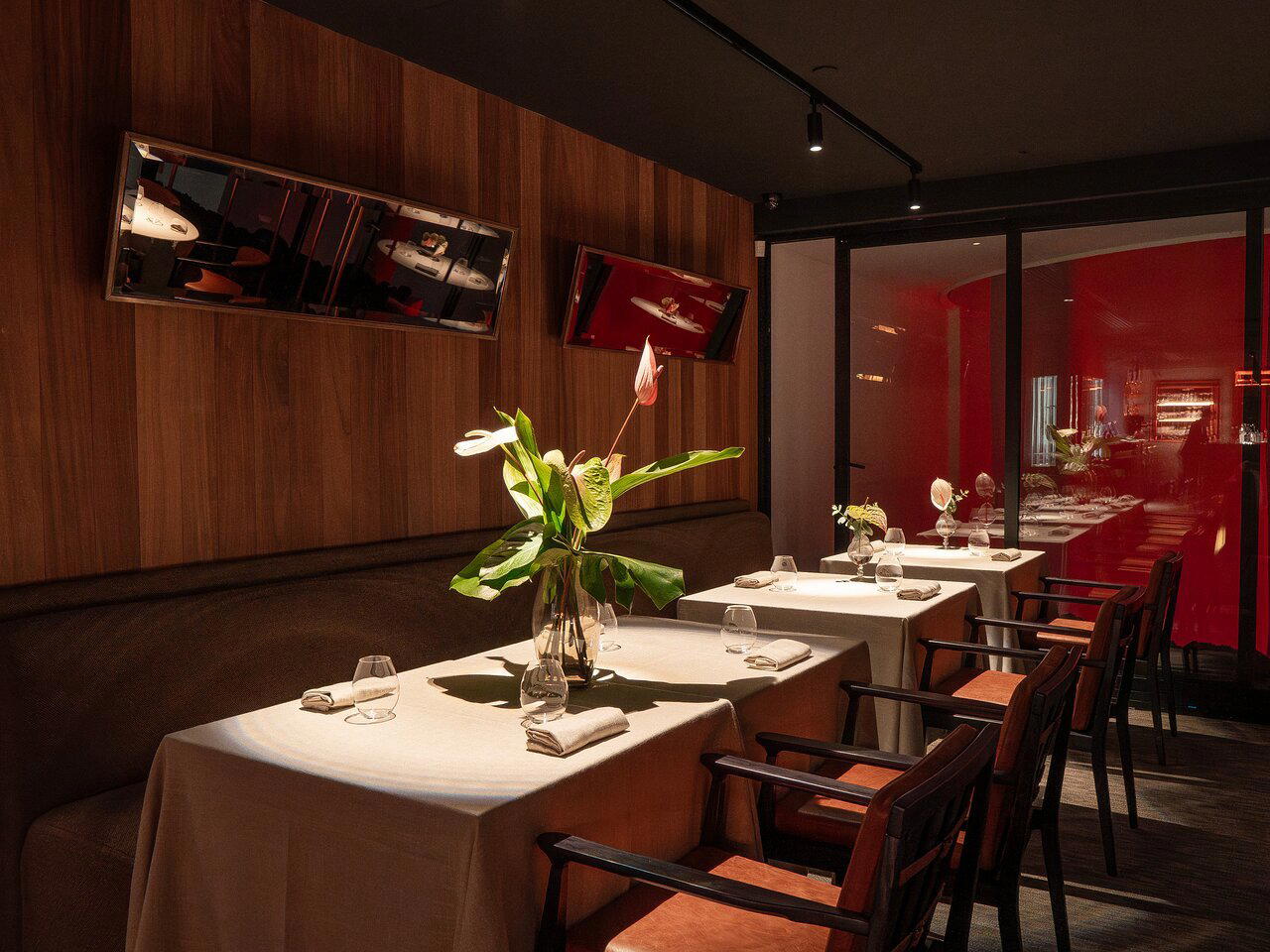
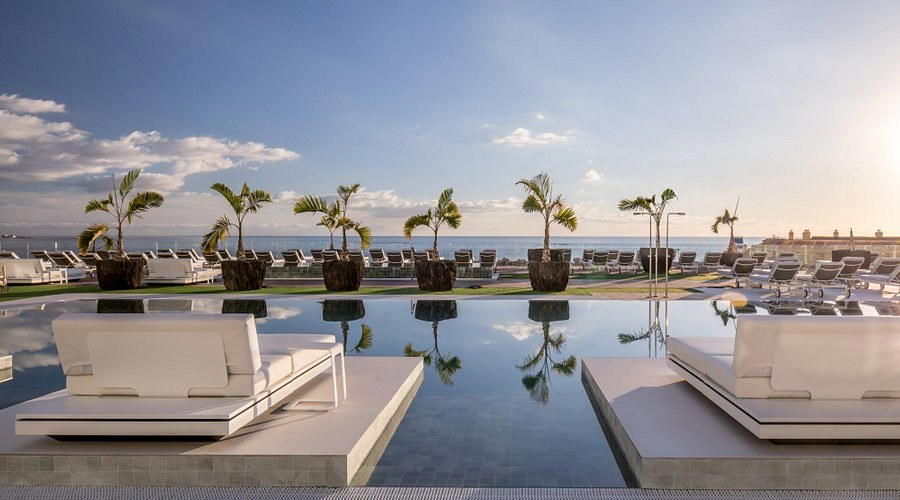
Elegant and sophisticated with minimal decor, pleasant lighting, widely spaced tables for privacy, and far-reaching coastal and mountain views through floor-to-ceiling glass.