
We're Smart World 4 Radishes
Our verdict
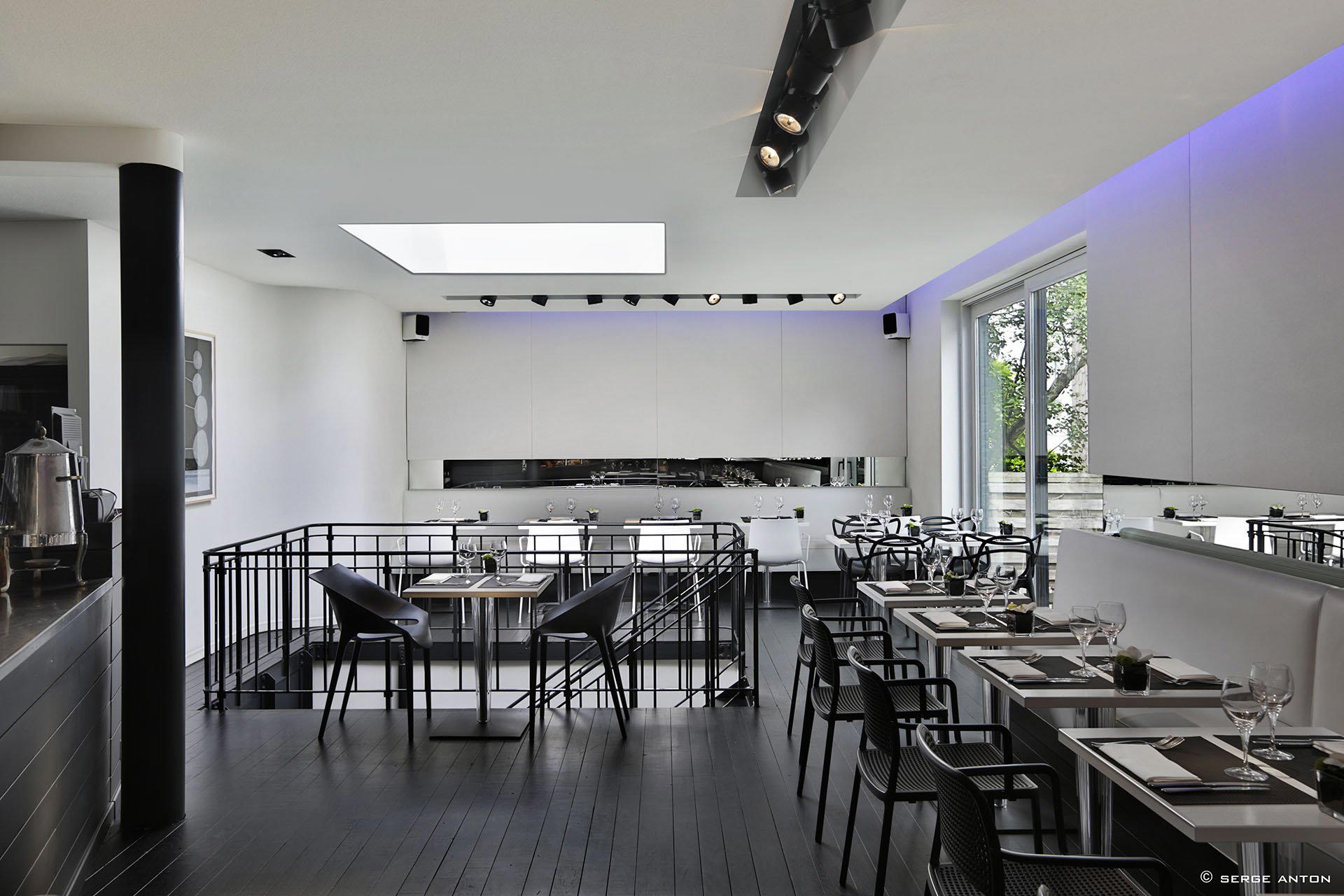
On a quiet Ixelles street, TAN pairs a ground-floor organic grocery with an upstairs restaurant committed to vegetarian cooking built on raw and low-temperature techniques. The kitchen favours unprocessed ingredients, thoughtful dressings, and raw sauces over heat-heavy methods, producing food that registers as considered rather than ascetic. A rooftop city terrace completes a format that places TAN firmly within Brussels' growing ecology of ingredient-led, plant-forward dining.

Pearl is the En Primeur Club membership app — saves, bookings, and concierge access live there. Same editors, same standards.
- Address
- Rue de l'Aqueduc Waterleidingsstraat 95, 1050 Elsene, Belgium
- Phone
- +32 2 537 87 87
- Hours
- Mon–Sat 9:30 AM–8 PMSun Closed
- Website
- tan.brussels
- Directions
- Get directions
The menu
What to order
- Ceviche
- Tofu and Jerusalem Artichoke Balls
Where the Grocery and the Kitchen Share the Same Values
Ixelles has quietly become the neighbourhood in Brussels where the gap between food politics and food pleasure narrows most visibly. The commune's mix of independent traders, organic markets, and a dining public that reads ingredient provenance as part of the experience has produced a cluster of addresses where what you eat and where it comes from are treated as inseparable questions. TAN, at Rue de l'Aqueduc 95, sits at the more committed end of that spectrum. The ground floor operates as a bio grocery store; the restaurant occupies the floors above. That vertical integration is not a branding exercise — it is the operational logic of the place. The same sourcing standards that stock the shelves inform what goes onto the plate.
This kind of embedded, whole-building approach to organic food retail and dining is relatively rare in Brussels, even as the broader European conversation around sustainable restaurant models has accelerated. Venues like Barge and Eliane represent different points on the city's plant-forward and ingredient-conscious spectrum, but TAN's grocery-plus-restaurant format places it in a distinct structural category: the venue as a complete food environment rather than a single service point.
The Cooking: Raw, Low-Temperature, and Deliberately Unforced
The kitchen's philosophy is built around restraint in technique rather than restraint in flavour. Raw preparation and low-temperature cooking are the primary methods, used not as aesthetic statements but as practical tools for preserving what the ingredients already contain. In European vegetarian cooking over the past two decades, the trajectory has moved away from compensatory richness — the cheese-heavy, cream-reliant plates that once characterised plant-based menus at more conventional addresses, toward a more direct engagement with texture, acidity, and the structural qualities of vegetables themselves. TAN's approach to dressings and raw sauces fits that trajectory. These are finishing elements treated as integral to the dish rather than as condiments applied at the end.
The pairing of raw-technique cooking with considered dressings produces food that reads as balanced rather than spare. In the wider context of European fine dining, where addresses like Hof van Cleve in Kruishoutem and Boury in Roeselare anchor Belgium's high-end reputation in classical technique and protein-forward menus, TAN operates in a deliberately different register, not in competition with that tier, but parallel to it, serving a different set of priorities. The question TAN poses is whether cooking built on vegetables, raw preparation, and organic sourcing can hold its own as a satisfying meal rather than a philosophical position. The kitchen's answer is consistently in the affirmative.
Sustainability as Structure, Not Signalling
Sustainability story at TAN is structural before it is communicative. The bio store on the ground floor creates a direct supply-chain transparency that most restaurants can only gesture toward. Customers who eat upstairs can, in principle, source the same category of ingredients downstairs. That continuity between retail and restaurant is a meaningful commitment in a food culture where organic certification and ethical sourcing are increasingly used as marketing language without the operational depth to support them.
Low-temperature cooking also has a sustainability dimension beyond its effects on flavour. The method is energy-efficient relative to high-heat preparation, and it tends to reduce waste because slower, gentler cooking extracts value from ingredients that might otherwise be discarded. Raw preparation takes that logic further: no heat energy at all, and a direct relationship between ingredient quality and plate quality that leaves no technical intervention to compensate for sourcing compromises. For a kitchen committed to organic produce, these methods are not incidental, they are aligned with the sourcing philosophy at every step.
Brussels as a city has seen growing interest in this kind of integrated food ethics, driven partly by the presence of EU institutions whose staff bring diverse European food cultures and expectations around provenance, and partly by a local consumer base in communes like Ixelles that has consistently supported independent, values-led food businesses. TAN's longevity at this address reflects genuine demand rather than a passing moment.
The Rooftop Terrace and the Urban Context
The rooftop city terrace adds a dimension that separates TAN from the standard urban vegetarian address. In a city where outdoor dining is contingent on weather and where rooftop space is rarely available to independent operators, the terrace functions as a seasonal draw that shifts the character of a meal. Ixelles rooftops offer views across a mixed residential and commercial fabric that is, in its own way, characteristic of Brussels: layered, imperfect, and more interesting than the sanitised city-centre panoramas that premium rooftop bars tend to trade on.
For the Brussels dining scene more broadly, TAN occupies a position that complements rather than competes with the city's more formal addresses. Comme chez Soi and La Villa Lorraine by Yves Mattagne sit at the apex of classical Belgian and French-influenced fine dining, while Bozar Restaurant represents a cultural-institutional positioning. TAN asks different questions of its kitchen and its guests. Those questions, about what plant-based cooking can genuinely deliver and how sourcing transparency can be built into a venue's architecture rather than appended to its marketing, are among the more interesting ones being asked in Brussels right now.
Planning Your Visit
TAN is located at Rue de l'Aqueduc 95 in Ixelles, a commune well-served by public transport from central Brussels. The address sits in a walkable residential quarter where the density of independent food businesses makes it a natural stopping point within a broader afternoon or evening in the neighbourhood. Given the format, a restaurant above a bio store with a rooftop terrace, the practical advice is to arrive in time to browse the ground floor before sitting down, which gives the meal a useful context. For current hours, booking availability, and seasonal menu details, the address itself is the most reliable source; the format lends itself to drop-in visits during quieter periods, though the terrace is likely to require advance planning during warmer months. For a wider picture of where TAN sits within the city's food scene, our full Brussels restaurants guide maps the range from organic independents to classical fine dining. The Brussels hotels guide, bars guide, wineries guide, and experiences guide round out the broader visit. Elsewhere in Belgium, Zilte in Antwerp, Willem Hiele in Oudenburg, Bartholomeus in Heist, and Castor in Beveren each represent distinct points on the country's ingredient-led dining spectrum. For reference points further afield, Le Bernardin in New York and Emeril's in New Orleans illustrate how different culinary traditions build their own approaches to sourcing and technique.
Frequently asked questions
What's TAN's location?
TAN is located at Rue de l'Aqueduc Waterleidingsstraat 95, 1050 Elsene, Belgium, Brussels.
Is TAN Michelin-listed?
TAN has received recognition including: In a soothing and natural setting you can eat excellent vegetarian dishes. Cooked with raw ingredients as well as at low temperature, in combination with tasty salad dressings or raw sauces. Tan remains an excellent address for people who c….
What should I eat at TAN?
The kitchen centres on raw preparations and low-temperature cooking, paired with salad dressings and raw sauces that carry most of the flavour work. TAN has been recognised as an address where vegetarian cooking does not sacrifice taste for health credentials. Specific dishes rotate with seasonal and bio supply, so the ground-floor store gives a reliable read on what ingredients are driving the current menu.
Do I need a reservation for TAN?
Given the rooftop terrace adds limited outdoor covers, booking ahead is sensible during warmer months when Brussels outdoor dining peaks.
What do critics highlight about TAN?
Recognition for TAN focuses on the combination of technique and restraint: raw and low-temperature cooking delivered with enough flavour complexity to satisfy beyond the health-diet rationale. It is described as an excellent address for those who follow a balanced diet without giving up taste, a distinction that places it above the standard Brussels health-food offer.
Can TAN adjust for dietary needs?
The entire menu is vegetarian by design, built around raw and low-temperature preparations sourced through the bio store on the ground floor. That supply-chain structure means the kitchen's default position is already aligned with plant-based and organic requirements, though specific allergen or vegan adaptations should be confirmed directly with the venue.
Does TAN have a rooftop terrace, and is it open year-round?
TAN operates a rooftop city terrace, which adds an outdoor dimension uncommon among Brussels vegetarian addresses. Brussels weather makes open-air dining seasonal in practice, so availability varies across the year. Checking current terrace access before visiting is advisable, particularly outside the late-spring to early-autumn window.
Awards and Standing
Comparable venues nearby, for context on price, style, and recognition.
| Venue | Cuisine | Price | Awards | Notes |
|---|---|---|---|---|
| TANThis venue — the venue you are viewing | Organic Fusion with Vegan Options | $30–50 | We're Smart World 4 Radishes | Not listed |
| Correspondance | Modern Belgian Fusion Brasserie | Not listed | Michelin Plate | Tour & Taxis |
| Ötap | Modern European Small Plates | $50–100 | We're Smart World 2 Radishes | Châtelain |
| Brut Food | Modern Organic Belgian Bistro | $50–100 | We're Smart World 3 Radishes | Ixelles |
| Crush | Belgian-French Bistro | Not listed | Not listed | Pl. de Brouckere |
| Gramm | Modern French-Japanese Fusion | $50–100 | Not listed | Pl. de Brouckere |
Recognition history
Dated appearances from independent guides and award organizations, with the underlying list record or original source where available.
We're Smart World 4 Radishes
We're Smart World
Continue exploring
More in Brussels
Restaurants in Brussels
Browse all →
Bars in Brussels
Browse all →
Hotels in Brussels
Browse all →
Wineries in Brussels
Browse all →
Details
- Cozy
- Modern
- Intimate
- Elegant
- Date Night
- Special Occasion
- Open Kitchen
- Natural Wine
- Organic
- Local Sourcing
- A La Carte
- Set Menu
- Organic Wine
- Vegetarian Friendly
- Vegan Options
- Gluten Free Options
- Organic Focus
Current opening hours
- Monday
- 9:30 AM–8 PM
- Tuesday
- 9:30 AM–8 PM
- Wednesday
- 9:30 AM–8 PM
- Thursday
- 9:30 AM–8 PM
- Friday
- 9:30 AM–8 PM
- Saturday
- 9:30 AM–8 PM
- Sunday
- Closed
Hours can change for holidays and private events. Last verified .
Zen decor with a nice, stylish atmosphere, casual yet inviting.