
Tabelog 100 #72
Our verdict
Takara Ya belongs to Osaka’s serious udon culture rather than its spectacle economy: a compact Yao room, a low-key noodle format, and recognition on Tabelog’s Udon WEST 100 in 2024, 2022, and 2020. The draw is the category discipline: udon, tempura, and donburi handled in a small local setting rather than dressed up for destination dining.

Pearl is the En Primeur Club membership app, where members save venues, book tables and use the concierge.
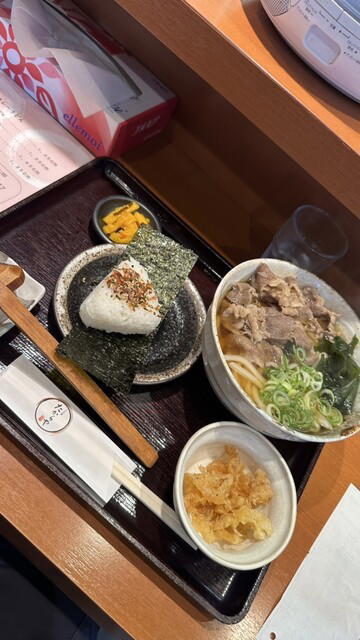
Approaching Takara Ya changes the scale of Osaka dining. The city’s central food districts sell noise, queues, neon, and speed; smaller local rooms often make a quieter argument, with dining built around repetition and habit. At Takara Ya, the appeal is less about spectacle than focus: a compact Osaka setting where noodle eating, casual meals, and repeat local use sit in the same grammar.
That room tells a larger Osaka story. Udon here is not a fallback between higher-status meals; it is a daily craft with its own hierarchy, its own specialists, and its own audience. Recognition from Tabelog Hyakumeiten in 2024, alongside a listed score of 3.68, puts Takara Ya inside a better-documented udon conversation, but the format remains closer to neighborhood dining than trophy collecting. The listed categories, udon, tempura, and donburi, keep the frame narrow enough to read as a noodle shop first, not a general Japanese restaurant with udon attached.
A small Osaka dining room built for noodles, not theatre
Osaka’s premium dining often gets read through counter sushi, kappo rooms, and late-night drinking streets. Udon resists that lens. Its seriousness is measured through texture, broth discipline, frying, and the pacing of a bowl, not through ceremony. A modest noodle-room format makes that clear: the architecture of the meal supports everyday use, while the Tabelog recognition signals a level of craft that has pulled attention beyond ordinary utility.
The useful context is cultural rather than biographical. Osaka has long treated flour-based and noodle-driven food as central to daily eating, not as a secondary category. The point is not to force Takara Ya into a luxury frame; it is to understand why a focused udon shop can belong to a competitive dining conversation usually associated with denser central districts. Technique, repetition, and local rhythm are part of how Osaka food culture travels.
Within Osaka, that makes Takara Ya different from restaurants whose value is built around scarcity menus or evening spend. Compare the category signal with Kei Chan and Jikoryu Ramen Watamen, both operating in accessible noodle-adjacent territory, against TORILABO, Yakitori BLACK, and Manger, where format and spend can push the meal into different decision sets. Udon at this level is not competing with tasting-menu theatre; it competes on repeatability, a narrower repertoire, and whether a simple meal can justify a deliberate trip.
Where udon sits in Osaka's broader food map
Osaka’s food identity is often reduced to street snacks and entertainment-district shorthand, but its stronger dining culture is more fragmented: station-area counters, local specialists, department-store food halls, family-run rooms, and small restaurants that build loyalty through one category. Udon belongs firmly to that second Osaka, the one that rewards readers willing to look beyond the most obvious dining circuits for a room whose reputation comes from category focus rather than visual spectacle.
The setting also changes expectations. A small Osaka restaurant asks for a different tempo than a polished central counter. The format matters editorially because it softens the line between specialist and everyday restaurant: this is not a shrine to craft sealed off from regular use, but a focused noodle address with a practical, casual register. That is a common Kansai virtue, letting a serious kitchen remain socially usable rather than turning every good meal into an occasion.
The supporting categories add another clue. Udon shops are often read as pure lunch utility, but tempura and donburi extend the visit without blurring the core identity. The better reading is not “go for everything,” but “go for the udon culture, with supporting categories that make the room work for more than a single bowl.” That narrowness is part of the value: the restaurant’s identity is easy to understand before the first order is placed.
How to place it on an Osaka itinerary
Takara Ya makes sense for travelers who already understand that Osaka’s food depth is not confined to its most obvious central dining areas. Its Osaka setting places the meal in a more targeted register, and that is part of the editorial decision: this is a deliberate udon stop, not a casual add-on between landmarks. The restaurant’s 2024 Tabelog Hyakumeiten recognition gives the journey a clear rationale, especially for readers comparing noodle traditions across Kansai rather than simply collecting famous addresses.
The smart pairing is conceptual rather than geographic. Use it to understand how Osaka’s low-cost, high-skill dining culture works, then contrast it with other formats in the city: bakeries, casual institutions, specialist restaurants, and other dining rooms that show how broad the local food map can be. For broader planning, keep Our full Osaka restaurants guide, Our full Osaka hotels guide, Our full Osaka bars guide, Our full Osaka wineries guide, and Our full Osaka experiences guide in the same research loop.
Travelers building a wider Japan food map can also compare category-led dining beyond Osaka through unnamed regional specialists, from grilled-meat restaurants and seafood counters to curry shops, bakeries, bars, and focused casual rooms. For Japanese food culture abroad, the same principle applies: tightly defined formats often travel best when they remain clear about what they do well, rather than trying to represent an entire cuisine at once.
The editorial verdict is clear: seek out Takara Ya for udon as Osaka craft, not for luxury signalling. The appeal lies in the tension between modest physical scale and category recognition. In a city where food fame often becomes performance, this Osaka room argues for a quieter form of seriousness: narrow categories, practical pricing, and a noodle tradition strong enough to carry the trip.
Frequently asked questions
What are the opening hours for Takara Ya?
Opening hours for Takara Ya should be confirmed directly before visiting.
How do I find Takara Ya?
Takara Ya is located in Osaka.
Is Takara Ya more mid-range or high-end?
Pricing at Takara Ya is listed as - JPY 999.
What makes Takara Ya worth seeking out?
Takara Ya has 2024 recognition from Tabelog Hyakumeiten, with a listed score of 3.68. The draw is the focused Osaka format as much as the recognition: udon, tempura, and donburi presented as a clear, accessible noodle-shop proposition.
Peers Worth Knowing
Comparable venues to anchor price and recognition.
| Venue | Cuisine | Price | Awards | Notes |
|---|---|---|---|---|
| Takara YaThis venue (the venue you are viewing) | Japanese udon shop | Not listed | Tabelog 100 #72 | Not listed |
| Kei Chan | Udon noodle shop | Not listed | Tabelog 100 #50 | JPY 999 JPY 1,000 - JPY 1,999 View spending breakdown |
| Jikoryu Ramen Watamen | Ramen & Tsukemen Shop | $10–20 | Tabelog 100 #39 | JPY 1,000 - JPY 1,999 JPY 1,000 - JPY 1,999 |
| TORILABO | Not listed | Not listed | Tabelog 100 #85 | JPY 6,000 - JPY 7,999 |
| Yakitori BLACK | Yakitori Omakase | $50–100 | Tabelog 100 #63 | JPY 10,000 - JPY 14,999 |
| Manger | Premium Tonkatsu | $30–50 | Tabelog 100 #67 | Tonkatsu |
Recognition history
Dated appearances from independent guides and award organizations, with the underlying list record or original source where available.
Tabelog 100 #72 · No. 72
Tabelog · Tabelog 100 - Udon - WEST - 2024
Continue exploring
More in Osaka
Restaurants in Osaka
All restaurants in Osaka →




Bars in Osaka
All bars in Osaka →

Hotels in Osaka
All hotels in Osaka →




Wineries in Osaka
Browse all →
Details
- Standalone
Current opening hours
- Monday
- 11:30 AM–2:30 PM
- Tuesday
- 11:30 AM–2:30 PM
- Wednesday
- Closed
- Thursday
- 11:30 AM–2:30 PM
- Friday
- 11:30 AM–2:30 PM
- Saturday
- Closed
- Sunday
- Closed
Hours can change for holidays and private events. Hours as of .