Tabelog 100 #39
Our verdict
Jikoryu Ramen Watamen is a compact counter-format ramen shop in Matsubara, outside central Osaka, selected for Tabelog Ramen OSAKA 100 in 2025 after repeated appearances on the ramen list. The appeal is not luxury; it is ingredient-control discipline, with ramen, tsukemen, and kara-age served in a narrow, low-capacity format that rewards diners willing to leave the city-center circuit.

Pearl is the En Primeur Club membership app, where members save venues, book tables and use the concierge.
The menu
What to order
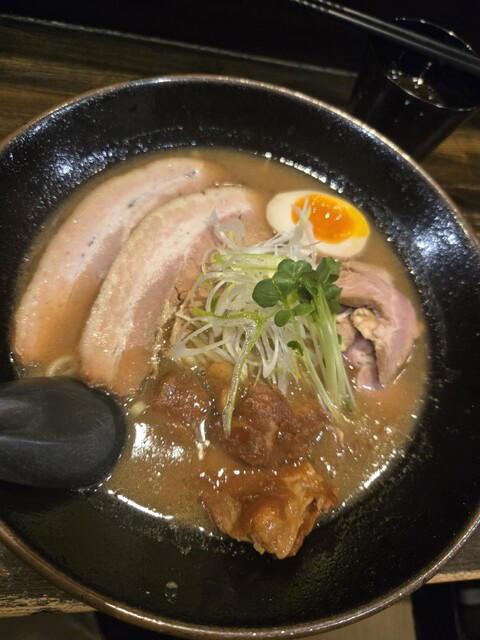
- Tsukemen (dipping noodles)
- House ramen
- Kara-age (deep-fried chicken)
Approaching Osaka for ramen changes the tempo of a meal. The city’s central stations sell speed, neon, and turnover; a specialist ramen stop asks for a more deliberate pause. In a focused ramen setting, attention narrows to the old ramen equation serious shops rarely escape: broth, noodles, timing, and the operational choices that decide whether a bowl tastes assembled or integrated.
That is the useful way to read Jikoryu Ramen Watamen. It is not part of the polished hotel-dining Osaka visitors often map through the city’s major commercial areas, nor the snack-heavy tourist route where queues can be driven as much by photography as appetite. It belongs to another Osaka tradition: specialist, low-ceremony, and built around close local attention. Its selection for Tabelog Ramen OSAKA 100 in 2025 places it in the city’s serious ramen conversation without changing the experience’s essential grammar.
Ramen, tsukemen, and kara-age put the bowl in the specialist Osaka bracket
Osaka ramen has never had the single dominant regional identity of Hakata tonkotsu or Sapporo miso. Its strength is plurality: clear broths, richer bowls, dipping noodles, and shops refining one narrow lane over time. In that context, a focused ramen shop is judged on texture, balance, serving rhythm, and whether the bowl holds together from first lift to last sip.
Jikoryu Ramen Watamen’s listed categories, ramen, tsukemen, and kara-age, sketch a common Kansai comfort structure with a specialist tilt. Tsukemen asks more of noodle texture than standard soup ramen because noodles are dipped, often against a more concentrated sauce. Kara-age is not a side-note in Osaka dining culture; fried chicken appears across izakaya, lunch counters, and ramen shops because it answers the city’s appetite for high-impact, low-ceremony eating. The point is not menu breadth, but a format that stays within a tight vocabulary and uses execution as its claim to seriousness.
Compared with Osaka’s lower-cost quick-service options such as Takara Ya and Kei Chan, the draw here is not convenience alone. Compared with higher-ticket counter restaurants such as TORILABO or Yakitori BLACK, it does not ask diners to treat the meal as a long-form evening. It sits in the affordable specialist tier, closer in spend to Inui, where judgment rests on execution rather than room theatre. That category is one of Osaka’s strengths: modest bills, narrow formats, and public scrutiny that can be unforgiving when a bowl loses precision.
A focused ramen setting changes how the meal works
Specialist ramen is compressed choreography. In a focused shop, every decision matters: how quickly bowls are prepared, how diners move through the meal, and how the format supports concentration more than ceremony. Small ramen shops can feel more exacting than many formal dining rooms because there is little room for distraction. Cooking, serving, and eating are all judged through the same narrow lens.
The specialist setup also explains why solo dining often suits the format. Osaka is generous to groups, from casual counters to shared tables, but ramen at this scale rewards diners who can fold into the room’s rhythm. For travelers, it corrects the idea that Osaka dining begins and ends in the center. The city’s serious food culture extends beyond the most obvious visitor routes, where repeat custom and online evaluation can matter more than international visibility.
That distinction matters for how a bowl is read. Ramen is sometimes described through toppings, but the deeper question is structure: how the noodles, soup, seasoning, and any dipping format work together. A shop recognized in ramen categories competes on fundamentals. In a focused setting, those fundamentals are exposed. A diner notices noodle firmness, broth concentration, and whether the dipping format has enough structure to carry repeat bites. No garnish rescues weak architecture.
Where it fits in an Osaka eating itinerary
Jikoryu Ramen Watamen is best treated as a purposeful Osaka ramen stop, not a casual add-on between central Osaka landmarks. The planning logic is simple: make it part of the meal plan rather than a last-minute filler, especially if your day is otherwise built around the city’s busiest visitor zones.
The planning profile is specific enough to be useful without overcomplicating the visit. The listed budget is Dinner: JPY 1,000 - JPY 1,999; Lunch: JPY 1,000 - JPY 1,999, and its Tabelog score is listed as 3.67. For the right diner, that combination describes a focused, inexpensive meal with a public recognition trail supporting the detour.
Travelers building a wider Osaka map should think in contrasts. Other casual stops, specialist counters, bakeries, and everyday dining rooms show the city’s eating culture at scale, while more formal or internationally inflected restaurants place Osaka in a broader register. For broader planning, use Our full Osaka restaurants guide alongside Our full Osaka hotels guide, Our full Osaka bars guide, Our full Osaka wineries guide, and Our full Osaka experiences guide.
Japan’s casual-specialist dining scene also rewards cross-city comparison. A diner who values narrow formats can think about how ramen, dipping noodles, fried chicken, and other everyday Japanese formats vary from city to city without needing a famous room or a luxury setting. Across the Pacific, Japanese casual formats translate in different ways, though Osaka’s ramen discipline remains rooted in local mechanics of access, price sensitivity, and quick turnover.
Frequently asked questions
How would you describe the vibe at Jikoryu Ramen Watamen?
The emphasis is kept on the bowl rather than the room. It suits diners looking for a focused ramen stop in Osaka.
What's the address for Jikoryu Ramen Watamen?
Osaka.
What does dinner at Jikoryu Ramen Watamen typically cost?
Pricing at Jikoryu Ramen Watamen is listed as JPY 1,000 - JPY 1,999 JPY 1,000 - JPY 1,999.
How far ahead should I plan for Jikoryu Ramen Watamen?
Plan it as a purposeful Osaka ramen stop rather than a casual add-on. The key is timing your visit around the rest of your day and allowing for a focused meal.
What's the standout thing about Jikoryu Ramen Watamen?
Its strongest credential is the Tabelog Ramen OSAKA 100 selection for 2025. Add the JPY 1,000 - JPY 1,999 price range and listed 3.67 score, and it reads as a serious ramen stop in Osaka rather than a throwaway detour.
Price and Positioning
Comparable venues to calibrate price, style, and recognition.
| Venue | Cuisine | Price | Awards | Notes |
|---|---|---|---|---|
| Jikoryu Ramen WatamenThis venue (the venue you are viewing) | Ramen & Tsukemen Shop | $10–20 | Tabelog 100 #39 | Not listed |
| Chuka Soba Kaminari Wantan | Traditional Japanese ramen / chuka soba | $1–10 | Tabelog 100 #36 | Sumiyoshi, Traditional Japanese ramen / chuka soba |
| Gyoza no Mise Momo | Osaka gyoza counter | $10–20 | Tabelog 100 #81 | Abeno, Osaka gyoza counter |
| Fuse Hosomi Shoten | Ramen & Tsukemen Shop | $1–10 | Tabelog 100 #27 | Fuse, Ramen & Tsukemen Shop |
| Niji no Hotoke | Osaka spice curry & Japanese-style Western curry | $10–20 | Tabelog 100 #48 | Tennōji, Osaka spice curry & Japanese-style Western curry |
| Udon Jojo | Casual Udon Noodle Shop | $1–10 | Tabelog 100 #71 | Higashinari, Casual Udon Noodle Shop |
Recognition history
Dated appearances from independent guides and award organizations, with the underlying list record or original source where available.
Tabelog 100 #39 · No. 39
Tabelog · Tabelog 100 - Ramen - OSAKA - 2025