Tabelog 100 #84
Our verdict
Taishu Chuuyuuka Shokudo Hakkai puts Osaka’s everyday Chinese-curry crossover into a serious small-room format, with counter seats, table seating, shochu, take-out, and repeat selection for Tabelog Chinese WEST 100 in 2024 and 2026. The draw is less ceremony than rhythm: a compact Higashiosaka dining room where regulars know the category, the pace, and the value bracket before they sit down.

Pearl is the En Primeur Club membership app, where members save venues, book tables and use the concierge.
Approaching Osaka through its everyday dining rooms, the mood shifts from spectacle economy to everyday streets, accessible meals, and restaurants whose regulars read the room faster than any menu explanation can. Taishu Chuuyuuka Shokudo Hakkai belongs to the Osaka category where Chinese cooking, curry culture, shokudo informality, and repeat dining overlap. It is not chasing long-course luxury; it works where everyday appetite and critical recognition coexist.
That matters in a city often reduced, from outside Japan, to takoyaki, okonomiyaki, and late-night drinking. Osaka more broadly rewards food that can carry frequency: casual lunch, solo meal, small table, or quick return visit after the first meal proves the point. Hakkai’s recognition through Tabelog Hyakumeiten in 2026 is therefore a useful signal, placing a modest-format restaurant inside a regional Chinese-cuisine conversation often crowded with higher-ceremony rooms, hotel dining, and tasting formats.
Chinese-curry Osaka, read through the regulars
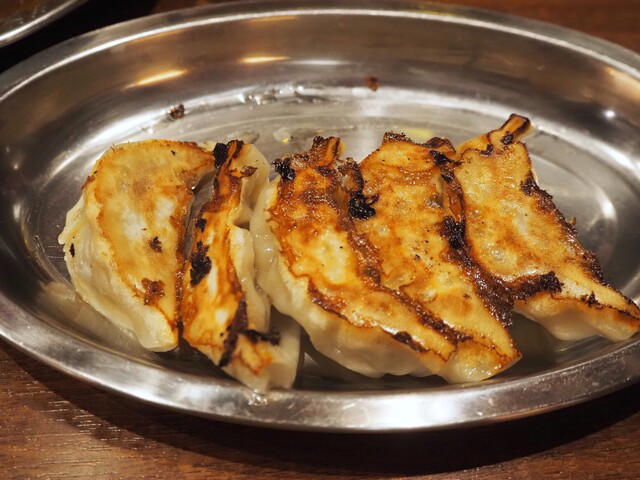
Osaka has a long appetite for hybrid comfort: rice plates, wok heat, curry gravies, gyoza counters, ramen shops, and Chinese-derived everyday dishes absorbed into Japan’s urban food grammar. Hakkai’s Chinese-and-curry listing says more than a cuisine label. It points to a place where the unwritten order is shaped by repeat visits rather than one trophy dish. The format reinforces that rhythm: practical, casual, and scaled for decisiveness over ceremony.
The regulars’ perspective is the right lens because this format depends on familiarity. Restaurants in this bracket need consistency, speed, and enough character to pull people back, not a long introduction. Compared with Osaka casual specialists such as Toriyaki Shogun Eiwa in a different dinner lane, or noodle-led rooms like Gokuju Bimen umami, Chuka Soba Fukuhara, Chotakasui Jun Teuchi Men Nishimura, and Junai Udon Nadeshiko, Hakkai sits in a different everyday register. It is neither yakitori nor ramen nor udon, but it competes for the same local decision: where to eat well without turning the meal into an event.
For readers mapping Osaka beyond central hotel dining, the lesson is useful. The city’s casual depth is not a consolation prize beneath fine dining; it is a parallel system with its own standards. A low price bracket can still attract serious attention when the format is coherent and the cooking category has local pull. Hakkai’s Tabelog score of 3.67 and 2026 Hyakumeiten recognition make that case with numbers rather than adjectives.
A casual format with award-level scrutiny
The Japanese Chinese dining category runs from banquet rooms to family-run machi-chuka counters. Osaka’s version often tilts toward generosity and speed, but the better rooms are disciplined differently: focused menus, efficient turnover, practical service, and cooking that must land across repeat visits. Hakkai’s shokudo identity keeps the experience close to everyday Osaka dining without becoming luxury performance.
Tabelog’s Hyakumeiten recognition carries particular weight because it is cuisine-specific and selective. It does not simply reward glamour; it places restaurants into a field where diners compare Chinese cooking across Japan, including Osaka’s dense middle tier. In that field, a shokudo-scale Chinese-and-curry address counters the idea that only high-budget formats deserve culinary attention.
The practical tone also tells readers how to use the place. This is a casual Osaka meal, not a sealed business dinner or a formal destination room. The price band and category suggest an everyday restaurant rather than luxury-dining insulation. For travelers, the appeal is eating within a local cadence: come for the category, accept the directness, and do not expect the choreography of a high-end tasting menu.
Osaka’s broader dining map supports that contrast. A day could move through bakeries, pork-bun counters, Italian rooms, pizza specialists, cafes, and other unnamed Osaka dining rooms, and the pattern is clear: Osaka is strongest when meals are chosen by function as much as cuisine category. Hakkai fits neatly.
How to fold Hakkai into an Osaka food itinerary
The smart itinerary does not isolate Hakkai as a single-restaurant detour. It uses the meal to widen the city beyond the usual visitor grid. Hakkai suits diners comfortable building a day around Osaka’s ordinary dining rhythms rather than taxis, spectacle, or a checklist of famous counters. Its appeal is compact and direct: Chinese and curry, a low lunch price band, and enough recognition to make the stop feel considered rather than random.
The budget setup is part of the point: Tabelog lists the price range as JPY 1,000 - JPY 1,999, with lunch in the same JPY 1,000 - JPY 1,999 bracket and no dinner budget specified. That detail belongs to a broader point about Japan’s serious casual dining rooms. Many carry national or regional recognition while keeping service and pacing closer to everyday use than to inbound-tourism expectations. The right reader does not treat that as friction; it is part of the operating culture.
Use Hakkai as a calibration meal for Osaka’s casual Chinese and curry scene, then compare it with other Osaka formats without forcing direct equivalence. Toriyaki Shogun Eiwa, Gokuju Bimen umami, Chuka Soba Fukuhara, Chotakasui Jun Teuchi Men Nishimura, and Junai Udon Nadeshiko all speak to different everyday decisions, from grilled chicken to noodles and udon. Hakkai’s value is that it keeps its own lane clear: accessible, locally legible, and recognized through Tabelog Hyakumeiten 2026.
Frequently asked questions
What's the address for Taishu Chuuyuuka Shokudo Hakkai?
Osaka.
What should I budget for a meal at Taishu Chuuyuuka Shokudo Hakkai?
Pricing at Taishu Chuuyuuka Shokudo Hakkai is listed as JPY 1,000 - JPY 1,999. The listed lunch budget is JPY 1,000 - JPY 1,999, with no dinner budget specified.
What time does Taishu Chuuyuuka Shokudo Hakkai open and close?
Specific opening hours are not provided in the verified venue details. Confirm the latest schedule before visiting.
What makes Taishu Chuuyuuka Shokudo Hakkai worth seeking out?
Its main credential is the Tabelog Hyakumeiten 2026 recognition in the Chinese category. The listed categories are Chinese and curry, the Tabelog score is 3.67, and the price range is JPY 1,000 - JPY 1,999, which makes it an accessible Osaka stop rather than a formal detour.
How does Taishu Chuuyuuka Shokudo Hakkai handle allergies?
The public record confirms Chinese and curry service, but it does not list a formal allergy protocol. The listed phone number is +81-6-6781-8807; confirm ingredients directly with the restaurant before ordering.
Can I bring kids to Taishu Chuuyuuka Shokudo Hakkai?
The lower price band, JPY 1,000 - JPY 1,999, may suit a casual meal in Osaka, but confirm current arrangements with the restaurant before visiting with children.
Peers Worth Knowing
Comparable venues to place this listing in its category.
| Venue | Cuisine | Price | Awards | Notes |
|---|---|---|---|---|
| Taishu Chuuyuuka Shokudo HakkaiThis venue (the venue you are viewing) | Chinese restaurant | Not listed | Tabelog 100 #84 | Not listed |
| Toriyaki Shogun Eiwa | Traditional Yakitori Izakaya | Not listed | Tabelog 100 #30 | JPY 3,000 - JPY 3,999 |
| Gokuju Bimen umami | Ramen shop | $10–20 | Tabelog 100 #40 | JPY 1,000 - JPY 1,999 JPY 1,000 - JPY 1,999 View spending breakdown |
| Chotakasui Jun Teuchi Men Nishimura | Handmade Ramen & Tsukemen | $10–20 | Tabelog 100 #34 | JPY 999 - JPY 999 |
| Junai Udon Nadeshiko | Not listed | Not listed | Tabelog 100 #70 | JPY 999 - JPY 999 |
| Chuka Soba Fukuhara | Classic Japanese ramen (chuka soba) | $10–20 | Tabelog 100 #18 | JPY 1,000 - JPY 1,999 JPY 1,000 - JPY 1,999 View spending breakdown |
Recognition history
Dated appearances from independent guides and award organizations, with the underlying list record or original source where available.
Tabelog 100 #84 · No. 84
Tabelog · Tabelog 100 - Chinese cuisine - WEST - 2026