Tacos de Canasta Los Especiales

A Michelin Plate-recognised taco de canasta stall in Centro Histórico, Tacos de Canasta Los Especiales operates in one of Mexico City's most enduring street-food traditions: slow-steamed tacos sold from a basket at prices that have kept the format accessible for generations. Rated 4.6 on Google across 81 reviews, it represents the kind of everyday cooking that the Michelin Guide increasingly acknowledges alongside the city's fine-dining tier.
Pearl is the En Primeur Club membership app — saves, bookings, and concierge access live there. Same editors, same standards.
- Address
- C. Ramón Corona 15, Centro Histórico de la Cdad. de México, Centro, Cuauhtémoc, 06000 Ciudad de México, CDMX, Mexico
- Directions
- Get directions
 Saves & bookings on Pearl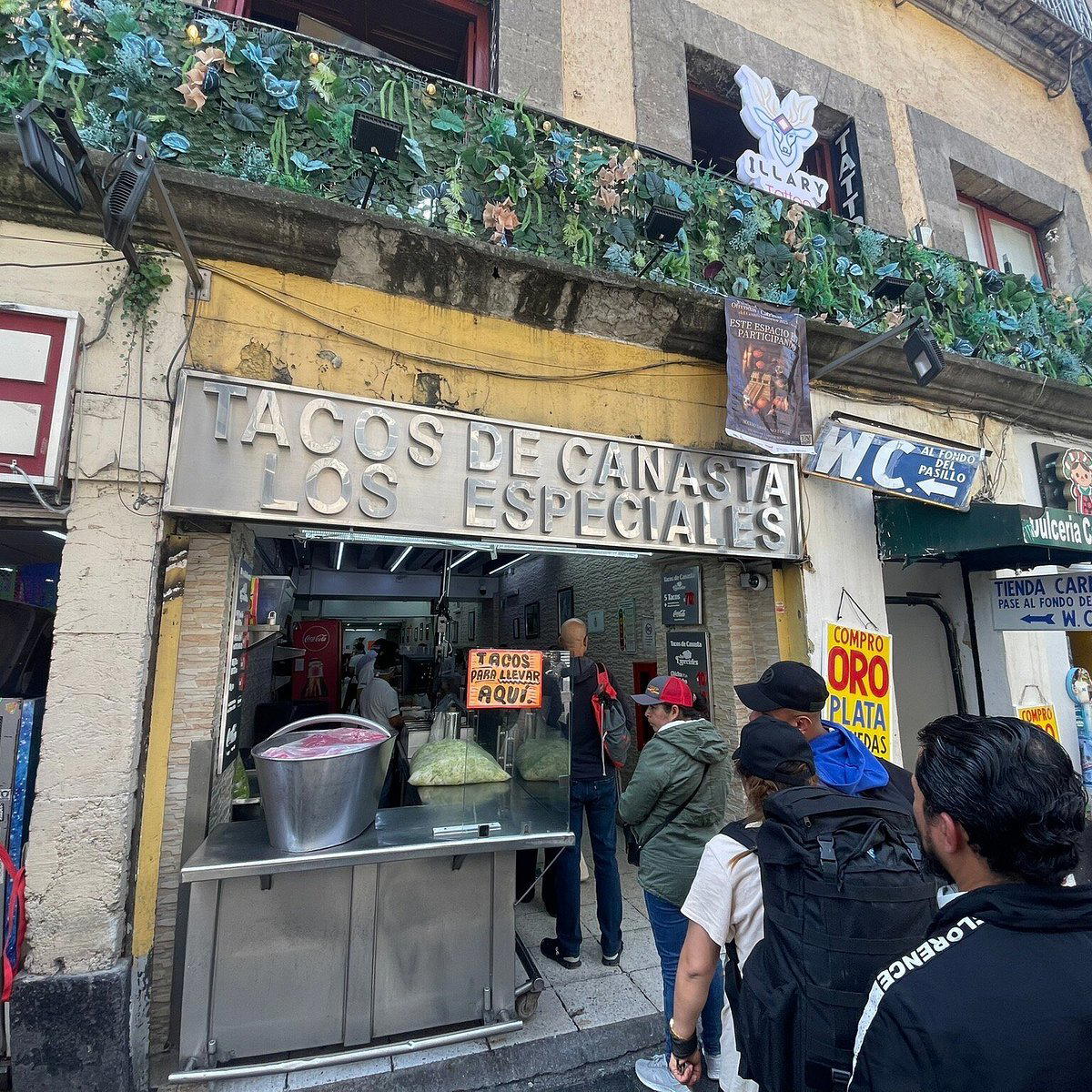
The Basket Taco Tradition in Centro Histórico
Street food in Mexico City does not exist on a single register. At one end, destinations like Pujol and Em have built international reputations around refined Mexican technique; at the other, the taco de canasta format has persisted for decades in the capital's historic centre, governed by entirely different logic. The basket taco, steamed inside a cloth-lined container, sold in rapid succession, priced for daily consumption, is not a simplified version of restaurant food. It is a distinct culinary category with its own internal standards, its own regional grammar, and its own criteria for quality.
Tacos de Canasta Los Especiales, operating from Calle Ramón Corona 15 in Centro Histórico, sits within that tradition. Its 2025 Michelin Plate recognition positions it in a growing cohort of street-level Mexico City addresses that the guide now acknowledges alongside the $$$$ tier. The distinction matters: a Michelin Plate signals food worth eating, not food that is merely cheap or convenient. For the basket taco format, that kind of institutional recognition is relatively new, and reflects a broader shift in how critics and serious eaters engage with the city's most embedded everyday cooking.
What Defines the Canasta Format
The taco de canasta method is rooted in central Mexican cooking tradition, with particular associations with the Tlaxcala region and the working-class food culture of Mexico City's older neighbourhoods. The mechanics are deliberate: tortillas are filled, stacked, then steamed inside an insulated basket, sometimes for hours, until the layers meld and the exterior softens. The result is structurally different from a grilled or freshly assembled taco. The tortilla becomes part of the filling rather than a separate wrapper, and the fats from the filling distribute across the whole stack through the steaming process.
Common fillings in the canasta tradition include refried beans, potato with chorizo, chicharrón in salsa verde, and tinga de pollo, each chosen partly for how it behaves under sustained steam. This is not a format associated with the elaborate mole traditions of Oaxaca or the achiote-forward cooking of the Yucatán. It is specifically central Mexican, tied to the daily food rhythms of the capital and the agricultural towns that supplied it.
For context on how regional Mexican cooking traditions diverge across the country, the contrast is instructive: while Oaxacan cooking leans on fermentation, complex chiles, and slow-fire techniques, and Yucatecan food is shaped by Mayan ingredient traditions and citrus marinades, the taco de canasta is an urban working format, efficient, fat-rich, and calibrated for volume. That specificity is part of what makes it coherent as a culinary category.
Centro Histórico as a Food Environment
The address on Calle Ramón Corona places this stall inside one of the city's densest concentrations of everyday eating. Centro Histórico operates at a different pace and price register from the Polanco or Roma Norte restaurant corridors where Esquina Común and Máximo have built their followings. Here, the foot traffic is local, office workers, market vendors, students, and the food has to perform at volume and speed.
The $ price range confirms the format: this is among the lowest-cost Michelin-recognised eating in Mexico City, which itself has become one of the more densely recognised cities in the guide's Latin American coverage. That recognition pattern reflects a deliberate decision by Michelin to map the full spectrum of the city's food culture rather than limit itself to tasting-menu addresses. The same logic applies to venues like Expendio de Maíz, which approaches corn-based cooking from a different angle but occupies a similarly foundational position in the city's culinary infrastructure.
Where This Fits in Mexico's Broader Food Recognition
Mexico's contemporary food recognition story tends to cluster around a handful of names and formats: the modernist tasting menu, the market-to-table concept, the regional revival project. Addresses like Animalón in Valle de Guadalupe, KOLI Cocina de Origen in Monterrey, and Le Chique in Puerto Morelos each represent distinct nodes in that network, ambitious, technically demanding, priced accordingly. The taco de canasta occupies a completely separate tier, and that separation is not a limitation. It is what makes a Michelin Plate here legible as a different kind of statement.
The guide's acknowledgment of street-level eating in Mexico City has parallels in how it treats hawker stalls in Singapore or certain ramen counters in Tokyo: the argument is that technique, consistency, and cultural authenticity constitute quality regardless of format or price. Tacos de Canasta Los Especiales earns its recognition within that framework, not by imitating fine-dining categories but by executing its own tradition at a high level of consistency.
For visitors mapping Mexico City across price points, the contrast with the city's fine-dining tier is worth holding in mind. A meal at Pujol or Em and a mid-morning basket taco in Centro Histórico are not competing experiences. They document different layers of the same food culture, one reconstructed through a contemporary lens, the other still operating inside its original social and economic logic. Both are worth the time. The basket taco demands far less of both.
Mexican food has also travelled well beyond its borders, with venues like Alma Fonda Fina in Denver and Cariño in Chicago building serious reputations around regional Mexican cooking in the United States. The canasta format, tied as it is to the specific conditions of Mexico City's street life, is harder to export, which makes encountering it in situ on Calle Ramón Corona something the itinerary should accommodate.
Know Before You Go
- Address: C. Ramón Corona 15, Centro Histórico, Cuauhtémoc, 06000 Ciudad de México, CDMX
- Price range: $ (among the lowest-cost Michelin-recognised eating in Mexico City)
- Recognition: Michelin Plate (2025) 6 out of 5 (81 reviews)
- Cuisine: Mexican, taco de canasta (basket taco) format
- Booking: No booking; walk-up only, as is standard for the format
- Neighbourhood context: Centro Histórico operates at high foot-traffic volume; arrive early for peak freshness
A Credentials Check
Comparable venues nearby, for context on price, style, and recognition.
| Venue | Cuisine | Price | Awards | Notes |
|---|---|---|---|---|
| Tacos de Canasta Los EspecialesThis venue — the venue you are viewing | Authentic Tacos de Canasta | $ | Michelin Plate | Not listed |
| Churrería El Moro | Traditional Mexican Churros & Hot Chocolate | $ | Not listed | Roma Norte |
| Ricos Tacos Toluca | Toluca-Style Chorizo Tacos | $ | Michelin Plate | Centro |
| Tacos Hola El Güero | Authentic Guisado Tacos | $ | Michelin Plate | Hipodromo |
| Panadería Rosetta | Contemporary Mexican Bakery | $$ | Not listed | Roma Norte |
| Taqueria El Califa | Traditional Mexican Taqueria | $$ | Not listed | Chapultepec Morales |
Recognition history
Dated appearances from independent guides and award organizations, with the underlying list record or original source where available.
Michelin Plate
Michelin
Continue exploring
More in Mexico City
Restaurants in Mexico City
Browse all →
Bars in Mexico City
Browse all →





At a Glance
- Lively
- Well Known
- Rustic
- Energetic
- Casual Hangout
- Solo
- Group Dining
- After Work
- Historic Building
- Open Kitchen
- Street Scene
Current opening hours
- Monday
- 10 AM–5 PM
- Tuesday
- 10 AM–5 PM
- Wednesday
- 10 AM–5 PM
- Thursday
- 10 AM–5 PM
- Friday
- 10 AM–5 PM
- Saturday
- 10 AM–3:30 PM
- Sunday
- Closed
Hours can change for holidays and private events. Last verified .
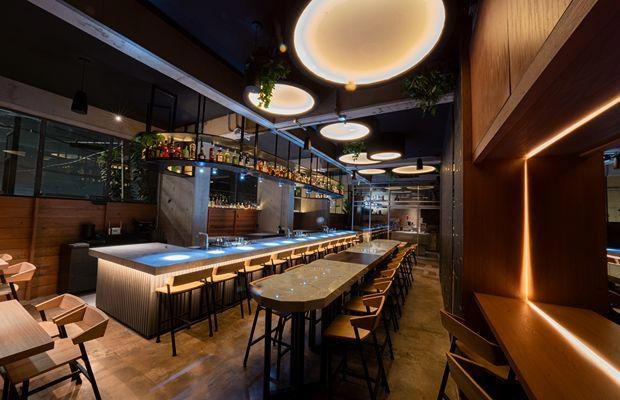
Bustling, no-frills street food atmosphere with constant crowds, rapid turnover, and a lively communal dining experience where customers stand or share tables in a deceptively large dining room.