
Michelin Bib Gourmand
Our verdict
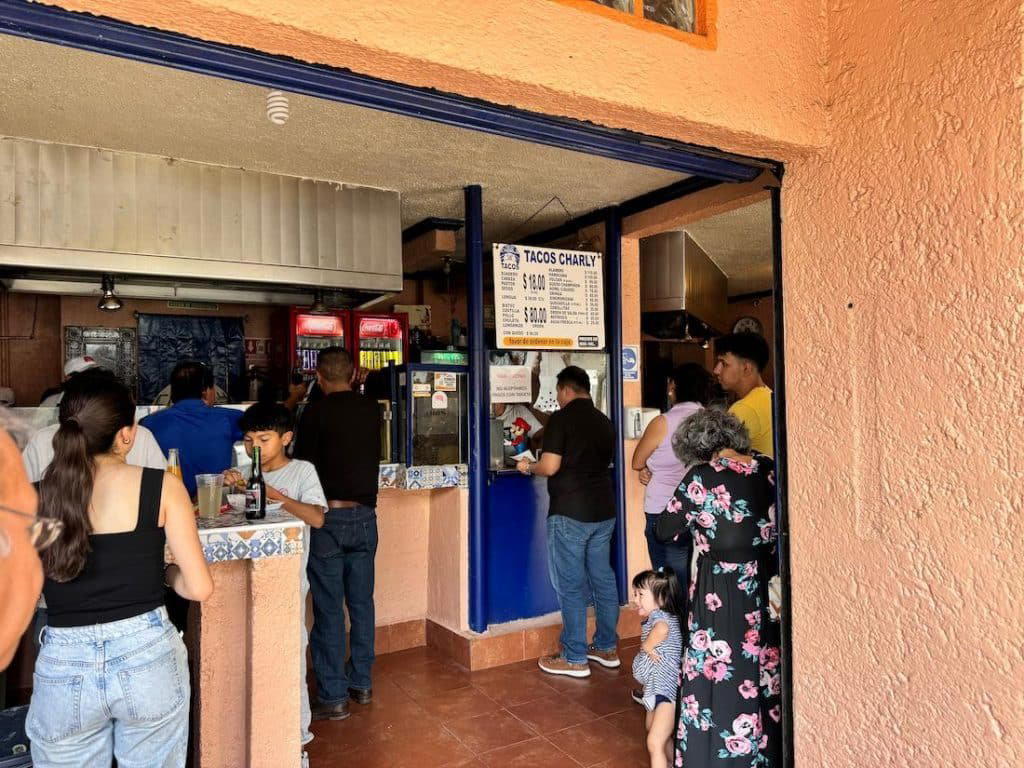
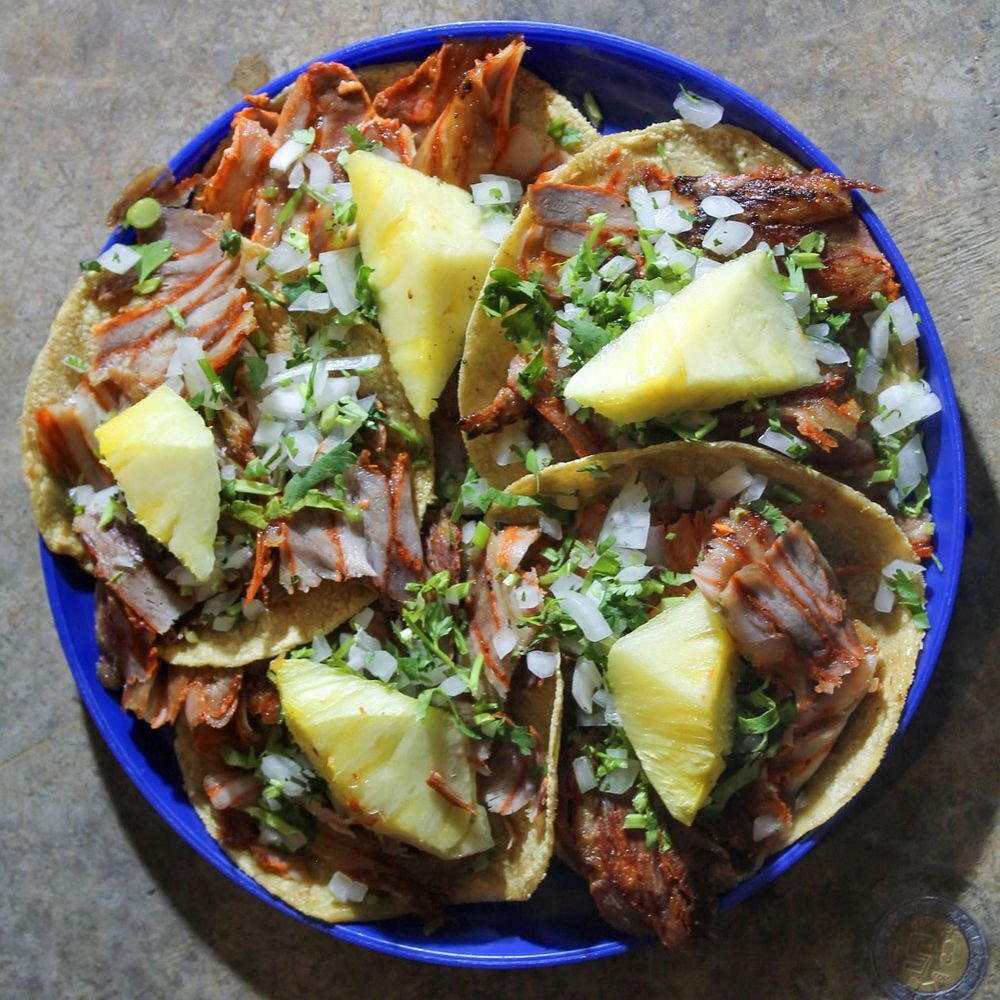
At Tacos Charly in Tlalpan, the suadero is confit before being simmered in water, producing a juicier, more tender result than the standard griddle method. The al pastor comes off a dedicated trompo, sliced thin enough to catch the rendered fat at each pass. Cash only, crowds early, this is southern Mexico City taqueria culture at its most direct.

Pearl is the En Primeur Club membership app, where members save venues, book tables and use the concierge.
The menu
What to order
- Suadero tacos
- Al pastor tacos
Southern Mexico City's Taqueria Tradition
The southern boroughs of Mexico City operate on a different tempo from the polished dining rooms of Polanco or the tasting menus at Pujol. In Tlalpan, the architecture is colonial, the streets narrow, and the taco stands function as genuine neighbourhood anchors rather than tourist waypoints. Tacos Charly sits on Av. San Fernando in the Toriello Guerra area, and the scene around it is consistent with that broader character: regulars arriving before the rush, the smell of rendered fat arriving before the food does, and a queue that forms not because of a marketing campaign but because word travels within a community that eats here habitually.
For context on what the rest of the city's serious dining looks like at the opposite end of the format spectrum, see our guides to Le Chique in Puerto Morelos and Alcalde in Guadalajara. Tacos Charly occupies none of that territory. Its authority comes from repetition and technique at a single station, not from range or ambition across a menu.
The Technique Behind the Suadero
Mexico's taqueria tradition is rarely as direct as it appears from the street. The cuts of meat, the fat used for cooking, the temperature of the comal, the thickness of the tortilla, each decision carries regional logic and, in many cases, generational practice. At Tacos Charly, the suadero preparation is the most illustrative example of this. Suadero, the thin, fatty cut from between the leg and belly of the cow, is commonly cooked on a large round griddle called a comal de disco, submerged in fat and cooked low and slow. The version here takes a different route: the meat is confit first, then finished with a simmer in water. The result is a taco with noticeably more moisture than the standard preparation, where extended dry heat can tighten the fibers even as it renders the fat. The water step loosens the texture without washing out the depth that the confit process establishes.
This kind of two-stage technique is not universally adopted. Many of Mexico City's celebrated suadero specialists stick to the disco approach, arguing that the fat-submerged method produces better caramelization on the exterior. The tradeoff at Charly leans toward interior juiciness over crust, which suits the specific texture of suadero at this thickness. It is a considered production decision, not a compromise, and it is exactly the kind of granular processing difference that separates serious taqueros from those who simply maintain an inherited method.
For a broader picture of how ingredient sourcing and preparation method intersect across Mexico's serious kitchens, from the wood-fire context at Animalón in Valle de Guadalupe to the coastal sourcing logic at HA' in Playa del Carmen, the through-line is the same: the leading results come from operators who understand what the ingredient requires at each stage, not just how to finish it on heat.
The Al Pastor Station
Al pastor is one of the most technically demanding tacos to execute consistently. The trompo, the vertical spit on which the marinated pork is stacked and rotated, requires constant attention. The outer layer cooks faster than the interior; the angle of the blade on each slice determines how much rendered fat transfers to the tortilla. At Tacos Charly, the al pastor has its own dedicated station, which is a meaningful operational commitment. When a taqueria splits its stations by protein, it signals that the team is not managing one generalist cook who rotates between jobs but specialists whose attention remains fixed on a single product through service.
The pork here is sliced thin enough that each pass of the blade catches fat already loosened by the heat. That fat is part of the delivery mechanism, it carries the marinade's achiote and dried chile character through to the final bite. Al pastor without adequate rendered fat is a drier, flatter experience. The thickness of each slice and the timing of the cut are production variables as significant as the marinade itself, and the dedicated station format at Charly suggests this is understood by the people running it.
Mexico has no shortage of regional taco traditions worth investigating. Our guides to Levadura de Olla in Oaxaca, KOLI Cocina de Origen in Monterrey, and Pangea in San Pedro Garza García map different points on that spectrum. Tacos Charly belongs to a distinct tier: no reservations, no printed menu, no room for performance, only the trompo turning and the comal hot.
Planning Your Visit
Tlalpan is in the far south of Mexico City, accessible by the Tren Ligero or by taxi from the historic centre. Av. San Fernando 201, in the Toriello Guerra neighbourhood, is the address. The practical advice from people who eat here regularly is consistent: arrive early. The most popular cuts sell through before the queue thins, and suadero in particular goes faster than the pace of the line suggests. No credit cards are accepted, so cash is essential, small bills make the transaction faster for everyone. Expect a wait during peak morning and lunch hours; this is not a deterrent but a structural feature of a place that doesn't scale its output to match demand.
For places to stay while exploring the southern end of the city, see our Tlalpan hotels guide. For a broader sense of what else the neighbourhood offers across dining and drink, the Tlalpan restaurants guide, bars guide, and experiences guide cover the wider picture. The Tlalpan wineries guide is also available for those extending into the region's drink culture.
For comparison points at the formal end of Mexico's dining range, the contemporary tasting menus at Arca in Tulum, Lunario in El Porvenir, and Olivea Farm to Table in Ensenada are all worth knowing. And if you are interested in how ingredient-led cooking plays out at the international fine dining level, Le Bernardin in New York and Emeril's in New Orleans offer useful reference points from a different culinary tradition.
Frequently asked questions
Is Tacos Charly child-friendly?
A sidewalk taqueria on Av. San Fernando 201 in Tlalpan, Tacos Charly is an open, informal spot with no dress code or table service formality. The casual queue-and-order format works fine with children, though the crowds during peak hours can make it tight. Bring cash and expect to stand.
Is Tacos Charly formal or casual?
Fully casual. Tacos Charly operates as a street-style taqueria in Tlalpan's Toriello Guerra neighbourhood, cash only, no reservations, no cards accepted. Dress however you arrive from the Tren Ligero.
What's Tacos Charly known for in terms of accolades?
Tacos Charly has received recognition including: Tacos Charly is a popular spot in Tlalpan, the southern part of Mexico City, so arrive early or expect a wait, and bring cash, as credit cards aren't accepted. Come for their suadero, which they confit and then simmer in water for a juicier….
What's the signature dish at Tacos Charly?
The suadero is the reason most regulars make the trip south. The cut is confited, then simmered in water to retain moisture, producing a juicier taco than the standard griddle-only method. The al pastor, sliced thin off a dedicated trompo with a touch of rendered fat, runs it close.
Where exactly is Tacos Charly?
Tacos Charly is located at Av. San Fernando 201, Toriello Guerra, Tlalpan.
Can I walk in to Tacos Charly?
Yes, there are no reservations. Tacos Charly in Tlalpan operates on a walk-in basis, but the taqueria draws consistent crowds, so arriving early is the practical move. No credit cards are accepted, so bring cash before you join the queue.
What has Tacos Charly built its reputation on?
Two things: a suadero preparation that goes further than most, confit followed by a water simmer for added juiciness, and an al pastor station where a dedicated cook manages the trompo, slicing the marinated pork thin against a finish of rendered fat. The combination has made it a consistent draw in Tlalpan's southern taqueria circuit.
At-a-Glance Comparison
| Venue | Cuisine | Price | Awards | Notes |
|---|---|---|---|---|
| Tacos CharlyThis venue (the venue you are viewing) | Traditional Mexican Taqueria | $10–20 | Michelin Bib Gourmand | Not listed |
| Pujol | Modern Mexican Fine Dining | $200–300 | 2 Michelin Stars · World's 50 Best #60 | Mexican |
| Quintonil | Modern Mexican Fine Dining | $300–500 | 2 Michelin Stars · World's 50 Best #7 | Modern Mexican, Contemporary |
| Rosetta | Mexican-Italian Fusion Fine Dining | $30–50 | 1 Michelin Star · World's 50 Best #39 | Italian, Creative |
| Em | Modern Japanese-Mexican Fusion | $200–300 | 1 Michelin Star · World's 50 Best #71 | Mexican |
| Le Chique | Avant-Garde Mexican Tasting Menu | $200–300 | 1 Michelin Star · World's 50 Best #58 | Mexican, Contemporary |
Recognition history
Dated appearances from independent guides and award organizations, with the underlying list record or original source where available.
Michelin Bib Gourmand
Michelin
Continue exploring
More in Tlalpan
Restaurants in Tlalpan
All restaurants in Tlalpan →
Bars in Tlalpan
Browse all →



Details
- Rustic
- Cozy
- Casual Hangout
- Late Night
- Open Kitchen
- A La Carte
Current opening hours
- Monday
- 3–11 PM
- Tuesday
- 3–11 PM
- Wednesday
- 3–11 PM
- Thursday
- 3–11 PM
- Friday
- 3–11 PM
- Saturday
- 3–11 PM
- Sunday
- Closed
Hours can change for holidays and private events. Hours as of .
Casual taco stand with standing counters, bustling no-frills atmosphere.