
Tabelog 100 #15
Our verdict
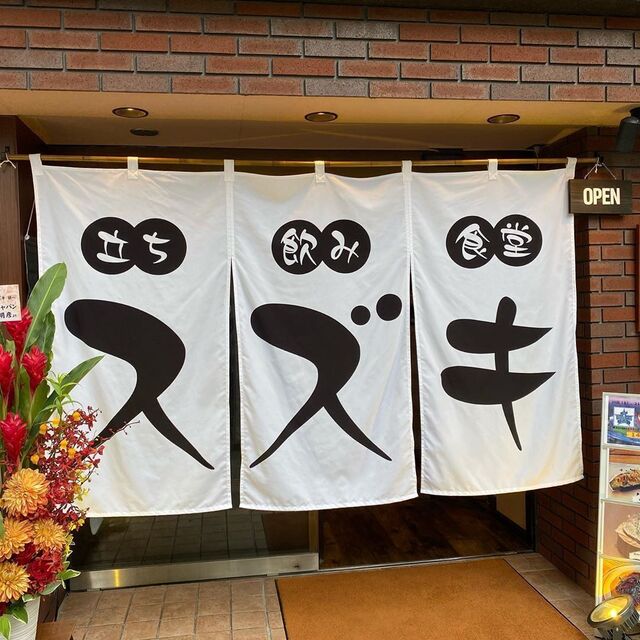
In Bashamichi, Tachinomi Shokudo Ultra Suzuki belongs to Yokohama’s sharper stand-up drinking culture: compact, social, and food-led rather than bar-snack driven. Its Tabelog 100 - Tachinomi - 2025 selection places it among Japan’s recognized tachinomi addresses, with bistro and yoshoku cues sitting alongside fish, shochu, wine, cocktails, lemon sours, and whiskey.

Pearl is the En Primeur Club membership app, where members save venues, book tables and use the concierge.
The menu
What to order
- Fluffy omelette with black truffle sauce
- Genki pork grill with aioli cream sauce
- Lamb rump herb grill
- Sea urchin and mentaiko cream bread gratin
- Black truffle cream risotto
Approaching a tachinomi counter in Yokohama is different from entering a formal dining room. The signal is movement: office workers cutting through the city, groups arriving without ceremony, glasses appearing before the evening has settled into a full meal. Tachinomi Shokudo Ultra Suzuki fits that rhythm, but the point is not austerity. Yokohama’s better stand-up bars increasingly treat the format as a dining proposition, not merely a place to drink between appointments.
That distinction matters in Yokohama, a city where port-city formality and after-work pragmatism sit close together. Yokohama names such as Bashamichi Okawa, Sumibi Kappou An, and SUIRINKAKU speak to one side of the city’s restaurant map, while tachinomi culture works in another direction. It compresses the evening, lowers the barrier to entry, and asks the kitchen to deliver quickly without behaving like a snack counter.
Yokohama's stand-up format, treated as dinner rather than prelude
The category here is useful: stand-up bar, bistro, and yoshoku. That combination says more about modern Yokohama dining than a narrow cuisine label would. Yoshoku has long been one of Japan’s more adaptable urban food languages, absorbing Western forms into Japanese eating habits; bistro framing gives the menu a broader context; the stand-up room keeps the experience democratic and immediate. In a city built around ports, rail lines, and commerce, that hybrid feels less like novelty than local logic.
The recognition is concrete. Tachinomi Shokudo Ultra Suzuki was selected for Tabelog’s 2025 tachinomi recognition, with a Tabelog score of 3.59 attached to the listing. For a stand-up venue, that matters because the category is crowded and highly local. Tachinomi drinkers are not rewarding ceremony; they are rewarding pace, value, consistency, and the ability to make a short stop feel like a complete night out.
The listed categories reinforce the point. Stand-up bar, bistro, and yoshoku sit together rather than pulling the room into a single-purpose definition. That range moves the venue away from a simple drinking stop. A visit can read as casual, food-minded, or somewhere between the two; the bistro and yoshoku context gives the standing format more ballast than the usual shorthand for quick counter drinking.
Why this Yokohama room belongs in a wider dining plan
Yokohama’s restaurant map rewards category switching. A serious itinerary can move between polished dining rooms, casual counters, yoshoku-leaning meals, and other local formats without treating any one category as the whole story. Other Yokohama dining rooms belong to the same broader lesson: the city is strongest when read through formats, not just cuisines. The stand-up counter is one of those formats, and it changes how the evening is paced.
For travellers building around Yokohama rather than treating it as a Tokyo side note, the useful comparison is not only between restaurants. The city’s drinking and dining culture sits beside hotels, compact bar districts, and broader regional access. Start with Our full Yokohama restaurants guide, then use Our full Yokohama hotels guide, Our full Yokohama bars guide, Our full Yokohama wineries guide, and Our full Yokohama experiences guide to place a stand-up dinner inside a fuller itinerary.
The regional spread also helps clarify the role of this kind of venue. Other dining in and around Yokohama can pull a meal toward slower, seated occasions, while casual counters and compact rooms offer a different rhythm. Farther afield, the comparison becomes format rather than geography: Japanese dining culture is full of specialized rooms, café-like stops, bar-led counters, and tightly defined casual formats. Those examples show how Japanese formats travel, mutate, and become legible in different cities without needing Tachinomi Shokudo Ultra Suzuki to behave like a conventional restaurant.
The editorial read: informal, but not lightweight
Tachinomi is often misunderstood by visitors as a budget shortcut. In practice, the stronger examples function as pressure tests for a kitchen and bar. There is less time to hide behind ceremony, fewer physical comforts to soften weak cooking, and a higher demand for clarity: food has to land with purpose, drinks have to suit repeat ordering, and the room has to make standing feel intentional rather than inconvenient.
That is why the 2025 Tabelog tachinomi recognition carries weight here. It places the venue inside a national conversation about a format usually judged locally and habitually. For Yokohama, it also marks the city as more than a corridor between transport, offices, and waterfront leisure. The city supports polished dining rooms, but it also supports the tighter pleasure of a standing counter with bistro-yoshoku instincts. That contrast is the reason to pay attention.
Frequently asked questions
Is Tachinomi Shokudo Ultra Suzuki a family-friendly restaurant?
The room is listed as a stand-up bar in Yokohama, so it reads as a casual, drinks-friendly address rather than a formal family setup. The current profile is built around standing-bar energy, bistro framing, and yoshoku.
Is Tachinomi Shokudo Ultra Suzuki formal or casual?
It is firmly casual, but not careless: Tachinomi Shokudo Ultra Suzuki is listed as a stand-up bar, bistro, and yoshoku spot at JPY 3,000-3,999. The standing-bar category keeps the tone informal.
What's the price range at Tachinomi Shokudo Ultra Suzuki?
Pricing at Tachinomi Shokudo Ultra Suzuki is listed as JPY 3,000 - JPY 3,999 JPY 3,000 - JPY 3,999.
Where is Tachinomi Shokudo Ultra Suzuki located?
Yokohama.
Do I need a reservation for Tachinomi Shokudo Ultra Suzuki?
It appears in Tabelog’s 2025 tachinomi recognition, which is a useful signal for planning ahead.
What's the signature at Tachinomi Shokudo Ultra Suzuki?
Its calling card is the standing-bar format itself, reinforced by Tabelog’s 2025 tachinomi recognition.
The Essentials
Comparable options at the same price tier.
| Venue | Cuisine | Price | Awards | Notes |
|---|---|---|---|---|
| Tachinomi Shokudo Ultra SuzukiThis venue (the venue you are viewing) | Tachinomi stand-up bar with yoshoku and bistro-style plates | $20–30 | Tabelog 100 #15 | Not listed |
| Bashamichi Okawa | Kaiseki Japanese | $100–150 | Tabelog 100 #36 | JPY 10,000 - JPY 14,999 JPY 3,000 - JPY 3,999 |
| Sumibi Kappou An | Charcoal-fired Seasonal Japanese Kaiseki (Sumibi Kappo) | $100–150 | Tabelog 100 #4 | JPY 8,000 - JPY 9,999 JPY 3,000 - JPY 3,999 |
| SUIRINKAKU | Nouvelle Chinese fine dining in Yokohama Bashamichi | $100–150 | Tabelog 100 #67 | JPY 15,000 - JPY 19,999 JPY 6,000 - JPY 7,999 |
| Cucina Takemura | Wild Game Italian | $30–50 | Not listed | Not listed |
Recognition history
Dated appearances from independent guides and award organizations, with the underlying list record or original source where available.
Tabelog 100 #15 · No. 15
Tabelog · Tabelog 100 - Tachinomi - 2025
Continue exploring
More in Yokohama
Restaurants in Yokohama
All restaurants in Yokohama →




Bars in Yokohama
Browse all →







Details
- Lively
- Cozy
- Modern
- Trendy
- Energetic
- After Work
- Casual Hangout
- Solo
- Group Dining
- Date Night
- Standalone
- Craft Cocktails
- Beer Program
- A La Carte
- Small Plates
- Counter Dining
- Lemon Sours
- Beer
- Whisky
- Highballs
Bright, clean, and relaxed standing-bar atmosphere with an intimate feel, focused on easy drop-ins for a drink or two but with food quality closer to a small bistro than a typical tachinomi.