Our verdict
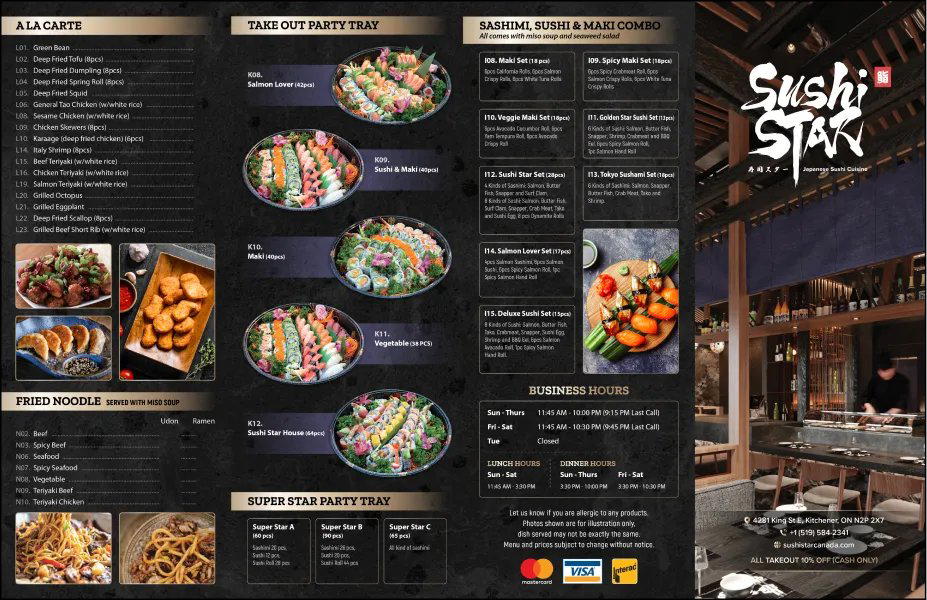
Sushi Star occupies a spot on King Street East in Kitchener, Ontario, where Japanese dining traditions meet a mid-sized Canadian city still building out its restaurant identity. The address places it within reach of Kitchener's eastern residential corridors, making it a practical option for those seeking Japanese cuisine away from the downtown core.

Pearl is the En Primeur Club membership app, where members save venues, book tables and use the concierge.
Japanese Dining in a City Finding Its Culinary Footing
King Street East runs through one of Kitchener's quieter commercial stretches, where strip-plaza dining and neighbourhood staples outnumber destination restaurants. It is precisely in zones like this, away from the self-conscious energy of a downtown dining district, that certain cuisines take root quietly and serve a community rather than a trend cycle. Sushi, in particular, has spread through mid-sized Canadian cities in a way that separates it from the coastal restaurant cultures that originally introduced the form to North American diners. In Kitchener, as in comparable Ontario cities, the sushi offering ranges from fast-casual conveyor formats to more deliberate, counter-led operations where technique and sourcing carry more weight.
Sushi Star at 4281 King St E sits within that spectrum. The address, east of the downtown core, signals a neighbourhood-first posture rather than a tourist-facing one. For residents along Kitchener's eastern corridors and into the Doon area, this proximity is the primary practical advantage. The broader Kitchener restaurant scene, covered in our full Kitchener restaurants guide, has been developing steadily, with spots like Janet Lynn's Bistro and odd | duck anchoring a more ambitious contemporary dining conversation. Japanese dining, meanwhile, operates in a parallel register, one defined less by local critical attention and more by consistent community use.
The Cultural Weight Behind a Simple Counter
Japanese cuisine carries a set of codified expectations that no other tradition imports quite so fully into the North American context. The vocabulary of sushi, nigiri, omakase, maki, sashimi, arrived with specific cultural meanings attached, meanings that have been variously honoured, diluted, and reinvented across decades of export. At the serious end of the Canadian market, restaurants like Alo in Toronto operate in a tier defined by technical discipline and sourcing rigour, while high-conviction Japanese specialists such as Sushi Masaki Saito have pushed Toronto's omakase ceiling toward international comparison points. Kitchener operates below that tier by simple geometry of market size, but the cultural underpinning of the food does not change based on postal code.
What sushi asks of a kitchen, precision in rice temperature, accuracy in knife work, quality in fish sourcing, is the same at a neighbourhood counter as it is at a Michelin-listed omakase room. The gap between those settings lies not in what the cuisine demands but in how those demands are resourced and communicated. In smaller Canadian cities, the leading Japanese restaurants tend to be those where the kitchen takes the sourcing question seriously even without the marketing infrastructure to announce it. That practical seriousness, where it exists, is often the difference between a sushi restaurant that earns regulars and one that rotates through a transient customer base.
For context on how Japanese technique translates across different Canadian settings and scales, AnnaLena in Vancouver demonstrates how ingredient-led thinking shapes a menu even when the format is not explicitly Japanese. Across the country, reference points like Tanière³ in Quebec City and Jérôme Ferrer - Europea in Montreal show that Canada's most ambitious dining happens when kitchens commit to a clear culinary argument. The neighbourhood sushi restaurant operates in a different register, but the underlying question, does the kitchen take the food seriously, applies at every level.
What the King Street East Location Tells You
Restaurant geography is rarely accidental. A King Street East address in Kitchener, rather than a downtown King Street address, reflects a deliberate or at least pragmatic choice about rent, foot traffic, and target customer. The eastern stretch of King runs through established residential neighbourhoods, which tends to produce a different diner profile than the student-heavy blocks near Wilfrid Laurier or the tech-company lunch trade closer to the Innovation District. East-end diners are, broadly speaking, repeat visitors rather than discovery seekers. A restaurant serving that customer base succeeds on consistency and value rather than novelty.
That context shapes what you should expect from Sushi Star. The operational environment, strip-plaza or commercial block, parking-accessible, neighbourhood-oriented, aligns with a format designed for regulars. The Canadian comparison for this model is instructive: just as Restaurant Pearl Morissette in Lincoln serves its Niagara wine-country community with a specificity that would be harder to sustain in a larger city, neighbourhood Japanese restaurants in mid-sized Ontario cities often develop a local loyalty that destination-facing restaurants cannot replicate.
Other Ontario and regional references, The Pine in Creemore, Eigensinn Farm in Singhampton, Barra Fion in Burlington, all demonstrate that serious dining outside major urban centres tends to root itself in a specific community relationship. Sushi Star's location argues for the same reading.
Planning Your Visit
Contacting the venue directly before visiting is the practical step. For comparison, neighbourhood sushi operations in similar Ontario cities typically run in the CAD $15–$40 per-person range for a la carte dining, with omakase or chef's menu formats pushing higher where offered. Whether Sushi Star operates a fixed-menu format or a standard a la carte counter is a question leading answered at the source.
The King Street East address is accessible by car with parking typical of eastern Kitchener commercial plazas. Those arriving by transit should check current GRT routing along the King corridor, which connects the eastern stretches to the downtown terminal. For a broader orientation to where Sushi Star sits within Kitchener's dining offer, and how it compares to other options across the city and region, the EP Club Kitchener guide provides a fuller picture. Further afield, Bonimi in Etobicoke, Biagio's Kitchen + Catering in Ottawa, and Narval in Rimouski illustrate the range of ambition showing up in Canadian dining beyond the major-city centres. For those benchmarking against international reference points, Le Bernardin in New York City and Atomix in New York City represent the upper register of what precision seafood technique looks like at full scale. Aux Anciens Canadiens in Quebec and Bearspaw Golf Club in Calgary round out the national picture of how dining traditions take hold across Canadian geographies.
Frequently asked questions
How do I find Sushi Star?
Sushi Star is located at 4281 King St E, Kitchener, ON N2P 2E9, Canada, Kitchener.
Is Sushi Star suitable for a family dinner in east Kitchener?
Sushi Star's King Street East location in Kitchener positions it as a neighbourhood-accessible option rather than a downtown destination, which typically correlates with a more relaxed, family-oriented dining tempo. Japanese restaurants in this eastern corridor format generally offer a mix of maki and cooked options that accommodate younger diners alongside sushi-focused adults.
What should I eat at Sushi Star?
In Japanese restaurants operating at the neighbourhood level in Kitchener, nigiri sets, maki rolls, and donburi bowls are standard anchors of the menu. Confirming current offerings directly with the venue before visiting is advisable.
Do I need a reservation for Sushi Star?
Japanese restaurants along Kitchener's eastern King Street corridor typically operate on a walk-in basis, with phone-ahead seating becoming practical during weekend dinner service. Calling ahead is the lower-risk approach.
What's the signature at Sushi Star?
No signature dish data is documented for this Kitchener location. Across Japanese restaurants in this category, the nigiri selection is generally the clearest indicator of kitchen standards, as it requires the fewest ingredients to obscure technique. Asking staff on arrival about daily specials is a reasonable strategy.
Can Sushi Star adjust for dietary needs?
Japanese menus at this category level often include naturally pescatarian and gluten-aware options, though soy-based sauces present cross-contact considerations for those with gluten sensitivities. Confirming with the kitchen directly is the only reliable step.
Price and Recognition
Comparable venues nearby, for context on price, style, and recognition.
| Venue | Cuisine | Price | Awards | Notes |
|---|---|---|---|---|
| Sushi StarThis venue (the venue you are viewing) | Japanese All-You-Can-Eat Sushi & BBQ | $20–30 | Not listed | Not listed |
| Janet Lynn's Bistro | Modern Canadian Bistro | $30–50 | Not listed | Belmont, Modern Canadian Bistro |
| odd | duck | Modern Creative Fine Dining | $50–100 | Michelin Plate | Downtown Kitchener, Modern Creative Fine Dining |
| Ju-Raku | Modern Japanese Sushi & Teppanyaki | $30–50 | Not listed | North York / Don Mills, Modern Japanese Sushi & Teppanyaki |
| Koganei Japanese Seafood | Upscale Japanese Seafood | $30–50 | Not listed | Woodbridge, Upscale Japanese Seafood |
Continue exploring
More in Kitchener
Restaurants in Kitchener
All restaurants in Kitchener →



Bars in Kitchener
All bars in Kitchener →

Hotels in Kitchener
Browse all →
Details
- Trendy
- Lively
- Group Dining
- Casual Hangout
- Family
- Sake Program
- A La Carte
- Buffet
- Vegetarian Friendly
Current opening hours
- Monday
- 11:45 AM–10 PM
- Tuesday
- Closed
- Wednesday
- 11:45 AM–10 PM
- Thursday
- 11:45 AM–10 PM
- Friday
- 11:45 AM–10:30 PM
- Saturday
- 11:45 AM–10:30 PM
- Sunday
- 11:45 AM–10 PM
Hours can change for holidays and private events. Hours as of .
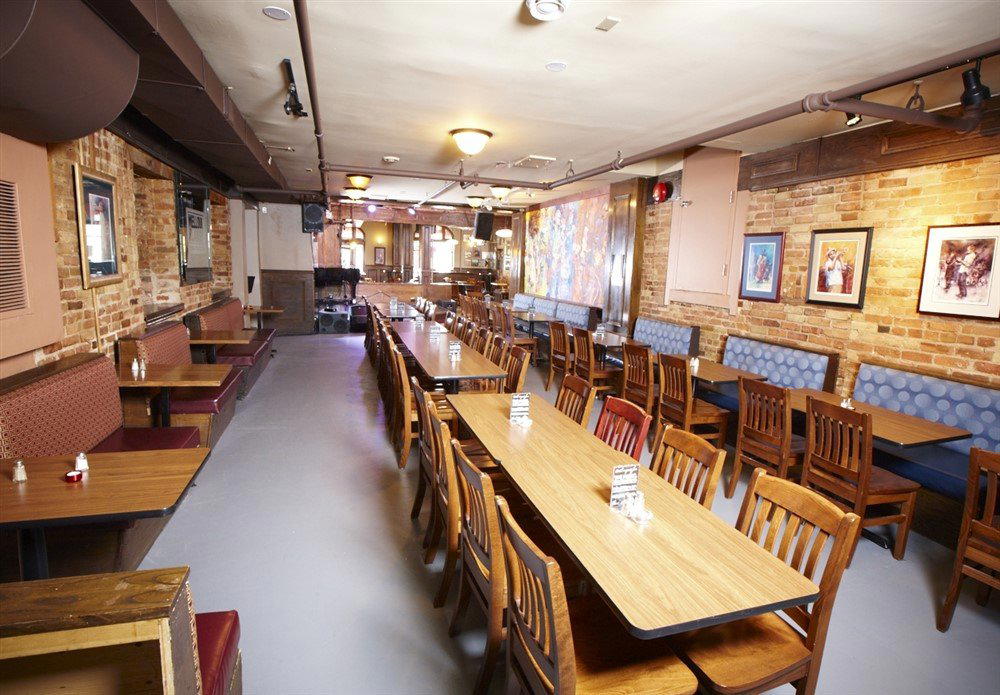
Casual and bustling atmosphere typical of a popular all-you-can-eat sushi spot with focus on fresh food variety.