Elora Mill
A 19th-century grist mill converted into a boutique hotel and restaurant on the Grand River in Elora, Ontario, Elora Mill occupies among the more architecturally distinctive properties in rural Canada. The stone walls, mill machinery, and river-facing position make it a benchmark for adaptive heritage reuse in the country hotel category. Expect serious cooking, considered wine, and accommodation that earns its premium positioning.
Pearl is the En Primeur Club membership app — saves, bookings, and concierge access live there. Same editors, same standards.
- Address
- 77 Mill St W, Elora, ON N0B 1S0, Canada
- Phone
- +1 519 846 8464
- Website
- eloramill.ca
- Directions
- Get directions
 Saves & bookings on Pearl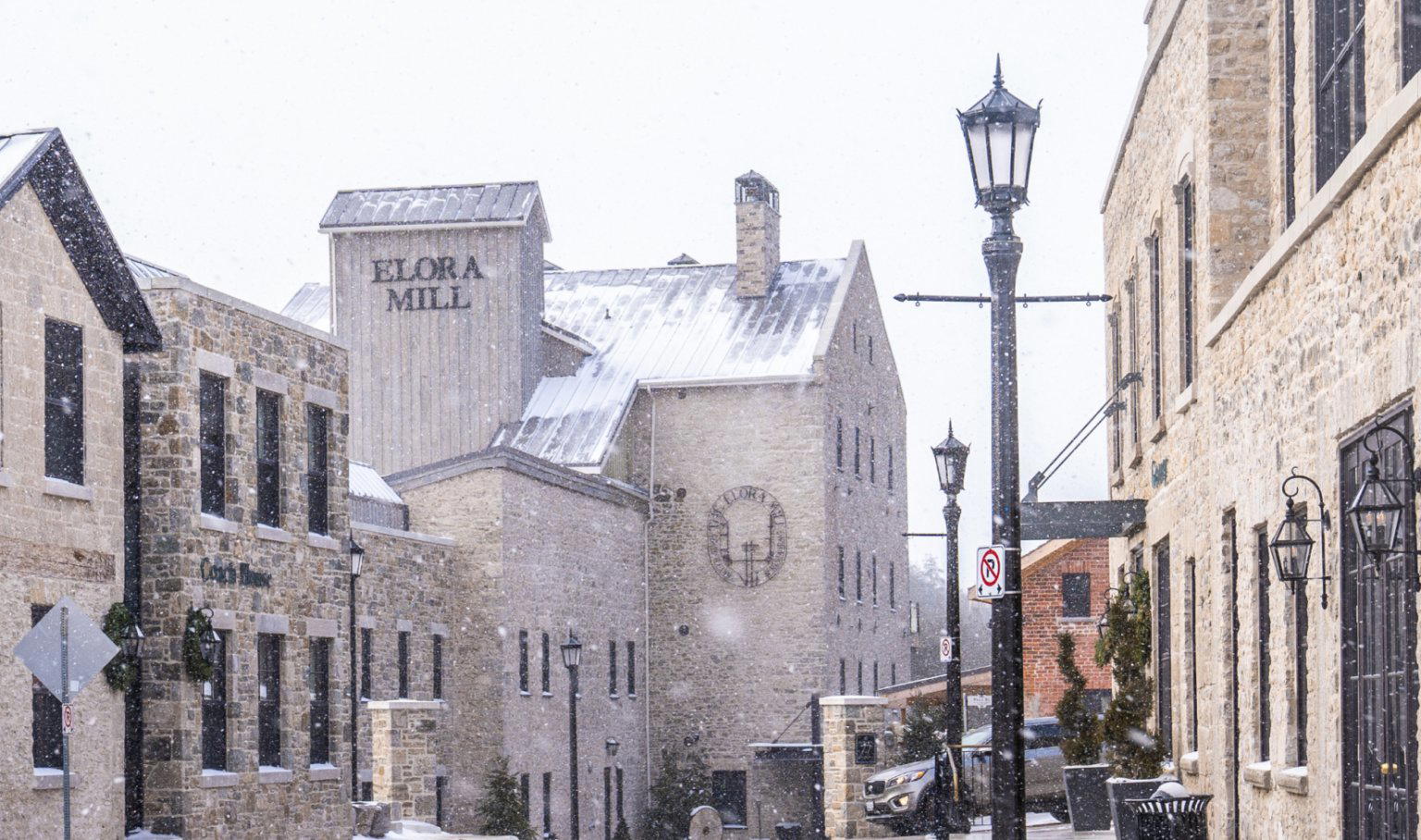
Stone, Water, and the Architecture of Restraint
Approaching Elora Mill from Mill Street West, the building reads as geology before it reads as hospitality. The limestone exterior, quarried from the same Grand River gorge that the mill has overlooked since the 1832 original construction, carries the particular grey-gold tone of Wellington County fieldstone. It does not announce itself the way a purpose-built resort might. The mass of the structure, the thickness of the walls, the small-paned windows cut into stone rather than framed by it, these are the signals of a working industrial building that has outlasted its original purpose and found a second life that suits it at least as well.
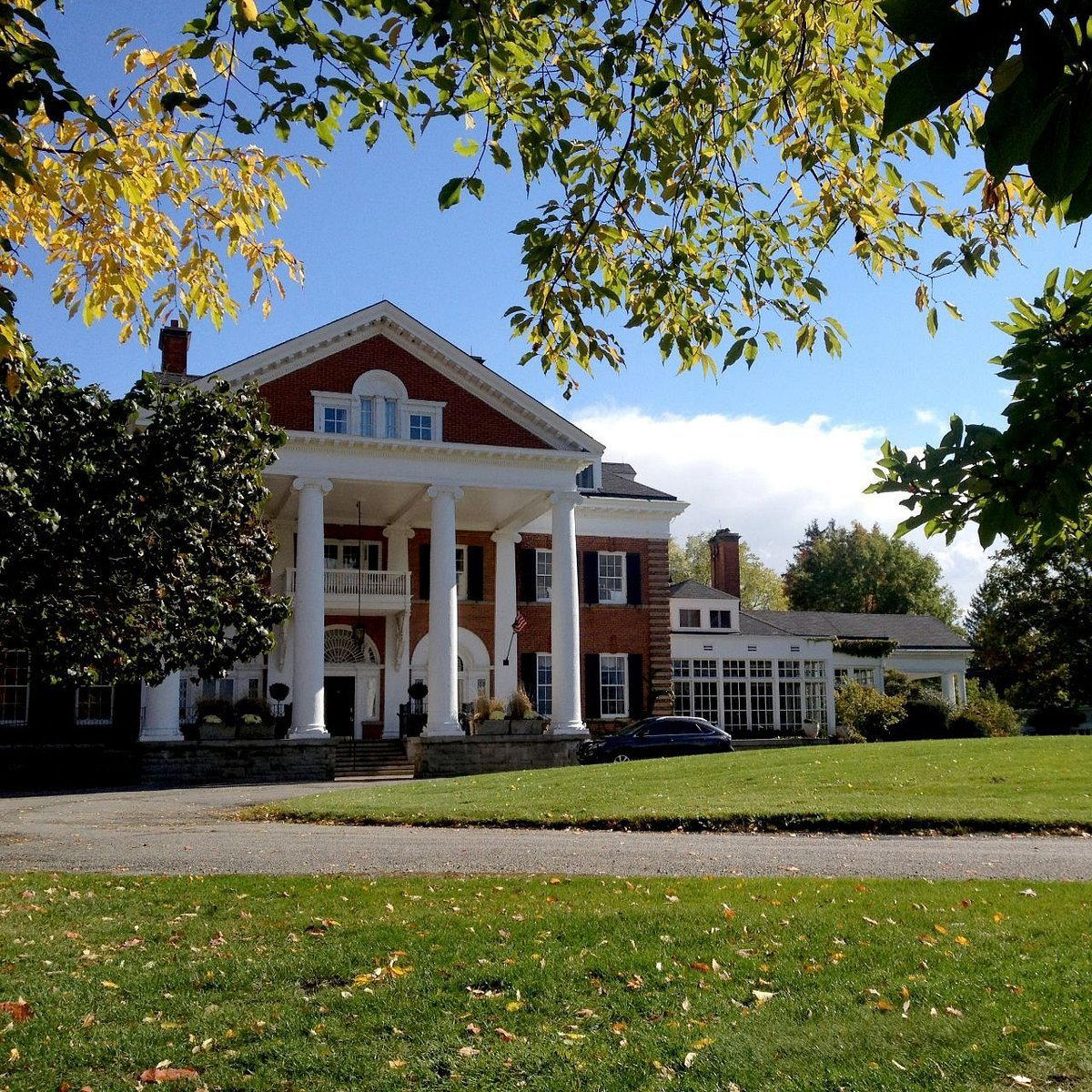
A cohort of properties, among them Langdon Hall Country House Hotel and Spa in Cambridge, roughly an hour's drive south, and Manoir Hovey in North Hatley in Quebec's Eastern Townships, operate in the register of serious country-house hospitality anchored by a building with genuine age and provenance. Elora Mill sits comfortably in that comparable set. What separates it from a generic heritage conversion is the industrial honesty the architecture refuses to obscure: original mill machinery, exposed timber, the audible proximity of the river below.
The Gorge as Context
Elora's position above the Grand River gorge is not incidental to the property's appeal, it is the load-bearing fact. The village of Elora, population just over five thousand, has drawn visitors to this limestone canyon since the early 19th century. The gorge drops sharply from street level, and the mill building sits at the edge of that drop, making the relationship between architecture and landscape something felt rather than simply seen. Rooms and dining spaces oriented toward the river engage directly with that geology in a way that no interior design decision can fully replicate.
This is not the mountain drama of Fairmont Chateau Lake Louise or the coastal scale of Clayoquot Wilderness Lodge in Tofino. The appeal here is intimate and riverine: a gorge you can hear from your room, a village that remains recognisably a village, and a property that earns its rate on architecture and food rather than on amenity sprawl.
What the Building Demands of Its Dining Room
Heritage buildings set a standard the kitchen must meet. When stone walls are doing the interior design work, cooking has to justify the setting rather than hide behind it. The dining program at Elora Mill has consistently positioned itself in the upper tier of Ontario's destination-restaurant category, drawing from the province's agricultural depth, Wellington County's beef and grain heritage, the fruit belts to the south and east, the mushroom and game supply from the surrounding countryside, and presenting it in a format that respects the room's seriousness without performing austerity for its own sake.
Ontario's country-house dining has matured considerably over the past decade. The model that once leaned on generic Continental fare has largely given way to kitchens making explicit arguments about regional sourcing and seasonal constraint. Elora Mill participates in that shift. The stone room and river view create an expectation; the kitchen's job is to honour it. Four Seasons Hotel Toronto represents the urban anchor against which country properties are often calibrated by travellers moving between the two registers.
Rooms in a Working Structure
Accommodation in a genuine heritage building involves trade-offs that purpose-built resorts do not face. Walls of 19th-century limestone carry sound differently, ceiling heights vary with the mill's original functional logic, and river-facing rooms occupy a geometry determined by the building's industrial past rather than hospitality convention. At the hotel, these constraints become the product. A room shaped by a mill's structural requirements, with stone walls and a window cut to the thickness of the exterior, offers something that no amount of bespoke furniture can replicate in a purpose-built property.
The Royal Hotel in Picton, or further afield, Hôtel Quintessence in Mont-Tremblant, understand the exchange. You accept that the building's logic takes precedence over standardised comfort expectations, and in return you get a room that has a point of view. River-facing categories at the hotel are the ones that make the architectural argument most fully: the gorge is present in those rooms as a sound and a view, not merely as something glimpsed from a corridor window.
Where It Sits in the Ontario Country Hotel Conversation
Ontario's premium country hotel category is smaller than the province's tourism volume might suggest. Outside the Muskoka corridor, where Deerhurst Resort in Huntsville anchors the larger-scale end, and the Prince Edward County cluster around Picton, genuinely destination-grade rural properties are sparse. The hotel operates in a relatively uncrowded field within a ninety-minute radius of Toronto, which is both a commercial advantage and a responsibility: it carries the weight of being the area's most architecturally significant hospitality offering without a comparable set close enough to keep it honest through direct competition.
Drake Motor Inn in Prince Edward and The Royal Hotel in Picton anchor the county wine-country register to the east, while Elora holds the Wellington County position to the west. They are not direct competitors, the architectural proposition, price tier, and dining ambition differ, but they occupy the same general category of Ontario weekend travel for the Toronto market.
For those extending beyond Ontario, the adaptive-reuse model finds its Canadian counterpart at Fogo Island Inn in Joe Batt's Arm, a fundamentally different building logic and landscape, but the same insistence that architecture and place do the primary hospitality work, with amenity and food in service of that rather than in spite of it.
Planning a Visit
Elora is a ninety-minute drive from Toronto via Highway 401 and Regional Road 7, or roughly forty minutes from Waterloo Region. The village is compact and walkable, with the gorge, the mill, and Elora's limestone commercial streetscape within easy reach of one another. Booking lead times for weekend stays and dining at properties in this category typically run four to eight weeks during the May-through-October season, when the gorge and village are at their most accessible; winter stays offer a quieter counterpoint, with the river and stone architecture taking on a different register in snow.
How It Stacks Up
Comparable venues nearby, for context on price, style, and recognition.
| Venue | Cuisine | Price | Awards | Notes |
|---|---|---|---|---|
| Elora MillThis venue — the venue you are viewing | Historic luxury boutique hotel in restored grist mill | $$$$ | 5-Star | Not listed |
| Park Hyatt Vancouver | Urban luxury high‑rise hotel integrated into a landmark mixed‑use tower, combining Park Hyatt’s residential feel with contemporary West Coast design. | $$$$ | 5-Star | West End |
| Nobu Hotel Toronto | Ryokan-inspired urban sky sanctuary atop residential towers | $$$$ | 5-Star | Entertainment District |
| The Pearle Hotel & Spa | Modern lakehouse-inspired luxury retreat | $$$$ | 5-Star | historic downtown Burlington |
| InterContinental Toronto Centre | Urban luxury with penthouse-like suites | $$$$ | 4-Star | Entertainment District |
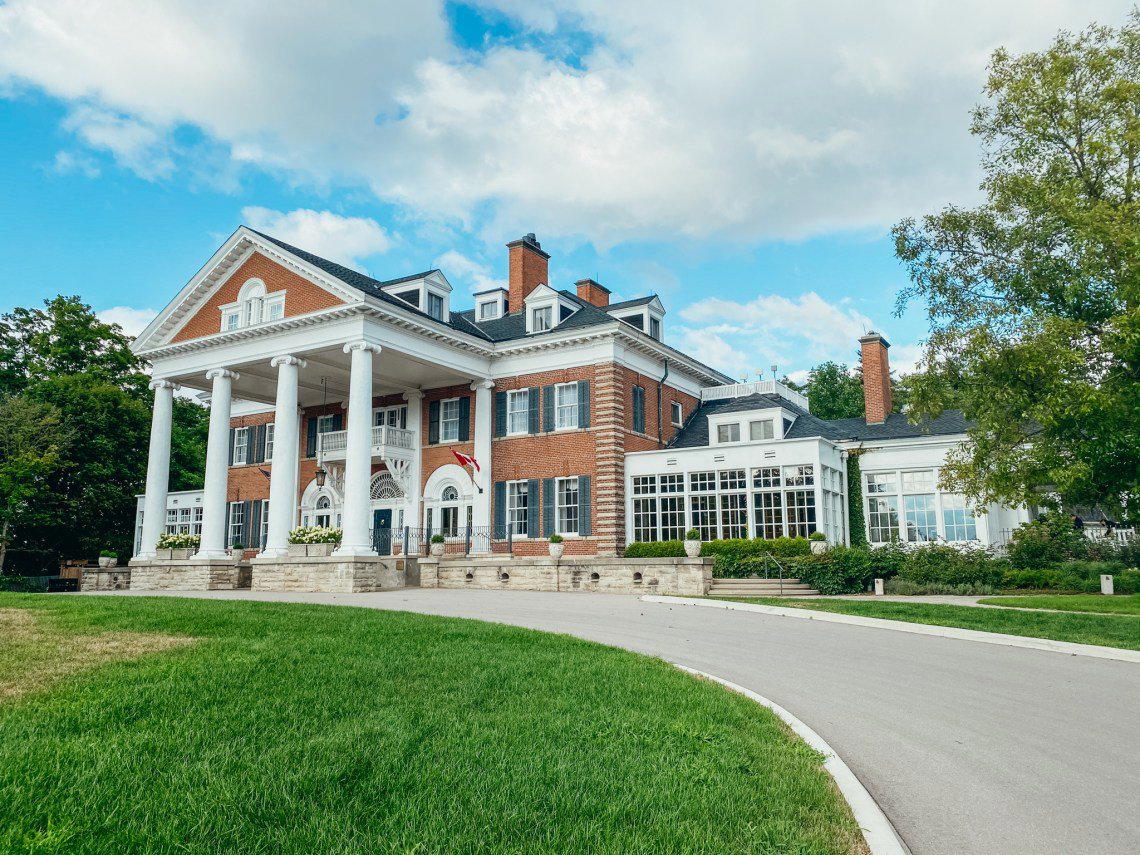
| Langdon Hall Country House Hotel and Spa | Georgian country house with modern sophistication | $$$$ | 5-Star | Cambridge |
Continue exploring
More in Centre Wellington
Hotels in Centre Wellington
Browse all →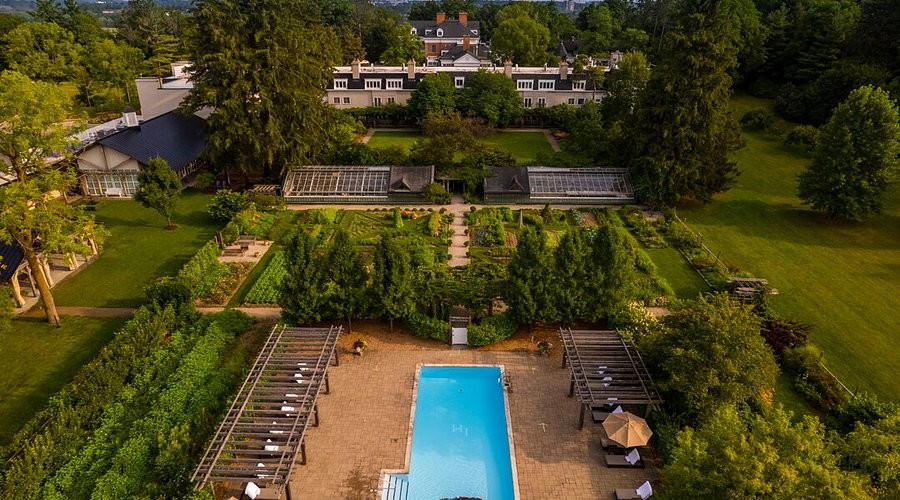
Bars in Centre Wellington
Browse all →
Restaurants in Centre Wellington
Browse all →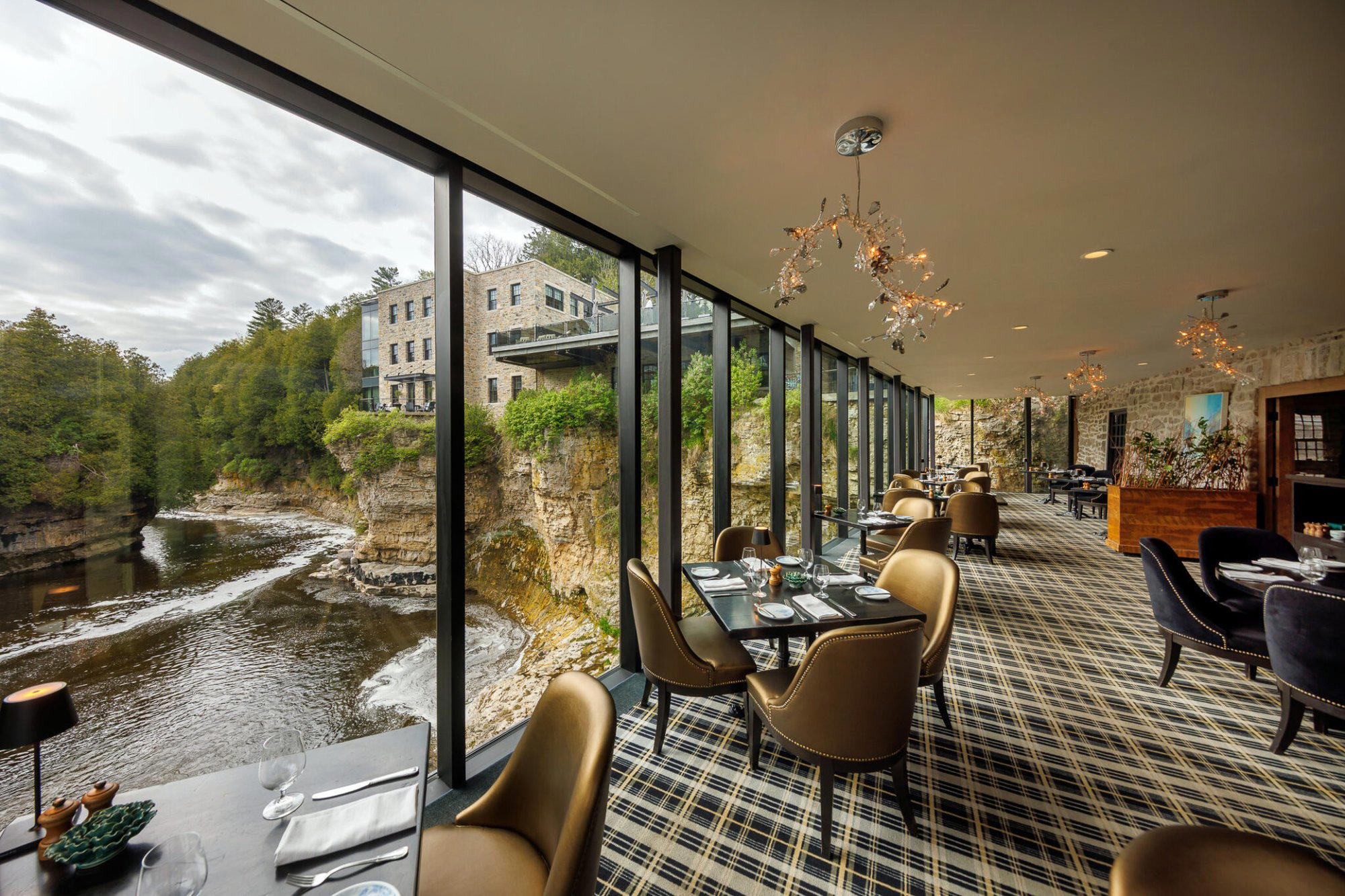

At a Glance
- Romantic
- Scenic
- Elegant
- Rustic
- Sophisticated
- Romantic Getaway
- Anniversary
- Weekend Escape
- Honeymoon
- Waterfront
- Historic Building
- Panoramic View
- Terrace
- Spa
- Pool
- Fitness Center
- Wi Fi
- Room Service
- Concierge
- Waterfront
- Spa
- Pool
- Fitness Center
- Wi Fi
- Room Service
- Concierge
Refined and serene with dramatic panoramic views of the gorge rapids and falls, warm lighting enhancing the heritage charm.