Sushi on Jones

Our verdict
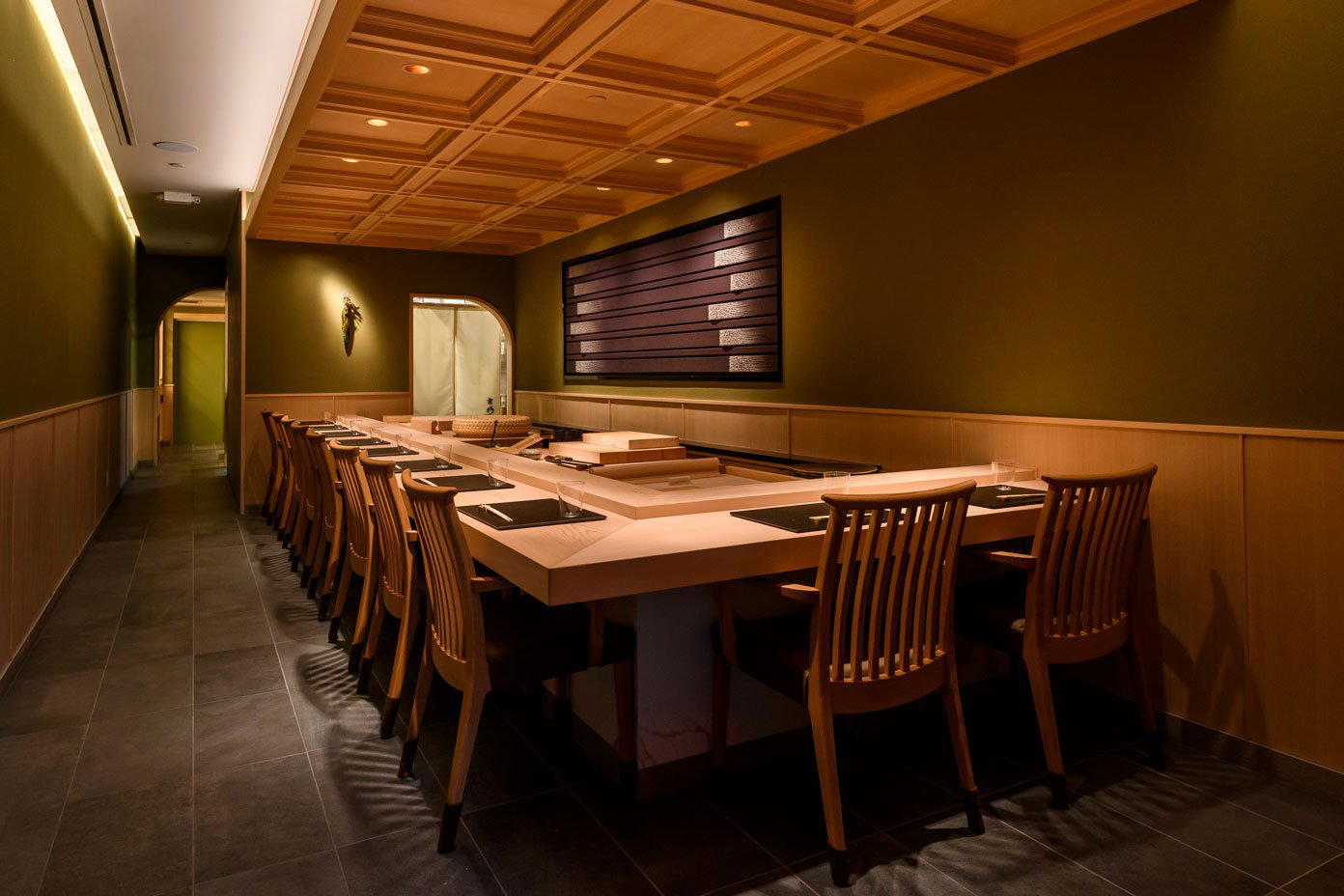
A Lower East Side omakase counter that has held consecutive Opinionated About Dining recognition from 2023 through 2025, Sushi on Jones occupies a niche where neighbourhood informality and serious fish sourcing coexist. Chef Corwin Kave runs a program that sits outside the Midtown trophy-sushi circuit, drawing regulars who prioritise substance over setting.

Pearl is the En Primeur Club membership app, where members save venues, book tables and use the concierge.

The menu
What to order
- 12-course omakase
- 20-course omakase
- Uni backpack (wagyu with uni)
- A5 wagyu nigiri
- Seared hamachi
- Chu toro with uni
- Unagi
Where the Lower East Side Lands in New York's Sushi Conversation
New York's sushi market has stratified sharply over the past decade. At the leading sits a cluster of counters Joji, Shion 69 Leonard Street, and Bar Masa, competing at price points that benchmark against Tokyo omakase rather than the New York cost of living. Below that, a mid-tier has emerged in the outer boroughs and downtown neighbourhoods, where chefs trained in serious Japanese technique operate in rooms that carry none of the Midtown overhead. Sushi on Jones, on Eldridge Street in the Lower East Side, belongs to that second cohort: consistent enough to earn Opinionated About Dining recognition in three consecutive years (2023, 2024, and 2025), but grounded in a neighbourhood that has never positioned itself as a luxury dining address.
That positioning matters more than it might appear. The Lower East Side has historically absorbed restaurants that trade on craft rather than ceremony, from the Jewish delicatessens that defined the block for generations to the wave of chef-driven small rooms that arrived in the 2010s. A sushi counter opening here makes a deliberate statement about where its priorities lie: on the fish and the technique, not the chandelier budget.
Three Years of Consecutive OAD Recognition, What That Signals
Opinionated About Dining uses a peer-review model weighted toward serious eaters and industry professionals rather than general public submissions. For comparison, the OAD Casual list regularly includes counters that would sit comfortably alongside finalists from Lazy Bear in San Francisco or Providence in Los Angeles in terms of sourcing rigour, the casual designation speaks to format and price register, not ambition.
Small-counter sushi rooms are particularly exposed to rating variance; a single off-night, a temperature misjudgement on the fish, or a service stumble at an eight-seat counter shows up immediately in guest feedback. Sustained scores at this level, over multiple years of OAD inclusion, indicate a program that has found its rhythm.
Sourcing, Seasonality, and the Ethics of Small-Counter Fish Procurement
The sustainability argument for serious omakase counters is often counterintuitive. Large-volume sushi restaurants, operating at scale to fill 80-cover rooms nightly, typically rely on commodity supply chains where provenance is difficult to trace and bycatch practices are opaque. Smaller counters, by contrast, tend to source through specialist fish brokers or direct relationships with day-boat fishermen, not as a marketing position, but because the format demands it. When a chef is serving twelve to twenty guests per seating, every piece of fish is visible at the counter, and the quality differential between traceable, day-caught product and commodity supply is immediately apparent to any experienced diner.
This is the structural advantage that tight-format omakase carries over high-volume sushi. Chefs at counters like this one, along with peers such as Blue Ribbon Sushi or, internationally, counters like Harutaka in Tokyo and Sushi Shikon in Hong Kong, are working with quantities small enough to demand provenance accountability on every item. Waste reduction follows naturally: when you buy only what you need for that evening's service, and the menu adjusts to what arrived at the dock that morning, the incentive structure aligns with minimal waste by default.
Chef Corwin Kave operates within this logic at Sushi on Jones. The Eldridge Street address, in a neighbourhood where real estate costs remain lower than in Tribeca or the West Village, allows the program to allocate a proportionally larger share of its cost structure to the ingredient itself rather than to rent recovery. That economic reality is one reason downtown and outer-borough sushi counters often punch above their apparent price tier on the plate.
How Sushi on Jones Fits the Broader New York Scene
New York's sushi conversation tends to collapse into two poles: the prestige omakase rooms drawing on Masa's legacy and the conveyor-belt chain end of the market. The middle ground, serious technique, neighbourhood pricing, non-ceremonial format, is where the city's most interesting fish work has actually been happening. Sushi Sho occupies a related niche in terms of chef pedigree and counter intimacy, even if its positioning differs. Sushi on Jones holds its place in that conversation through OAD's peer-review validation rather than through Michelin recognition or the kind of long-form critical attention that tends to follow white-tablecloth restaurants.
The comparison set also contextualises what the venue is not trying to be. Rooms like Alinea in Chicago, The French Laundry in Napa, or Single Thread Farm in Healdsburg operate in a register where the theatrical and the agricultural are equally foregrounded. A Lower East Side sushi counter operates on a different covenant with its guest: less spectacle, more fish, a room where the work is the point. For diners who have spent time at Omakase counters elsewhere in New York or abroad, that directness tends to read as confidence rather than limitation.
For a broader map of where this counter sits within the city's dining options, see our full New York City restaurants guide. The city's bar and hotel scenes are covered separately in our full New York City bars guide and our full New York City hotels guide, with further entries in our full New York City wineries guide and our full New York City experiences guide.
Planning Your Visit
Address: 217 Eldridge St, New York, NY 10002, in the Lower East Side. Reservations: Hours: Budget: Awards: Opinionated About Dining Casual, North America, Recommended (2023), #611 (2024), #706 (2025). Getting there: The F and J/M/Z subway lines serve the immediate area, with Delancey St and Essex St stations within walking distance.
Frequently asked questions
Is Sushi on Jones Michelin-listed?
Sushi on Jones has received recognition including: Opinionated About Dining Casual in North America Ranked #706 (2025); Opinionated About Dining Casual in North America Ranked #611 (2024); Opinionated About Dining Gourmet Casual Dining in North America Recommended (2023).
Who is the chef or culinary lead at Sushi on Jones?
The chef associated with Sushi on Jones is Corwin Kave.
What's the best thing to order at Sushi on Jones?
Sushi on Jones operates as an omakase counter under chef Corwin Kave, meaning the menu follows the chef's selection rather than an à la carte list. Opinionated About Dining has recognised the restaurant across three consecutive years (2023–2025), which in a peer-reviewed model weighted toward industry professionals signals consistent execution across the full progression. The counter format is the offering, ordering around it isn't the intended approach.
What kind of cuisine does Sushi on Jones serve?
What part of town is Sushi on Jones in?
Sushi on Jones is located at 217 Eldridge St, New York, NY 10002, New York City.
What's the best way to book Sushi on Jones?
Small omakase counters in New York at this recognition level, three consecutive OAD listings between 2023 and 2025, typically run through Resy or Tock, so checking both platforms is worth doing while confirming directly.
Category Peers
| Venue | Cuisine | Price | Awards | Notes |
|---|---|---|---|---|
| Sushi on JonesThis venue (the venue you are viewing) | Express Omakase | $50–100 | Not listed | Not listed |
| Le Bernardin | French Seafood Fine Dining | $300–500 | 3 Michelin Stars · World's 50 Best #13 | French, Seafood |
| Atomix | Modern Korean Tasting Menu | $300–500 | 2 Michelin Stars · World's 50 Best #7 | Modern Korean, Korean |
| Masa | Seasonal Hokkaido Tempura Omakase | $150–200 | Tabelog 100 #34 | Sushi, Japanese |
| Per Se | French Fine Dining Tasting Menu | $300–500 | 3 Michelin Stars · World's 50 Best #40 | French, Contemporary |
| Eleven Madison Park | Contemporary Plant-Based Fine Dining | $300–500 | 3 Michelin Stars · World's 50 Best #4 | French, Vegan |
Recognition history
Dated appearances from independent guides and award organizations, with the underlying list record or original source where available.
Opinionated About Dining Casual in North America Ranked #706
Opinionated About Dining
Full recognition history (3 entries)
Opinionated About Dining Casual in North America Ranked #611
Opinionated About Dining
Opinionated About Dining Gourmet Casual Dining in North America Recommended
Opinionated About Dining