Sushi Nakazawa





1 Michelin Star · Star Wine List · Wine Spectator Best of Award of Excellence
Our verdict
Sushi Nakazawa's ten-seat Commerce Street counter has ranked among Opinionated About Dining's top North American restaurants every year from 2023 through 2025, placing it firmly in New York's upper tier of omakase dining. Chef Daisuke Nakazawa's 20-course format draws on Jiro Ono lineage and sources fish both locally and from Japan, with wine director Dean Fuerth overseeing a 1,580-bottle list strong in Champagne and Burgundy.

Pearl is the En Primeur Club membership app — saves, bookings, and concierge access live there. Same editors, same standards.
- Address
- 23 Commerce St, New York, NY 10014
- Phone
- (212) 924-2212
- Hours
- Daily 11:30 AM–2 PM, 5–10 PM
- Website
- sushinakazawa.com
- Directions
- Get directions
- Booking
- Book on Resy
From Apprentice to Commerce Street: The Arc of Omakase in New York
New York's premium omakase tier has compressed and intensified over the past decade. What began as a handful of Japanese-trained counters in Midtown has expanded into a citywide network of small-format sushi rooms, each competing on sourcing credentials, rice technique, and the depth of their Japanese training lineage. At the top of that tier sit counters where the entry price is steep, the format is fixed, and the chef's background is legible in every piece of fish. Sushi Nakazawa on Commerce Street in the West Village occupies that bracket, and its trajectory from a single-location debut to a multi-year ranked presence on the Opinionated About Dining list reflects a broader story about how serious omakase consolidated its reputation in this city.
Daisuke Nakazawa trained under Jiro Ono, the Sukiyabashi Jiro master whose counter in Ginza holds three Michelin stars and whose apprenticeship program is among the most demanding in Japanese cuisine. That credential travels. In New York, where diners and critics alike read lineage as a signal of technical standard, a Jiro-trained chef carries a specific set of expectations: precise rice temperature, clean knife work, fish aged and rested to correct texture, and a deliberate restraint in seasoning that lets the protein lead. Nakazawa's counter at 23 Commerce Street delivers against those expectations with enough consistency to have held an Opinionated About Dining highly recommended nod in 2023, a ranked position at #181 in 2024, and a climb to #189 across all of North America in 2025.
The Counter Format and What It Has Become
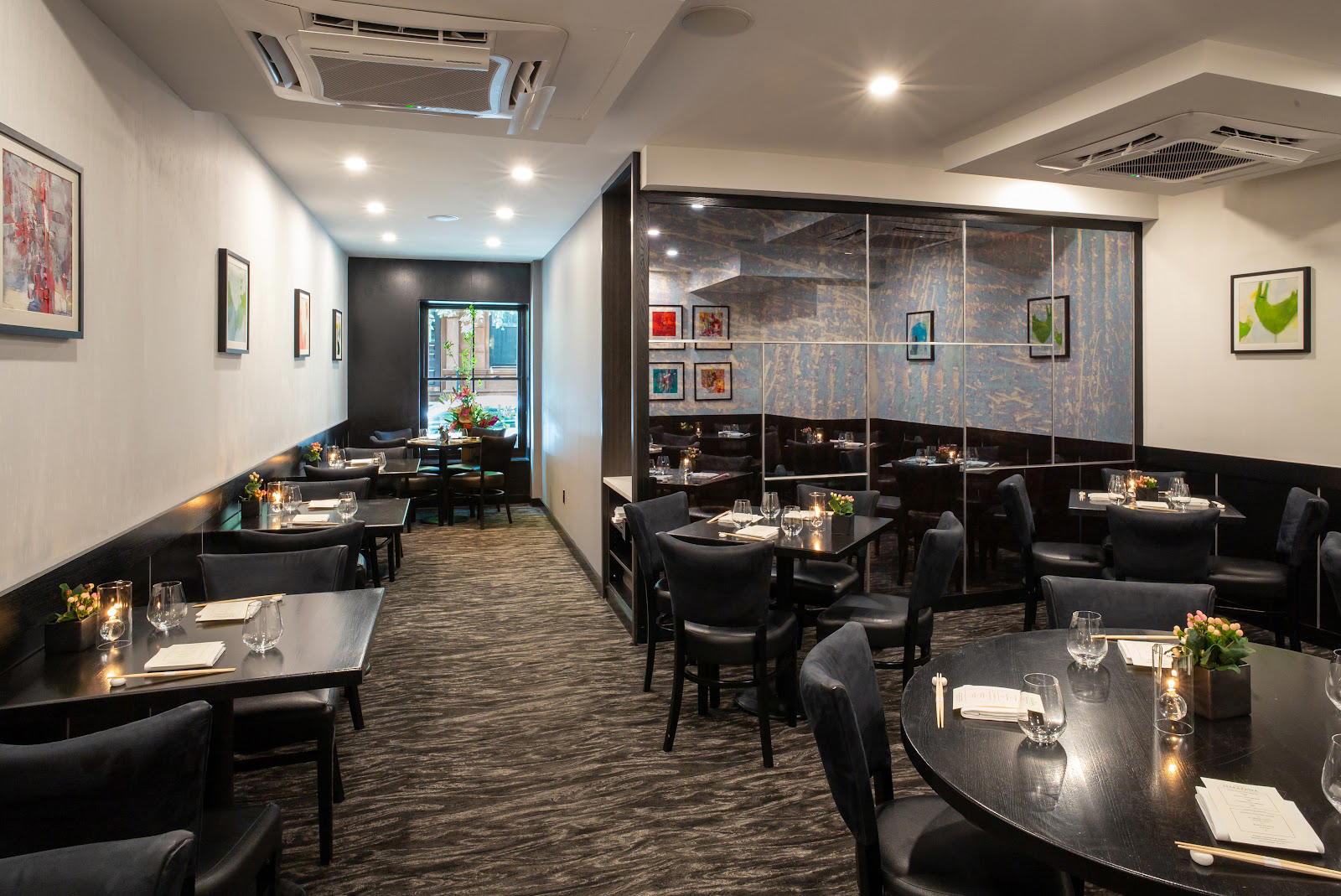
The ten-seat counter is the defining unit of premium omakase, not just in New York but across any city where the format has taken root. It enforces a particular kind of dining: no à la carte, no substitutions at will, no ambient noise cover from a large room. You sit, you watch, and the meal unfolds at the itamae's pace. At Sushi Nakazawa, that format is built around a 20-course omakase, presented across two to three hours. The room itself reinforces the register: dark wood, gold accents, marble counter, leather stools. It is a second location, the original having established the template, and the design language here reads as a deliberate refinement rather than a replication.
The sourcing approach straddles two logics. Some fish comes from Japanese suppliers, maintaining the connection to Tsukiji-adjacent quality standards and specialty regional products. Other ingredients are sourced domestically, including Massachusetts sea scallop and other East Coast products that perform differently than their Japanese equivalents but offer seasonal freshness arguments of their own. This dual-sourcing model has become increasingly common across New York's serious omakase counters as chefs build relationships with American fishermen and farmers while keeping lines open to Japanese importers. It is a pragmatic evolution that reflects both supply-chain maturity and an interest in telling a more geographically complex story through the meal.
Wine program under Director Dean Fuerth adds a dimension that separates Sushi Nakazawa from counters that treat beverage as an afterthought. The list runs to 370 selections backed by 1,580 bottles of inventory, with particular depth in Champagne and Burgundy. For omakase specifically, those two regions are not arbitrary choices: the acidity and autolytic complexity of grower Champagne and the texture contrast of white Burgundy both pair logically with fatty fish and seasoned rice. The pricing sits at a $$$ tier based on the list's general markup, with many bottles crossing the $100 mark, and a $75 corkage fee for those who bring their own. Compared to the wine programs at counters like Masa, which operates at a considerably higher floor, or at more beverage-forward rooms like Sushi Noz, the Nakazawa list holds its own as a serious, curated accompaniment to the format.
Reinvention and Rank: How the Venue Has Moved
Editorial angle here is less about origin and more about trajectory. Moving from a broadly recommended position to a ranked slot in the Opinionated About Dining North America list, and then holding that rank across consecutive years, is a signal worth parsing. OAD rankings are assembled from critic and informed diner submissions, weighted by voter expertise, and they tend to reward consistency of execution rather than novelty. A counter that climbs in that system and holds position is one where the kitchen discipline has not slipped, the sourcing relationships have deepened, and the front-of-house operation has become reliable enough to maintain. General Manager Anthony Arvin and the floor team carry part of that burden, and the OAD trajectory suggests they are carrying it well.
Sushi Amane and Kosaka occupy adjacent territory, while Sushi Yasuda represents an earlier generation of New York sushi seriousness with a slightly different value proposition. Masa, at the very best of the price band, operates as a different category entirely. Nakazawa's positioning in the $$$ cuisine pricing range, described by OAD as typical for two courses but applicable here to the full omakase context, makes it more accessible than the absolute ceiling while still requiring commitment. That positioning is its own editorial statement: a counter where the technical standard is demonstrably high and the entry bar, while steep, is not the highest in the city.
The broader North American frame is also worth noting. The same OAD list that ranks Nakazawa includes serious omakase operations in other cities and countries. Sushi Masaki Saito in Toronto and Endo at The Rotunda in London demonstrate how the Japanese counter format has embedded itself in cities far from its origin. In that company, Nakazawa's consistent ranking signals that it is not trading on New York's general prestige but on the specific quality of what happens at the counter. For travelers building a comparative itinerary across the highest-ranked dining in the Americas and Europe, the OAD positions of Nakazawa, alongside tasting-format rooms like Lazy Bear in San Francisco, Alinea in Chicago, The French Laundry in Napa, Single Thread Farm in Healdsburg, Providence in Los Angeles, and Emeril's in New Orleans, provide a useful calibration of where the counter sits in a national hierarchy of serious dining.
Planning Your Visit
The Commerce Street location operates Tuesday through Sunday for both lunch (11:30 AM to 2:00 PM) and dinner (5:00 PM to 10:00 PM), with Monday service also running those same hours. The format is omakase; the counter seats ten. Reservations: Advance booking is expected given the seat count; check the venue's booking platform directly for current availability windows. Budget: Cuisine pricing at $$$ (OAD scale, $66 and above for a typical meal); wine program at $$$ with corkage at $75 per bottle if you choose to bring your own. Address: 23 Commerce St, New York, NY 10014. For wider planning in the city, see our full New York City restaurants guide, our full New York City hotels guide, our full New York City bars guide, our full New York City wineries guide, and our full New York City experiences guide.
Frequently asked questions
Does Sushi Nakazawa work for a family meal?
No. The format is a fixed 20-course omakase at $$$ cuisine pricing across ten seats on Commerce Street — a structure built for focused, course-by-course dining rather than flexible family-style eating. Children or guests uninterested in sitting through a multi-course sequence will find little accommodation here.
How would you describe the vibe at Sushi Nakazawa?
Dark wood and gold accents set a quietly confident tone at the marble counter, where the team operates with the kind of tidy, surgical precision that the Opinionated About Dining panel has ranked among North America's top 200 for three consecutive years. Conversation happens, but the room is organized around the counter and the itamae — not around ambient noise or showmanship.
What distinctions does Sushi Nakazawa have?
Sushi Nakazawa has received recognition including: Opinionated About Dining Top Restaurants in North America Ranked #189 (2025); WINE: Wine Strengths: Champagne, Burgundy, France Pricing: $$$ i Wine pricing: Based on the list\'s general markup and high and low price points:$ has many bottle….
What should I eat at Sushi Nakazawa?
The omakase is the only format on offer, and it is the point. Chef Daisuke Nakazawa trained under Jiro Ono, and the 20-course sequence draws on both Japanese sourcing and local ingredients — sumi ika with shiso and pickled plum, lightly torched kama toro, live Massachusetts sea scallop, and a fatty tuna handroll that closes the meal. The wine list runs to 370 selections with strength in Champagne and Burgundy, priced at $$$, with a $75 corkage fee if you bring your own.
What does dinner at Sushi Nakazawa typically cost?
Pricing at Sushi Nakazawa is listed as $$$$.
Peers in This Market
A short peer table to compare basics side-by-side.
| Venue | Cuisine | Price | Awards | Notes |
|---|---|---|---|---|
| Sushi NakazawaThis venue — the venue you are viewing | Traditional Japanese Omakase | $150–200 | 1 Michelin Star · Star Wine List | Not listed |
| Le Bernardin | French Seafood Fine Dining | $300–500 | 3 Michelin Stars · World's 50 Best #13 | French, Seafood |
| Atomix | Modern Korean Tasting Menu | $300–500 | 2 Michelin Stars · World's 50 Best #7 | Modern Korean, Korean |
| Masa | Seasonal Hokkaido Tempura Omakase | $150–200 | Tabelog 100 #34 | Sushi, Japanese |
| Per Se | French Fine Dining Tasting Menu | $300–500 | 3 Michelin Stars · World's 50 Best #40 | French, Contemporary |
| Eleven Madison Park | Contemporary Plant-Based Fine Dining | $300–500 | 3 Michelin Stars · World's 50 Best #4 | French, Vegan |
Recognition history
Dated appearances from independent guides and award organizations, with the underlying list record or original source where available.
Michelin 1 Star
Michelin
Star Wine List
Star Wine List
Opinionated About Dining Top Restaurants in North America Highly Recommended
Opinionated About Dining
Wine Spectator Best of Award of Excellence
Wine Spectator
World's Best Wine Lists Awards WBWL 3-Star
World's Best Wine Lists Awards
Full recognition history (14 entries)
Opinionated About Dining Top Restaurants in North America Ranked #189
Opinionated About Dining
Wine Spectator Best of Award of Excellence
Wine Spectator
World's Best Wine Lists Awards WBWL Category Winner
World's Best Wine Lists Awards
Michelin 1 Star
Michelin
Opinionated About Dining Top Restaurants in North America Ranked #181
Opinionated About Dining
World's Best Wine Lists Awards WBWL Category Winner
World's Best Wine Lists Awards
Opinionated About Dining Top Restaurants in North America Highly Recommended
Opinionated About Dining
World's Best Wine Lists Awards WBWL Category Winner
World's Best Wine Lists Awards
World's Best Wine Lists Awards WBWL 3-Star
World's Best Wine Lists Awards
Continue exploring
More in New York City
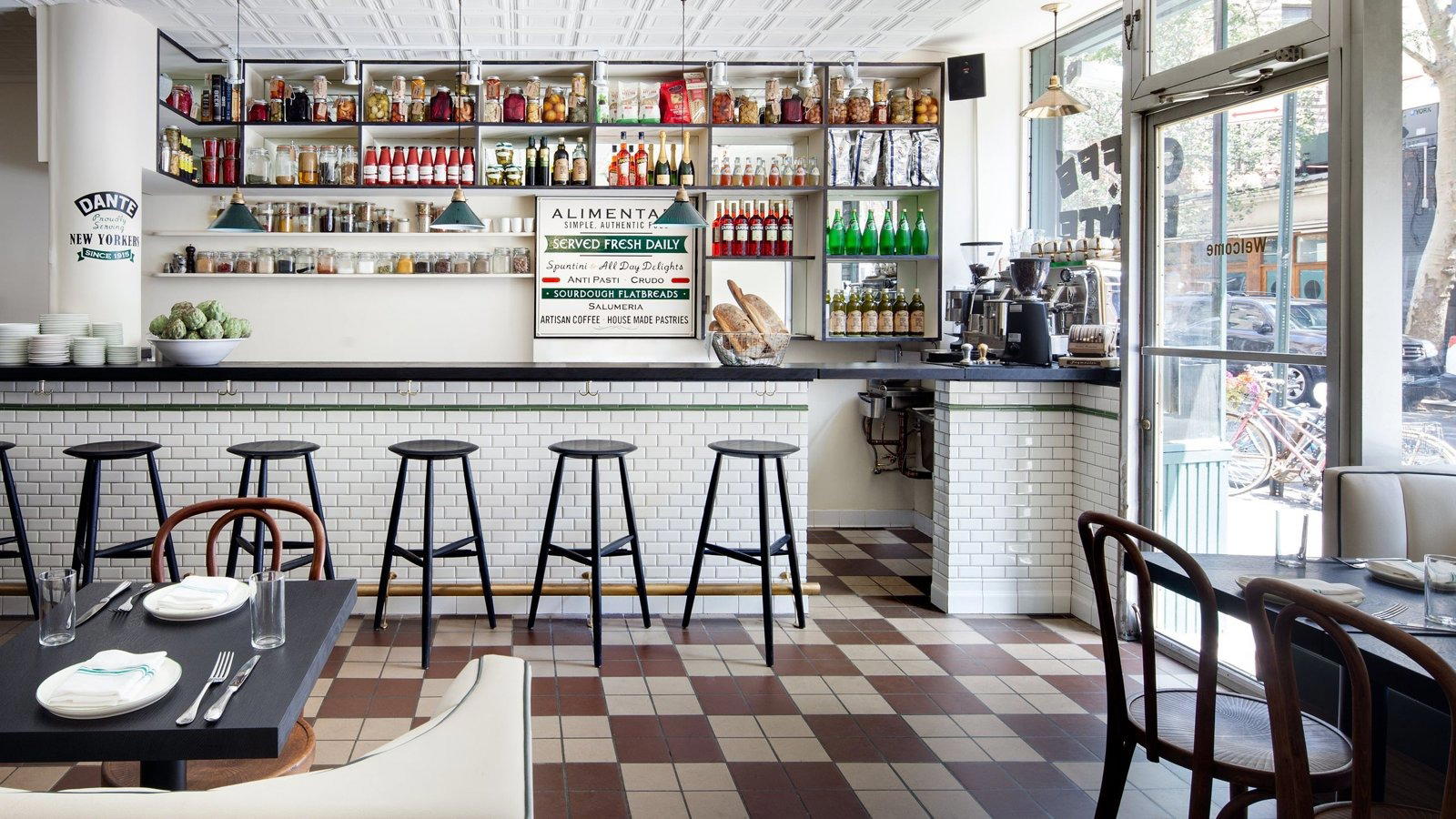
Restaurants in New York City
Browse all →
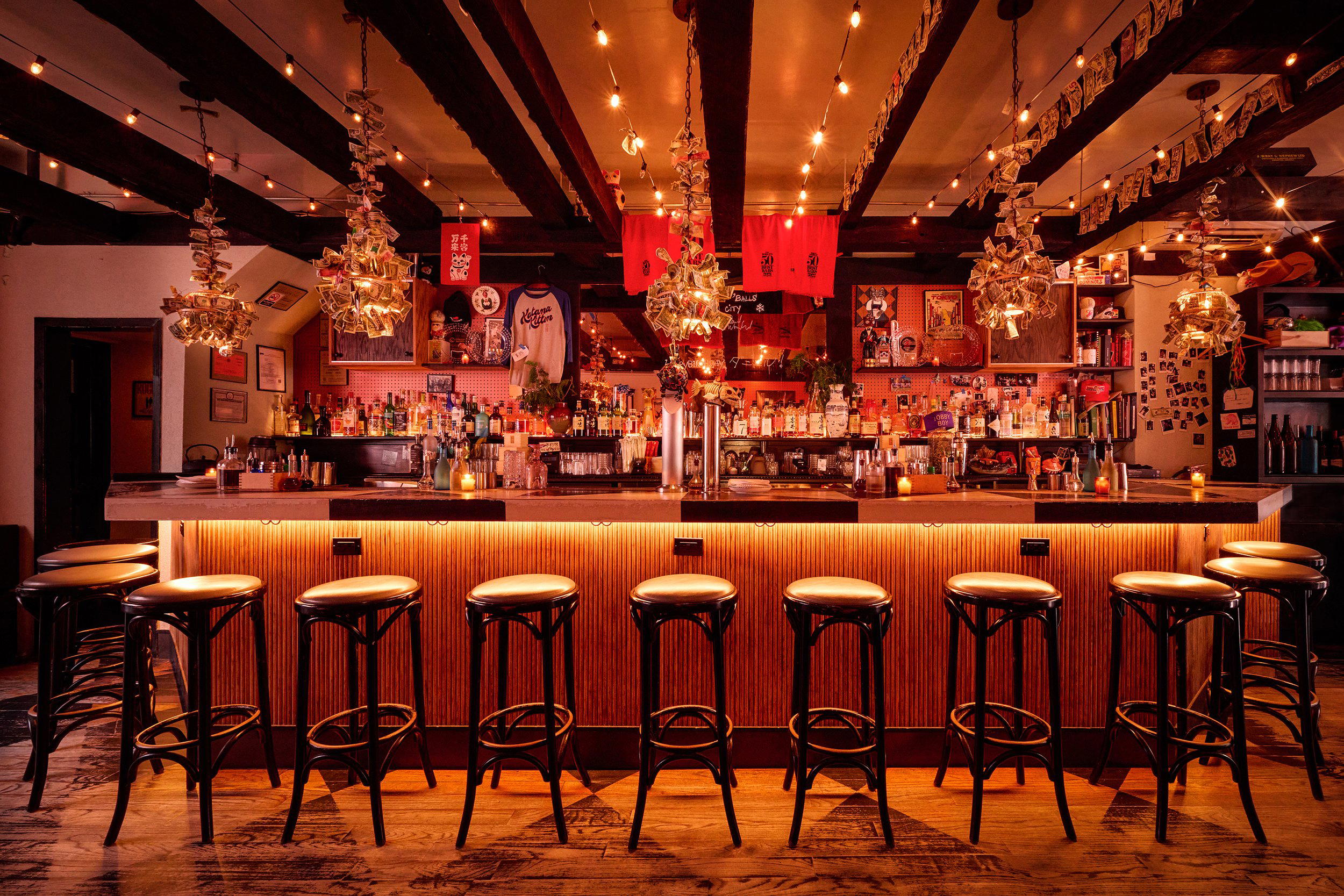
Bars in New York City
Browse all →
Hotels in New York City
Browse all →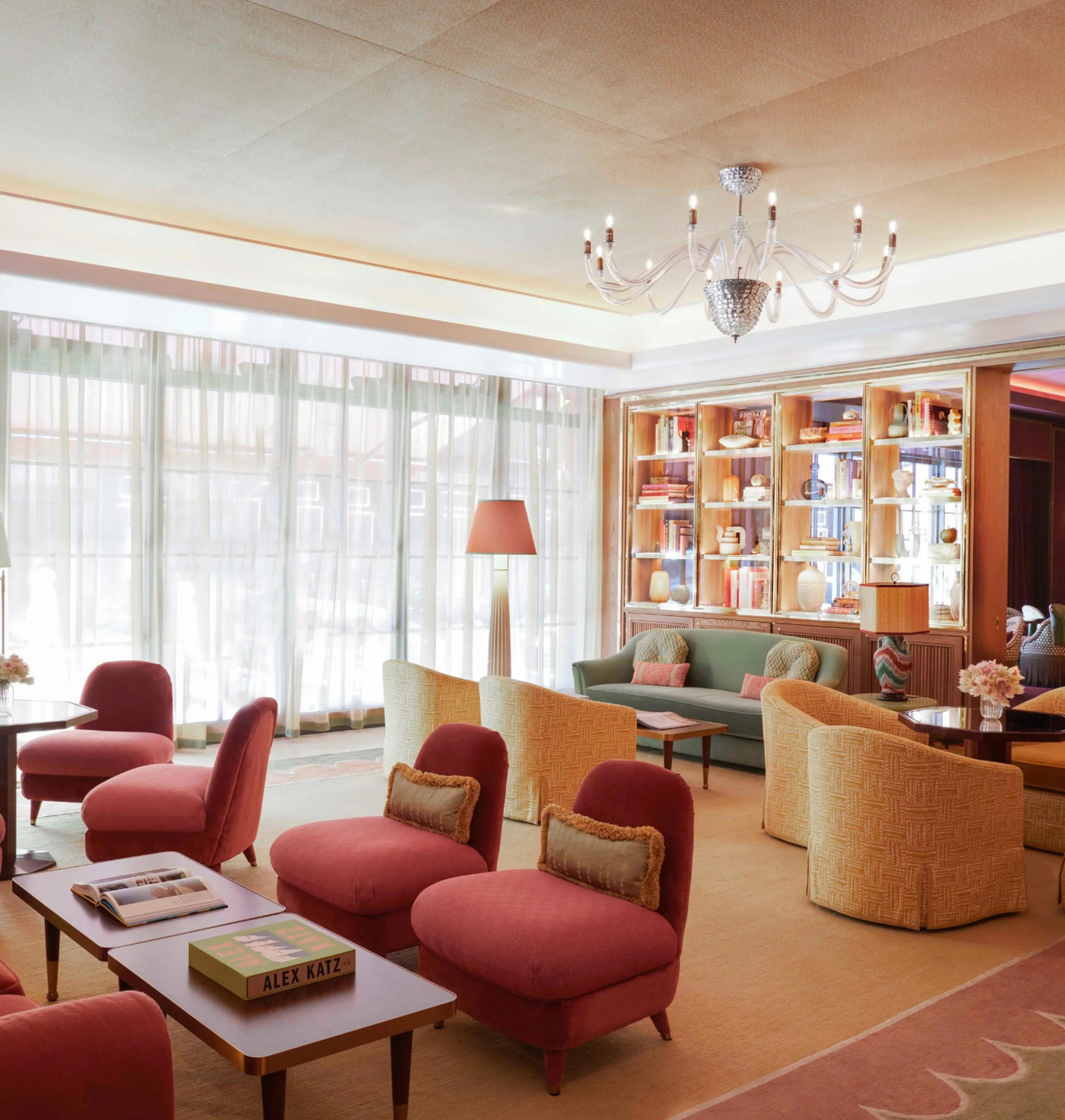





Details
- Elegant
- Intimate
- Sophisticated
- Date Night
- Special Occasion
- Chefs Counter
- Sake Program
- Omakase
- Counter Dining
- Sake
- Pescatarian Friendly
Current opening hours
- Monday
- 11:30 AM–2 PM, 5–10 PM
- Tuesday
- 11:30 AM–2 PM, 5–10 PM
- Wednesday
- 11:30 AM–2 PM, 5–10 PM
- Thursday
- 11:30 AM–2 PM, 5–10 PM
- Friday
- 11:30 AM–2 PM, 5–10 PM
- Saturday
- 11:30 AM–2 PM, 5–10 PM
- Sunday
- 11:30 AM–2 PM, 5–10 PM
Hours can change for holidays and private events. Last verified .
Tranquil and professional atmosphere with library-like quietness, elegant design, and focused counter seating.