St. Andreas

1 Michelin Star
Our verdict
A 2025 Michelin-starred restaurant inside Hotel Blauer Engel, St. Andreas operates as a small, focused room where the Unger brothers deliver seasonal menus of three to seven courses built around precise, ingredient-led cooking. Veal with beech mushrooms, gooseberry and parsley root typifies the kitchen's approach: regional produce structured with care. Price range is €€€€, placing it among Saxony's most serious dining destinations.

Pearl is the En Primeur Club membership app, where members save venues, book tables and use the concierge.
The menu
What to order
- Veal with beech mushrooms gooseberry and parsley root
A Michelin Star in an Unlikely Postcode
Germany's Michelin map has long rewarded cooking in unexpected locations. The Erzgebirge region, the forested mountain range straddling Saxony and the Czech border, is not the first area that comes to mind when discussing serious modern cuisine, yet the 2025 Michelin Guide found exactly that at Altmarkt 1 in Aue-Bad Schlema. Small-town hotel dining rooms across Germany have produced starred cooking before, the pattern at Waldhotel Sonnora in Dreis and Schanz in Piesport confirms that geographic remoteness and culinary ambition are not mutually exclusive, but each example still carries a degree of surprise. St. Andreas, operating inside the long-established Hotel Blauer Engel, belongs firmly to that tradition.
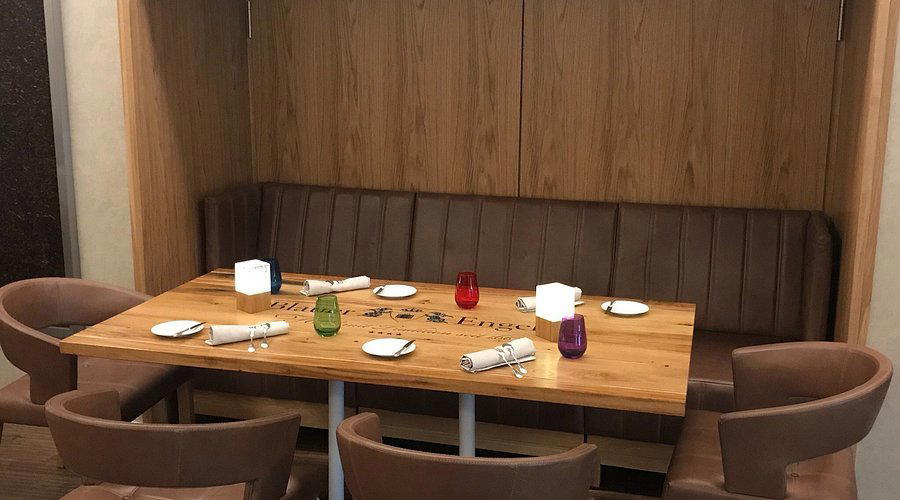
The room itself signals the kitchen's intent before the first course arrives. Minimalist decor and a considered, pared-back aesthetic replace the heavy ornament that older hotel restaurants in this part of Germany often carry. The result is an atmosphere that reads as calm and purposeful: the kind of space where attention moves naturally to the plate. For guests arriving from outside the region, the contrast between the industrial and post-industrial character of Aue-Bad Schlema and the measured elegance inside Hotel Blauer Engel is striking. For diners familiar with the German hotel-dining tradition, it is a recognisable register, executed with evident care.
Seasonal Produce as the Kitchen's Organizing Principle
The editorial angle on modern German fine dining has shifted considerably over the past decade. Where once the conversation centred on French technique as an imported framework, kitchens at the starred level now compete increasingly on their proximity to seasonal and regional raw materials. The most compelling argument a kitchen can make is not that it applies elaborate method, but that it starts with produce the surrounding landscape can actually supply. At St. Andreas, that argument is made through menus of three to seven courses structured around what the Erzgebirge and wider Saxony can deliver across the calendar year.
Documented dish of veal with beech mushrooms, gooseberry and parsley root is instructive. Beech mushrooms grow across central European deciduous forest; gooseberries and parsley root both suit the cooler, shorter growing seasons of this altitude. None of these ingredients signals exoticism. The combination reads instead as a confident exercise in extraction: finding the leading possible version of what is already here, then building a plate around the natural affinities between those components. The acidity of gooseberry against veal fat, the earthiness of parsley root against the texture of mushroom, are the kinds of relationships that emerge from cooking close to a specific geography over time. Kitchens working at this precision level, such as ES:SENZ in Grassau or JAN in Munich, share a similar commitment to the logic of place as a menu-building tool.
Range of three to seven courses is wider than most fixed-format tasting menus at this tier. That flexibility suggests the kitchen is calibrating the menu to seasonal availability and, potentially, to the preferences of guests who may be staying at the hotel rather than making a dedicated dining pilgrimage. It is a practical acknowledgment of the venue's dual role: a destination restaurant and an integral part of a working hotel in a mid-sized Saxon town.
The Unger Brothers and the Service Model
Hotel-restaurant pairings at the starred level in Germany have produced some of the country's most durable dining institutions. The division of labour between a front-of-house director and a head chef is standard architecture, but the particular character of St. Andreas rests in how that division operates. Claudius Unger manages the restaurant floor; Benjamin Unger heads the kitchen. The documented detail that the kitchen team, including the head chef, participates in serving and explaining dishes is worth noting not as a biographical flourish but as a structural choice with real implications for how the meal is experienced.
When the person who made a dish brings it to the table, the explanation carries a different weight. The gap between kitchen intent and table understanding closes. This format has gained traction at a number of creative European restaurants, CODA Dessert Dining in Berlin operates on a similar principle of total team engagement, and it tends to reflect kitchens where the food is genuinely complex enough to require translation, and where that translation is considered part of the work. At St. Andreas, with meticulously presented courses that combine regionally specific ingredients in precise relationships, the approach is clearly earned rather than theatrical.
Where St. Andreas Sits in the German Fine Dining Tier
A single Michelin star, awarded in 2025, places St. Andreas in the broad middle tier of Germany's recognised fine dining scene. The country's starred cohort now includes operations at very different scales and price points. At the upper end, kitchens such as Aqua in Wolfsburg, Vendôme in Bergisch Gladbach, and Victor's Fine Dining by Christian Bau in Perl operate at three stars with the full apparatus of extended tasting menus and large brigade kitchens. Schwarzwaldstube in Baiersbronn and Restaurant Haerlin in Hamburg represent the two-star tier with long track records in their respective regions. St. Andreas, as a newly starred room in a non-metropolitan location, represents a different proposition: serious, focused, and operating at €€€€ pricing without the scale or profile of its multi-starred peers.
The €€€€ price designation puts it at the same tier as Germany's most ambitious restaurant rooms. That positioning is meaningful in Aue-Bad Schlema, a town whose economic history is shaped by uranium mining and post-reunification restructuring rather than tourism infrastructure. The restaurant is making a case for fine dining as a local institution, not just as a draw for out-of-town visitors. Whether that case lands depends, in part, on the region's appetite for what St.
For comparison outside Germany, the format of a small, hotel-based, ingredient-led modern restaurant earning first-star recognition shares recognisable DNA with the kind of Nordic-influenced precision dining that kitchens like Frantzén in Stockholm or its international extension FZN by Björn Frantzén in Dubai represent at the very best of the format. St. Andreas operates at an earlier stage of that arc, but the organizing principles, restraint, seasonality, ingredient logic, are consistent with where the broader category is headed.
Planning a Visit
St. Andreas is located at Altmarkt 1, 08280 Aue-Bad Schlema, within Hotel Blauer Engel. At €€€€ pricing with a 2025 Michelin star, advance booking is advisable; the dining room is small by design, which means availability can tighten quickly around peak periods. Aue-Bad Schlema sits in the western Erzgebirge, accessible from Chemnitz by road or regional rail, with Chemnitz itself connected to Leipzig and Dresden. Guests travelling from outside Saxony may consider an overnight stay at Hotel Blauer Engel to make the journey worthwhile. For those building a wider Saxon dining itinerary, Lotters Wirtschaft - Tausendgüldenstube represents the town's alternative dining register, grounded in country cooking rather than modern fine dining. EP Club's full Aue-Bad Schlema restaurants guide covers the broader dining picture, while the hotels guide, bars guide, wineries guide, and experiences guide complete the picture for a longer stay in the region.
Frequently asked questions
What style of cooking does St. Andreas do?
St.
What's the address for St. Andreas?
St. Andreas is located at Altmarkt 1, 08280 Aue-Bad Schlema, Germany, Aue - Bad Schlema.
What's St. Andreas known for in terms of accolades?
St. Andreas has received recognition including: Michelin 1 Star (2025); The long-established Hotel Blauer Engel is home to this small restaurant run by the dedicated and highly skilled Unger brothers. Claudius manages the restaurant floor while head chef Benjamin crafts a creative season….
What's the must-try dish at St. Andreas?
The 2025 Michelin Guide singles out veal with beech mushrooms, gooseberry and parsley root as a representative plate from Benjamin Unger's kitchen. The combination signals the menu's direction: native foraged and seasonal produce paired with classical protein, calibrated across three to seven courses at €€€€ pricing. Members of the kitchen team serve the dishes themselves and explain each plate, which adds context that a conventional front-of-house handoff rarely provides.
Price Lens
| Venue | Cuisine | Price | Awards | Notes |
|---|---|---|---|---|
| St. AndreasThis venue (the venue you are viewing) | Modern Creative German | $100–150 | 1 Michelin Star | Not listed |
| Schwarzwaldstube | Modern French Fine Dining | $150–200 | 3 Michelin Stars · World's 50 Best #47 | French, Classic French |
| Aqua | Not listed | Not listed | Michelin 3 Star | Contemporary German, Italian/Japanese, Creative |
| CODA Dessert Dining | Dessert-Inspired Fine Dining | $200–300 | 2 Michelin Stars · World's 50 Best #79 | Creative |
| Tantris | Modern French, French Contemporary | Not listed | Michelin 2 Star | Not listed |
| Vendôme | Modern German Haute Cuisine | $200–300 | 2 Michelin Stars · World's 50 Best #47 | Modern European, Creative |
Recognition history
Dated appearances from independent guides and award organizations, with the underlying list record or original source where available.
Michelin 1 Star
Michelin
Full recognition history (3 entries)
Michelin 1 Star
Michelin
Michelin 1 Star
Michelin
Continue exploring
More in Aue - Bad Schlema
Restaurants in Aue - Bad Schlema
All restaurants in Aue - Bad Schlema →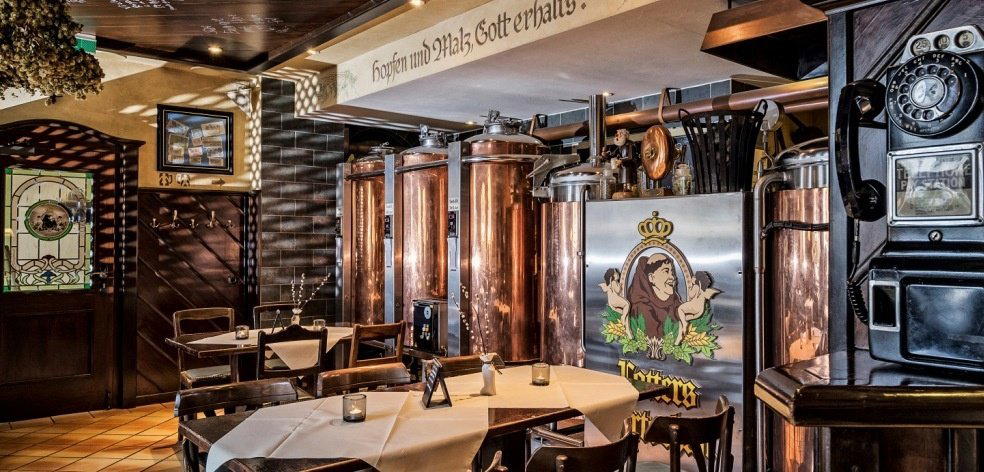
Hotels in Aue - Bad Schlema
Browse all →
Wineries in Aue - Bad Schlema
Browse all →
St. Andreas
The wine
- Wine program
- Deep wine list
- Extensive wine list
Details
- Elegant
- Modern
- Intimate
- Sophisticated
- Romantic
- Date Night
- Special Occasion
- Hotel Restaurant
- Extensive Wine List
- Tasting Menu
- Vegetarian Friendly
Current opening hours
- Monday
- Closed
- Tuesday
- Closed
- Wednesday
- 5 PM–12 AM
- Thursday
- 5 PM–12 AM
- Friday
- 5 PM–12 AM
- Saturday
- 5 PM–12 AM
- Sunday
- Closed
Hours can change for holidays and private events. Hours as of .
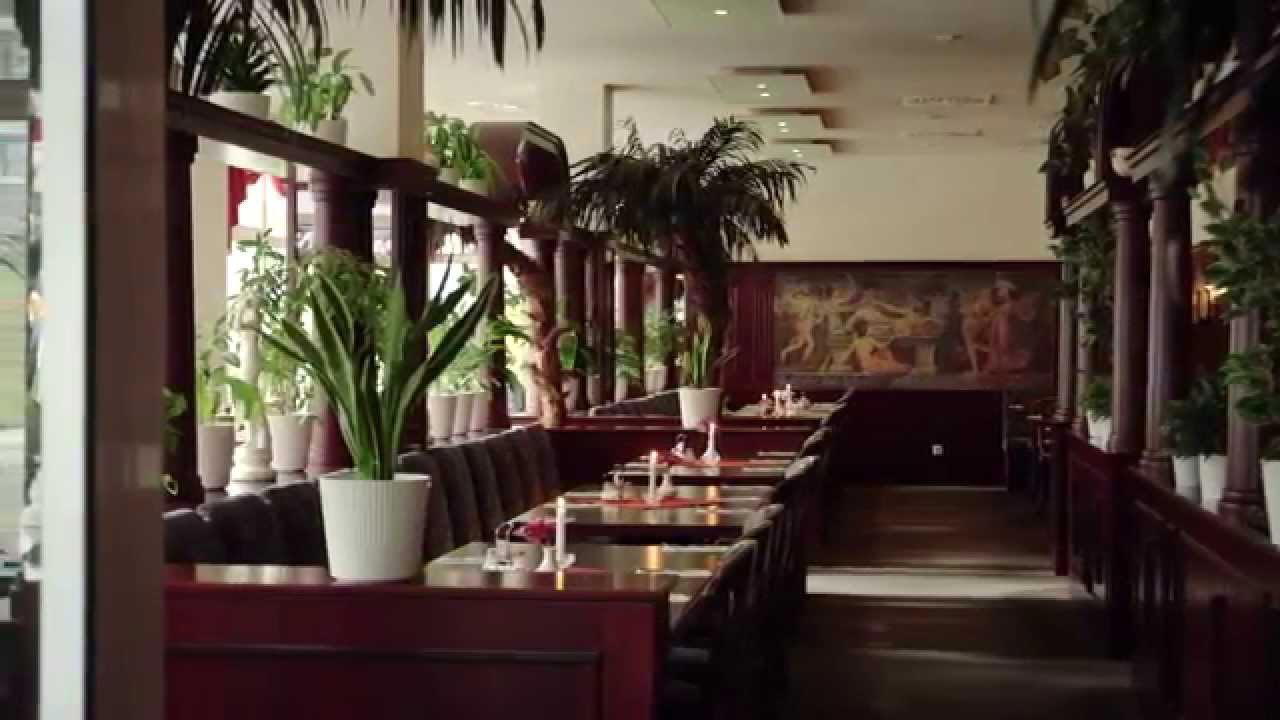
Modern minimalist decor with elegant, inviting setting featuring open fire and candlelight for a romantic atmosphere.