Our verdict
The Spinnerei complex in Leipzig's Plagwitz district is one of Germany's most significant post-industrial cultural sites, a former cotton mill turned sprawling gallery and creative campus that reshapes how visitors understand the city's art scene. Set within a 19th-century red-brick complex spanning several hectares, it sits at the intersection of Leipzig's contemporary art identity and its industrial past, making it a reference point for understanding the city beyond its concert halls and coffee houses.

Pearl is the En Primeur Club membership app — saves, bookings, and concierge access live there. Same editors, same standards.
- Address
- Spinnereistraße 7, 04179 Leipzig, Germany
- Phone
- +49 341 49800
- Hours
- Mon ClosedTue–Sat 11 AM–6 PMSun Closed
- Website
- spinnerei.de
- Directions
- Get directions
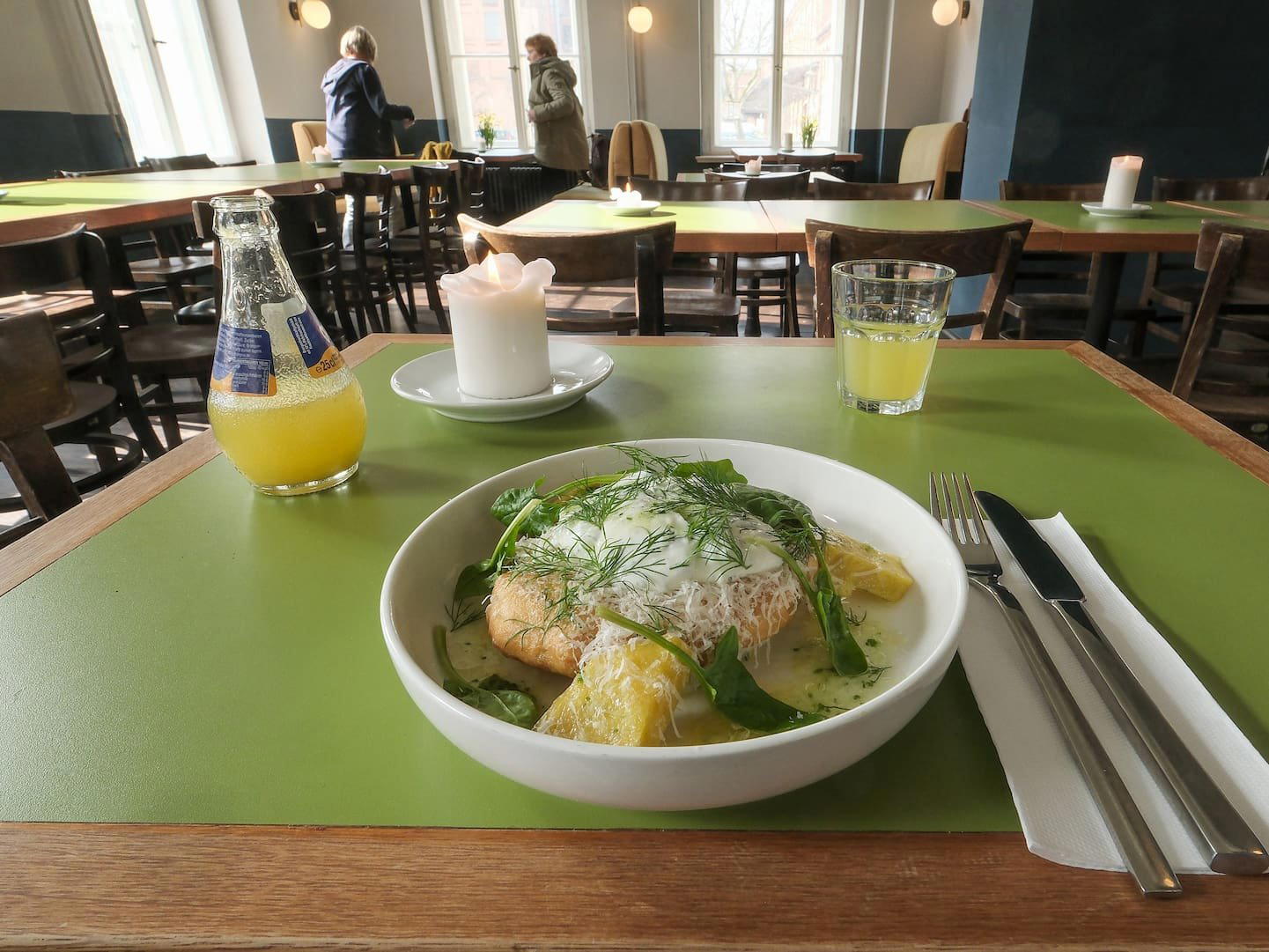
Where Leipzig's Industrial Past Meets Its Contemporary Art Identity
Spinnerei BetriebsgesellschaftmbH is a café in Leipzig's Plagwitz district, set within a former cotton mill arts complex at Spinnereistraße 7. Plagwitz, the western working-class district that Leipzig spent decades quietly reinventing, offers a different entry point into the city than the historic centre's Romanesque churches or the Augustusplatz concert halls. Along the Karl-Heine-Kanal, the neighbourhood's former textile mills and warehouses have been steadily repurposed since reunification, and no single site captures that transformation more completely than the Spinnerei complex at Spinnereistraße 7. Approaching the site, the scale registers first: a cluster of red-brick factory buildings covering roughly ten hectares, their mill chimneys and iron-framed windows unchanged since the 19th century. What operates inside those walls today is something German cities have attempted in various forms since the 1990s, but rarely with this concentration or staying power.
The Spinnerei opened as a cotton-spinning factory in 1884 and became, at its peak, one of the largest in continental Europe. After reunification and the collapse of East Germany's textile industry, the complex faced the fate common to industrial infrastructure across Saxony: vacancy, structural deterioration, and uncertain futures. What distinguished Plagwitz from comparable industrial districts in other eastern German cities was the arrival of artists attracted by large, cheap floor space during the 1990s and early 2000s. That early wave of studio occupants seeded what has since grown into a permanent cultural ecosystem, one that includes galleries, artist studios, a cinema, a restaurant, and event spaces distributed across the factory buildings. Leipzig's international art reputation, built partly around the New Leipzig School painters whose work drew collector attention in the 2000s, was incubated substantially within complexes like this one. The Spinnerei is where that reputation has a physical address.
A Cultural Campus, Not a Single Destination
Visitors arriving expecting a single gallery or a defined museum format will need to recalibrate. The Spinnerei operates more like a small city within a city: multiple independent galleries occupy separate buildings, studio artists work on-site, and the rhythm of the complex shifts depending on whether Leipzig is hosting one of its gallery weekends or a quieter mid-week period. The gallery weekends, held several times a year and timed partly around art fair calendars, draw concentrated visitor traffic and open otherwise private studio spaces. Outside those events, the complex rewards a slower, more exploratory approach. Galleries here include established names in the Leipzig contemporary art scene, and the programming tends toward the serious end of the market rather than commercial crowd-pleasers.
For those cross-referencing the Leipzig dining scene with a visit to Plagwitz, the practical geography matters. The Spinnerei sits roughly four kilometres west of the city centre, accessible by tram on the Line 14 route. The immediate neighbourhood around Spinnereistraße has its own dining options, though Leipzig's more concentrated restaurant offer remains centred further east. Kuultivo (Modern Cuisine) and Stadtpfeiffer (Creative) both operate in the city's more central zones and represent the upper tier of Leipzig's restaurant scene, while the Spinnerei neighbourhood itself lends itself better to afternoon visits combined with the kind of casual eating the surrounding streets offer.
Leipzig's Art Scene in European Context
Germany's dining circuit runs through cities like Hamburg, Munich, and Berlin, with addresses such as Restaurant Haerlin in Hamburg, JAN in Munich, and CODA Dessert Dining in Berlin anchoring different ends of the conversation. Leipzig sits outside that primary circuit but has developed a distinct cultural identity that attracts visitors who are not simply chasing Michelin credentials. The Spinnerei is a large part of why. Where other German cities have attempted post-industrial regeneration through government-backed cultural institutions or flagship museum builds, Leipzig's transformation in Plagwitz was driven primarily by the economics of cheap space and the self-organising energy of artists and gallerists who arrived before the district had any official cultural strategy. The result feels less planned and more durable than many comparable projects across Europe.
That organic character is partly what differentiates Leipzig from Dresden, its Saxony neighbour, which rebuilt its historic centre with considerable reconstruction investment and markets itself primarily on Baroque architecture and the Semperoper. Leipzig's draw is more diffuse and more contemporary. The Spinnerei sits within a network of cultural sites that includes the Grassi Museum complex, the Museum der Bildenden Künste, and a live music scene anchored by venues that have been running since the 1990s. Visitors building a multi-day programme around the city's art and dining offer will find that Plagwitz functions leading as either a morning or late afternoon destination, with the central city's dining options accessible by tram for lunch or dinner.
Planning a Visit to Spinnerei
The complex is generally accessible during gallery opening hours, which concentrate on afternoons through the week and extend on gallery weekend events. The physical address at Spinnereistraße 7 is direct to reach from Leipzig Hauptbahnhof via the tram network, with journey times under twenty minutes. Leipzig itself is well connected by rail, sitting on the ICE network with direct services from Berlin in approximately one hour and fifteen minutes and from Frankfurt in roughly two hours and fifteen minutes. For visitors combining the Spinnerei with the broader Leipzig cultural programme, the city's compact centre means that most gallery appointments can be managed without a car. Plagwitz sits just far enough from the tourist centre to feel like a neighbourhood rather than an attraction, which is precisely its appeal.
Leipzig's dining range runs from neighbourhood bistros through to the creative tasting menu format at Stadtpfeiffer, and the city has a growing offer of international addresses including 997 Sushi Restaurant, Addis Café, and Alfa Restaurant. Those looking to extend their Germany itinerary beyond Leipzig will find the country's more established fine dining addresses at places like Schwarzwaldstube in Baiersbronn, Aqua in Wolfsburg, Vendôme in Bergisch Gladbach, Victor's Fine Dining by christian bau in Perl, ES:SENZ in Grassau, Schanz in Piesport, and Waldhotel Sonnora in Dreis. For international reference points, Le Bernardin in New York City and Lazy Bear in San Francisco represent the kind of programme-led dining that shares a spirit of serious intent with Leipzig's gallery-and-studio culture, even if the format is entirely different.
Frequently asked questions
Where exactly is Spinnerei BetriebsgesellschaftmbH?
Spinnerei BetriebsgesellschaftmbH is located at Spinnereistraße 7, 04179 Leipzig, Germany, Leipzig.
How many galleries and artist studios are based at the Spinnerei in Leipzig's Plagwitz district?
The Spinnerei at Spinnereistraße 7 in Leipzig houses around a dozen galleries alongside more than 100 artist studios spread across its former cotton mill buildings — making it one of the largest concentrations of contemporary art production space in Germany. The campus model means visitors encounter working studios and exhibition spaces side by side, which distinguishes it from a conventional gallery district. Gallery weekend events, held several times a year, open the complex more widely and draw visitors from across Saxony and beyond.
What dish is Spinnerei BetriebsgesellschaftmbH famous for?
The Spinnerei in Leipzig is not a restaurant or food venue — it is a large-scale art and cultural complex occupying a former cotton mill on Spinnereistraße in the Plagwitz district. Its reputation rests on its gallery programming and resident artist studios rather than any culinary output. Visitors looking for dining should explore the broader Plagwitz neighbourhood, which has developed a range of independent cafés and restaurants around the complex.
Is Spinnerei BetriebsgesellschaftmbH reservation-only?
The Spinnerei complex in Leipzig generally operates on an open-access basis during gallery hours, concentrated on weekday afternoons and extended during the site's periodic gallery weekend events. Individual studio visits or specific exhibition openings may require separate coordination with resident galleries. Checking directly with the Spinnereistraße 7 campus ahead of a visit is advisable during high-demand event periods.
A Tight Comparison
Comparable venues nearby, for context on price, style, and recognition.
| Venue | Cuisine | Price | Notes |
|---|---|---|---|
| Spinnerei BetriebsgesellschaftmbHThis venue — the venue you are viewing | Café in Arts Complex | Not listed | Not listed |
| Lutherburg | Traditional German Gaststätte | $20–30 | Eutritzsch, Traditional German Gaststätte |
| Small Treats Cafe & Bistro | Cafe Bistro | Not listed | Schleußig, Cafe Bistro |
| Kenkō Burger | Asian Fusion Burgers | $10–20 | Anger-Crottendorf, Asian Fusion Burgers |
| Gaststätte »Am Kanal« | Traditional German Gaststätte | $10–20 | Lindenau, Traditional German Gaststätte |
| Don Kichot | Turkish Street Food - Kumpir Specialists | $10–20 | Lindenau, Turkish Street Food - Kumpir Specialists |
Continue exploring
More in Leipzig
Restaurants in Leipzig
Browse all →
Bars in Leipzig
Browse all →
Hotels in Leipzig
Browse all →

Details
- Industrial
- Trendy
- Casual Hangout
- Historic Building
- A La Carte
Current opening hours
- Monday
- Closed
- Tuesday
- 11 AM–6 PM
- Wednesday
- 11 AM–6 PM
- Thursday
- 11 AM–6 PM
- Friday
- 11 AM–6 PM
- Saturday
- 11 AM–6 PM
- Sunday
- Closed
Hours can change for holidays and private events. Last verified .
Trendy and creative atmosphere in a vast industrial factory setting with artistic energy.