
Tabelog 100 #10
Our verdict
Spice Bar Kozaburo belongs to Tokyo’s smaller, ingredient-led spice rooms rather than the city’s grander tasting-menu tier. Its Tabelog 100 selection for Asian and ethnic cuisine in Tokyo, compact counter-and-table format, and Indian-leaning dining-bar identity place it in a lane where Japanese produce, spice technique, sake, shochu, and wine share the same conversation.

Pearl is the En Primeur Club membership app, where members save venues, book tables and use the concierge.
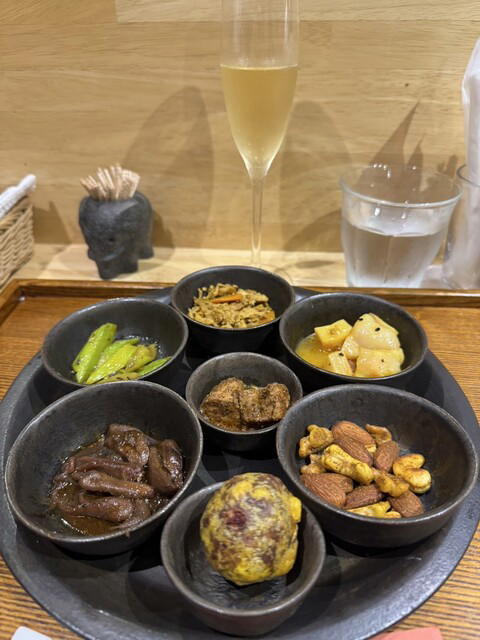
The menu
What to order
- Shark curry
- Chicken curry
- Half & half spice curry sets
Tokyo sets the tempo before dinner. Away from the city’s loudest dining corridors, Spice Bar Kozaburo fits a Tokyo pattern that has grown more interesting in recent years: spice cooking treated not only as quick lunch, but as a compact evening format with drinks, close attention, and a kitchen shaped by a broader Asian-ethnic frame. Its Tabelog 100 recognition for Asian cuisine and ethnic cuisine in Tokyo in 2024, after earlier selections in the same field and a curry selection in 2020, matters because Tabelog’s Hyakumeiten lists are especially useful in Japan for categories Michelin often under-represents.
Tokyo’s serious spice-led and Asian-ethnic scene often splits two ways: fast, inexpensive lunch turnover, and smaller bar-like rooms where spice gets attention usually reserved for the city’s other meticulous dining formats. Spice Bar Kozaburo belongs to the second camp. Its 2024 Tabelog Hyakumeiten recognition, with a listed score of 3.68, matters because Tabelog’s category lists are especially useful in Japan for fields that international guides can under-represent.
Asian, ethnic, dining bar, and Indian in a Tokyo frame
Read this not as a conventional restaurant transplanted whole from elsewhere, but as a Tokyo spice bar. Its public category listing spans Asian, ethnic, dining bar, and Indian: a revealing mix that centres spice technique without locking the meal into a single script.
Imported cuisines often sharpen in Tokyo when filtered through small-format discipline. The city’s best compact restaurants can shift mood without acting like banquet rooms, and Spice Bar Kozaburo sits naturally in that register. The appeal is less about spectacle than about a focused meal in which category, pacing, and atmosphere carry equal weight.
The dining-bar designation is important. It places the restaurant closer to a compact evening address than a simple quick stop, and it helps explain why the listing feels useful for travellers looking beyond the most familiar Tokyo dining circuits. For visitors used to spice-led food as a fast, casual meal, this is the more local reading.
The comparison set clarifies it. Chuka Chotoku and Hoei occupy different registers, while Espresso Factory, Kikumi Senbei Sohonten, and Nezu no Taiyaki show how Tokyo supports small specialists, not only destination dining rooms. Spice Bar Kozaburo belongs to that culture, but with a fuller evening identity than a snack counter or cafe. Tokyo’s serious eating is not confined to its most familiar high-end formats.
A compact room changes the stakes
Small Tokyo restaurants often manufacture intimacy in copy; here, the format itself does much of the work. The experience is better understood as exacting rather than formal, because a focused room and a spice-led kitchen leave little margin for drift. The sweet spot is likely diners who want concentration rather than noise.
The room’s scale also matters for the food. This is not a corporate entertaining address or hidden salon, but a compact Tokyo restaurant in a category where aroma, pacing, and drink choice need a steady hand. For visitors, it counters Tokyo’s more choreographed reservations: serious without luxury-dining theatre.
By 2024, the more interesting addresses in this field are no longer proving Tokyo likes spice-led cooking; that case is closed. They ask what happens when spice cooking enters the same compact, ingredient-conscious ecosystem as other small Tokyo dining formats.
That is why Tabelog Hyakumeiten recognition is a meaningful trust signal. In a city with dense review culture and sharp category loyalty, selection in 2024 across Asian and ethnic cuisine suggests more than novelty. It places the restaurant in a competitive Tokyo field where diners compare flavour intensity, balance, value, consistency, and how well the room fits the food.
Where it fits in a Tokyo eating itinerary
For an EP Club reader, the question is less “Is this a famous Tokyo dinner?” than “What kind of Tokyo does this unlock?” The answer is small rooms, hybrid categories, and techniques filtered through Japanese service habits. It suits an itinerary already including other precise Tokyo dining formats because it shows another side of the city’s precision: spice handled with restraint, not reduced to heat.
Tokyo rewards deliberate planning. Away from hotel-heavy corridors, dinner here feels different from a night built around the city’s most obvious destination districts. Travellers should treat it as a Tokyo detour, not merely a convenience booking. The payoff is context: a meal linking the city’s appetite for Indian and broader Asian cooking with its gift for small, tightly run formats.
Readers mapping a broader restaurant run can place it beside other Tokyo entries in Our full Tokyo restaurants guide, from casual spice-led rooms to counter-led formats across the city. For a lighter contrast, other Tokyo cafes show a different, design-led side of the city’s casual dining culture.
For the wider trip, separate categories: Our full Tokyo hotels guide for where to stay, Our full Tokyo bars guide for late drinks, Our full Tokyo wineries guide for wine-focused stops, and Our full Tokyo experiences guide for cultural programming. Beyond Tokyo, useful contrasts include other dining rooms elsewhere in Japan. Across the Pacific, Japanese food culture travels differently outside Japan, but Spice Bar Kozaburo is best understood first in its Tokyo context.
The appeal is specificity without grandstanding. Spice Bar Kozaburo is not competing with Tokyo’s luxury counters on ceremony. It belongs to a grounded register: a small Tokyo room where spice technique, Asian and Indian references, and dining-bar pacing create a meal native to contemporary Tokyo rather than imported whole.
The Quick Read
Comparable venues to place this listing in its category.
| Venue | Cuisine | Price | Awards | Notes |
|---|---|---|---|---|
| Spice Bar KozaburoThis venue (the venue you are viewing) | Spice-focused Indian-style curry bar | $30–50 | Tabelog 100 #10 | Not listed |
| Chuka Chotoku | Neighborhood Chinese dumpling & fried rice house | $10–20 | Tabelog 100 #6 | JPY 1,000 - JPY 1,999 - JPY 999 |
| Hoei | Shanghai-Sichuan Chinese | $50–100 | Tabelog 100 #98 | JPY 8,000 - JPY 9,999 JPY 5,000 - JPY 5,999 |
| Espresso Factory | Not listed | $1–10 | Tabelog 100 #41 | JPY 999 - JPY 999 View spending breakdown |
| Kikumi Senbei Sohonten | Japanese senbei shop | $1–10 | Tabelog 100 #91 | JPY 999 - JPY 999 View spending breakdown |
| Nezu no Taiyaki | Traditional Taiyaki Shop | $1–10 | Tabelog 100 #2 | JPY 999 View spending breakdown |
Recognition history
Dated appearances from independent guides and award organizations, with the underlying list record or original source where available.
Tabelog 100 #10 · No. 10
Tabelog · Tabelog 100 - Asian cuisine / Ethnic cuisine - TOKYO - 2024
Continue exploring
More in Tokyo
Restaurants in Tokyo
All restaurants in Tokyo →

Bars in Tokyo
All bars in Tokyo →




Details
- Cozy
- Intimate
- Lively
- Solo
- After Work
- Casual Hangout
- Family
- Date Night
- Chefs Counter
- Standalone
- Beer Program
- A La Carte
- Counter Dining
- Small Plates
- Beer
- Wine
- Sake
- Vegetarian Friendly
A small, non-smoking neighborhood spice bar with about a dozen seats, counter-focused and relaxed; guests come for carefully prepared spice-centric plates, finishing with a light curry in a casual, welcoming atmosphere that works for both solo diners and families.