Sokolowski's University Inn

James Beard Award America's Classics
Our verdict
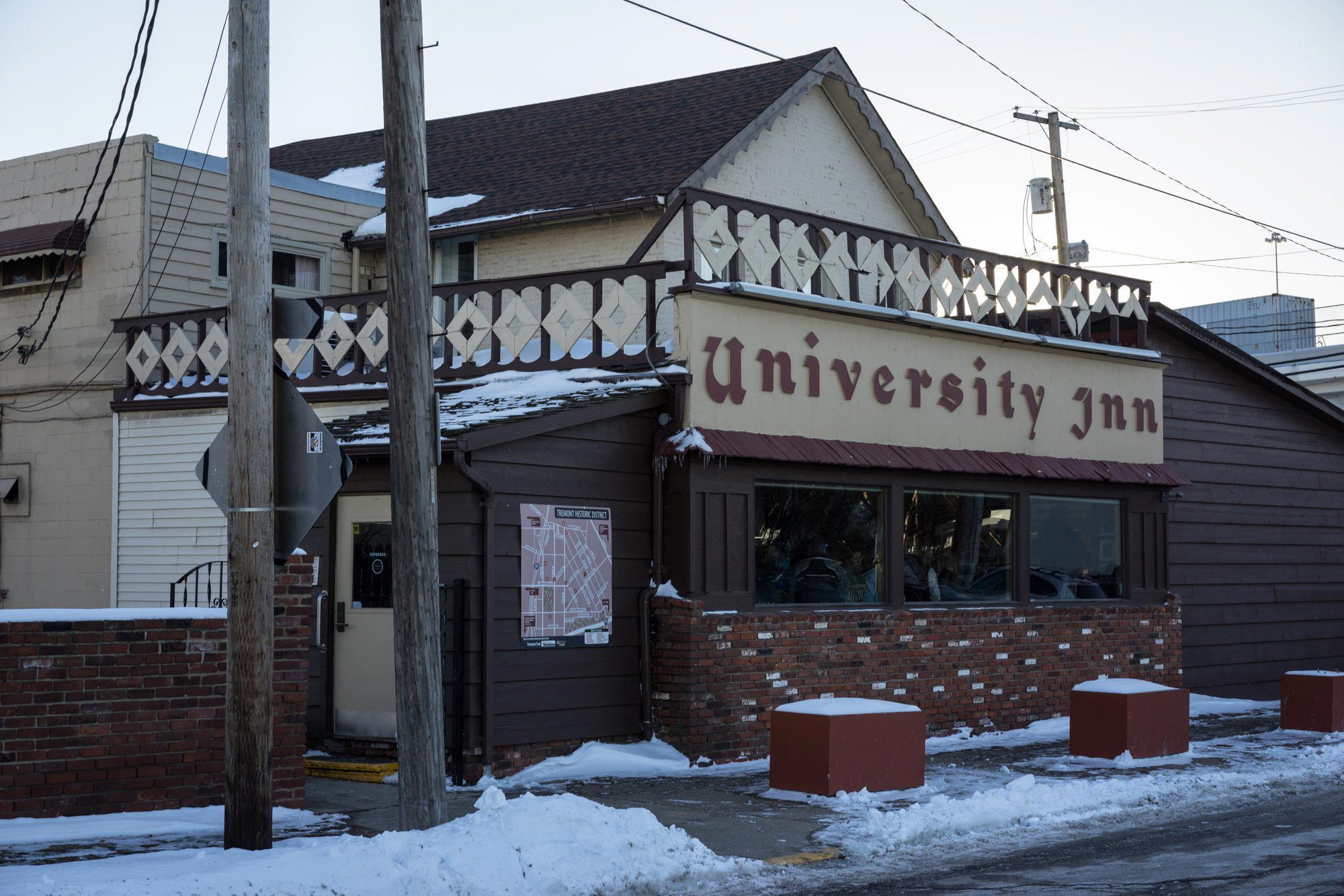
Sokolowski's University Inn has held its ground on University Road in Cleveland's Tremont-adjacent hillside for decades, serving the kind of Polish-American cafeteria food that once defined working-class Cleveland. The steam-table format, the pierogi, and the no-frills dining room signal something specific about the city's Central European immigrant heritage. It occupies a tier of Cleveland dining that resists trend cycles entirely.
- Address
- 1201 University Rd, Cleveland, OH 44113
- Website
- sokolowskis.com
- Directions
- Get directions
University Road and What It Tells You About Cleveland
There is a particular kind of American restaurant that functions less as a dining destination than as a community institution, and Sokolowski's University Inn on University Road sits firmly in that category. The address alone carries meaning: perched on a hillside above the industrial flats, a short distance from the arts district energy of Tremont and the older Polish neighborhoods that shaped this part of the city, the location reflects a Cleveland that predates the current wave of restaurant development. You arrive not through a curated dining district but through a neighborhood that has its own distinct, unself-conscious character. That approach changes the meal before you sit down.
Cleveland's food identity has diversified considerably in recent years, with cocktail programs at venues like Acqua di Dea and music-anchored hospitality at Beachland Ballroom and Tavern representing the city's more contemporary register. Sokolowski's operates in a different register entirely: it is the part of Cleveland's table that predates the branding era and has never felt the need to explain itself to a wider audience. That is, in itself, a form of confidence.
The Cafeteria Format as a Cultural Artifact
Polish-American steam-table dining is not a format that proliferates in contemporary restaurant guides. The cafeteria model, in which diners move along a line, point at what they want, and carry trays to communal or semi-communal tables, was the dominant format for immigrant community feeding in the industrial Midwest for much of the twentieth century. It was practical, affordable, and calibrated to the schedules and appetites of people who worked physically demanding jobs. Very few of those establishments survive into the present, and fewer still retain the format in anything close to its original form.
It is something closer to a working cafeteria that outlasted the industrial economy that created it. In that sense, a meal here is a form of food history that is genuinely difficult to access elsewhere in the region.
The food that defines the menu is the food of Central European immigrant kitchens adapted to American abundance: pierogi, stuffed cabbage, roast meats, potato-forward sides. These are dishes that reward neither novelty nor elaborate preparation but rather consistency and volume. The steam-table format demands that dishes hold, which means recipes developed over decades to perform well under those specific conditions. That is a form of culinary discipline that receives almost no critical attention, which is part of why Sokolowski's occupies an unusual position in the broader conversation about Cleveland dining. For more on how the city's dining scene has developed across different registers, see our full Cleveland restaurants guide.
Where It Sits Against Cleveland's Drinking and Eating Scene
Cleveland's current food and drink culture covers a wide range. Craft beer venues like Blue Sky Brews and hybrid concepts like Brewnuts represent the post-industrial creative economy version of the city's appetite. Sokolowski's represents the industrial economy version, untransformed. The two can coexist in a single afternoon itinerary, but they are pointing at different things about Cleveland's history and present simultaneously.
Compared to program-driven bars that attract regional attention, venues like Kumiko in Chicago or Bar Leather Apron in Honolulu, Sokolowski's competes on entirely different terms. The category of value it offers is not craft or technique in any contemporary sense but rather continuity and authenticity of tradition. In a national dining context where institutions that have operated for multiple generations in one family and one format are increasingly rare, that continuity carries its own weight. Consider similar heritage-forward venues like Jewel of the South in New Orleans, Julep in Houston, or Superbueno in New York City, each of which draws authority from a specific tradition rather than from novelty. Sokolowski's belongs to that tradition-anchored category, though its tradition is domestic and immigrant rather than cocktail-focused.
Internationally, the concept of a family-run institution sustaining a specific immigrant food culture across multiple generations is recognized as culturally significant in cities like Frankfurt, where places like The Parlour also draw on specific cultural identities to anchor their appeal. The mechanism is similar: the venue's value proposition is inseparable from its history. And for San Francisco readers familiar with the way that city's neighborhoods have been reshaped by development, a Cleveland institution like Sokolowski's offers an interesting point of comparison: what it looks like when a neighborhood food culture has not been displaced. A venue like ABV in San Francisco operates in a city that has largely lost its equivalent institutions; Sokolowski's persists in one that has not yet fully let go of them.
Planning a Visit: What to Know
University Road is not in the center of Cleveland's current dining activity, which clusters more heavily around downtown and the Gordon Square corridor. The location requires a deliberate decision to visit rather than a spontaneous detour, which functions as a mild filter: the dining room tends toward regulars, Cleveland locals, and visitors who have done their research. Lunch is the primary service format for cafeteria-style operations of this type, and Sokolowski's has historically operated on weekday and weekend lunch schedules, though visitors should verify current hours directly before planning around a meal.
The pricing structure for cafeteria-style Polish-American food of this category positions it well below the mid-market casual dining tier in any major American city. A full plate of pierogi, stuffed cabbage, and a side is likely to remain in a range that reflects the format's working-class origins rather than any contemporary repositioning. There is no formal booking system associated with this type of format; the queue-and-tray model is self-managing, and tables turn according to the pace of the dining room rather than reservation slots.
For visitors building a Cleveland itinerary that spans multiple parts of the city's food culture, Sokolowski's works as a midday anchor before an afternoon or evening that moves into the cocktail and craft beer venues that have developed in Tremont and surrounding neighborhoods. The combination provides a coherent read of Cleveland's food identity across its different eras.
Frequently asked questions
Where is Sokolowski's University Inn located?
Sokolowski's University Inn is located at 1201 University Rd, Cleveland, OH 44113, Cleveland.
How does Sokolowski's University Inn fit into Cleveland's Polish-American food heritage?
Cleveland has one of the larger Polish-American populations in the Midwest, and Sokolowski's on University Rd is among the few remaining venues where that community history translates directly into a dining format — the cafeteria line — rather than a modernized interpretation. The steam-table model preserves dishes and service rhythms that have largely disappeared from American restaurant culture. It represents a culinary record of Cleveland's Central European immigrant neighborhood life that no craft-dining concept in the city replicates.
What drink is Sokolowski's University Inn famous for?
Given the Polish-American cafeteria format at 1201 University Rd, the focus is on hearty steam-table food rather than a cocktail or wine list.
What makes Sokolowski's University Inn worth visiting?
Sokolowski's occupies a category nearly absent from contemporary restaurant guides: the Polish-American steam-table cafeteria, a format rooted in Cleveland's Central European immigrant history. At 1201 University Rd, it functions as a working community institution rather than a heritage concept retrofitted for tourists. That consistency, across decades, is the draw.
What's the best way to book Sokolowski's University Inn?
Confirming current hours directly before making the trip to University Road is recommended.
Who is Sokolowski's University Inn best for?
Diners interested in Cleveland's Polish-American food tradition, rather than the city's newer craft-focused dining corridor around Gordon Square, will find the most traction here. It also suits anyone who wants a lunch that functions as a sociological document of a specific mid-century Midwestern dining culture, not a contemporary tasting experience.
Where It Fits
| Venue | Cuisine | Price | Awards |
|---|---|---|---|
| Sokolowski's University InnThis venue — the venue you are viewing | Not listed | Not listed | James Beard Award America's Classics |
| Acqua di Dea | Italian Seafood | $50–100 | Not listed |
Recognition history
Dated appearances from independent guides and award organizations, with the underlying list record or original source where available.
James Beard Award America's Classics
James Beard Award