Soban

Soban on West Olympic Boulevard has held consecutive Opinionated About Dining Casual North America rankings in 2024 and 2025, placing it among the more consistently recognised Korean restaurants in Los Angeles. Chef Jennifer Pak runs a kitchen rooted in traditional Korean technique with the disciplined precision that has earned the restaurant its critical standing outside Koreatown's tourist circuit.
Pearl is the En Primeur Club membership app — saves, bookings, and concierge access live there. Same editors, same standards.
- Address
- 4001 W Olympic Blvd, Los Angeles, CA 90019
- Phone
- (323) 936-9106
- Website
- sobanla.com
- Directions
- Get directions
 Saves & bookings on Pearl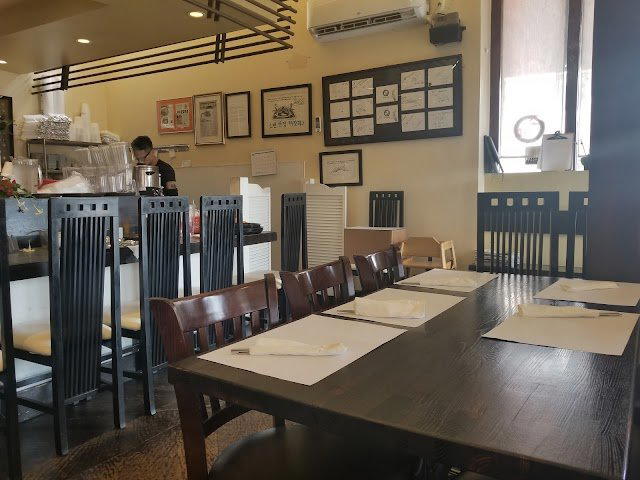
Korean Cooking on the Western Edge of Koreatown
Los Angeles has the largest Korean-American population outside the Korean peninsula, and Koreatown functions less like a neighbourhood than a self-contained culinary district, one with enough internal range to support everything from late-night pojangmacha-style counters to sit-down restaurants operating with the ambition and consistency of serious critical contenders. Soban, at 4001 West Olympic Boulevard, sits closer to the western boundary of that district, where the density of Korean signage begins to thin and the clientele skews toward regulars rather than first-timers. That address is not incidental: restaurants that land here tend to rely on reputation rather than foot traffic, which usually indicates that the kitchen is doing something worth seeking out.
Opinionated About Dining ranked Soban among its Casual North America list at number 319 in 2024 and number 312 in 2025, a consecutive improvement that signals sustained performance rather than a single strong season. OAD rankings aggregate frequency and quality scores from a verified pool of frequent diners, so consistent upward movement over two years carries more weight than a one-time appearance. For context, the guide covers thousands of restaurants across the continent; landing in the 300s two years running places Soban in a meaningful tier within the broader casual Korean category, where competition in Los Angeles alone is considerable.
Technique Against Tradition: Where the Kitchen Sits
The editorial focus with Soban is not simply that it serves Korean food well, plenty of Koreatown restaurants do, but where it sits between preservation and reinterpretation. Korean cuisine in Los Angeles has fractured into distinct registers over the past decade. On one end, restaurants like BCD Tofu House anchor the high-volume, around-the-clock comfort model. On the other, spots like Danbi and Dha Rae Oak have pushed toward refined presentation and tasting-format service. Soban occupies a middle register that is harder to hold: cooking that reads as traditional in its foundations but applies the kind of controlled, consistent technique that earns it placement on a critically evaluated list.
Chef Jennifer Pak leads the kitchen. In Los Angeles, where Korean restaurants are numerous enough to make critical differentiation difficult, that consistency is itself a distinguishing factor.
The intersection of inherited technique and applied discipline is the lens through which Soban reads most clearly. Korean banchan cooking, for instance, demands precision in fermentation timing, seasoning ratios, and temperature management, the same foundational competencies that define any serious kitchen, but applied to a culinary tradition that has its own exacting internal logic. What separates a well-executed Korean meal from a competent one is often invisible to a casual diner: the depth of a jjigae stock, the texture of properly rendered galbi, the acidity balance in kimchi that has been managed rather than left to chance. The critical recognition reflects how well those variables are controlled.
The Broader Korean Dining Context in Los Angeles
Understanding where Soban fits requires a brief look at what surrounds it. Hangari Kalguksu has built a following around handmade noodles with similar critical traction, while Jeong Yuk Jeom has moved the Korean barbecue category toward a more premium, ingredient-focused format. Each of these represents a different axis of development within the same culinary tradition. Soban's consecutive OAD appearances suggest it competes on the axis of technical execution and consistency rather than novelty or format innovation.
For readers who follow Korean fine dining at source, the relevant comparison point is Seoul, where restaurants like Mingles and Kwonsooksoo have demonstrated that Korean culinary tradition supports high-concept, internationally recognised formats. The Los Angeles Korean scene has developed along a different trajectory, more rooted in community dining, less oriented toward tasting-menu prestige, but the critical apparatus now evaluates it with comparable rigour. Soban landing on OAD's list is part of that broader recognition that serious Korean cooking in America merits the same analytical attention as the French-technique establishments that have historically dominated North American critical discourse. Compare that to the classical European precision that defines restaurants like Le Bernardin in New York City or The French Laundry in Napa, and the point becomes clear: technical rigour is the common currency across traditions.
Los Angeles itself has a high-technique dining culture that spans registers and traditions. Restaurants like Lazy Bear in San Francisco, Alinea in Chicago, and locally, the precision-led kitchens across the city, have raised diner expectations for exactness regardless of cuisine type. That environment is, what makes Soban's casual-category ranking more meaningful: it is holding its position in a city where the standard for serious eating is unusually high across the board. For reference on how American regional cooking can achieve critical standing alongside French-lineage institutions, Emeril's in New Orleans and Single Thread Farm in Healdsburg illustrate the same principle in different registers.
Planning a Visit
Soban is open Monday and Wednesday through Sunday, 11am to 9pm, with Tuesday closed. The West Olympic Boulevard address sits outside the densest core of Koreatown. Arriving earlier in the service window or on a weekday is advisable during peak periods.
Price Lens
Comparable venues nearby, for context on price, style, and recognition.
| Venue | Cuisine | Price | Notes |
|---|---|---|---|
| SobanThis venue — the venue you are viewing | Koreatown, Authentic Traditional Korean | $$$ | Not listed |
| Daedo Sikdang | Not listed | $$$ | Wilshire Center, Premium Korean BBQ Steakhouse |
| The Mulberry LA | Sawtelle, Modern Korean-American Bistro | $$$ | Not listed |
| Hangari Kalguksu | Not listed | $$ | Wilshire Center, Handmade Korean Knife-Cut Noodles |
| Sun Nong Dan | Not listed | $$ | Wilshire Center, Traditional Korean Braised Short Ribs |
| Gaam | Wilshire Center, Korean Fusion | $$ | Not listed |
Recognition history
Dated appearances from independent guides and award organizations, with the underlying list record or original source where available.
Opinionated About Dining Casual in North America Recommended
Opinionated About Dining
Opinionated About Dining Casual in North America Ranked #312
Opinionated About Dining
Opinionated About Dining Casual in North America Ranked #319
Opinionated About Dining
Continue exploring
More in Los Angeles
Restaurants in Los Angeles
Browse all →
Bars in Los Angeles
Browse all →

Hotels in Los Angeles
Browse all →
Wineries in Los Angeles
Browse all →
At a Glance
- Intimate
- Classic
- Cozy
- Elegant
- Group Dining
- Date Night
- Special Occasion
- Casual Hangout
- Open Kitchen
- Local Sourcing
Current opening hours
- Monday
- 11 AM–9 PM
- Tuesday
- Closed
- Wednesday
- 11 AM–9 PM
- Thursday
- 11 AM–9 PM
- Friday
- 11 AM–9 PM
- Saturday
- 11 AM–9 PM
- Sunday
- 11 AM–9 PM
Hours can change for holidays and private events. Last verified .
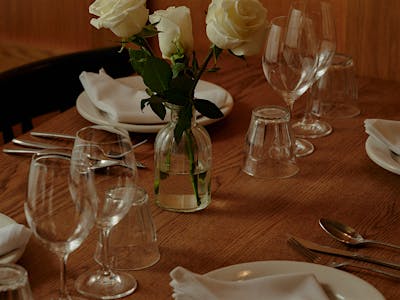
Warm, understated interior with wooden tables and subtle lighting creating an intimate setting; the front counter displays glass jugs of fermented ingredients, emphasizing the deliberate care in preparation.