
Tabelog 100 #60
Our verdict
Sobabito Aki places Osaka soba in a quieter register than the city’s louder street-food shorthand. The Kitahama address, Tabelog Soba WEST 100 selections in 2022, 2024, and 2025, and a drinks program built around sake and shochu make it a useful stop for readers who care as much about buckwheat and drinking culture as about the noodle bowl itself.

Pearl is the En Primeur Club membership app, where members save venues, book tables and use the concierge.
The menu
What to order
- Tenzaru soba (cold soba with tempura)
- Kakesoba (hot soba in broth)
- Crispy fried grated yamato-imo with buckwheat groats
- Assorted fermented side dishes
- Duck dishes at dinner
Osaka changes the pitch of dining from one address to the next. Away from the city’s loudest food imagery, the tempo can drop from neon appetite to quieter precision: modest rooms, focused formats, and restaurants that do not need to shout. In that context, soba reads differently. It is not the city’s usual shorthand of griddles, queues, and sauce; it is a slower grammar of buckwheat noodles, dipping broth, Japanese side dishes, and a rhythm that rewards attention rather than volume.
Sobabito Aki belongs to that quieter Osaka. Its recognition on the Tabelog Soba WEST 100 list in 2025 gives it a clear position inside western Japan’s soba conversation, not as a luxury tasting-menu address but as a serious noodle house with izakaya range. That distinction matters. Osaka has French rooms such as SINAE, Japanese special-occasion counters such as Fushimimachi Kakoiyama, and grill-led formats such as Sumibi Yakitori Torimasa; soba occupies another lane, where price, rhythm, and drinking habits produce a different kind of evening.
Buckwheat in Osaka, with the meal shaped around a tavern rhythm
Good soba restaurants in Japan are rarely only about noodles. The better ones can function as small dining rooms before they become noodle rooms: Japanese cooking sets the table, then buckwheat closes the meal with discipline. Sobabito Aki’s category spread, soba, izakaya, and Japanese cuisine, points to that older pattern. The appeal is not framed around luxury signals; its center of gravity is the relationship between noodles, side dishes, and the measured pace of a Japanese tavern meal.
For travellers used to judging a restaurant by the formality of service or the weight of a tasting menu, this is the useful translation: the supporting dishes perform the same editorial work here that a focused opening sequence performs in a small specialist restaurant. They set pace, determine whether the meal leans sharp or round, and give the kitchen more range than a noodle-only stop would allow. A soba house with izakaya character sits closer to tavern culture than to a quick lunch counter, even when the final bowl remains the anchor.
The Osaka point is also worth making. The city’s culinary identity is often flattened into appetite and excess, but its better everyday restaurants are built on exact formats: griddle shops, noodle counters, coffee rooms, yakitori rooms, sushi counters, and soba houses all ask the diner to understand the rules of the genre. Sobabito Aki’s 2025 Soba WEST 100 selection puts it among addresses where the genre itself is being judged, not merely the charm of the room or convenience of the location.
Osaka gives soba a different social role
Setting affects how a meal feels. In a louder itinerary, soba can disappear behind richer or more theatrical stops. In Osaka, approached on its own terms, the form gains clarity. The city suits a restaurant that can work for lunch, after-work dining, and a composed dinner without needing ceremony. The izakaya category adds another clue: this is soba as social infrastructure, useful for small groups and local regularity, not only for visitors checking off a famous dish.
The budget range reinforces that reading. Lunch is listed at JPY 1,000 - JPY 1,999, while dinner is listed at JPY 3,000 - JPY 3,999, a bracket where side dishes can matter as much as the noodles. That makes the address useful for travellers who have already spent heavily on sushi, wagyu, or kappo and want a meal with craft without a formal dégustation structure. Compared with a higher-spend Japanese room such as Fushimimachi Kakoiyama, the pleasure here is narrower and more specific: buckwheat, tavern-style cooking, and Japanese cuisine in a compact frame.
There is another practical implication, though it belongs to dining strategy rather than logistics. Soba rewards restraint. Ordering as if in an izakaya, then ending with noodles, usually makes more sense than treating the restaurant as a single-bowl stop. The Japanese-cuisine category supports that shape without turning the meal into something ornate. The point is not abundance; it is sequence. A good soba meal has a beginning, a middle, and a clean finish.
Where it fits in a sharper Osaka itinerary
For EP Club readers, the address makes strongest sense as a corrective to Osaka cliché. It will not replace the city’s counter sushi, kappo, or late-night bars, but it adds a quieter register that many itineraries miss. Pairing a soba dinner in Osaka with a bar later in the city creates a more balanced night than stacking rich food on rich food. Readers building a broader plan can use Our full Osaka restaurants guide, then cross-check drinking options in Our full Osaka bars guide and hotel positioning through Our full Osaka hotels guide.
The surrounding Osaka map can pull in many directions. Casual daytime planning might include other Osaka cafes, bakeries, or familiar local snack stops. For a completely different dinner register, the city’s non-Japanese dining also shows how Osaka’s appetite for specialist formats extends well beyond the expected categories. Sobabito Aki works best in that wider context: not as the loudest stop, but as the one that sharpens the itinerary by giving it a calmer, more exacting meal.
Travellers extending the itinerary beyond restaurants can widen the frame through Our full Osaka experiences guide and Our full Osaka wineries guide. Across Osaka and beyond, related editorial reference points are best treated generically: other noodle rooms, tavern formats, Japanese counters, and casual specialist addresses can all provide useful contrast without turning the evening into a checklist of names. The important comparison is not fame for its own sake, but how each format changes pace, appetite, and expectation.
The editorial case for Sobabito Aki is not that it offers spectacle. It is the opposite: a defined Osaka soba address with 2025 category recognition, a Tabelog score of 3.66, and enough izakaya structure to turn noodles into a full evening. In a city often sold through noise, that restraint is the reason to pay attention.
Frequently asked questions
Is Sobabito Aki open every day?
Check the latest opening days and hours directly before visiting Sobabito Aki, as schedules can change.
Where exactly is Sobabito Aki?
Osaka.
How much does it cost to eat at Sobabito Aki?
Pricing at Sobabito Aki is listed as Dinner: JPY 3,000 - JPY 3,999; Lunch: JPY 1,000 - JPY 1,999.
What is Sobabito Aki known for?
Sobabito Aki is known for soba, izakaya, and Japanese cuisine in Osaka, with Tabelog Soba WEST 100 recognition in 2025.
Cuisine and Recognition
Side-by-side context: comparable cuisine and price.
| Venue | Cuisine | Price | Awards | Notes |
|---|---|---|---|---|
| Sobabito AkiThis venue (the venue you are viewing) | Traditional Soba & Japanese Small Plates | $20–30 | Tabelog 100 #60 | Not listed |
| Saru Shokudo Honmachi honten | Japanese Western (Yoshoku) | $10–20 | Tabelog 100 #8 | Chūō |
| Gomenne JIRO | Yoshoku (Japanese-style Western cuisine) bistro | $20–30 | Tabelog 100 #35 | Kita |
| Okonomiyaki Ajikuraya | Osaka okonomiyaki & teppanyaki | $30–50 | Tabelog 100 #26 | Tennōji |
| Man masa | Yakiniku (Japanese BBQ) | $30–50 | Tabelog 100 #46 | Ikuno |
| Shabu Tei Nishiumeda ten | Japanese Shabu-Shabu | $20–30 | Tabelog 100 #88 | Kita |
Recognition history
Dated appearances from independent guides and award organizations, with the underlying list record or original source where available.
Tabelog 100 #60 · No. 60
Tabelog · Tabelog 100 - Soba - WEST - 2025
Continue exploring
More in Osaka
Restaurants in Osaka
All restaurants in Osaka →




Bars in Osaka
All bars in Osaka →


Hotels in Osaka
All hotels in Osaka →



Wineries in Osaka
Browse all →
Details
- Classic
- Cozy
- After Work
- Group Dining
- Solo
- Casual Hangout
- Business Dinner
- Late Night
- Private Dining
- Standalone
- Design Destination
- Sake Program
- Beer Program
- A La Carte
- Set Menu
- Sake
- Beer
Current opening hours
- Monday
- Closed
- Tuesday
- 11:30 AM–2:30 PM, 5:30–9:30 PM
- Wednesday
- 11:30 AM–2:30 PM, 5:30–9:30 PM
- Thursday
- 11:30 AM–2:30 PM, 5:30–9:30 PM
- Friday
- 11:30 AM–2:30 PM, 5:30–9:30 PM
- Saturday
- 11:30 AM–2:30 PM, 5:30–9 PM
- Sunday
- 11:30 AM–2:30 PM, 5:30–9 PM
Hours can change for holidays and private events. Hours as of .
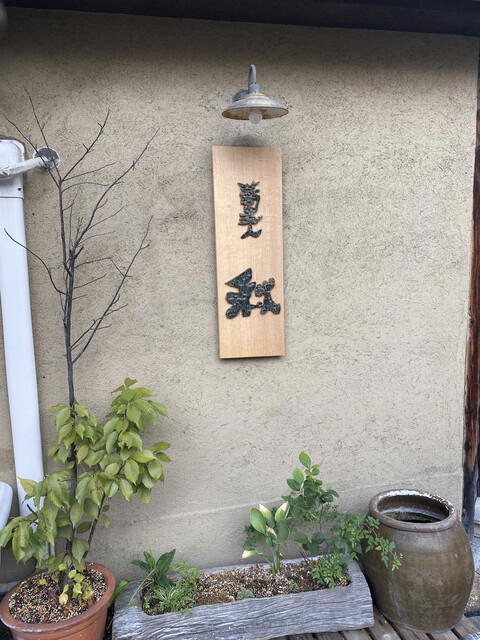
Traditional wooden townhouse with a warm, relaxed atmosphere; intimate tatami and table seating, softly lit and quietly bustling, suited to both solo diners and small groups.