Soba Ulala
Our verdict
New York's soba tradition runs deeper than most diners expect, and Soba Ulala sits squarely within that specialist current. A Japanese noodle house in a city more associated with omakase counters and tasting menus, it occupies the quieter, more disciplined end of the Japanese dining spectrum, where craft is measured in technique and restraint rather than ceremony and price.

Pearl is the En Primeur Club membership app, where members save venues, book tables and use the concierge.
The menu
What to order
- House-made soba
- Cold soba
- Hot soba
- Japanese small plates
A Street That Slows Down for Noodles
New York's Japanese dining conversation tends to anchor itself at the leading end: the omakase counter, the kaiseki progression, the kind of meal that costs as much as a transatlantic flight. Venues like Masa and Atomix operate in that register, where ceremony and price are inseparable from the experience. But the city also sustains a quieter tradition: the specialist noodle house, where the craft is narrower and, arguably, more demanding. Soba Ulala belongs to that second current.
Soba as a discipline is easy to underestimate from the outside. In Japan, the distinction between machine-cut and hand-cut noodles, between buckwheat ratios, between cold and hot preparations, carries the weight that wine region and vintage carry for a sommelier. The leading soba establishments in Tokyo draw as much serious attention as any kaiseki counter, and the gap in New York between the city's most ambitious Japanese cuisine and its leading soba has been closing steadily over the past decade. Soba Ulala is part of that closing.
The Neighbourhood as Context
The editorial angle most useful for understanding Soba Ulala is not the menu or the lineage but the street-level reality it occupies. New York's Japanese food scene has always been geographically specific: midtown holds the high-investment omakase operations, the East Village and Lower East Side carry the izakaya tradition, and pockets of other neighbourhoods sustain the kind of quiet specialist that locals return to without announcement. A soba house operates leading in exactly that last category. It does not need theatre. It needs regulars who understand what they are ordering and why the texture of a freshly milled noodle served cold with a restrained dipping broth is worth the trip on its own terms.
That hyper-local dynamic matters because soba is one of the few Japanese formats where the room itself should recede. The noodle is the event. The context Soba Ulala occupies in New York is one where the competition is not Le Bernardin or Eleven Madison Park but the handful of other serious soba houses that have established footholds in the city, each working within a format that rewards repetition and attention rather than novelty.
What the Format Demands
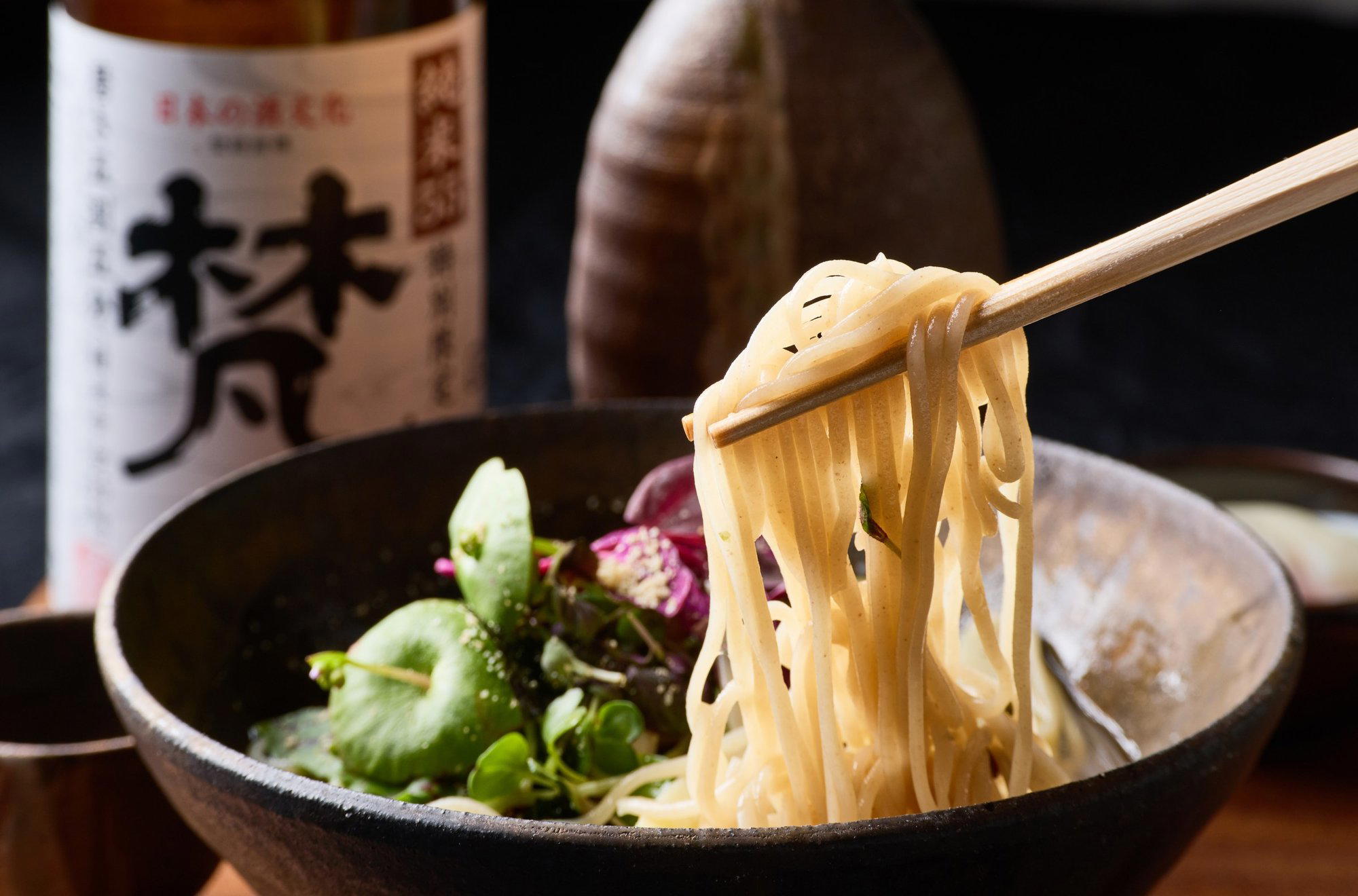
Soba houses, even at their most accomplished, operate in a price tier well below the city's marquee Japanese dining. That is a function of the format rather than ambition. A tasting menu at Per Se or a full omakase progression prices against a different set of inputs: years of training compressed into a single sitting, premium protein sourced globally, a front-of-house operation scaled to match. Soba's value proposition runs differently. The craft is in the milling and the cutting and the timing, and the pleasure is in simplicity done with precision. A bowl of zaru soba, cold noodles served with a dipping broth, scallion, and wasabi, is complete when it is made correctly. Nothing more is needed.
This means Soba Ulala positions itself in New York's mid-tier Japanese dining, where the expectation is focused technique rather than comprehensive experience. That tier has grown more competitive as the city's Japanese food culture has matured. Visitors who arrive having eaten soba in Tokyo will bring calibrated expectations; the comparison is real and useful. New York's leading soba houses have earned that comparison, and Soba Ulala participates in the same serious conversation.
Soba in the Wider New York Japanese Spectrum
Understanding where Soba Ulala sits requires mapping the wider Japanese dining field in New York. The city supports a full range: from the hyper-premium counter at the leading, through mid-range izakayas and ramen specialists, to the kind of specialist noodle house that soba represents. The format that soba occupies is closer in spirit to a craft ramen house than to an omakase counter, but the technique is more fragile. Ramen broth is built over hours and can be held; soba noodles must be served immediately after cooking or the texture shifts. That time pressure is part of what a serious soba house manages.
New York's appetite for this kind of precision dining has deepened alongside its broader Japanese food literacy. The same diner who seeks out a reservation at Masa for a special occasion may well seek out a soba house for a Tuesday lunch precisely because the register is different. Soba Ulala occupies that functional role in the city's dining week: a place where the quality is serious without the occasion needing to match.
For readers interested in how this kind of focused craft dining compares across American cities, our coverage of Smyth in Chicago and Lazy Bear in San Francisco illustrates how different cities build their fine-dining ecosystems around specialist premises. The Single Thread Farm in Healdsburg and Blue Hill at Stone Barns in Tarrytown represent a different axis entirely, where the sourcing narrative is the organising principle. Soba houses work from none of those frameworks. The discipline is the noodle, and the discipline is enough.
Internationally, the same specificity of focus appears in European contexts. Atelier Moessmer Norbert Niederkofler in Brunico and Dal Pescatore in Runate demonstrate how regional specificity can sustain serious restaurants over decades. Soba Ulala draws from a related logic: the argument that a single format, executed with full commitment, is sufficient reason for a restaurant to exist.
Our full New York City restaurants guide maps the broader dining field if you are building a multi-night itinerary around the city. For comparison with other destination-calibre American dining, see our coverage of The French Laundry in Napa, Providence in Los Angeles, Addison in San Diego, Emeril's in New Orleans, The Inn at Little Washington, and Frasca Food & Wine in Boulder.
Planning Your Visit
For a specialist soba house in New York, the general pattern holds: lunch service is the primary slot for noodle-forward dining, weekend midday slots fill faster than weekday equivalents, and walk-in availability is more common at soba houses than at the city's reservation-heavy omakase counters. Contacting the restaurant directly for current availability and hours is the most reliable approach.
Quick reference: Japanese soba specialist, New York City.
Frequently asked questions
How does Soba Ulala differ from New York's broader Japanese restaurant scene?
Where New York's Japanese dining conversation concentrates on multi-course omakase and kaiseki formats, Soba Ulala operates as a cuisine-specific soba house, a narrower, more disciplined category within the city's Japanese restaurant field. Buckwheat soba demands precision at the preparation stage rather than tableside theatre, which shapes both the atmosphere and the price point. For diners whose interest is the noodle craft itself rather than a multi-course progression, Soba Ulala addresses a gap in New York City's Japanese offering.
What dish is Soba Ulala famous for?
Soba Ulala's identity is built around Japanese soba, buckwheat noodles served in a format that rarely anchors New York's Japanese dining conversation, which tilts heavily toward omakase and kaiseki. The soba house format places the noodle itself at the centre, whether served cold with dipping broth or in a hot composition. This is a kitchen defined by a single discipline rather than a broad menu sweep.
How far ahead should I plan for Soba Ulala?
Specialist soba houses in New York operate across a range: some accept walk-ins at the counter while others run limited seatings that fill days in advance.
What do critics highlight about Soba Ulala?
What the format itself tends to attract from serious food writers is attention to noodle texture and broth calibration, the metrics that separate a committed soba house from a venue treating soba as one item among many. Soba Ulala's position in New York's Japanese dining spectrum, below the high-spend omakase tier, is its clearest editorial identifier.
Is Soba Ulala overpriced or worth every penny?
Soba houses as a category sit well below New York's marquee Japanese dining on price, which is a function of the format rather than a compromise on craft. A specialist soba kitchen in Manhattan is generally positioned to deliver focused, high-quality Japanese cooking at a cost that the omakase tier cannot match.