
Tabelog 100 #7
Our verdict
SMAAK brings Yokohama’s port-city openness into the innovative dining category, pairing fish-led cooking, wine service, and a high-floor Kitanakadori setting. Its selection for Tabelog 100 Innovative / Creative Cuisine 2025 places it in a serious national conversation rather than a purely local dining tier.

Pearl is the En Primeur Club membership app, where members save venues, book tables and use the concierge.
The menu
What to order
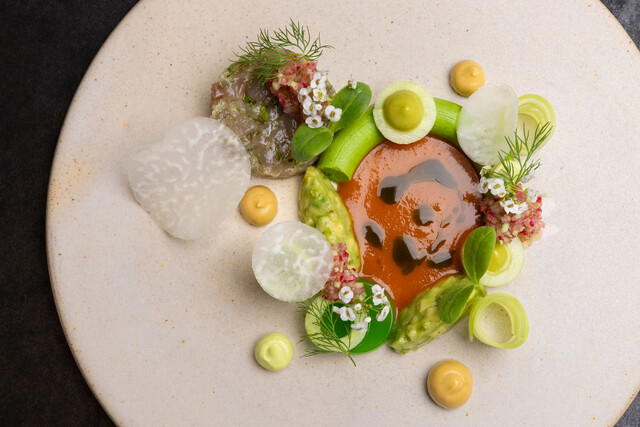
- Lightly marinated mackerel, perilla, cucumber, couscous, Japanese-style ceviche, horseradish, marinated and pickled
- Venison dishes with layered acidity and umami
- Espuma-forward seasonal vegetable courses
The first read is Yokohama itself: a port city whose dining culture has long been shaped by movement, exchange, and an appetite for outside influences. That context matters because it frames the meal less as a neighbourhood stop than as part of Yokohama’s longer habit of looking outward. This is a city with a history of international trade, hotel dining, bars, and imported ingredients moving through local taste. Innovative dining fits that character when it avoids novelty for its own sake and treats cross-cultural technique as a working language.
SMAAK sits in that category with national recognition from Tabelog 100 Innovative 2025. In Yokohama, that matters. The city has deep casual-food traditions, from long-running dining rooms to everyday counters and local comfort meals, but fewer restaurants operate in the formal innovative bracket where course structure, pacing, and service carry the evening.
Port-city ingredients, contemporary structure, Yokohama context
Innovative cuisine in Japan often works well when it keeps a clear relationship to place. Yokohama’s advantage is not a single canonical dish; it is the city’s openness to hybrid dining. That makes a course restaurant built around contemporary technique feel less imported than it might in a more rigid food city. The more interesting point is how that grammar sits inside Yokohama’s taste for international formats and outward-facing hospitality.
The competitive set is telling. SUIRINKAKU, Arai Ya Bankokubashi ten, Osteria Austro, The Bar CASABLANCA, and VANILLABEANS Minatomirai honten each point to a different Yokohama use case, from dining to drinking to sweets. Against that spread, SMAAK is not trying to be an all-purpose Yokohama address. It belongs to the city’s smaller high-commitment tier, where the meal is planned around a full sequence rather than a flexible stop between walking, shopping, and a nightcap.
That distinction also explains why the restaurant’s Tabelog 100 selection carries weight. The Innovative list is not the same conversation as more tradition-bound restaurant categories, where Japan’s dining culture can come with tightly defined benchmarks. This category rewards restaurants that can make technique, pacing, and ingredient logic feel coherent. The risk is cleverness without appetite. The reward is a meal that reflects Japan’s contemporary dining culture without pretending to be bound by a single inherited form.
Why the room changes the decision
Restaurants with a strong sense of setting can drift into atmosphere-first dining, a category where the room does too much work and the kitchen too little. The stronger version uses the room as tempo: lunch reads brighter and more public; dinner makes the meal feel slower and more intentional. SMAAK’s Yokohama setting gives it an advantage for guests who want a sense of the city rather than a neutral luxury room that could be in any large market.
The format is better understood as a planned meal than a spontaneous one. That is not a bureaucratic footnote; it is part of the logic of a restaurant in the Innovative category, where the appeal often lies in sequence, contrast, and control rather than à la carte improvisation. The experience places SMAAK closer to contemporary course-menu dining than to the casual, flexible rhythm that defines much of Yokohama’s everyday eating.
That difference also separates it from the tiny-counter model that dominates much of Japan’s high-end reservation culture. This is useful for Yokohama: the city draws business diners, hotel guests, residents from Kanagawa, and Tokyo diners who want a different evening rhythm. A restaurant built around a polished course experience can serve that mixed audience without becoming merely formal. The line is thin; the appeal depends on whether the cooking remains the central reason for the booking.
How to place it in a Yokohama itinerary
For travellers, the sharper question is not whether Yokohama has enough restaurants. It does. The question is what kind of Yokohama evening is being built. A casual itinerary might point toward other Yokohama dining rooms for counter meals, long-running local comfort, relaxed shared plates, or old-school appetite. Those choices say something different about the city: more everyday, more street-level, less ceremonially paced.
SMAAK makes sense when the evening calls for Yokohama as a dining city rather than simply a port-side excursion. It pairs naturally with a hotel-led stay, with the wider planning view in Our full Yokohama hotels guide, or with a drinks-focused second act from Our full Yokohama bars guide. The city’s broader leisure frame sits in Our full Yokohama experiences guide, while Our full Yokohama wineries guide is a reminder that wine interest in Japan increasingly extends beyond classic restaurant lists and into travel planning.
The editorial verdict is simple: this is a Yokohama restaurant for diners who care about the contemporary conversation and want the city’s outward-facing identity present in the room. It is not the pick for a fast local bite, a preschool-family meal, or a loose à la carte evening. For that, the region offers other lanes, from everyday counters to casual rooms across Yokohama and nearby cities. The useful comparison is not only local, either: Japan’s dining map can run from simple neighbourhood meals to highly planned destination restaurants, while abroad the Japanese-food conversation takes still other forms. SMAAK’s role is more specific: a polished expression of Yokohama’s ambitious, internationally minded dining culture.
Frequently asked questions
Is SMAAK open every day?
Check SMAAK’s current opening days and hours directly before booking, as specific hours are not provided here.
Is SMAAK expensive?
Pricing at SMAAK is listed as Dinner: JPY 15,000 - JPY 19,999; Lunch: JPY 6,000 - JPY 7,999.
How do I find SMAAK?
SMAAK is located in Yokohama.
What is SMAAK known for?
SMAAK is known for its 2025 Tabelog 100 selection in the Innovative category and for its role in Yokohama’s contemporary dining scene.
Price and Positioning
Comparable venues to calibrate price, style, and recognition.
| Venue | Cuisine | Price | Awards | Notes |
|---|---|---|---|---|
| SMAAKThis venue (the venue you are viewing) | Modern Dutch-inspired fine dining | $100–150 | Tabelog 100 #7 | Not listed |
| Sumibi Kappou An | Charcoal-fired Seasonal Japanese Kaiseki (Sumibi Kappo) | $100–150 | Tabelog 100 #4 | Naka, Charcoal-fired Seasonal Japanese Kaiseki (Sumibi Kappo) |
| Chinese Sairyu (Yokohama Bay Sheraton Hotel & Towers) | Modern Cantonese Chinese | $50–100 | Tabelog 100 #22 | Nishi, Modern Cantonese Chinese |
| クローチフィッソ | Authentic Sicilian Italian | $50–100 | Tabelog 100 #6 | Kanagawa, Authentic Sicilian Italian |
| Yakiniku AJITO Souhonten | Yakiniku (Japanese BBQ) | $30–50 | Tabelog 100 #43 | Kanagawa, Yakiniku (Japanese BBQ) |
| Ten Shichi | Classic Seasonal Tempura | $50–100 | Tabelog 100 #100 | Naka, Classic Seasonal Tempura |
Recognition history
Dated appearances from independent guides and award organizations, with the underlying list record or original source where available.
Tabelog 100 #7 · No. 7
Tabelog · Tabelog 100 - Innovative / Creative cuisine - 2025
Continue exploring
More in Yokohama
Restaurants in Yokohama
All restaurants in Yokohama →




Bars in Yokohama
Browse all →






Details
- Modern
- Elegant
- Scenic
- Sophisticated
- Romantic
- Date Night
- Business Dinner
- Special Occasion
- Group Dining
- Private Event
- Panoramic View
- Waterfront
- Design Destination
- Private Dining
- Hotel Restaurant
- Extensive Wine List
- Zero Proof
- Local Sourcing
- Skyline
- Waterfront
- Tasting Menu
- Set Menu
- Wine
- Non Alcoholic Pairing
Current opening hours
- Monday
- Closed
- Tuesday
- 12–3 PM, 6–10 PM
- Wednesday
- 12–3 PM, 6–10 PM
- Thursday
- 12–3 PM, 6–10 PM
- Friday
- 12–3 PM, 6–10 PM
- Saturday
- 12–3 PM, 6–10 PM
- Sunday
- 12–3 PM, 6–10 PM
Hours can change for holidays and private events. Hours as of .
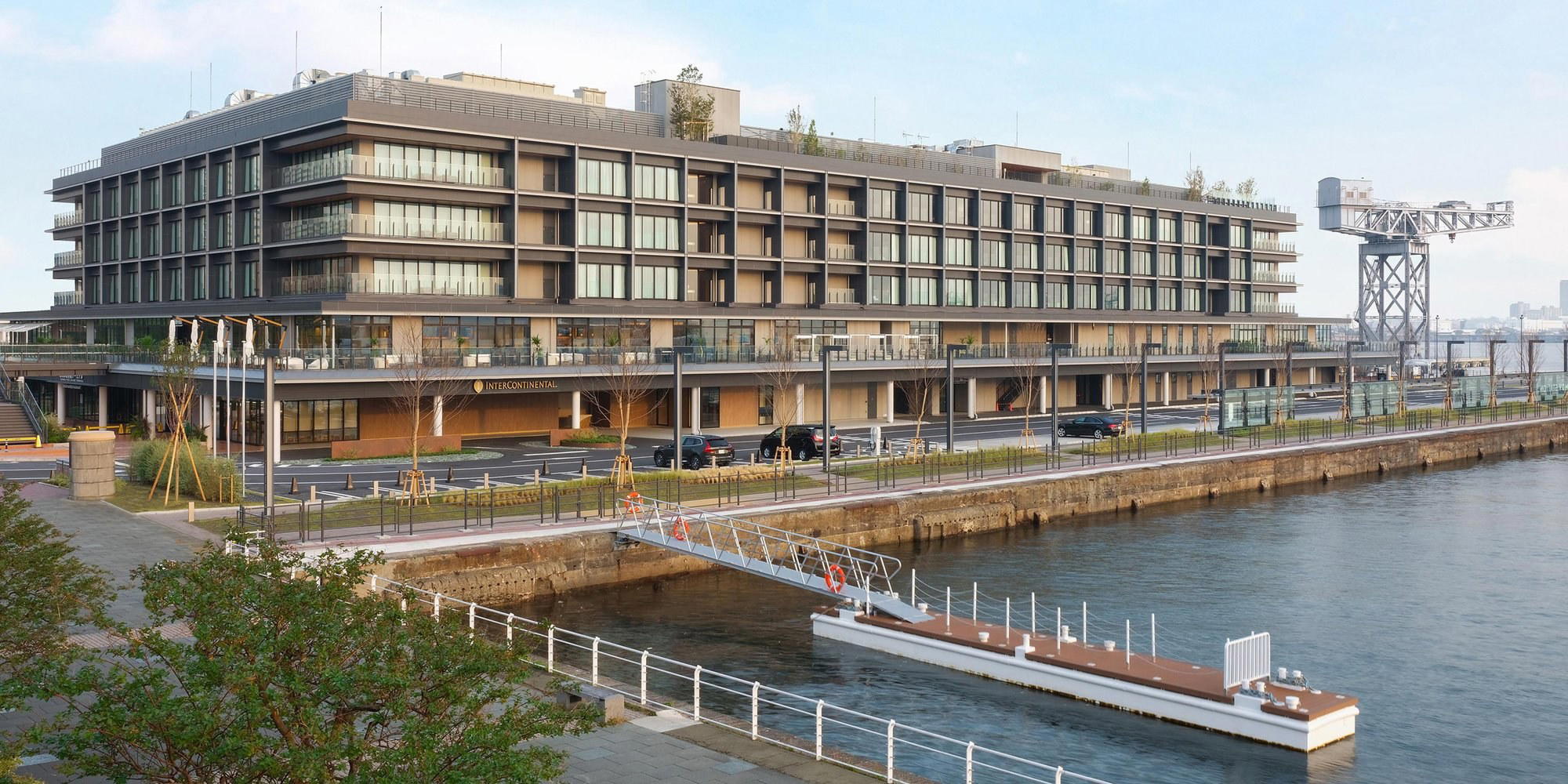
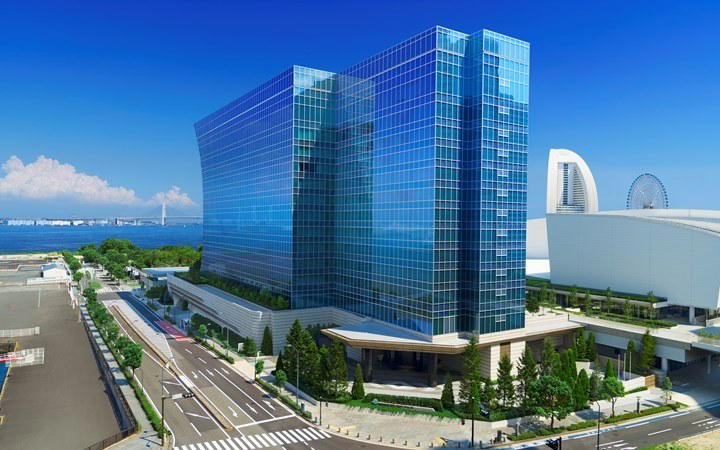
Modern fine‑dining room high on the 46th floor with wide city and bay views, polished but relaxed service, soft lighting, and an elegant, quietly sophisticated atmosphere suited to dates and special occasions rather than a hushed temple of gastronomy.