Sino

A Notting Hill restaurant where Ukrainian heritage shapes every plate, Sino on All Saints Road serves black pudding croquettes, crayfish with cabbage, and beef dumplings in spicy broth alongside house-baked rye and sourdough. Chef-owner Eugene Korolev brings a personal and political weight to the cooking that sets it apart from the neighbourhood's more polished competition. The room is small, warm, and run with sincerity.
Pearl is the En Primeur Club membership app — saves, bookings, and concierge access live there. Same editors, same standards.
- Address
- 7 All Saints Rd, London W11 1HA, United Kingdom
- Website
- sinorestaurant.co.uk
- Directions
- Get directions
 Saves & bookings on Pearl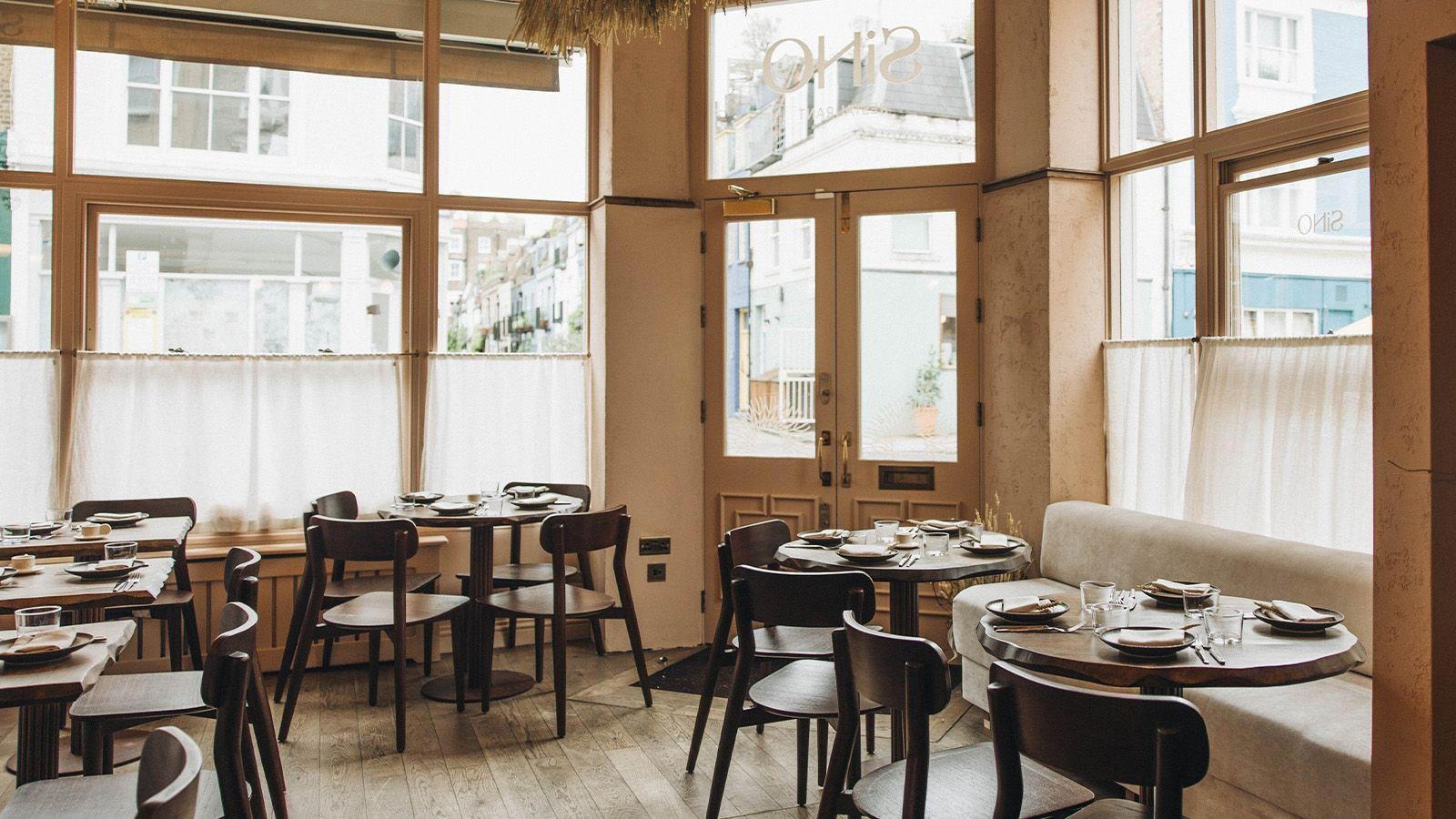
Ukrainian Cooking in London: The Context Behind Sino
London's restaurant scene has long absorbed cooking traditions from across Eastern Europe, but Ukrainian cuisine has occupied a narrow footprint in that conversation. Polish and Russian kitchens claimed earlier ground; Ukrainian cooking, with its fermented grains, slow-braised meats, and particular handling of offal and dumpling dough, arrived later and less visibly. That makes the presence of a dedicated Ukrainian kitchen on All Saints Road — one of West London's most characterful dining streets — a meaningful marker of how the city's hospitality map continues to shift.
Sino sits at 7 All Saints Road in Notting Hill, a stretch known for independent restaurants rather than chain formats, and for a customer base that tends toward curiosity over convenience. It is the kind of address where a focused, culturally specific menu can find its audience without the pressure of high-footfall locations elsewhere in the city. The editorial comparison here is not with London's high-investment European fine dining circuit, places like The Ledbury, Sketch's Lecture Room and Library, or CORE by Clare Smyth, but with the smaller, neighbourhood-rooted tier where personal conviction and cultural specificity do the work that scale and investment do elsewhere.
What the Menu Says About Ukrainian Culinary Tradition
Ukrainian cooking is built around fermentation, preserved vegetables, slow-cooked meats, and bread. The bread culture alone, dense rye loaves, sourdoughs with long ferments, flavours that lean sour and earthy rather than neutral, tells you something about a culinary tradition shaped by cold winters and agricultural self-sufficiency. At Sino, the basket of rye and sourdough breads that arrives early in the meal is not a gesture toward informality; it is the clearest single statement the kitchen makes about where the food comes from.
Black pudding croquettes as an opening course place the kitchen squarely in the offal-forward Eastern European tradition, where blood sausage appears in various regional forms from Lviv to Kyiv. The crisped exterior versus the dense, iron-rich interior is a textural argument as much as a flavour one, and it signals that this is a kitchen thinking about technique alongside heritage. Crayfish with cabbage draws on the freshwater shellfish traditions of Ukraine's river regions, the Dnieper basin produces significant freshwater catch, while beef dumplings in spicy beef broth echo varenyky traditions that predate modern restaurant culture by several centuries.
That continuity matters editorially. When a cuisine arrives in a new city, the question of authenticity versus adaptation is always present. One credible answer tends to come through dishes where the cultural logic is intact rather than simplified for an outside audience. The menu at Sino reads as the former: dishes that assume some curiosity from the diner rather than explaining themselves defensively.
The Room and the Register
Small, cosy, and run with evident warmth, these are not decorative compliments but structural facts about what kind of dining experience Sino provides. In a city where larger operators increasingly dominate the mid-market with polished service protocols and design-forward rooms, a smaller, character-led space with attentive and personal hospitality represents a distinct register. The emotional temperature of a meal here will differ from the more formal environments of Restaurant Gordon Ramsay or Dinner by Heston Blumenthal, not because those rooms are cold, but because intimacy at this scale operates differently. You feel the proximity of the kitchen. Service carries personal investment rather than trained neutrality.
The chef-owner model, where the person responsible for the cooking is also responsible for the room, tends to produce this register. It appears across formats, from high-end destination restaurants like L'Enclume in Cartmel or Moor Hall in Aughton to smaller neighbourhood operations, but the stakes feel different at the intimate end, where every table accounts for a larger share of a smaller room.
Chef-Owner Eugene Korolev: Credential as Context
The biographical fact most relevant to understanding what Sino represents editorially is not culinary lineage but the specific weight of experience that Eugene Korolev brings from serving on the front line in Ukraine before opening this restaurant. That transition, from active conflict to running a kitchen in West London, is not background colour. It is the reason the food's cultural commitment reads as substantive rather than marketed. Chefs draw on formative experience in every kitchen; few have formative experience this recent or this stark. The love of Ukrainian cuisine and culture that comes through in the cooking has a different gravity because of what preceded it.
This is not a restaurant built around a trend toward Eastern European flavours. It predates any such trend in the chef's own life and was built from necessity, identity, and survival in a more literal sense than that phrase usually carries.
Sino in the London Restaurant Conversation
London's broader restaurant scene in 2024 and into 2025 has continued to diversify at the neighbourhood level even as the top tier consolidates around familiar names and formats. The city's Notting Hill and West London corridors have historically supported independent restaurants with strong personal identities, this is the same neighbourhood context that allowed operators to build long-term reputations on focused, non-generic menus. Sino fits that pattern while occupying a cultural lane that remains underrepresented in London dining.
For readers building a wider picture of the city's dining geography, our full London restaurants guide maps the range from neighbourhood operations to the upper-end rooms. For those interested in the broader ecosystem, London hotels, bars, wineries, and experiences guides round out the picture. Internationally, the kind of focused, culturally specific counter-programming that Sino represents appears in different forms at places like Atomix in New York City, where Korean heritage shapes a high-commitment tasting format, or at Le Bernardin, where a single culinary philosophy is held without compromise across decades.
Closer to home, the commitment to culinary identity over crowd-pleasing menus places Sino in the same broad orientation as places like Gidleigh Park in Chagford, Hand and Flowers in Marlow, or Le Manoir aux Quat' Saisons in Great Milton, operations where a specific point of view holds whether or not it is the commercially safe option. And for those interested in technically precise cooking that departs from convention, The Fat Duck in Bray remains the benchmark for how a kitchen can build an entire vocabulary around cultural reimagination.
Planning Your Visit
Sino is located at 7 All Saints Road, London W11 1HA. The restaurant is small, and the combination of a focused menu, a specific cultural identity, and a chef-owner format means tables are worth booking in advance rather than relying on walk-in availability. All Saints Road is accessible via Westbourne Park or Ladbroke Grove on the Hammersmith and City line, both a short walk away.
Quick reference: 7 All Saints Road, W11 1HA. Small room; advance booking recommended. Nearest Tube: Westbourne Park or Ladbroke Grove.
How Sino London compares with similar nearby venues.
| Venue | Cuisine | Price |
|---|---|---|
| Empire Empire | Indian | ££ |
| The Pelican | Traditional Cuisine | ££ |
| Fabrique | Bakery | Not listed |
| Caractère | European Contemporary | ££££ |
Recognition history
Dated appearances from independent guides and award organizations, with the underlying list record or original source where available.
Michelin Plate
Michelin
Continue exploring
More in London
Restaurants in London
Browse all →
Bars in London
Browse all →
Hotels in London
Browse all →

At a Glance
- Intimate
- Cozy
- Elegant
- Modern
- Sophisticated
- Date Night
- Special Occasion
- Open Kitchen
- Sake Program
- Local Sourcing
Current opening hours
- Monday
- Closed
- Tuesday
- Closed
- Wednesday
- 12–3 PM, 6–10 PM
- Thursday
- 12–3 PM, 6–10 PM
- Friday
- 12–3 PM, 6–10 PM
- Saturday
- 12–3 PM, 6–10 PM
- Sunday
- 12–3 PM, 6–10 PM
Hours can change for holidays and private events. Last verified .
Peaceful monastic grey stone walls, off-white bouclé banquettes, fluttering linen curtains, rustic minimalism with hay sculpture overhead and subtle Ukrainian cultural elements creating an intimate, refined atmosphere.