
A compact Tsukamoto ramen counter with Tabelog Ramen OSAKA 100 selections in 2023, 2024, and 2025, Shoyu to Kai to Men Soshite Hito to Yume puts Osaka’s noodle culture outside the usual central-city circuit. The draw is its place in a local ramen tier where shoyu, shellfish-led broth, ramen, and tsukemen share a small-room format built for solo diners as much as neighbourhood regulars.
Pearl is the En Primeur Club membership app — saves, bookings, and concierge access live there. Same editors, same standards.
- Address
- 大阪府大阪市西淀川区柏里3-12-22
- Phone
- +81664728186
- Website
- tabelog.com
 Saves & bookings on Pearl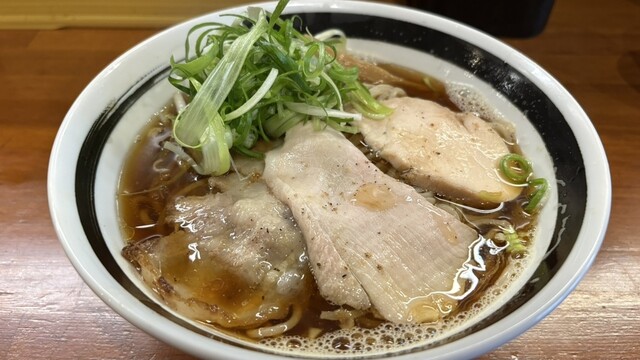
Tsukamoto is not Osaka’s canal-neon or department-store dining-floor version of the city. West of the central shopping churn, it works as a commuter pocket: station exits, narrow streets, small shopfronts, and meals folded into daily life rather than staged as destination theatre. That matters for ramen. In Osaka, serious noodle shops often operate at street scale, in compact rooms with quick turnover, judged less by spectacle than by broth discipline, noodle handling, and whether the format can sustain repeat local use.
Shoyu to Kai to Men Soshite Hito to Yume fits that category. Its name foregrounds soy sauce, shellfish, noodles, people, and dreams, but the clearer signal is structural: a ramen and tsukemen specialist in Nishiyodogawa-ku with 15 seats, counter seating, and selection for Tabelog Ramen OSAKA 100 in 2023, 2024, and 2025. In a city where ramen sits beside udon, okonomiyaki, kushikatsu, and department-store food halls, that recognition places the shop in Osaka’s serious noodle conversation rather than the broader tourist checklist.
Tsukamoto ramen, away from the central dining circuit
Osaka dining can split between visitor zones and districts serving residents first. Tsukamoto is the latter, and ramen suits that geography. A small counter does not need landmark architecture or a hotel-lobby address; it needs regular traffic, quick decisions, and a broth identity clear enough to justify a detour. Here, the draw is the narrower ramen-shop grammar of shoyu and shellfish, plus tsukemen for diners who want dipping noodles rather than a conventional bowl.
That differs from Osaka’s higher-spend dining rooms, where value often rests on ingredients, service pacing, or wine depth. Compared with ku:de kiyo, a French address in Osaka’s upper price tier, this is another measure of seriousness: fewer rituals, a tighter room, lower spend, and a category where one bowl must carry the argument. It also sits beside local noodle peers such as Men Ippai and Chuka Soba Kirimen Souhonten in the same low-price ramen bracket, where distinctions are technical rather than decorative.
The neighbourhood frame explains the practical feel. Counter seating suits solo dining, and Tabelog’s occasion notes point to that use case. Private rooms and private use are unavailable, not a deficiency in this genre but part of the ramen-shop contract. The room is built for focused eating, not lingering through courses. For travellers mapping Osaka by appetite, it is a useful counterpoint to snack-led wandering, whether the itinerary also includes pork buns from 551 Horai (551蓬莱), bakery stops such as 52CHO-ME BAKERY, or a sharper coffee break at .cafe.
Recognition matters because ramen has little room for disguise
Ramen awards are useful when read correctly. A Tabelog 100 selection is not proof every diner will prefer one bowl; it signals sustained attention in a crowded, opinionated category. Shoyu to Kai to Men Soshite Hito to Yume has appeared on the Osaka ramen list across three consecutive cycles, more meaningful than one year of attention. Consistency is hard because ramen leaves little cover: broth, noodles, tare, toppings, and timing are exposed in a quickly served bowl.
Osaka’s ramen scene is less internationally codified than Tokyo’s headline counters, giving the city a wider range of neighbourhood specialists. The local appeal is not just rarity or queue culture. It is ramen’s ability to occupy a modest price tier while drawing close scrutiny from diners comparing bowl to bowl across stations and subareas. That is why a shop in Kashiwazato can matter to a citywide noodle map without fine-dining trappings.
The available category labels say enough without over-describing the bowl: ramen and tsukemen. The formats create different rhythms. Ramen asks for broth and noodles to arrive as one integrated serving; tsukemen separates noodles from concentrated dipping broth, shifting attention to texture, temperature, and pace. For travellers, choosing between them means choosing between two established Japanese noodle traditions, not two versions of the same dish.
No chef mythology is needed. The stronger story is civic and categorical: a small Osaka ramen room, open since 2016, operating in a residential-commuter district and carrying repeated local recognition in a category where price stays accessible but standards can be unforgiving.
How to fold it into an Osaka eating day
For visitors, this is not the obvious first Osaka meal if the brief is Dotonbori lights, market grazing, or a long dinner with sake pairings. It works better as a deliberate noodle stop showing how the city eats beyond postcard foods. Build the day around neighbourhood movement rather than one grand reservation: ramen in Tsukamoto, then return toward the centre for Italian cooking at a canto (Italian) or pizza at 99 Pizza Napoletana Gourmet. For broader comparison, Our full Osaka restaurants guide gives the citywide frame, while Our full Osaka hotels guide, Our full Osaka bars guide, Our full Osaka wineries guide, and Our full Osaka experiences guide cover the rest of the trip architecture.
Travellers extending a Japan food itinerary can use this stop as calibration. It sits in a different lane from beef-led cooking such as -Grilled beef Sukiyaki- KAMAKURA TANUKIAN 鎌倉 たぬき庵 in Kamakura, casual seafood-and-charcoal formats like. 鮪と炭火焼き うお炭 秋葉原店 in Tokyo, regional modern dining such as.know in Kumamoto, and Kyoto’s quieter contemporary circuit represented by [ki:] in Kyoto. Outside Japan, references such as (Shoku) Vietnam in Kawasaki, [Curry Senmon Ten] Maruyama Kyoju. in Sapporo, Jōdo Saké Bar in Los Angeles, and Onigiri Time in Pasadena underline the point: Japanese casual formats travel well, but the neighbourhood counter in Osaka retains a particular pressure and economy.
The editorial case is simple. Shoyu to Kai to Men Soshite Hito to Yume is for diners who want a recognised Osaka ramen shop without turning lunch or dinner into ceremony. Its value lies in the overlap between place and format: a compact Tsukamoto room, a shoyu-and-shellfish identity, ramen and tsukemen under one roof, and enough repeat recognition to justify leaving the central grid.
Awards and Standing
Comparable venues at the same tier for side-by-side context.
| Venue | Cuisine | Price | Notes |
|---|---|---|---|
| Shoyu to Kai to Men Soshite Hito to YumeThis venue — the venue you are viewing | Ramen & Tsukemen | $ | Not listed |
| KALUTARA | Sri Lankan Curry House | $ | Nishi |
| Osaka Mentetsu | Osaka-style ramen counter | $ | Kita |
| GARuRu KO-RI | Kakigori (Japanese shaved ice) specialty shop | $ | Kita |
| Gokuraku Udon TKU | Udon & curry udon specialist | $ | Higashinari |
| Shima Ya Honten | Traditional Japanese sweet potato café | $ | Abeno |
Recognition history
Dated appearances from independent guides and award organizations, with the underlying list record or original source where available.
Tabelog 100 #31 · No. 31
Tabelog · Tabelog 100 - Ramen - OSAKA - 2025
Continue exploring
More in Osaka
Restaurants in Osaka
Browse all →




Bars in Osaka
Browse all →




Hotels in Osaka
Browse all →



Wineries in Osaka
Browse all →
At a Glance
- Lively
- Cozy
- Solo
- Casual Hangout
- After Work
- Late Night
- Standalone
- Local Sourcing
Compact, non-smoking ramen shop with counter-focused seating and a few small tables, creating a busy but welcoming atmosphere that suits solo diners and ramen enthusiasts.