Shōwa

Our verdict
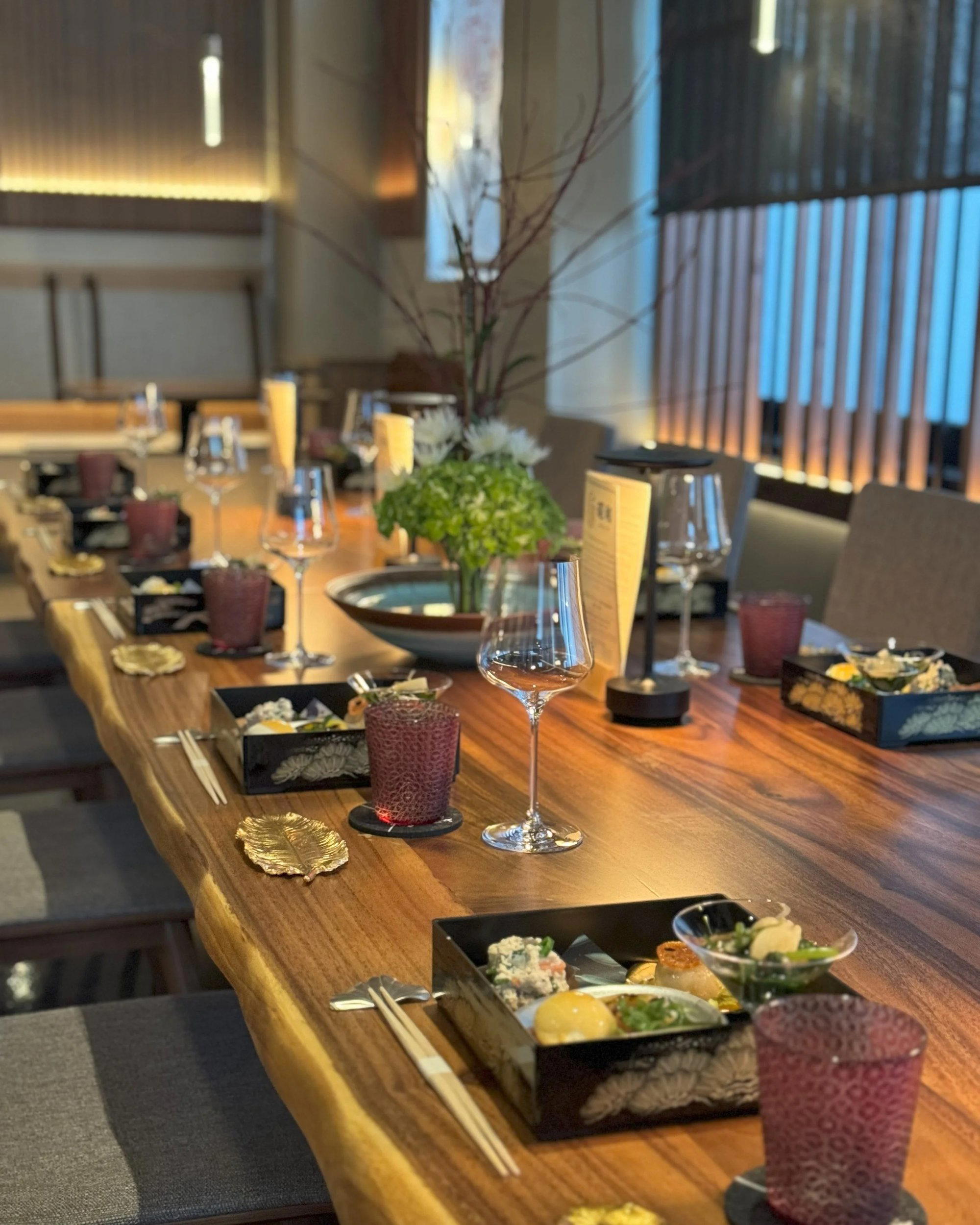
A 20-seat tasting counter in SoMa, Shōwa reframes the kaiseki format around a progressive katsu sequence, 10 to 12 courses that move from miso-cured fish and uni with bluefin tartare into an extended progression of Japanese-style fried foods. The result is a structured, technique-driven meal that arrives at something genuinely delicate despite the fryer being its central instrument.

Pearl is the En Primeur Club membership app, where members save venues, book tables and use the concierge.
The menu
What to order
- Tonkatsu
- Kaiseki-inspired courses
- Dry-aged pork
- Iberico pork
The Fryer as Fine Dining Instrument
San Francisco's tasting-menu tier has long been defined by restraint: the clean plating of Benu, the elemental precision of Saison, the conceptual architecture of Atelier Crenn. What SoMa's Shōwa does is introduce a different kind of discipline to that conversation, one built around the deep fryer rather than in spite of it. Walk into the 20-seat dining room on Howard Street and the first thing you register is a faint trace of fryer oil in the air. At most restaurants, that would signal a problem. Here, it signals the concept.
The format is kaiseki-inspired, meaning the evening follows a deliberate arc from lighter, more delicate preparations toward the richest and most technically demanding. The meal spans 10 to 12 courses, and the early stages, miso-marinated fish, uni with bluefin tuna tartare over rice, keep the fryer entirely out of reach. These opening courses establish the kitchen's precision and set the palate's expectations before the katsu progression begins. That sequencing matters: it is the same logic a Kyoto kaiseki kitchen applies when moving from soup to sashimi to grilled to simmered, except here the destination is breadcrumbed and fried.
How the Katsu Progression Works
Katsu, in the broader Japanese context, refers to a category of breaded and deep-fried preparations most familiar in the West through tonkatsu, pork cutlet with shredded cabbage and a sauce that reads somewhere between Worcestershire and fruit. The format is humble by origin, a late 19th-century adaptation of Western-style fried cutlets that became embedded in Japanese home cooking and casual dining. Shōwa's contribution is to take that tradition and apply tasting-menu logic to it: sequenced by ingredient, varied by cut and fat content, modulated by the accompaniments that sit alongside each piece.
The katsu courses have included greenling cod, tuna, and dry-aged Duroc pork, a range that moves across protein types and cooking behaviors. Dry-aging Duroc pork before frying it is an intervention borrowed from the steakhouse and charcuterie traditions, applied to a format that rarely demands it. The effect concentrates flavor in a way that makes the breaded exterior do more structural than ornamental work. Throughout the progression, cabbage and pickles recur as counterpoints, providing crunch and acidity in the same way that tsukemono and sunomono serve as palate resets in a traditional kaiseki sequence.
The measure of the kitchen's achievement is that a meal built almost entirely around fried food reads, at its close, as delicate, refined, and balanced. That outcome is not incidental, it reflects decisions about fat temperature, breading thickness, resting time, and the sequencing of acidic elements alongside richer ones. It is the same structural thinking that governs a kaiseki at The French Laundry in Napa or Single Thread Farm in Healdsburg, applied to a category of cooking those kitchens would not touch.
A Format That Has Evolved Into Its Own Register
EA-GN-20 angle applies directly here: Shōwa represents a reinvention not of a single restaurant but of a category assumption. For most of the tasting-menu era, Japanese fine dining in American cities meant omakase sushi or kaiseki with a French-technique overlay, formats represented nationally by restaurants like Atomix in New York. What Shōwa has done is identify a third path: a Japanese culinary tradition with its own depth and internal hierarchy, the katsu category, and subject it to the structural demands of the contemporary tasting menu.
That pivot carries risk. Fried food at tasting-menu price points invites skepticism from diners conditioned to equate cost with ingredient rarity. The format answers that skepticism through execution density rather than ingredient prestige, though dry-aged Duroc pork and bluefin tuna tartare are not casual sourcing choices. The comparison set for Shōwa within San Francisco's tasting-menu tier, Lazy Bear, Quince, and peers of similar structural ambition, is useful context: those kitchens price against technique and experience, not raw cost-of-goods. Shōwa operates by the same logic.
Nationally, the conversation around Japanese-American tasting formats has expanded considerably. Kitchens like Providence in Los Angeles and Le Bernardin in New York approach Japanese ingredient traditions from a Western fine-dining framework. Shōwa inverts that: it approaches a Japanese culinary tradition on its own structural terms and asks the kaiseki format to carry the weight. That inversion is what makes it a genuinely different proposition within the current scene, rather than a variant on a familiar template.
The Room and the Experience
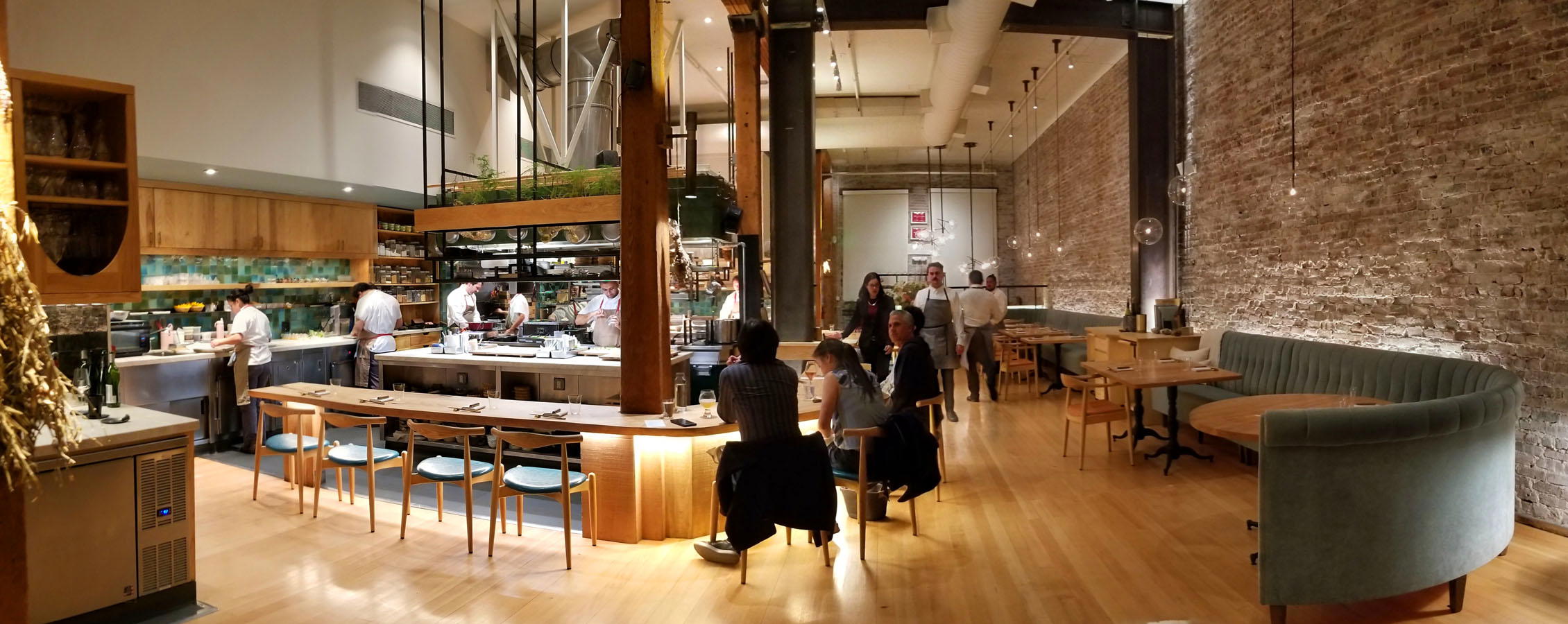
The dining room holds 20 seats, a capacity that places Shōwa firmly in the intimate counter tier alongside the city's omakase and chef's-table formats. At that scale, the kitchen's timing decisions are visible in a way that larger dining rooms obscure. The fryer, the resting station, the plating, the mechanical logic of the meal is present in the atmosphere, which is part of what gives that ambient trace of frying oil its meaning. It is a kitchen-forward environment, and the format rewards diners who are paying attention to sequence rather than simply moving from course to course.
Joe Chang manages the front of house as maître d', a role that carries more weight in a 20-seat format than in a conventional restaurant. At this scale, the pacing between courses, the decision about when to explain versus when to let a dish speak, and the management of a room where every table can hear every other table are all front-of-house responsibilities with real impact on the meal's arc. Executive chef Koji Endo's kitchen vision requires that front-of-house discipline to land as intended, the two functions are more interdependent at 20 seats than at 80.
Where Shōwa Sits in the Broader Conversation
San Francisco's tasting-menu scene has contracted and recalibrated since the pandemic, with several high-profile closures narrowing the field of long-format dinner options. The restaurants that have sustained, Benu, Atelier Crenn, and their peers, tend to anchor on a clear conceptual identity rather than technical breadth alone. Shōwa's identity is unusually specific: it is, in the city's current landscape, the room where you go to understand what kaiseki logic can do to a food category most restaurants treat as casual. That specificity is a strength in a market where differentiation is increasingly the operative criterion.
For broader regional context on San Francisco's dining scene, our full San Francisco restaurants guide maps the current field across price tiers and formats. Visitors building a full trip can also reference our San Francisco hotels guide, bars guide, wineries guide, and experiences guide for a broader picture. Among comparable long-format tasting experiences nationally, Alinea in Chicago and Emeril's in New Orleans represent contrasting approaches to the same general category of ambitious American tasting menus, and 8½ Otto e Mezzo Bombana in Hong Kong is a useful reference point for how Western fine-dining formats interact with Asian culinary traditions at the highest level.
Planning Your Visit
Shōwa is located at Address: 1550 Howard St, San Francisco, CA 94103, in the SoMa district. Format: 10 to 12 courses, kaiseki-inspired with a katsu progression. Capacity: 20 seats. Reservations: Given the 20-seat format and the specificity of the concept, demand runs ahead of availability, book as far in advance as the reservation window allows. Timing: Evening service only; the format is not suited to a quick dinner. Dress: No formal dress code is listed, but the structure of the meal aligns with smart casual at minimum. Contact: Check the venue directly for current booking availability, as phone and website details are subject to change.
Frequently Asked Questions
- What should I eat at Shōwa?
- The menu is a set tasting format, there are no individual ordering decisions. The experience moves through 10 to 12 courses, opening with preparations like miso-marinated fish and uni with bluefin tuna tartare over rice before transitioning into the extended katsu progression. That progression has included greenling cod, tuna, and dry-aged Duroc pork, each accompanied by cabbage and pickles to provide structural contrast. Because the format is fixed, the question is less what to order and more when to visit: the kitchen's current direction and seasonal protein sourcing shape what lands on the progression at any given time.
- Should I book Shōwa in advance?
- Yes, and with significant lead time. A 20-seat dining room running a single multi-course format each evening has a hard capacity ceiling. San Francisco's tasting-menu tier, which includes restaurants like Lazy Bear, Benu, and Atelier Crenn, all operating at comparable price points and similar booking pressure, typically requires reservations weeks to months ahead. Shōwa's specific concept means it attracts a targeted audience with high repeat interest, which adds booking pressure beyond what pure seat count would suggest. If your travel dates are fixed, lock the reservation before arranging anything else.
- What do critics highlight about Shōwa?
- The consistent critical observation is that the meal achieves something structurally surprising: a tasting menu built almost entirely around fried food that concludes as delicate, refined, and balanced. That outcome reflects the kaiseki-inspired sequencing, the deliberate arc from raw and cured preparations into the katsu progression, and the kitchen's management of acidity and texture through recurring accompaniments like cabbage and pickles. Critics also note the ambient presence of fryer oil in the dining room as an atmospheric signal that functions in the opposite way it would at a lesser restaurant: here, it marks intent rather than oversight.
Comparable Options
| Venue | Cuisine | Price | Awards | Notes |
|---|---|---|---|---|
| ShōwaThis venue (the venue you are viewing) | Modern Japanese Tonkatsu | $150–200 | Not listed | Not listed |
| Lazy Bear | Modern American Tasting Menu | Not listed | 2 Michelin Stars · World's 50 Best #25 | Progressive American, Contemporary |
| Benu | Modern Asian Fusion Fine Dining | $150–200 | 3 Michelin Stars · World's 50 Best #33 | French - Chinese, Asian |
| Atelier Crenn | Contemporary French Fine Dining | $300–500 | 3 Michelin Stars · World's 50 Best #44 | Modern French, Contemporary |
| Quince | Modern French Fine Dining | $300–500 | 3 Michelin Stars · World's 50 Best #48 | Italian, Contemporary |
| Saison | Modern French-Italian | Not listed | Michelin Plate | Progressive American, Californian |
Recognition history
Dated appearances from independent guides and award organizations, with the underlying list record or original source where available.
Robb Report The 10 Best New Restaurants in America #6
Robb Report
Continue exploring
More in San Francisco
Restaurants in San Francisco
All restaurants in San Francisco →
Bars in San Francisco
All bars in San Francisco →
Details
- Intimate
- Sophisticated
- Elegant
- Quiet
- Date Night
- Special Occasion
- Private Event
- Standalone
- Local Sourcing
- Tasting Menu
Current opening hours
- Monday
- Closed
- Tuesday
- 6–9:30 PM
- Wednesday
- 6–9:30 PM
- Thursday
- 6–9:30 PM
- Friday
- 6–9:30 PM
- Saturday
- 6–9:30 PM
- Sunday
- Closed
Hours can change for holidays and private events. Hours as of .
Peaceful, exclusive, and intimate, with vintage Japanese home-inspired decor and a refined, culturally immersive atmosphere.