Shingo

1 Michelin Star
Our verdict
Shingo holds consecutive Michelin stars (2024 and 2025) at its Alhambra Circle address in Coral Gables, making it the most formally recognized Japanese restaurant in South Florida.

Pearl is the En Primeur Club membership app — saves, bookings, and concierge access live there. Same editors, same standards.
The menu
What to order
- Toro trio
- Uni nigiri
- Unagi with caviar
- Oyster with okra ponzu
Japanese Precision in the City Beautiful
Coral Gables runs on Mediterranean Revival architecture and a civic self-seriousness that distinguishes it from the louder, faster parts of greater Miami. Alhambra Circle, where Shingo sits at number 112, carries that character: measured, considered, low on spectacle. It is exactly the kind of address where a serious Japanese restaurant can take root without competing for attention against neon and noise. The approach to the room frames expectations before a single dish arrives.
That framing matters because Shingo operates in a category where environment and precision reinforce each other. The leading Japanese dining rooms — whether an eight-seat counter in Ginza or a spare tatami room in Kyoto — are calibrated to put nothing between the guest and the food. Coral Gables, more than any other Miami-area neighbourhood, tolerates that restraint. Our full Coral Gables restaurants guide maps how the city's dining has tilted toward European and Latin formats for decades; Shingo represents the clearest disruption of that pattern at the top of the market.
Two Consecutive Michelin Stars and What They Signal
Shingo earned a star in 2024 and retained it in 2025, a consecutive run that carries more weight than a single-year recognition. Inspectors return when there is consistency to reward, not just a strong opening season. That two-year signal places Shingo in a small group of Florida Japanese restaurants operating at formally verified levels, a cohort that remains far smaller than the starred Japanese population in New York, Chicago, or San Francisco.
For South Florida specifically, the achievement is significant. Miami's dining recognition has historically concentrated in steak, seafood, and Latin cooking. The city produced a Michelin-starred Japanese counter outside the obvious tourist corridors, in a residential-scale neighbourhood rather than on Brickell or South Beach, and the inspectors found it twice. That geography is part of the story. Myojaku in Tokyo and Azabu Kadowaki represent the reference tier for what Michelin-level Japanese technique can look like; Shingo operates at a different scale but draws from the same tradition of craft over volume.
The Case for Simplicity: Why Japanese Comfort Food Demands More Skill Than It Appears
There is a particular discipline required of Japanese cooking that does not apply to cuisines built on sauce, reduction, or transformation. Ramen broth that reads as simple requires eighteen or more hours of extraction and a precise understanding of fat emulsification. Soba cut in-house demands a humidity-controlled environment, knife technique measured in fractions of a millimetre, and timing calibrated to the minute between cut and service. Udon dough obeys rules about water temperature and kneading pressure that most Western kitchens never have to think about. The closer a dish appears to its ingredients, the less forgiving the process behind it.
This is the editorial argument that Japanese cooking at its highest levels keeps making: mastery of the humble format is harder than mastery of the theatrical one. A tasting menu with twelve components can distribute its difficulty across technique, sourcing, and presentation. A bowl of soba with dipping broth has nowhere to hide. Chef Shingo Akikuni's training and the Michelin panel's consecutive recognition suggest a kitchen that understands this. Coral Gables diners eating in the $$$$-tier Japanese category are engaging with that argument whether they frame it consciously or not.
For context on how the broader Coral Gables market prices itself, Beauty & the Butcher operates at the $$$ tier in the contemporary category, and Eating House brings Argentine-Italian at a comparable level. Shingo at $$$$ places the meal above both, which the Michelin credential justifies in market terms.
Where Shingo Sits in the Wider Starred Landscape
A single Michelin star, when held consecutively, positions a restaurant in a specific competitive bracket. It is not the tier of Alinea in Chicago or The French Laundry in Napa, which operate with multiple stars and the infrastructure those demand. It is closer to the tier of Lazy Bear in San Francisco, where the kitchen runs a focused program with enough precision to hold inspector confidence year on year. The comparison to Le Bernardin in New York City or Single Thread Farm in Healdsburg is more about the sustained discipline model than the scale.
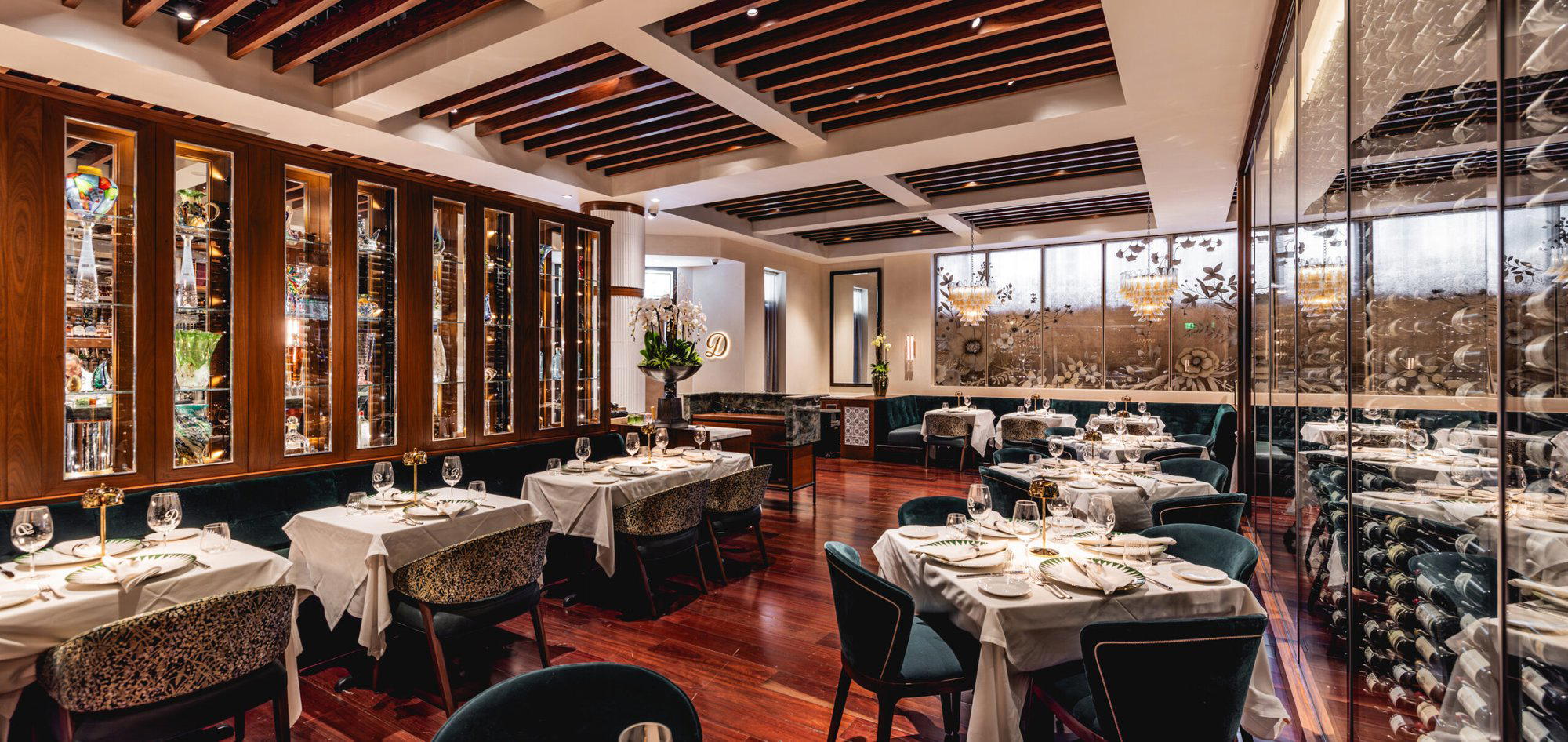
Within the Miami-area market, the relevant comparison set includes Cuban-influenced Coral Gables staples like Havana Harry's and American-format anchors like Hillstone, but those comparisons operate at a different price tier and serve a different function. The more useful frame is against other formally recognized Japanese restaurants in Florida, where Shingo occupies a clear upper position. Daniel's Miami represents another Coral Gables option for a formal dinner format, but in a European rather than Japanese tradition.
Nationally, Emeril's in New Orleans shows how a single strong kitchen identity can anchor a city's perception of a cuisine category. Shingo is performing a version of that function for Japanese dining in South Florida: it is the address that other Japanese restaurants in the region are implicitly measured against.
The 4.9 Google Signal
At 111 responses, the sample is large enough to filter out outlier inflation; at 4.9, it suggests a consistent experience rather than a polarizing one. Some starred restaurants generate sharp critical division at the consumer level; price, formality, or format creates friction. A 4.9 from over a hundred diners suggests Shingo manages the gap between critical recognition and guest satisfaction more cleanly than many in its tier.
Planning Your Visit
Shingo is located at 112 Alhambra Circle, Coral Gables, FL 33134, within walking distance of the Miracle Mile retail corridor and accessible by car from Brickell and South Miami without significant traffic outside peak hours. The $$$$ pricing signals a formal dining commitment: budget at the level of the restaurant's starred Florida peers rather than at the casual Asian dining that dominates the broader Miami market. Reservations for Michelin-starred restaurants in Florida's smaller cities tend to book faster than their New York counterparts would suggest, partly because the total seat count at this level is lower. Booking several weeks in advance is a reasonable baseline, with weekend tables requiring more lead time. For hotels near the neighbourhood, our full Coral Gables hotels guide covers the relevant options. If you are building a broader evening around the area, our Coral Gables bars guide identifies the pre- and post-dinner options nearby. Those interested in the wider neighbourhood food and drink scene can also consult our wineries guide and our experiences guide for a fuller picture of what Coral Gables offers beyond the restaurant itself.
Frequently asked questions
Is Shingo child-friendly?
At $$$$ pricing in a Michelin-starred format in Coral Gables, Shingo is built for adult dining rather than family meals.
What is the atmosphere like at Shingo?
Coral Gables tends toward composed, residential-scale dining rather than the high-energy formats that dominate Miami Beach and Brickell. Shingo fits that register: the $$$$ price point and consecutive Michelin stars (2024 and 2025) indicate a room calibrated for focused dining rather than ambient noise, consistent with the city's broader character and with how serious Japanese restaurants typically manage their environments.
What's the must-try dish at Shingo?
What the Michelin recognition and Chef Shingo Akikuni's Japanese training consistently signal is that the kitchen's discipline is most legible in its treatment of simpler formats, where Japanese technique has the least cover and the most to prove. Order accordingly: trust the direct choices on the menu before the constructed ones.
Pricing, Compared
| Venue | Cuisine | Price | Awards |
|---|---|---|---|
| ShingoThis venue (the venue you are viewing) | Edomae-Style Omakase | $200–300 | 1 Michelin Star |
| Eating House | Modern Fusion | $50–100 | Not listed |
| Hillstone | Polished American with Sushi | $50–100 | Not listed |
| Tinta y Cafe | Cuban Café & Sandwich Shop | $10–20 | Michelin Bib Gourmand · Eater Coffee Guide |
| Zitz Sum | Modern Japanese-Italian Fusion | $100–150 | Michelin Bib Gourmand |
| Beauty & the Butcher | Modern Steakhouse | $50–100 | Michelin Plate |
Recognition history
Dated appearances from independent guides and award organizations, with the underlying list record or original source where available.
Michelin 1 Star
Michelin
Full recognition history (2 entries)
Michelin 1 Star
Michelin
Continue exploring
More in Coral Gables
Restaurants in Coral Gables
All restaurants in Coral Gables →
Bars in Coral Gables
All bars in Coral Gables →
Shingo
The wine
- Wine program
- Curated wine list
- Sommelier-led
- Sake program
Details
- Intimate
- Elegant
- Sophisticated
- Date Night
- Special Occasion
- Celebration
- Chefs Counter
- Open Kitchen
- Historic Building
- Sake Program
- Sommelier Led
- Local Sourcing
- Sustainable Seafood
- Omakase
- Counter Dining
- Sake
- Champagne
- Pescatarian Friendly
Current opening hours
- Monday
- Closed
- Tuesday
- 6–11 PM
- Wednesday
- 6–11 PM
- Thursday
- 6–11 PM
- Friday
- 6–11 PM
- Saturday
- 6–11 PM
- Sunday
- Closed
Hours can change for holidays and private events. Last verified .
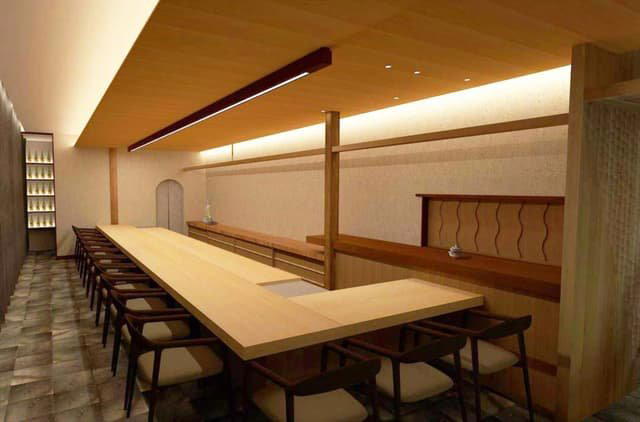
Intimate counter setting with smooth wood construction, refined and traditional Japanese aesthetic in a historic building, soft lighting conducive to focused dining experience.