
Seiran sits in Osaka’s Nakadera area with a menu that reads through Chinese cooking by way of seafood, tantan-men, wine and Shaoxing rather than banquet-room excess. Its Tabelog Chinese WEST 100 selection in 2026, plus earlier selections in 2024, 2023 and 2021, places it in a serious regional set while keeping the room compact and the ordering format flexible.
Pearl is the En Primeur Club membership app — saves, bookings, and concierge access live there. Same editors, same standards.
- Address
- Japan, 〒542-0065 Osaka, Chuo Ward, Nakadera, 1 Chome−2−23 シティガーデン中寺
- Phone
- +81 6-6777-5647
- Website
- tabelog.com
 Saves & bookings on Pearl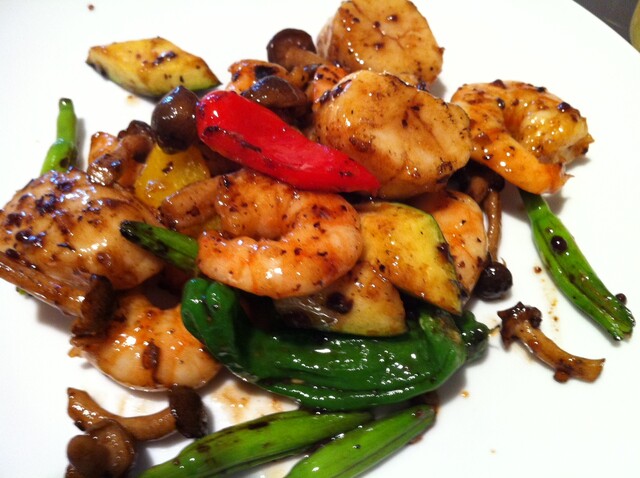
Nakadera is quieter than Osaka’s shorthand of neon, queues and late-night grill smoke. Around Matsuyamachi and Tanimachi Rokuchome, temples, sloping side streets and regulars’ rooms replace spectacle. That matters: Osaka Chinese dining has long had two public faces, the noodle-and-dumpling counter and the formal banquet table. Seiran sits between them, where a meal can start with tantan-men or grow into seafood, wine and a longer à la carte progression without becoming hotel dining.
That middle tier is increasingly interesting. Osaka’s reputation leans on okonomiyaki, kushikatsu, sushi counters and kappo, but its Chinese restaurants show Japanese sourcing meeting Chinese technique: fish as anchor, spice restrained or forceful, and drinks lists beyond beer into wine and aged Shaoxing. Seiran’s recognition in Tabelog Chinese WEST 100 for 2026, after selections in 2024, 2023 and 2021, confirms it belongs to the smaller group of Kansai Chinese rooms regular diners compare, not a casual neighbourhood footnote.
A Chinese menu built around fish, noodles and à la carte control
The menu explains the restaurant. Instead of pushing a fixed tasting format, seat reservations begin with an assorted appetizer platter, then open into more than 50 à la carte dishes. In Osaka, strong restaurants often reveal themselves through range rather than ceremony; here, diners read the kitchen through seafood, noodles, steamed dishes, fried textures and sauce balance, then decide how far to extend the meal.
Seafood is the clearest signal. Seiran highlights fresh seafood from the wholesale market and fish as a focus, placing it closer to Kansai’s ingredient-led dining culture than generic Chinese comfort cooking. Dishes include Chinese-style sea bream sashimi, Cantonese-style steamed natural gashira from Nagasaki, stir-fried abalone, Hokkaido scallops with beef and doubanjiang, soft shell crab in chili sauce, and soft shell crab with “golden sand” aromatics. Fish appears raw, steamed, sauced and stir-fried, moving through temperature, texture and intensity without leaving seafood.
Tantan-men adds another marker. In Japan, tantan-men has become its own category, often detached from Sichuan dan dan noodles and adapted toward sesame richness, chilli heat and ramen-counter familiarity. Listing Chinese cuisine and tantan-men together signals a room that works as both noodle destination and broader dinner address: not simply a quick bowl stop, and not only a special-occasion Chinese table.
The drinks follow the same hybrid logic. Shochu, wine, a stated wine focus, Kame-dashi Shaoxing and BYO wine with corkage suggest pairing rather than habitual bottle ordering. A sommelier is listed, meaningful at this price tier. Chinese food and wine in Japan can feel uneven when the list is an afterthought; here, wine and Shaoxing operate as parallel routes.
Where it sits in Osaka's compact-restaurant culture
With 25 seats, including counter seating, three tables and a private room, Seiran belongs to Osaka’s compact dining culture rather than large Chinese rooms for weddings or corporate banquets. The counter suits solos and pairs; the private room suits family or business meals needing separation. Private use is listed for up to 20 people, making it small enough for focus and structured enough for planned groups.
That scale shapes comparisons. In Osaka, il Centrino and DELI a Casa represent the Italian small-restaurant lane, while Udon to Osake Karahori Kinugawa and Kyu Yam Tei Karahori ten show nearby casual formats competing on specificity rather than scale. Seiran’s lane is Chinese cooking with seafood depth, a noodle identity and a drinks program that gives dinner shape. If the evening calls for a small-room Osaka meal with ordering latitude, this is the Chinese answer rather than another kappo or Italian reservation.
The price position supports that reading. Dinner sits at JPY 6,000 to JPY 7,999; lunch is JPY 1,000 to JPY 1,999, with review-based averages higher. In Osaka terms, that is serious but not trophy pricing, allowing a composed dinner from several dishes without entering the high-end tasting-menu economy. The JPY 6,500 lunch course, available by reservation from 12:30, separates casual lunch traffic from planned dining.
Recognition adds a filter. Tabelog scores are not the only way to judge Japanese restaurants, but a 3.68 score plus repeated Chinese WEST 100 selections creates a credible public signal. For visitors, that helps in a deep field of small Osaka restaurants with uneven English-language visibility; awards do not guarantee preference, but reduce noise where strong rooms are often not the loudest online.
How to plan the meal without overcomplicating it
The practical rhythm is direct. Lunch has last food order at 1:30 p.m. and can close earlier depending on waiting customers, so late arrival is poor strategy. Dinner opens earlier on weekends and public holidays. The restaurant takes irregular days off, often around Mondays, with roughly seven closures a month. Schedule it rather than improvise.
Reservations are available. Seat reservations begin with an assorted appetizer platter charged per person before à la carte ordering. Cancellation terms are strict, including a per-person fee for same-day reductions or cancellation and full course charges for course bookings. Dinner has a one-drink order system and 5 percent dinner-time charge. These are common in Japan, but suit diners who know party size and will commit.
Access is strongest by subway. Seiran is listed near Matsuyamachi Station and approachable from Tanimachi Rokuchome, with the Nakadera address away from heavy Dotonbori flow. Parking is not provided, though coin parking is nearby. Credit cards are accepted; electronic money and QR code payments are not. The non-smoking room has free Wi-Fi and is listed as wheelchair accessible, useful details in a compact Osaka dining room where assumptions often fail.
Families can make it work with planning. School-age children are welcome, baby food is allowed, and private rooms are available by advance reservation under dinner conditions tied to group size or minimum spend. Outside food and bento are not allowed. It is more plausible for a multigenerational meal than many serious small counters, though not a free-form family canteen.
For a broader Osaka itinerary, place Seiran beside other focused food stops rather than treating it as a standalone detour. EP Club’s Osaka coverage ranges from casual and bakery listings such as .cafe, 52CHO-ME BAKERY and 551 Horai (551蓬莱) to international counters such as 99 Pizza Napoletana Gourmet and a canto (Italian). For city planning, use Our full Osaka restaurants guide, plus Our full Osaka hotels guide, Our full Osaka bars guide, Our full Osaka wineries guide and Our full Osaka experiences guide. Readers comparing Japanese regional dining beyond Osaka can also look at -Grilled beef Sukiyaki- KAMAKURA TANUKIAN 鎌倉 たぬき庵 in Kamakura. 鮪と炭火焼き うお炭 秋葉原店 in Tokyo.know in Kumamoto, (Shoku) Vietnam in Kawasaki, [Curry Senmon Ten] Maruyama Kyoju. in Sapporo, [ki:] in Kyoto, Jōdo Saké Bar in Los Angeles and Onigiri Time in Pasadena.
Comparable Spots
Comparable venues for context, by category and price tier.
| Venue | Cuisine | Price | Notes |
|---|---|---|---|
| SeiranThis venue — the venue you are viewing | Chinese Fine Dining | $$$ | Not listed |
| Opus One | Seasonal Fine Chinese with Shark Fin & Seafood Courses | $$$ | Chūō |
| Mikuni Tei | Traditional Chinese counter restaurant | $$ | Chūō |
| Shokudo Kuro Usagi | Modern Chinese Izakaya | $$ | Kita |
| Kitashinchi Fuka | Modern Chinese Dim Sum Tasting (Kitashinchi Counter) | $$$$ | Kita |
| É nye | Spanish Restaurant | $$$ | Chūō |
Recognition history
Dated appearances from independent guides and award organizations, with the underlying list record or original source where available.
Tabelog 100 #48 · No. 48
Tabelog · Tabelog 100 - Chinese cuisine - WEST - 2026
Continue exploring
More in Osaka
Restaurants in Osaka
Browse all →




Bars in Osaka
Browse all →


Hotels in Osaka
Browse all →



Wineries in Osaka
Browse all →
At a Glance
- Sophisticated
- Classic
- Intimate
- Business Dinner
- Date Night
- Special Occasion
- Group Dining
- Standalone
An upscale, traditional Chinese dining room with a polished, intimate feel suited to lingering meals.