
Tabelog 100 #79
Our verdict
seiohtei Shinjuku ten brings yoshoku into the department-store dining room: Japanese-style Western cooking, steak, and hamburger steak inside Isetan Shinjuku. Its Tabelog 100 Yoshoku EAST 2025 selection, 80-seat format, and steady JPY 2,000–2,999 lunch and dinner range put it in a practical tier for Shinjuku regulars rather than occasion-only dining.

Pearl is the En Primeur Club membership app, where members save venues, book tables and use the concierge.
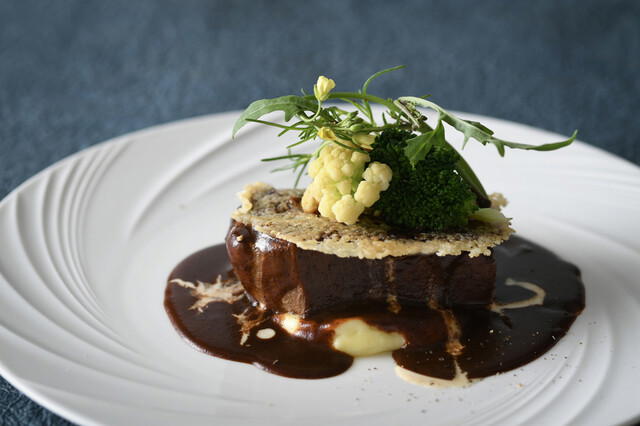
The menu
What to order
- Sakura Plate
- Menchi Katsu with demi-glace
- Beef Cutlet
- Hamburger steak
- Ebi Fry
In Tokyo, the rhythm differs from the city’s reservation-only counters. Diners move with intent: not chasing spectacle, but returning to formats that work. Yoshoku belongs naturally here: Western food translated through Japanese habits of portion, sauce, rice, set meals, and restraint. In Tokyo, it is less novelty than a dependable part of the city’s dining week.
seiohtei Shinjuku ten sits in that tradition with a clear brief: Japanese-style Western cuisine, steak, and hamburger steak in a room built for repeat use. The Tabelog 100 Yoshoku EAST 2025 selection gives it a signal beyond everyday convenience. In a city where visitors chase sushi counters, ramen queues, or cocktail rooms, yoshoku rewards different attention: how Tokyo absorbs foreign forms, standardizes them, and judges them by local expectations.
Yoshoku as regulars' food, not nostalgia theater
Yoshoku can be misunderstood by visitors as retro comfort food. In Tokyo, it is more exacting. Hamburger steak, steak plates, rice, sauces, and set-meal logic belong to a lineage running through everyday dining rooms, retail settings, and long-running local restaurants. The pleasure is consistency: sauce ratio, rice temperature, timing of fried or grilled items, and a table that can handle lunch, a weekday catch-up, or dinner after shopping without changing its grammar.
This is where Tokyo matters. The city holds many dining personalities close together: food halls, station-adjacent chains, chef-led counters, late-night drinking rooms, and long-established specialty restaurants. A yoshoku room competes less with destination omakase than with where locals return when they want a cooked meal rather than a project. Compared with casual Tokyo stops such as noix de beurre Shinjuku isetan ten and Premium Mario Gelateria Shinjuku isetan ten, this is a seated meal proposition. Compared with more specialized Tokyo dining rooms such as 新宿割烹 中嶋, it belongs to the accessible, repeatable side of the city.
The regulars’ view explains why the category holds up. Tokyo diners do not need every meal to perform rarity. They need legible ordering, rooms that absorb mixed-age parties, and cooking that satisfies without a tasting-menu clock. The listed categories, yoshoku, steak, and hamburger steak, point to that function. The venue fits the everyday Tokyo pattern: a meal can feel planned without becoming formal.
What the room says about Tokyo dining habits
Tokyo is often described through movement: rail transfers, retail floors, entertainment streets, and after-work crowds. Dining follows the same logic. The city rewards restaurants that understand timing. A guest may arrive between errands, before an evening plan, or with a companion who does not want to decode a chef’s-counter ritual. Straightforward restaurants answer with clarity. They are structured for diners who value reliability over narrative.
That does not make the format anonymous. The Tabelog 100 Yoshoku EAST 2025 recognition places seiohtei Shinjuku ten within a judged regional category, not merely among convenient everyday restaurants. The distinction matters because yoshoku is crowded with everyday operators; recognition usually reflects the discipline to separate familiar dishes from casual approximations. A Tabelog score of 3.56 further suggests solid local approval on a platform where small score differences carry weight among Japanese diners.
The menu’s center of gravity helps travelers building a Tokyo itinerary. After sushi, tempura, kappo, or yakitori, yoshoku resets the palate without leaving Japanese dining culture. It is Western-influenced cooking filtered through domestic expectations, more revealing than another imported brasserie meal. Nearby and across the city, EP Club’s Tokyo coverage spans different registers, from other casual rooms to counter formats, cafes, curry specialists, and grilled-food restaurants. Together, they show Tokyo dining as specialized habits, not a single hierarchy.
For broader planning, Our full Tokyo restaurants guide gives the restaurant context, while Our full Tokyo hotels guide, Our full Tokyo bars guide, Our full Tokyo wineries guide, and Our full Tokyo experiences guide help place this meal within a larger trip. Treat it as a Tokyo calibration point: not rarefied, not careless-casual, but proof of how the city makes everyday dining precise.
How to read the order without overthinking it
The unwritten menu logic at yoshoku restaurants is simple: follow the house categories and avoid forcing the meal into French, American, or steakhouse expectations. Hamburger steak and steak are core to the genre, not attempts to imitate a Western grill. Japanese-style Western cooking is about familiar forms handled with local expectations, where texture, sauce, rice, and timing matter more than novelty.
The stronger editorial case for seiohtei Shinjuku ten is not that it replaces a high-drama Tokyo dinner. It offers a grounded Tokyo meal with enough recognition to justify choosing it over a random stop. The listed lunch and dinner budget of JPY 2,000 - JPY 2,999 suits practical planning, and the categories make the proposition easy to understand. For travelers, that combination can be more valuable than another difficult reservation, especially on days shaped by shopping, transit, and changing plans.
Tokyo regulars protect places that solve recurring problems. Here, the problem is where to eat Japanese Western food in Tokyo without turning the meal into an errand or compromise. That is why this venue belongs in a serious Tokyo dining plan. It teaches the city at a different volume.
For adjacent Japan and Asia-Pacific reading, EP Club also covers regional contrasts across other cities and dining styles, from grill-focused meals and cafes to curry counters, sake bars, and casual Japanese formats.
Frequently asked questions
Where exactly is seiohtei Shinjuku ten?
Tokyo.
What's the pricing like at seiohtei Shinjuku ten?
Pricing at seiohtei Shinjuku ten is listed as JPY 2,000 - JPY 2,999 JPY 2,000 - JPY 2,999.
How far ahead should I plan for seiohtei Shinjuku ten?
For a lunch or dinner slot in Tokyo, planning ahead is sensible, especially at times when local dining rooms are busiest.
What's seiohtei Shinjuku ten best at?
The draw is yoshoku in the Tokyo sense: steak, hamburger steak, and Japanese-style western cuisine. Its Tabelog 100 Yoshoku EAST 2025 selection signals a house that is judged within that category, not as a generic restaurant.
Booking and Cost Snapshot
Comparable options at the same price tier.
| Venue | Cuisine | Price | Awards | Notes |
|---|---|---|---|---|
| seiohtei Shinjuku tenThis venue (the venue you are viewing) | Japanese-style Western (Yoshoku) | $30–50 | Tabelog 100 #79 | Not listed |
| Garden Lounge | Hotel lounge for desserts, afternoon tea, and buffet with Japanese garden view | $50–100 | Tabelog 100 #58 | Chiyoda, Hotel lounge for desserts, afternoon tea, and buffet with Japanese garden view |
| Eau de Vie | Classic Hotel Bar & Cocktails | $50–100 | Tabelog 100 #81 | Shinjuku, Classic Hotel Bar & Cocktails |
| Bar Capri | Hotel cocktail bar with light bites | $50–100 | Tabelog 100 #42 | Chiyoda, Hotel cocktail bar with light bites |
| Ishi no Hana | Craft cocktail bar | $30–50 | Tatler Listed in Best Bars Asia-Pacific · Tabelog 100 #19 | Shibuya, Craft cocktail bar |
| BAR Shusendo | Classic Japanese cocktail & whisky bar | $30–50 | Tabelog 100 #34 | Chūō, Classic Japanese cocktail & whisky bar |
Recognition history
Dated appearances from independent guides and award organizations, with the underlying list record or original source where available.
Tabelog 100 #79 · No. 79
Tabelog · Tabelog 100 - Yoshoku - EAST - 2025
Continue exploring
More in Tokyo
Restaurants in Tokyo
All restaurants in Tokyo →


Bars in Tokyo
All bars in Tokyo →







Details
- Classic
- Cozy
- Elegant
- Family
- Group Dining
- Business Dinner
- Celebration
- Special Occasion
- Casual Hangout
- Private Dining
- Hotel Restaurant
- Local Sourcing
- A La Carte
- Set Menu
A calm, department-store restaurant with a relaxed, quietly elegant atmosphere where guests can sit back and enjoy nostalgic Japanese-style Western dishes in a comfortable dining room.