Schützenmatt
Schützenmatt sits on Hellgasse in Altdorf, the small cantonal capital of Uri that most travellers pass through on the way to the Gotthard. In a Swiss dining scene where regional identity increasingly shapes kitchen philosophy, this address represents the kind of neighbourhood anchor that larger resort towns rarely produce. It belongs on any serious itinerary of Central Switzerland dining.
Pearl is the En Primeur Club membership app — saves, bookings, and concierge access live there. Same editors, same standards.
- Address
- Hellgasse 1, 6460 Altdorf, Switzerland
- Phone
- +41418701160
- Website
- restaurant-schuetzenmatt.ch
- Directions
- Get directions
 Saves & bookings on Pearl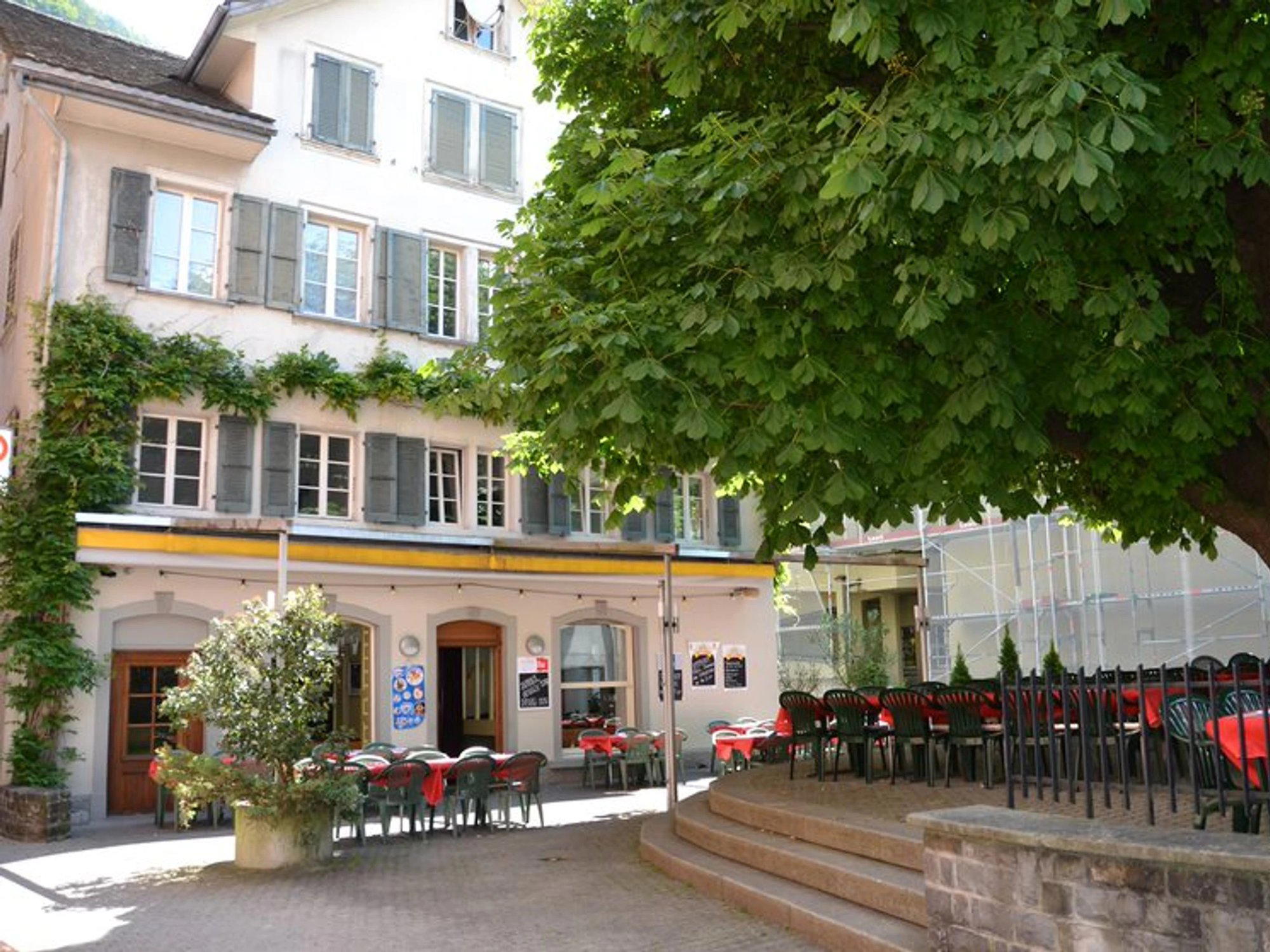
Altdorf at the Table: What the Gotthard Corridor Produces
Altdorf sits on the Gotthard corridor, with the A2 motorway slipping through the Uri valley, the William Tell statue marking the town square, and coaches continuing south toward the Gotthard. That passage dynamic has long defined what restaurants here are expected to do, which is to say, feed travellers efficiently rather than feed a local dining culture seriously. Schützenmatt, at Hellgasse 1, sits in a different register from that highway-adjacent logic. The address places it in the town centre, where the built environment is more compact and the clientele more rooted.
Central Switzerland rarely appears in the same conversation as the country's headline dining destinations. The names that dominate Swiss fine dining tend to cluster around Geneva, Zurich, Basel, and the Graubünden resort circuit. Properties like Schloss Schauenstein in Fürstenau and Memories in Bad Ragaz operate with significant infrastructure, international press attention, and pricing that positions them against European peers rather than regional ones. focus ATELIER in Vitznau, barely forty kilometres north of Altdorf along Lake Lucerne, shows how close the serious creative cooking can get to this corridor without quite reaching into it. That gap is the context in which a place like Schützenmatt operates: a town that the dining economy has largely overlooked, and where the absence of competition either produces complacency or creates the conditions for something more honest.
Ingredient Geography in the Uri Valley
The editorial angle that matters most for any restaurant in this part of Switzerland is ingredient sourcing, because the geography makes it unavoidable. Uri is a mountain canton: high Alpine pasture to the south and east, the Reuss River running through the valley floor, Lake Uri feeding into the larger Lake Lucerne system to the north. That terrain produces a specific larder. Alpine dairy traditions in this region predate the industrialised Swiss cheese export model by centuries, and the grass-fed herds on higher summer pastures translate into milk and butter with a fat composition that lowland equivalents do not replicate. Freshwater fish from the lake system, game from the surrounding forests during autumn season, and the particular root vegetables and pulses that thrive at altitude are the raw materials that define what an honest kitchen in Altdorf should be drawing from.
Across Swiss German-speaking Switzerland, the broader shift toward regional sourcing has reshaped how kitchens frame their identity. Restaurants like Magdalena in Schwyz, the neighbouring canton to the north, have built their reputation partly on the discipline of working within a defined geography rather than importing prestige ingredients from further afield. The argument is not sentimental. Shorter supply chains mean fresher product and greater seasonal specificity, and in mountain regions with genuine climatic variation, seasonal specificity is measurable in flavour rather than just in marketing language.
What this means for a diner approaching Schützenmatt is that a reliable way to read the kitchen's ambition is to look at what arrives on the plate and ask whether it reflects this particular valley or could have been sourced from a cash-and-carry in any Swiss city. That test distinguishes restaurants that are geographically rooted from those that happen to be geographically located somewhere interesting. For the broader Altdorf dining scene, and for the Uri region generally, that distinction is the one that carries weight.
Where Schützenmatt Sits in the Swiss Dining Hierarchy
Switzerland's awarded dining tier is concentrated and well-documented. Hotel de Ville Crissier in Crissier and Cheval Blanc by Peter Knogl in Basel represent the upper Michelin bracket, operating at price points and formality levels that place them in a different category from a cantonal-town restaurant entirely. The sharing-format innovation that IGNIV Zürich by Andreas Caminada introduced, or the French classical rigour at La Table du Lausanne Palace, operate within a competitive set defined by international comparison rather than regional anchoring. 7132 Silver in Vals and Da Vittorio in St. Moritz belong to the destination-resort dining model, where the room and the setting are part of the product in ways that a town-centre address cannot replicate.
Schützenmatt does not occupy that tier. What it occupies is the space that most Swiss towns of Altdorf's scale need but rarely have: a serious local table that serves the community year-round, not just during peak tourist flows. The nearest comparable international reference points for this type of address, a regional anchor that grounds itself in local ingredient networks, are places like the quietly reliable bistronomie houses that define serious eating in secondary French towns, or the kinds of neighbourhood trattorias in northern Italy that the Slow Food movement spent decades documenting. The analogy is structural rather than culinary: it describes a restaurant's relationship to its town rather than its position on any awards ladder. For readers accustomed to the scale of celebrated urban destinations like Le Bernardin in New York City or Atomix, Schützenmatt represents a fundamentally different proposition: smaller, more local, and legible only in the context of the valley it serves.
Further afield within Switzerland, L'Atelier Robuchon in Geneva, La Brezza in Ascona, Colonnade in Lucerne, and Maison Wenger in Le Noirmont each represent distinct regional expressions of Swiss and Swiss-adjacent cooking, from French-inflected precision to Ticinese Mediterranean influence. Altdorf's contribution to that map is quieter but no less real for it. The Uri valley's larder is genuinely distinct, and any kitchen that engages with it seriously produces something that cannot be replicated in a city dining room regardless of budget. Einstein Gourmet in Sankt Gallen demonstrates how Swiss regional cities can support ambitious cooking without metropolitan infrastructure; Altdorf operates on a smaller scale still, but the principle holds.
Planning a Visit
Hellgasse 1 is a short walk from Altdorf's central square and the William Tell monument, making the address direct to reach on foot from the cantonal rail stop. Altdorf connects to the main Swiss rail network via the Flüelen junction, and the journey from Lucerne takes under an hour. Schützenmatt is recommended for reservations and is open Wednesday through Sunday, with hours varying by day. Reservations are recommended ahead of a visit.
At-a-Glance Comparison
Comparable venues nearby, for context on price, style, and recognition.
| Venue | Cuisine | Price | Notes |
|---|---|---|---|
| SchützenmattThis venue — the venue you are viewing | Traditional Swiss with Regional Seasonal Focus | $$ | Not listed |
| Blockhus | Swiss with eclectic influences | $$ | Fluntern |
| Restaurant gartenHAUS | Modern Swiss Herbal Cuisine | $$ | Reussbühl |
| Fischer's Fritz | Swiss Lakeside Seafood | $$$ | Wollishofen |
| Restaurant GIGERs | Swiss Regional | $$ | Sils im Engadin |
| Restaurant Nova | Modern Swiss Fine Dining | $$$ | Flims Dorf |
Continue exploring
More in Altdorf
Restaurants in Altdorf
Browse all →
Bars in Altdorf
Browse all →
Hotels in Altdorf
Browse all →

At a Glance
- Rustic
- Romantic
- Cozy
- Trendy
- Business Dinner
- Family
- Date Night
- Terrace
- Historic Building
- Local Sourcing
- Garden
Current opening hours
- Monday
- Closed
- Tuesday
- Closed
- Wednesday
- 10 AM–11 PM
- Thursday
- 10 AM–11 PM
- Friday
- 10 AM–11:30 PM
- Saturday
- 10 AM–11:30 PM
- Sunday
- 10 AM–10 PM
Hours can change for holidays and private events. Last verified .
Bright and friendly small dining room with rustic, casual, romantic, and trendy modern atmosphere; shaded garden terrace for lingering.