
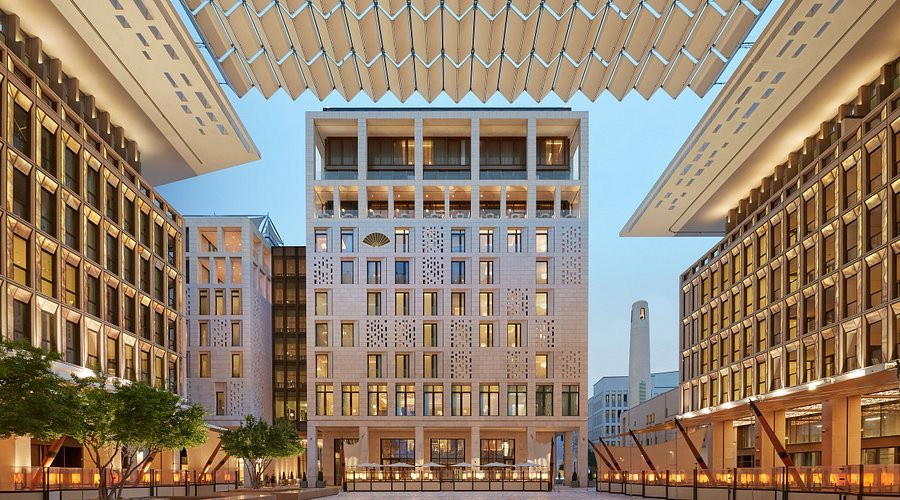
On the first floor of a private members' club in Doha's rejuvenated Msheireb downtown, SAWA by Sanad holds a 2024 Michelin Plate for its contemporary Levantine menu. Sharing plates anchor the format, while trolley service adds quiet theatre to evening sittings. Non-members are welcome at the table, though the atmosphere tends to prompt a second look at membership.
Pearl is the En Primeur Club membership app — saves, bookings, and concierge access live there. Same editors, same standards.
- Address
- 4052 Wadi Msheireb St, Doha, Qatar
- Phone
- +974 4142 7000
- Website
- sanaddoha.com
- Directions
- Get directions
 Saves & bookings on Pearl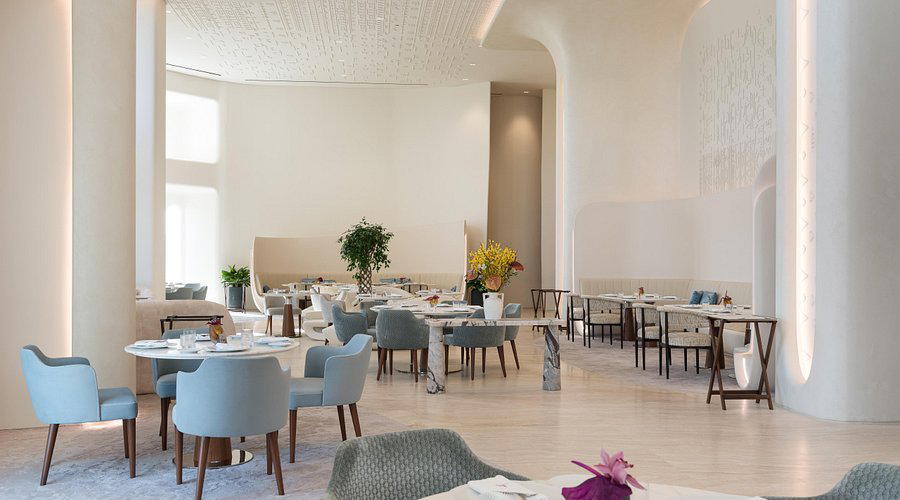
Downtown Doha's Levantine Counter-Argument
Doha's dining scene has long been anchored by hotel towers and waterfront addresses, where international brands set the price expectations and format conventions. The Msheireb downtown regeneration has begun to shift that geometry. SAWA by Sanad is a Modern Levantine restaurant in Doha, Qatar, at 4052 Wadi Msheireb St.
The Levantine kitchen has a particular resonance in a Gulf city like Doha. The culinary traditions of Lebanon, Syria, Palestine, and Jordan have filtered through the region for decades, carried by diaspora communities and regional movement. What has changed is the register in which those traditions are now being expressed. A generation of contemporary Levantine restaurants, from Bait Maryam in Dubai to Al Badawi in New York City and Ayat in New York City, has moved the format away from generous canteen-style spreads toward plated precision and curated sharing menus. SAWA belongs to that wave, and its 2024 Michelin Plate recognition confirms that the approach has landed in Doha with credibility.
The Room Before the Food
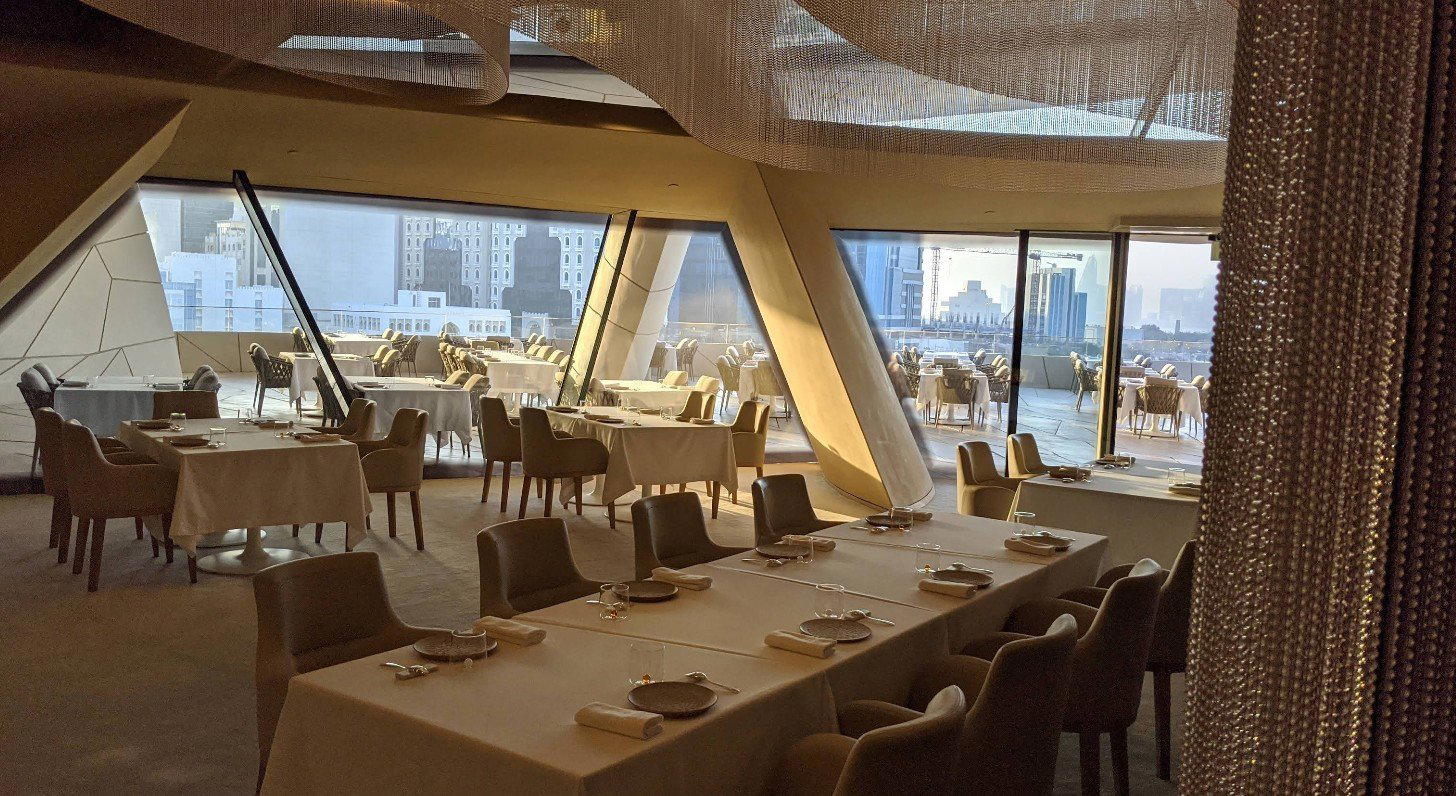
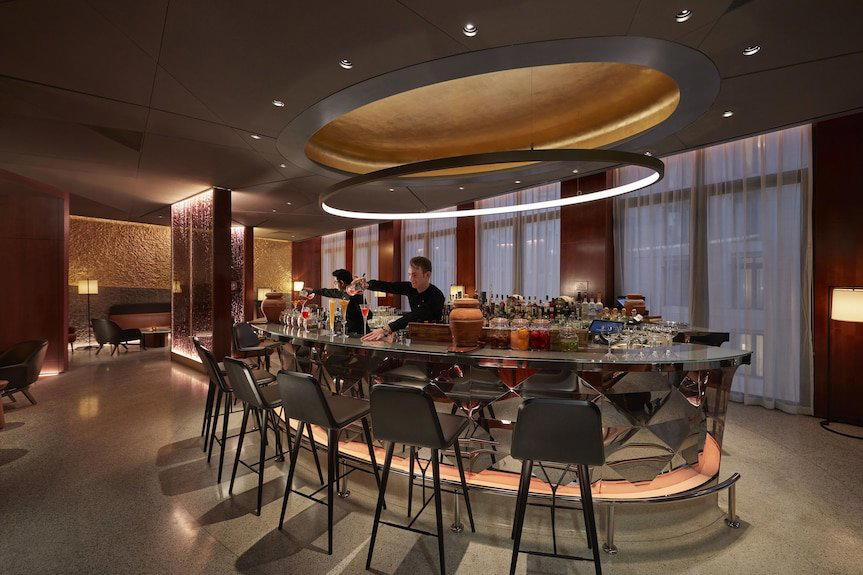
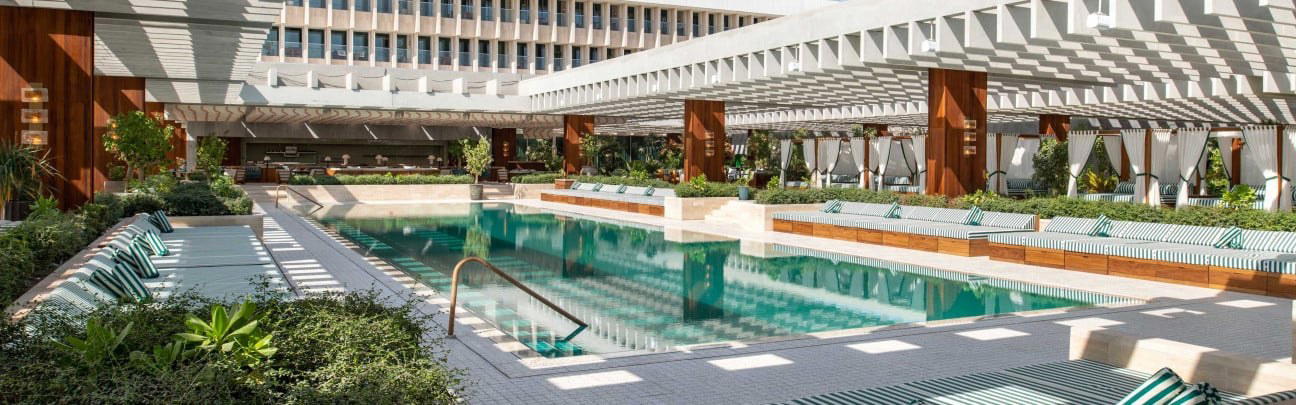
This is not a buzzy street-level restaurant pulling foot traffic from a lively promenade. The approach involves the specific orientation of a private club: quieter by design, the service pitched toward attentiveness rather than efficiency, the room dressed for conversation rather than spectacle. The dining room has been described consistently as chic without excess, a calculated restraint that separates it from the more theatrical international restaurant formats operating at similar price points in the city.
That restraint extends to who you share the room with. Members-only environments in the Gulf tend to attract a professional and often international crowd, and the non-member dining option at SAWA means the room mixes club regulars with visitors who have sought it out deliberately. The result is a dining environment that feels purposeful rather than transient. At a price tier of ﷼﷼﷼, it sits above the casual Levantine register represented by addresses like Jiwan and Saasna, while remaining accessible relative to the ﷼﷼﷼﷼ ceiling occupied by IDAM by Alain Ducasse or Hakkasan.
A Menu Built Around the Table
Contemporary Levantine menus are structurally generous, designed for the table rather than the individual plate. Mezze culture runs deep in the tradition, and SAWA's format follows that logic: dishes arrive in a sequence suited to sharing, with the kitchen calibrating portions and pacing to encourage a long, lateral meal rather than a vertical progression through courses. That structure favours groups over solitary dining and positions the food as the occasion itself rather than the prelude to something else.
The evening format introduces an additional layer. Trolley service, a gesture borrowed from the theatre of French service traditions and adapted here to a Middle Eastern context, adds a degree of tableside ceremony to dinner sittings. The mechanics matter less than the effect: it slows the meal down, creates a moment of engagement between server and guest, and signals that the kitchen is thinking about the dining experience as a sequence of small performances rather than a production line. The Adana Restaurant in Los Angeles and Kismet represent how the Levantine format adapts across different urban contexts; at SAWA, the Gulf setting and members' club frame give the same basic format a distinct sense of occasion.
The Pastry Tradition and How SAWA Fits It
Any serious Levantine kitchen carries the weight of a pastry and dessert tradition that is among the more technically demanding and culturally loaded in the world. Knafeh, baklava, mamoul, Turkish delight: these are not incidental finishes but the closing argument of a meal that is fundamentally about generosity and craft. In the contemporary Levantine restaurant, that tradition gets reinterpreted rather than replicated. The question is always how far to push the reinterpretation before the connection to the original is lost.
Doha's position in the Gulf means that diners arrive with genuine familiarity with these traditions. This is not a market where knafeh needs explaining; it is a market where knafeh will be judged against a high standard of personal memory. That pressure is productive. Restaurants that earn Michelin recognition in this context, as SAWA has, do so by meeting the tradition on its own terms while demonstrating that the kitchen has something deliberate to say. The Al Farah in Abu Dhabi represents a neighbouring city's answer to the same question; in Doha, SAWA is among the clearest statements of where contemporary Levantine dessert craft currently sits.
For the wider Gulf comparison, Baron and Bayt Sharq operate in adjacent territory within Doha itself, each bringing different cultural reference points to Middle Eastern dining at a comparable tier. The Desert Rose Café anchors the more casual end of the local Middle Eastern spectrum. SAWA's Michelin Plate and its members' club setting keep it in a different bracket from all three.
Planning Your Visit
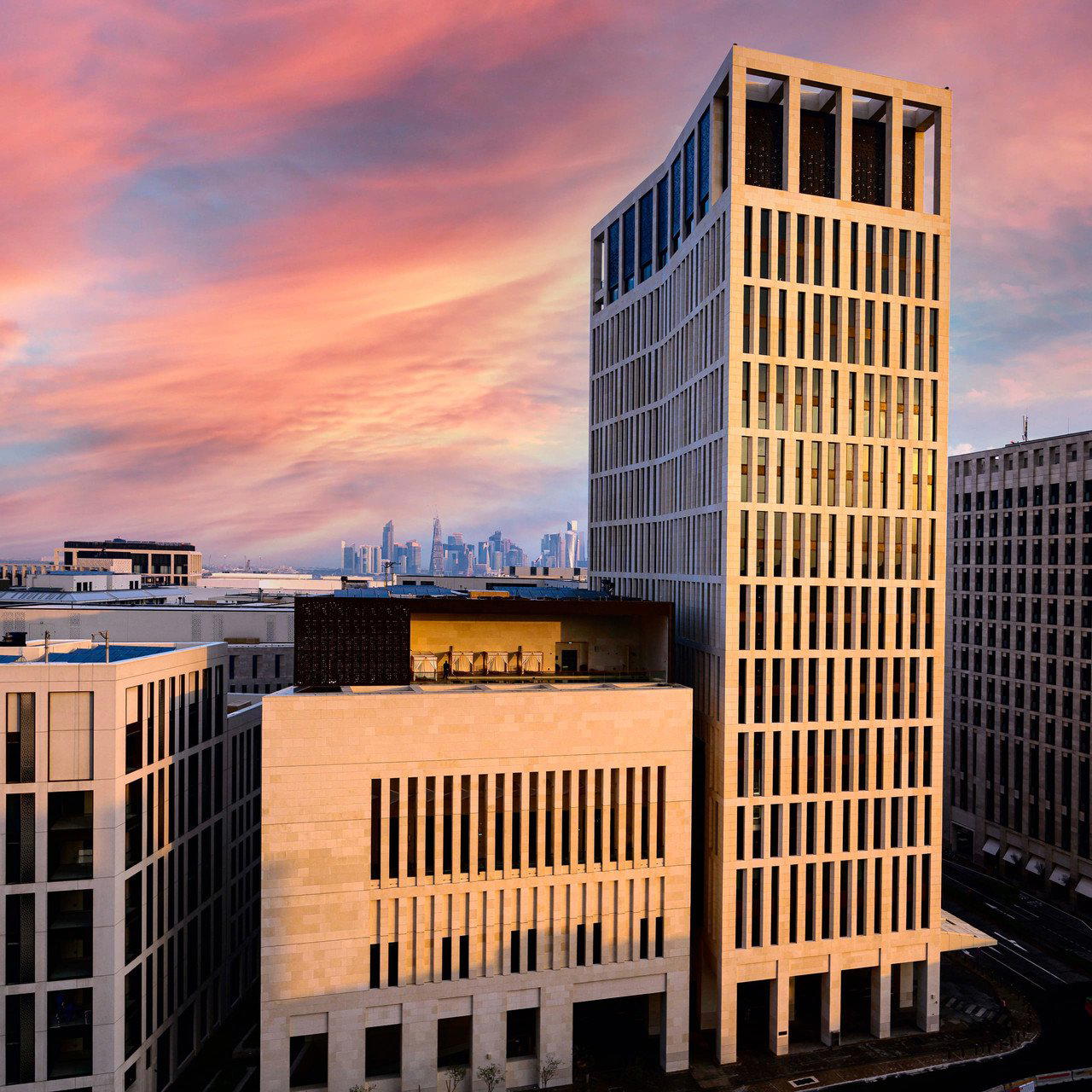
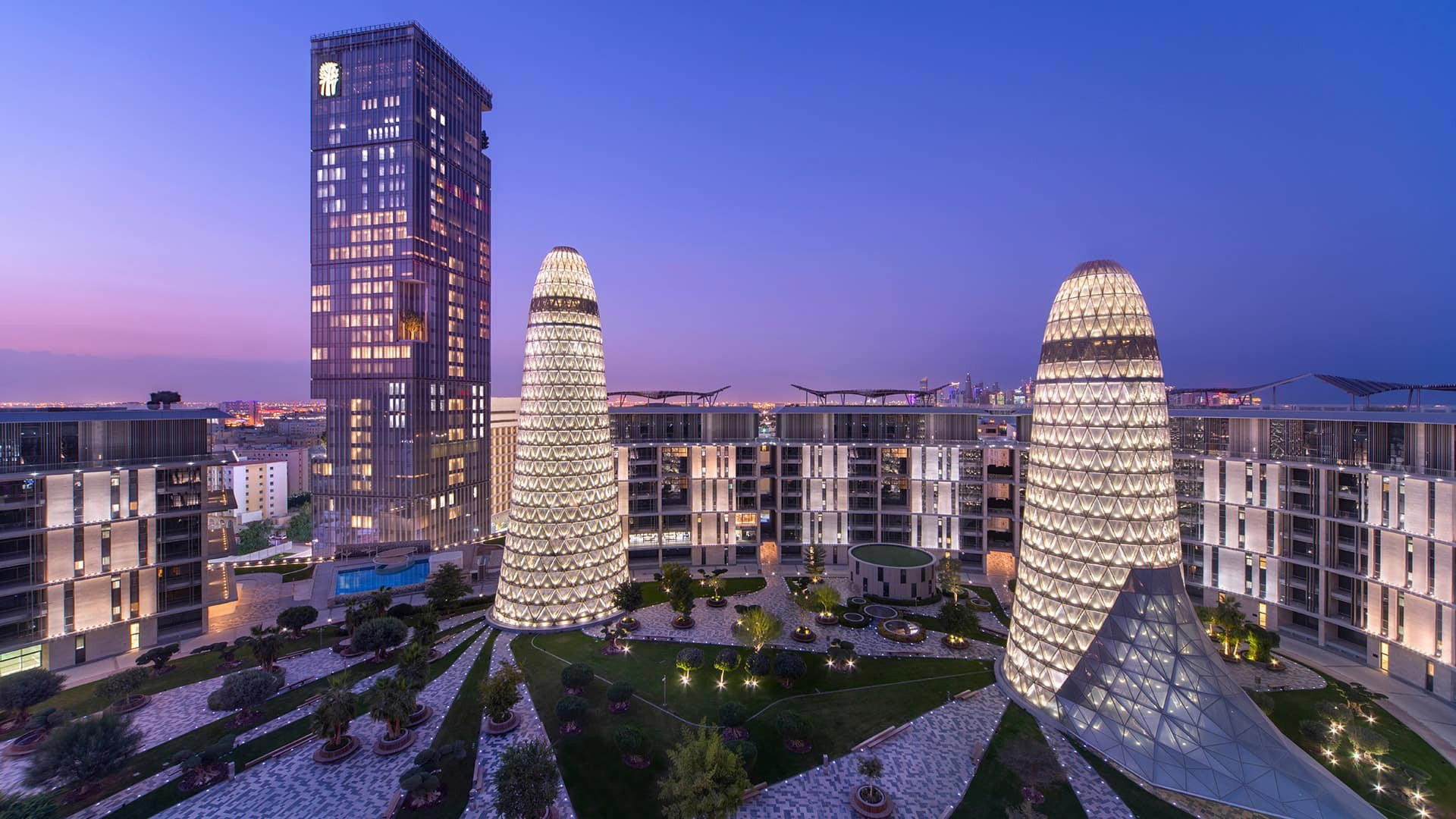
SAWA by Sanad is located at 4052 Wadi Msheireb Street in Doha's Msheireb downtown district, a neighbourhood that has developed substantially in recent years and rewards broader exploration before or after dinner. Non-members can dine without a club membership, which removes the primary barrier for visitors. The evening sitting, with its trolley service component, is the format most worth planning for if your schedule allows.
For Levantine comparison outside the Gulf, the format is being executed with similar contemporary ambition at Adamá in Oaxaca and Astoria Seafood in New York City, though the cultural context at each address is distinct enough that the comparisons are structural rather than direct.
Budget and Context
Comparable venues nearby, for context on price, style, and recognition.
| Venue | Cuisine | Price | Awards | Notes |
|---|---|---|---|---|
| SAWA by SanadThis venue — the venue you are viewing | Middle Eastern | $$$$ | Michelin Plate | Not listed |
| Dar Yema | Mushaireb, Moroccan & North African | $$$ | Michelin Plate | Not listed |
| Saasna | Not listed | $$$ | Michelin Plate | Fereej Mohammad Bin Jasim/Mushaireb, Modern Qatari |
| Chicago Rare | Not listed | $$$$ | Michelin Plate | The Pearl, Contemporary Chicago Steakhouse |
| yūn | West Bay, Modern Cantonese & Taishanese | $$$$ | Michelin Plate | Not listed |
| La Méditerranée Robuchon | Not listed | $$$$ | Michelin Plate | The Pearl, French-Mediterranean Fine Dining |
Recognition history
Dated appearances from independent guides and award organizations, with the underlying list record or original source where available.
Michelin Plate
Michelin
Michelin Plate
Michelin
Michelin Plate
Michelin
Continue exploring
More in Doha
Bars in Doha
Browse all →
At a Glance
- Elegant
- Modern
- Sophisticated
- Group Dining
- Celebration
- Special Occasion
- Date Night
- Private Dining
- Hotel Restaurant
- Extensive Wine List
- Craft Cocktails
Current opening hours
- Monday
- 5 PM–2 AM
- Tuesday
- 5 PM–2 AM
- Wednesday
- 5 PM–2 AM
- Thursday
- 5 PM–2 AM
- Friday
- 5 PM–2 AM
- Saturday
- 5 PM–2 AM
- Sunday
- 5 PM–2 AM
Hours can change for holidays and private events. Last verified .
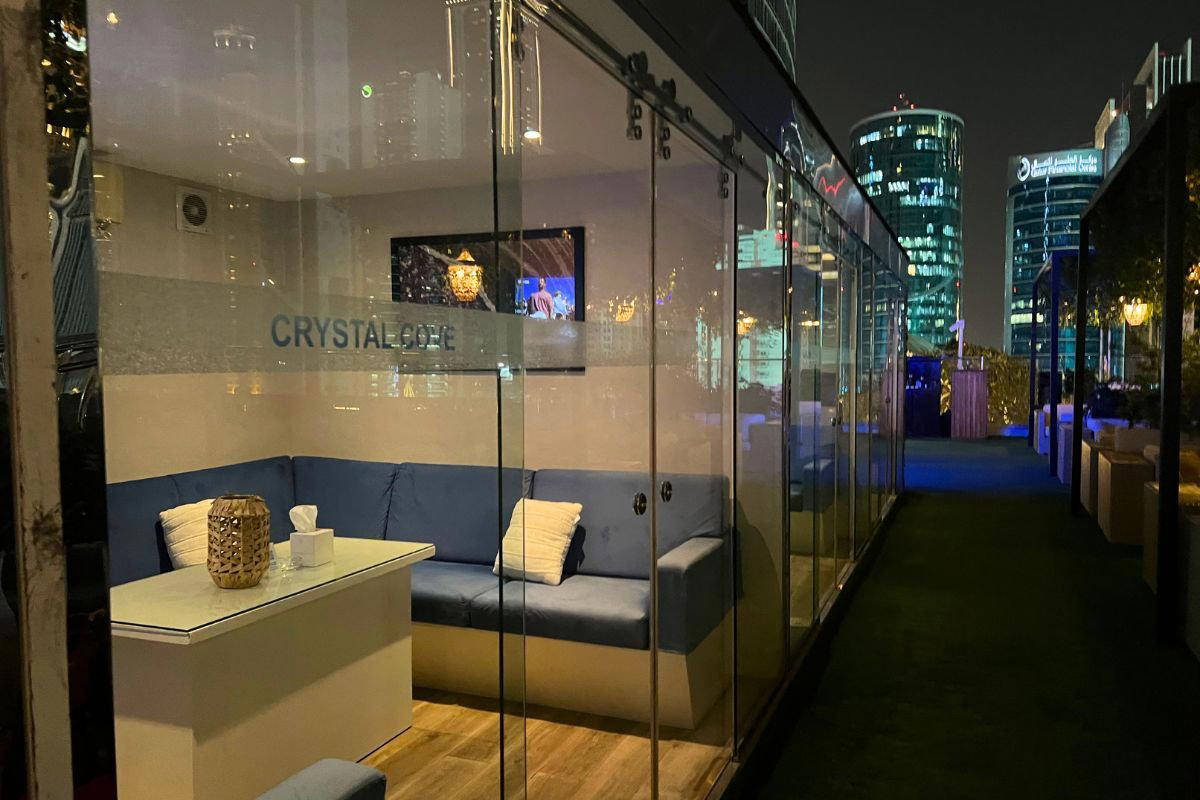
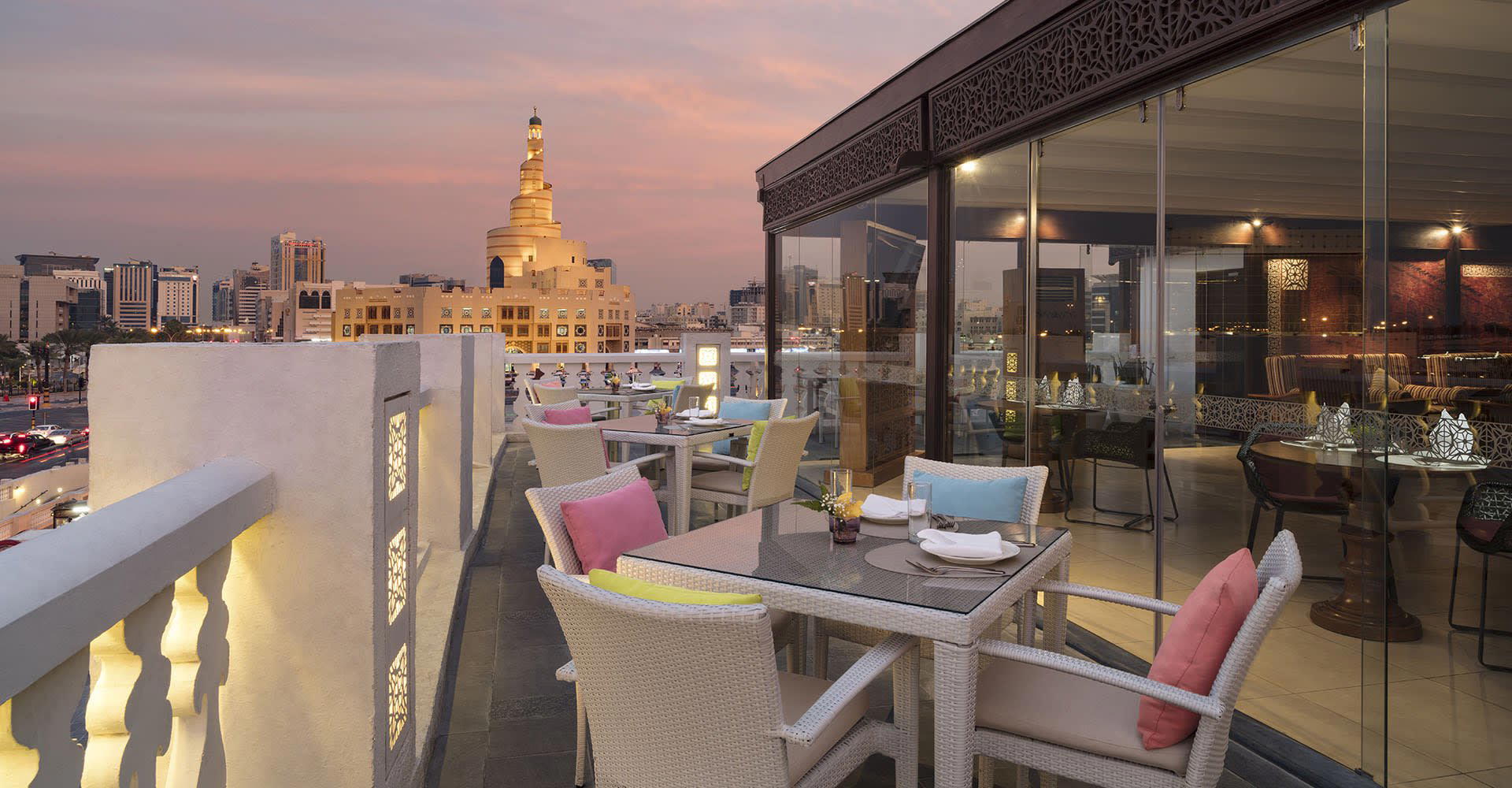
Chic and composed dining room with contemporary design reflecting Levantine heritage, soft conversation, and warm welcoming atmosphere.