Michelin Plate
Our verdict
On Staten Island's Hylan Boulevard, Ayat holds a Michelin Plate (2024) for Palestinian cooking that carries genuine neighborhood weight. The saj flatbreads, shawarma, and mezze at the $$ price point sit closer to Bay Ridge tradition than to Manhattan's polished Middle Eastern dining tier, placing it in a different but equally credible conversation from peers like Al Badawi or Kubeh.
The menu
What to order
- Baba ghanoush
- Chicken kebab
- Falafel
- Mansaf
- Muhammarah
A Busy Avenue, a Glass Façade, and Flatbread Made by Hand
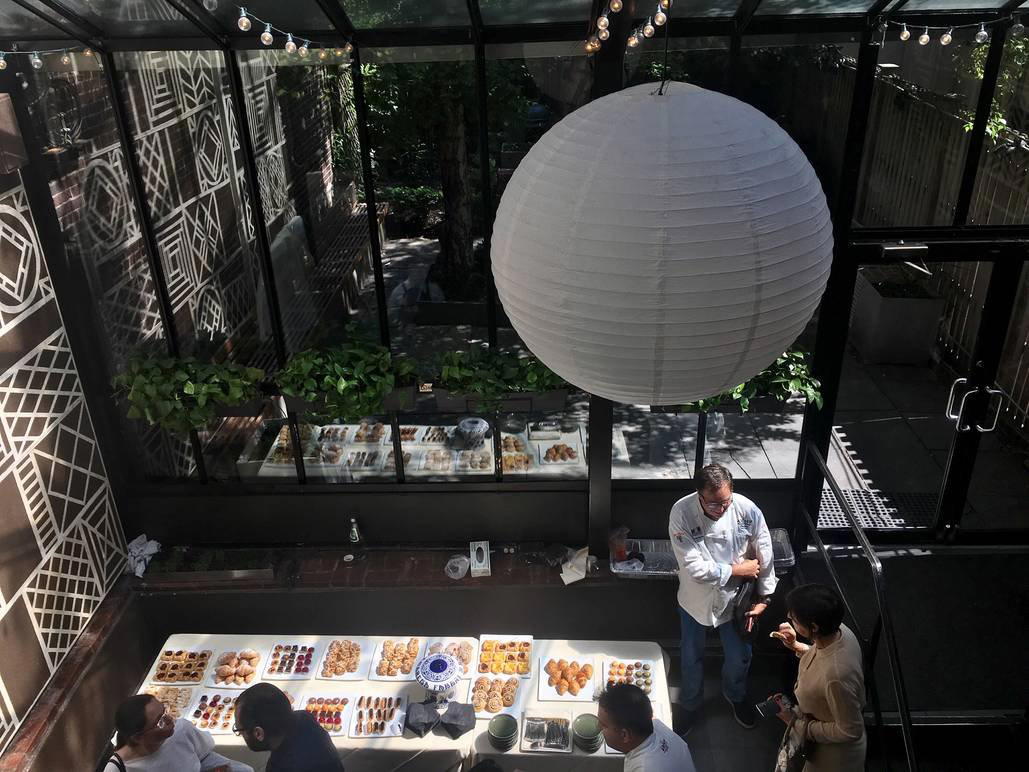
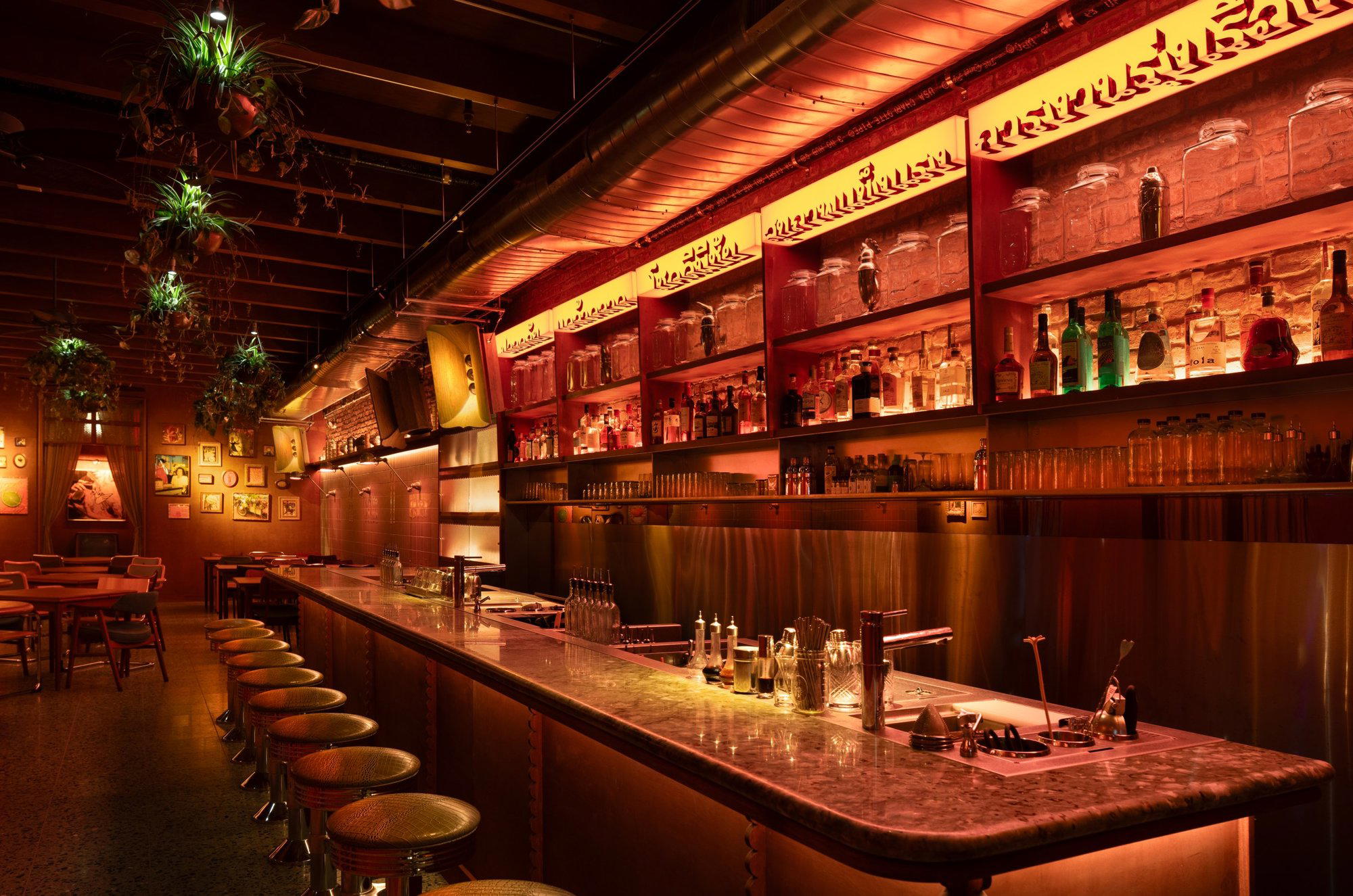
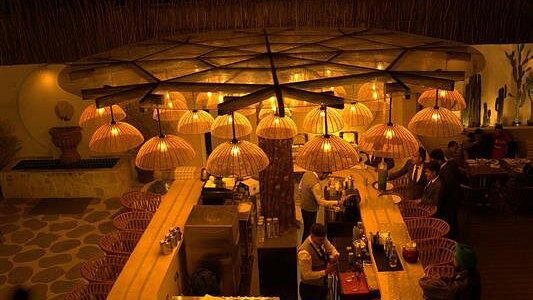
On Hylan Boulevard, a commercial strip that runs the length of Staten Island's eastern shore, most storefronts compete for attention with signage rather than atmosphere. Ayat manages something different: a glass façade threaded with vines and strung-up lights signals that someone has thought carefully about arrival before you step inside. The interior doesn't pursue drama, walls carry murals, a long counter faces the kitchen, and the room has the settled, un-designed quality of a place that has found its footing. What draws the eye is operational: flatbreads being formed by hand on a dome-shaped saj, and shawarma rotating on a spit. These are gestures of transparency that the more dressed-up tier of New York's Middle Eastern restaurants rarely bother with.
That physical honesty is consistent with where Ayat sits in the broader map of Palestinian and Levantine cooking in the city. New York's Middle Eastern dining scene has developed two distinct registers. One runs through Manhattan and parts of Brooklyn, where restaurants like Al Badawi and Mesiba operate at a studied, sometimes chef-forward pitch. The other register, neighborhood-anchored, unforced, priced for regulars rather than visitors, is where Ayat operates. Both registers have their place. They are not competing for the same diner on the same night.
The Midday Case: Why Lunch Changes the Equation
The lunch-versus-dinner divide matters significantly at a place like Ayat, and not merely in terms of foot traffic. Daytime service at neighborhood-oriented Middle Eastern spots tends to reward the meal with a different kind of attention. At midday, the saj station and the shawarma spit are at full operational tempo, and the pace of the room reflects a community using the restaurant as it was intended, quickly, practically, without ceremony. This is not a criticism. It is an argument for showing up before 2pm if you want to watch the kitchen working at its natural rhythm, and for expecting a slower, quieter room by evening when the neighborhood crowd thins out and the space takes on a more relaxed register.
The $$ price point, lower than virtually every Manhattan-based peer in the Middle Eastern category, holds at both services, making the lunch visit a particularly strong value proposition. For context, Mamoun's operates at a comparable price tier but across a fast-casual format that strips out the counter-service theater. Ayat retains that theater without the price escalation that usually comes with it.
The Menu: Palestinian Classics Held with Conviction
Menu at Ayat follows a Palestinian grammar that doesn't attempt translation for an unfamiliar audience. Mezze anchors the opening, baba ghanoush appears in its correct form, with char informing flavor rather than decoration. Beef shawarma arrives drizzled with tahini and served over fluffy rice, a presentation that prioritizes comfort over visual architecture. These are dishes that have been made this way for generations across the Levant and among Palestinian diaspora communities, and that tradition is evident in execution rather than described in menu copy.
For context on how this menu fits the wider New York scene: Kubeh in the West Village focuses on a more specialized format centered on the dumpling-soup tradition, while Ayat casts a wider net across the Palestinian repertoire. Neither approach is more authentic, they reflect different decisions about scope and audience. Globally, Palestinian cooking at this register has a strong counterpart in places like Bait Maryam in Dubai and Baron in Doha, where Gulf-based Palestinian diaspora cooking has developed its own recognized character. What distinguishes the New York version is the Staten Island borough context, further from the editorial attention concentrated in Manhattan, but no less serious in kitchen discipline.
The Michelin Plate and What It Signals
In 2024, Michelin awarded Ayat a Plate designation, the guide's signal that a kitchen is cooking food worth a special trip, sitting below the star tier but above the crowd. In the context of Staten Island's dining representation in the guide, this carries specific weight. The borough receives relatively sparse Michelin coverage compared to Manhattan, Brooklyn, or Queens, which means a Plate recognition lands with more editorial significance than it might elsewhere. It places Ayat in a different peer conversation than its $$ price and neighborhood-strip address would initially suggest, closer in ambition to Astoria Seafood in its outer-borough, no-frills-but-credentialed category than to the tasting-menu tier represented by Alinea in Chicago, Lazy Bear in San Francisco, The French Laundry in Napa, Single Thread Farm in Healdsburg, Providence in Los Angeles, or Emeril's in New Orleans. The Michelin Plate does something specific: it confirms that the kitchen's consistency holds under scrutiny, not just on a good night.
Getting There and Planning Your Visit
Ayat sits at 2018 Hylan Boulevard in Staten Island's New Dorp area. Getting there from Manhattan typically means the Staten Island Ferry from Whitehall Terminal to St. George, followed by the S79 express bus or a rideshare down Hylan, a journey of roughly 45 to 55 minutes door to door depending on connections. The address places it well outside the immediate orbit of the city's Middle Eastern dining cluster in Bay Ridge, Brooklyn, which makes the visit a deliberate trip rather than an incidental one. That distance also means you will not be competing with the Bay Ridge lunch crowd; the room draws primarily from the immediate Staten Island neighborhood, and the atmosphere reflects that. For anyone building an itinerary that takes Middle Eastern cooking in New York seriously, the full picture spans Ayat on Staten Island, the Bay Ridge corridor, and the Manhattan options covered in our full New York City restaurants guide. Those planning an overnight can find accommodation options in our full New York City hotels guide, and those extending the visit into bars or experiences can consult our full New York City bars guide, our full New York City wineries guide, and our full New York City experiences guide.
What Regulars Order at Ayat
What do regulars order at Ayat?
The Michelin Plate (2024) specifically cites the Palestinian menu's execution of classics, which points toward the mezze and shawarma as the dishes carrying the most kitchen investment. At the $$ price tier, ordering broadly across the mezze selection alongside a main is the format the room is set up to support, particularly at lunch when the kitchen is running at full tempo.
Frequently asked questions
What part of town is Ayat in?
Ayat is located at 2018 Hylan Blvd, Staten Island, NY 10306, New York City.
Is there a head chef associated with Ayat?
The chef associated with Ayat is Gwern Khoo and Ben Tham.
What do regulars order at Ayat?
The baba ghanoush and beef shawarma over rice are the two dishes that appear most consistently in reviews, with the shawarma finished with tahini on fluffy rice. The saj flatbread, shaped live on the dome-shaped grill at the counter, is a draw in its own right and worth ordering for the process alone. Ayat holds a Michelin Plate (2024), which gives some weight to what the regulars already know.
What kind of cuisine does Ayat serve?
Is Ayat more mid-range or high-end?
Pricing at Ayat is listed as $$.
Has Ayat won any awards?
Ayat has received recognition including: Brought to Bay Ridge by Abdul Elenani and his wife, Ayat Masoud, this is a small spot that shows mighty care and pride in its cooking. Housed on a busy avenue, a glass façade with vines and strung-up lights sets it apart; inside, the space ….
The Short List
| Venue | Cuisine | Price | Awards | Notes |
|---|---|---|---|---|
| Ayat | Palestinian Middle Eastern Bistro | Not listed | Not listed | Not listed |
| Le Bernardin | French Seafood Fine Dining | $300–500 | 3 Michelin Stars · World's 50 Best #13 | French, Seafood |
| Atomix | Modern Korean Tasting Menu | $300–500 | 2 Michelin Stars · World's 50 Best #7 | Modern Korean, Korean |
| Masa | Seasonal Hokkaido Tempura Omakase | $150–200 | Tabelog 100 #34 | Sushi, Japanese |
| Per Se | French Fine Dining Tasting Menu | $300–500 | 3 Michelin Stars · World's 50 Best #40 | French, Contemporary |
| Eleven Madison Park | Contemporary Plant-Based Fine Dining | $300–500 | 3 Michelin Stars · World's 50 Best #4 | French, Vegan |
Recognition history
Dated appearances from independent guides and award organizations, with the underlying list record or original source where available.
Michelin Plate
Michelin
Full recognition history (2 entries)
Michelin Plate
Michelin