Sasani

Michelin Bib Gourmand
Our verdict
Staff guide the pace and the selection, making it a reliable address for groups wanting to work through a meal rather than order and move on.

Pearl is the En Primeur Club membership app, where members save venues, book tables and use the concierge.
The menu
What to order
- Ghorme sabzi
- Joojeh kabab
- Kashk-o bademjan
- Kufteh tabreezi
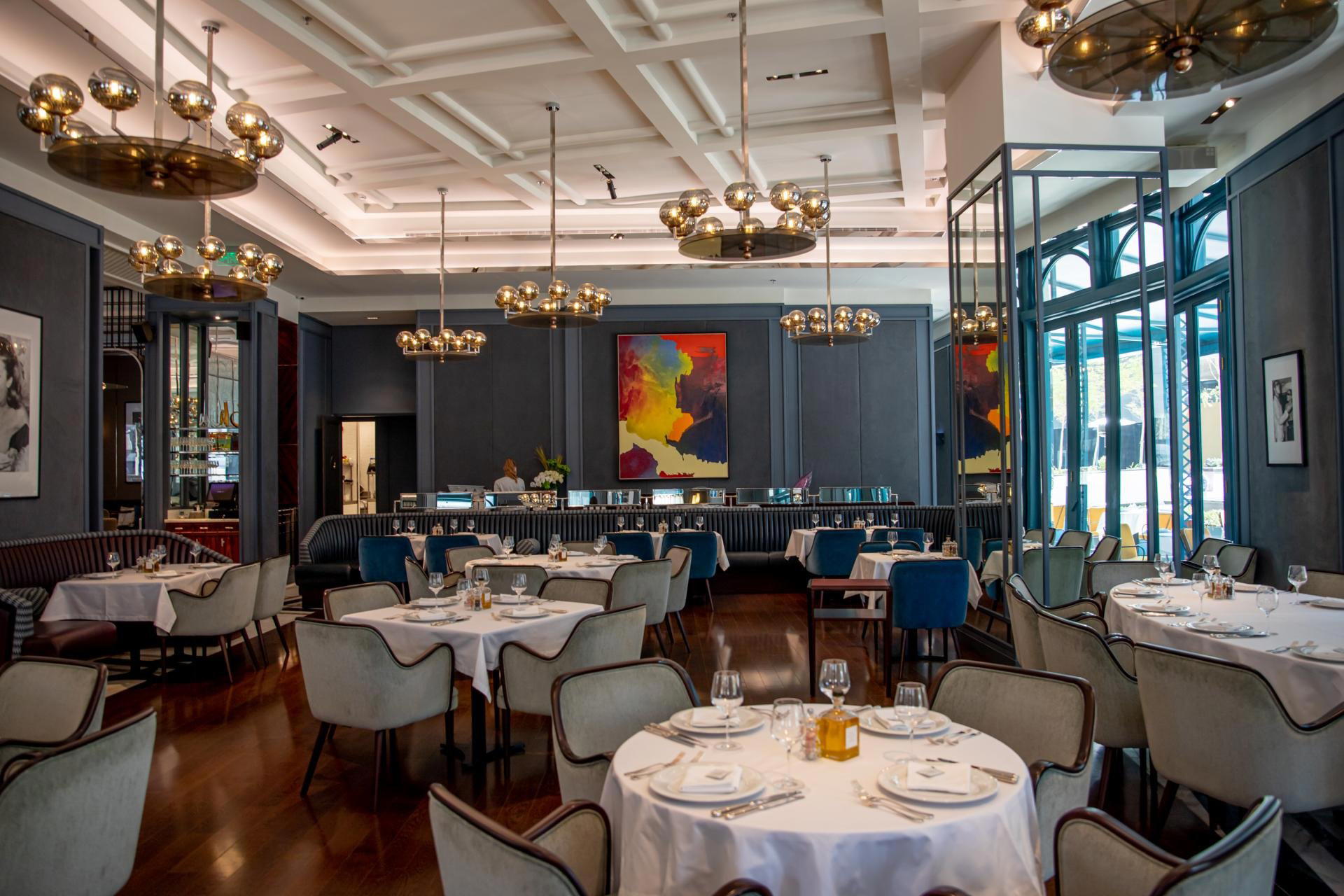
The Room Before the Food
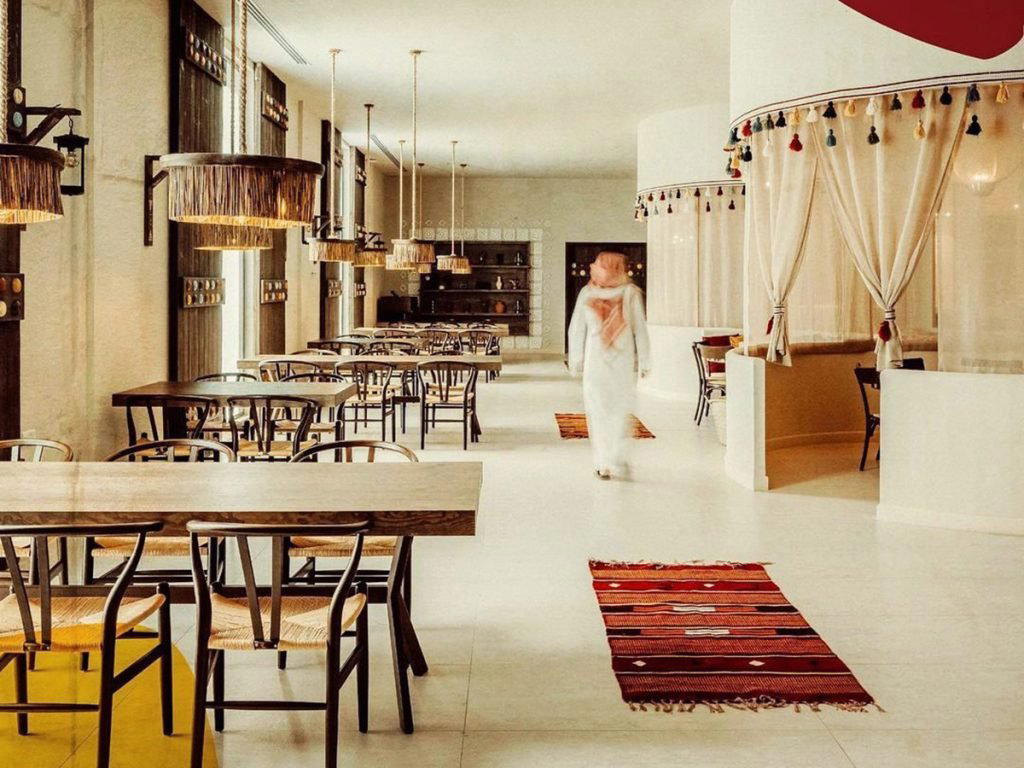
Some restaurants announce their intentions through the menu. Sasani does it through the ceiling. That distance matters less than it might in a more walkable city. Riyadh's dining scene is navigated by car, and the journey to Sasani is a short, direct drive that removes any real friction from the visit. What the location does offer is a slightly calmer register than the central restaurant strip, an environment that suits the deliberate, course-by-course pacing the kitchen appears designed for.
The Logic of an Iranian Table
Iranian cooking is one of the older and more structurally coherent cuisines in the Middle East, built on a set of combinations, slow-cooked proteins, aromatic herbs, sour-fruit tamarind and barberry notes, charcoal heat on meat, that have remained largely stable for centuries. It occupies a different position in Riyadh's dining offer from the Gulf and Levantine traditions that dominate elsewhere in the city. Addresses like Aseeb and Marble operate in registers that feel distinctly contemporary Saudi; Sasani's frame of reference sits further east, and that specificity is exactly what gives it a defined place in the city's wider offer.
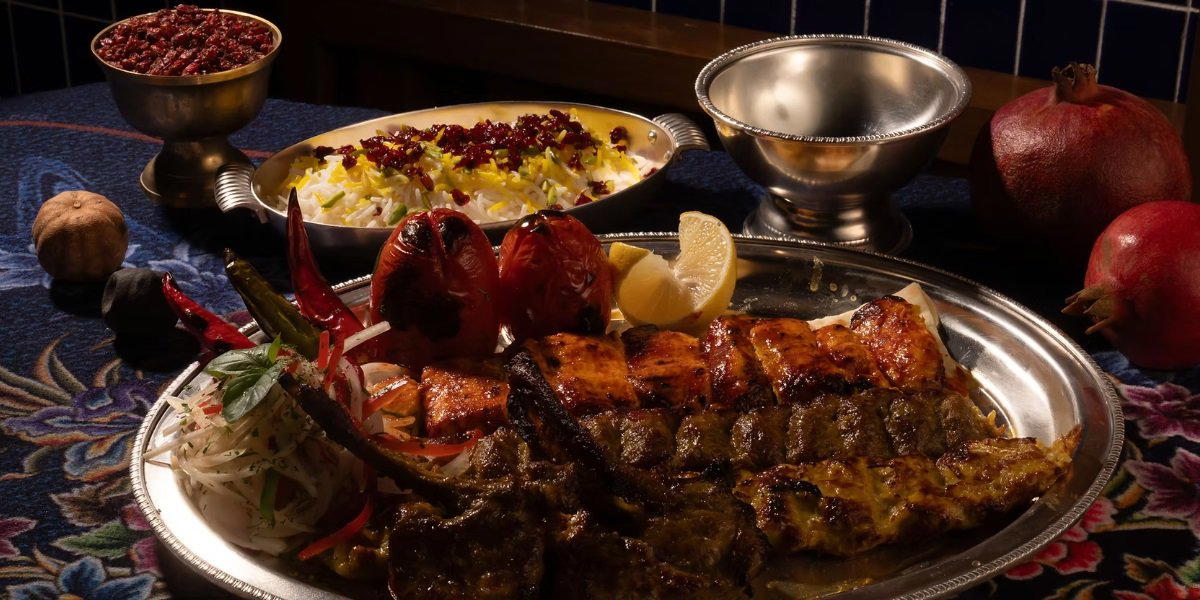
The menu at Sasani runs from hearty stews, the slow-braised khoreshts that form the backbone of any serious Iranian table, to charcoal-grilled kebabs in generous portions. Both categories represent the poles of Iranian cooking: the patient, oven-built depth of the stew versus the immediacy of fire-cured meat. A meal that travels between the two covers the essential grammar of the cuisine. Larger sharing portions are available for groups, which shifts the meal away from individual ordering and toward the more communal approach that Iranian dining traditionally favours.
Pacing and the Ritual of the Meal
In formal Iranian eating culture, meals are not rushed. Dishes arrive in sequence rather than simultaneously, rice is treated as a structural element rather than an afterthought, and the table is expected to settle in rather than turn over quickly. The editorial angle here is worth stating plainly: the dining ritual at this kind of table rewards patience. Ordering for the group, letting staff recommend according to what the table is in the mood for, and allowing the pace to be managed rather than dictated, these are the conditions under which the food makes the most sense.
Sasani's team are, by the venue's own account, on hand to guide both the selection and the tempo of the experience. In practice, that means visitors who arrive without a fixed plan of attack are in a reasonable position: the staff can steer the order toward balance, mixing stew and grill, heavier and lighter, in a sequence that makes structural sense. That kind of service intelligence is a material part of the offer at addresses where the menu is wide and the combinations are not immediately obvious to diners unfamiliar with the cuisine.
For groups arriving for a shared meal, the table-ordering format plays to Iranian food's natural strengths. Sharing a khoresh alongside a kebab platter, with rice and sides distributed across the table, is how this food was designed to be eaten. The solitary two-cover order, working through a menu that is built for communal consumption, misses some of that logic.
Where Sasani Sits in Riyadh's Dining Picture
Riyadh's restaurant scene has broadened considerably in recent years. Japanese addresses like Myazu and European formats like Benoit have extended the city's range at the formal end of the market. Within Saudi Arabia more broadly, addresses like Kuuru in Jeddah and Harrat in AlUla reflect a regional dining story that is expanding in multiple directions at once.
Sasani fits into this picture as a specialist address with a clear cuisine identity, rather than as a fusion or contemporary-crossover proposition. In a city where the international dining tier has been growing rapidly, there is a specific value in restaurants that maintain a defined culinary tradition and execute within it consistently. The Persian-influenced category in Riyadh is a relatively narrow niche compared to Gulf or Levantine cooking, which makes a restaurant with genuine depth in that tradition worth knowing about for visitors assembling a week-long dining itinerary.
For a broader picture of where to eat and stay across the city, our full Riyadh restaurants guide covers the current offer in detail, alongside our full Riyadh hotels guide, our full Riyadh bars guide, our full Riyadh wineries guide, and our full Riyadh experiences guide. Elsewhere in the EP Club network, Le Bernardin in New York City, Lazy Bear in San Francisco, Alinea in Chicago, Emeril's in New Orleans, 8 1/2 Otto e Mezzo Bombana in Hong Kong, and Alain Ducasse at Louis XV in Monte Carlo represent the wider range of formats and traditions the platform covers. The address is a short drive from the main hotel corridor and leading reached by car. The venue suits groups as much as pairs, and the sharing format means that arriving with more people at the table opens up more of the menu. Staff guidance on ordering is available and, given the breadth of the offer, worth accepting.
Frequently asked questions
What's the address for Sasani?
Sasani is located at 3340 Suwayd Ibn Harithah, Hittin, Riyadh.
What's Sasani known for in terms of accolades?
Sasani has received recognition including: A little way away from the city centre – but worth a visit. The Persian rugs hanging from the ceiling and the décor of this contemporary restaurant are nods to what’s on offer on the menu. You’ll have your pick of authentic dishes, ranging ….
What's the must-try dish at Sasani?
The charcoal-grilled kebabs are the anchor of the menu, and the hearty slow-cooked stews represent the structural core of Iranian cooking that Sasani is built around. For larger groups, the sharing portions offer a broader cross-section of both. The service team will guide you toward specific plates based on your preferences.
Do they take walk-ins at Sasani?
Contacting the restaurant directly before visiting is the practical approach, particularly for groups requiring sharing portions.
What's the signature at Sasani?
The charcoal-grilled kebabs are the defining preparation, and the room itself functions as an extension of that identity: Persian rugs hang from the ceiling in a contemporary dining space that signals the cuisine's register before the food arrives. The combination of grilled meats and slow-cooked stews covers the two foundational pillars of an Iranian table.
What if I have allergies at Sasani?
The service team at Sasani is noted for advising on dishes according to individual tastes, which positions them to field dietary questions directly. Iranian cooking relies heavily on nuts, legumes, dried fruits, and dairy in sauces and stews, so flagging specific allergies to the team before ordering is the practical step. No allergen menu is publicly documented.
Cuisine and Recognition
Comparable venues nearby, for context on price, style, and recognition.
| Venue | Cuisine | Price | Awards | Notes |
|---|---|---|---|---|
| SasaniThis venue (the venue you are viewing) | Authentic Persian | $30–50 | Michelin Bib Gourmand | Not listed |
| Em Sherif Café | Lebanese Café | $20–30 | Michelin Bib Gourmand | Al Muhammadiyah |
| Fi Glbak | Authentic Saudi Regional Cuisine | $30–50 | Michelin Bib Gourmand | Al Muhammadiyah |
| Tanjiah | Moroccan Fusion | $30–50 | Michelin Plate | King Fahd |
| Lusin | Armenian Fine Dining | $50–100 | Michelin Plate | Al Olaya |
| Tofareya | Traditional Saudi Regional Cuisine | $20–30 | Michelin Plate | Al Malqa |
Recognition history
Dated appearances from independent guides and award organizations, with the underlying list record or original source where available.
Michelin Bib Gourmand
Michelin