
Sanuki Udon Ueharaya Honten belongs to Takamatsu’s everyday udon culture rather than its formal dining circuit: quick, self-directed, inexpensive, and judged by noodle craft. Its Tabelog 100 Udon Kagawa 2024 selection places it among the prefecture’s recognised names, while the format keeps the meal grounded in the city’s working rhythm.
Pearl is the En Primeur Club membership app — saves, bookings, and concierge access live there. Same editors, same standards.
- Address
- 1-chome-18-8 Ritsurincho, Takamatsu, Kagawa 760-0073, Japan
- Phone
- +81 87-831-6779
- Website
- ueharayahonten.com
 Saves & bookings on Pearl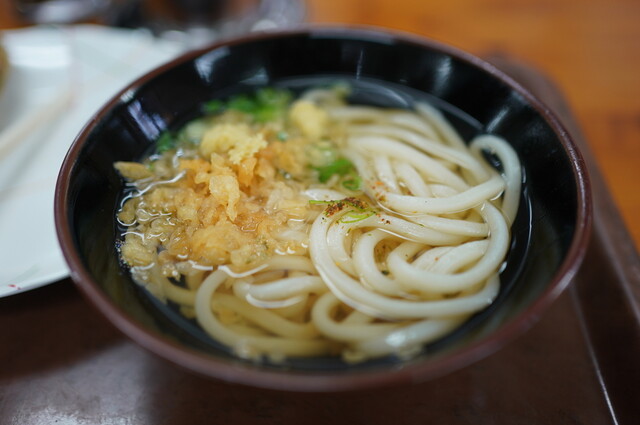
Approaching an udon shop in Takamatsu rarely feels ceremonial in the fine-dining sense. The ritual is faster, plainer, and more revealing: read the flow of the room, choose the noodle style, collect sides if the format allows, season with restraint, eat before the texture fades. Sanuki Udon Ueharaya Honten sits inside that Kagawa grammar. The point is not theatre but timing, wheat, and the confidence of a city that treats udon as daily infrastructure.
Kagawa’s Sanuki udon tradition rewards directness. The noodles are expected to carry the meal: firm chew, clean wheat flavour, and enough structure to hold up in hot broth or chilled preparations. In Takamatsu, the strongest shops often operate closer to canteens than restaurants, and that distinction matters. A traveller looking for hushed service may misread the category; a traveller watching how locals move through the line will understand it faster.
The Sanuki udon ritual is built around speed, texture, and self-direction
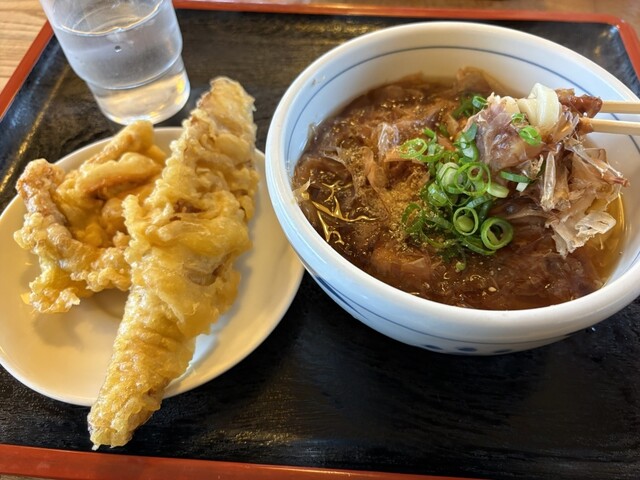
The defining pleasure of this style is its lack of excess. Sanuki udon is not an elaborate tasting-menu proposition translated into noodles. It is a regional staple with a narrow technical brief, and the room’s pacing protects that brief. Noodles are chosen, dressed, carried, and eaten with minimal delay. That tempo is part of the craft because udon changes quickly once it meets broth, dipping sauce, or ambient heat.
That is why Takamatsu’s udon circuit reads differently from Tokyo’s ramen queues or Kyoto’s kaiseki reservations. The meal is shorter, the spend is lower, and the judgment is harsher because there are fewer distractions. Side dishes such as oden or fried foods can round out the tray, but they should not become the main event. The editorial question is simple: does the shop make the noodle worth the stop?
Recognition helps separate signal from habit in a prefecture dense with udon names. Sanuki Udon Ueharaya Honten was selected for Tabelog 100 Udon Kagawa 2024, with prior Tabelog 100 udon selections listed across 2017, 2018, 2019, 2020, and 2022. That continuity is more useful than a single burst of attention. It indicates a shop that has remained visible inside a competitive regional category where local diners have deep muscle memory for the form.
For comparison within Takamatsu, Chikusei Honten and Azuma also belong to the city’s udon conversation, while Furukawa Udon and Furusato Udon show how broad the local field becomes even before leaving the casual bracket. The useful comparison is not luxury versus modesty; it is how each shop handles the same regional expectation without hiding behind décor or ceremony.
Why Ritsurincho makes sense for a serious udon stop
Ritsurincho gives the meal a specific Takamatsu frame. This is not the waterfront hotel zone or a nightlife-first quarter; it is a practical neighbourhood tied to one of the city’s major cultural anchors, Ritsurin Garden. That geography suits udon. In Kagawa, the category belongs to morning and midday movement as much as destination dining, and shops near transit, parks, and residential streets often feel closer to the region’s actual appetite than polished dining rooms built for visitors.
The venue’s format reinforces that reading. Counter seats and tables point to turnover and mixed use rather than lingering occasion dining. Children are welcome, take-out is available, and the room is non-smoking. None of these details make the meal grander; they make it more legible. Sanuki udon culture is not precious about access. It is exacting about the bowl.
Peer pricing in Takamatsu also explains why this category draws repeat eating rather than single trophy meals. Teuchi Udon Okura, Matsushita Seimensho, Makoto Udon, and Menya Shichifuku Honten all sit in the same low-cost bracket, while Mensho Kusugami occupies a slightly higher local range. That spread shows how narrow the economic band can be even among names serious diners track. In this context, distinction comes from execution, not spend.
Readers building a wider Takamatsu itinerary should treat udon as a daily rhythm rather than a single checkbox. The city’s broader restaurant map includes casual regional cooking, specialist noodle counters, and compact neighbourhood institutions; Fumiya Okonomiyaki Honten points toward another everyday Japanese format with its own pacing. For a fuller city view, use Our full Takamatsu restaurants guide, then layer in stays through Our full Takamatsu hotels guide, drinks through Our full Takamatsu bars guide, regional bottles through Our full Takamatsu wineries guide, and local programming through Our full Takamatsu experiences guide.
How to read the meal without overcomplicating it
The right approach is to accept the shop’s pace. Sanuki udon is a practical cuisine with technical standards, and over-ordering can blur the reason to come. Start with the noodle style that makes the shop’s texture easiest to judge, then add sides only if they support the meal. The point is contrast and rhythm, not abundance.
That restraint is also what separates Kagawa udon from many export versions of Japanese comfort food. Outside Japan, casual Japanese cooking often gets sorted into broad categories: curry, onigiri, izakaya plates, café sweets, noodles. Within Japan, the distinctions are sharper. A specialist udon shop in Takamatsu asks a different set of questions than [Curry Senmon Ten] Maruyama Kyoju. in Sapporo, Onigiri Time in Pasadena, or Jōdo Saké Bar in Los Angeles. The comparison is useful because it clarifies format: here, the noodle is the argument.
That same lens helps avoid category confusion when moving across Japan’s casual dining map..cafe in Osaka.know in Kumamoto, (Shoku) Vietnam in Kawasaki. 鮪と炭火焼き うお炭 秋葉原店 in Tokyo, and -Grilled beef Sukiyaki- KAMAKURA TANUKIAN 鎌倉 たぬき庵 in Kamakura each sit in a different ritual system. Sanuki udon’s system is leaner: line, bowl, texture, exit.
The editorial case for Sanuki Udon Ueharaya Honten is therefore not that it turns a simple meal into a luxury object. It does the opposite. It keeps the encounter within the democratic udon format while carrying enough recognition to justify attention from travellers who usually plan around harder-to-book tables. In Takamatsu, that is the correct kind of seriousness.
Cuisine and Recognition
Comparable venues to calibrate price, style, and recognition.
| Venue | Cuisine | Price | Notes |
|---|---|---|---|
| Sanuki Udon Ueharaya Honten | Traditional Sanuki udon | $ | Takamatsu |
| Shinpei Udon | Sanuki udon noodle shop | $ | Takamatsu |
| Teuchi Udon Hisaeda | Traditional Sanuki udon | $ | Takamatsu |
| Udonya Goemon | Late-night Sanuki udon & black curry udon | $ | Takamatsu |
| Teuchi Udon Fugetsu | Traditional Sanuki Udon | $ | Takamatsu |
| Miyatake Udon | Traditional Sanuki udon shop | $ | Takamatsu |
Recognition history
Dated appearances from independent guides and award organizations, with the underlying list record or original source where available.
Tabelog 100 #8 · No. 8
Tabelog · Tabelog 100 - Udon - KAGAWA - 2024
Continue exploring
More in Takamatsu
Restaurants in Takamatsu
Browse all →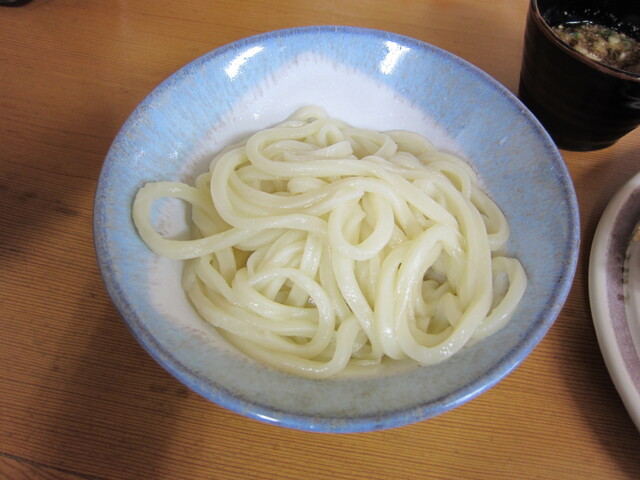

At a Glance
- Lively
- Classic
- Solo
- Family
- Casual Hangout
- Group Dining
- Standalone
- Local Sourcing
- Street Scene
Current opening hours
- Monday
- 9:30 AM–2:30 PM
- Tuesday
- 9:30 AM–2:30 PM
- Wednesday
- 9:30 AM–2:30 PM
- Thursday
- 9:30 AM–2:30 PM
- Friday
- 9:30 AM–2:30 PM
- Saturday
- 9:30 AM–2:30 PM
- Sunday
- Closed
Hours can change for holidays and private events. Last verified .
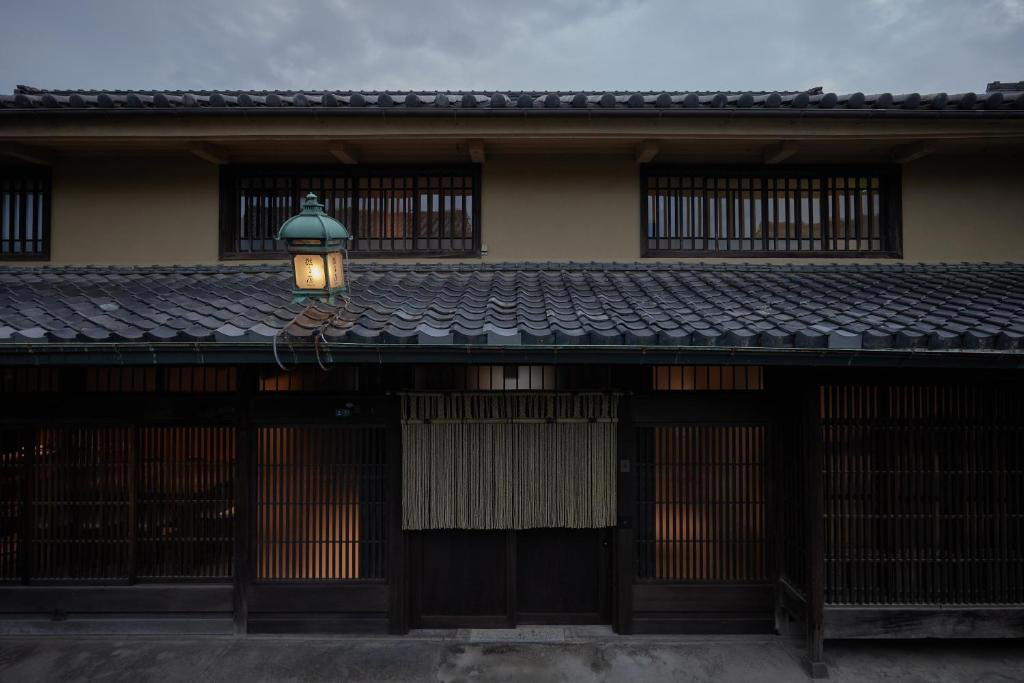
Bright, busy cafeteria-style udon shop with counter and table seating and some tatami space, focused on quick turnover and practicality rather than décor, creating an authentic everyday local feel.