
Sanuki Udon Imayuki places Osaka’s everyday noodle culture in a sharper frame: Sanuki-style udon, udon-suki, and a casual room with counter, table, and tatami seating rather than ceremony. Its Tabelog 100 Udon WEST 2024 selection and 3.72 score put it in the serious udon conversation while keeping the format closer to a neighbourhood meal than a luxury production.
Pearl is the En Primeur Club membership app — saves, bookings, and concierge access live there. Same editors, same standards.
- Address
- Japan, 〒530-0026 Osaka, Kita Ward, Kamiyamacho, 3−10 1F
- Phone
- +81 6-6316-0826
- Website
- imayuki.jp
 Saves & bookings on Pearl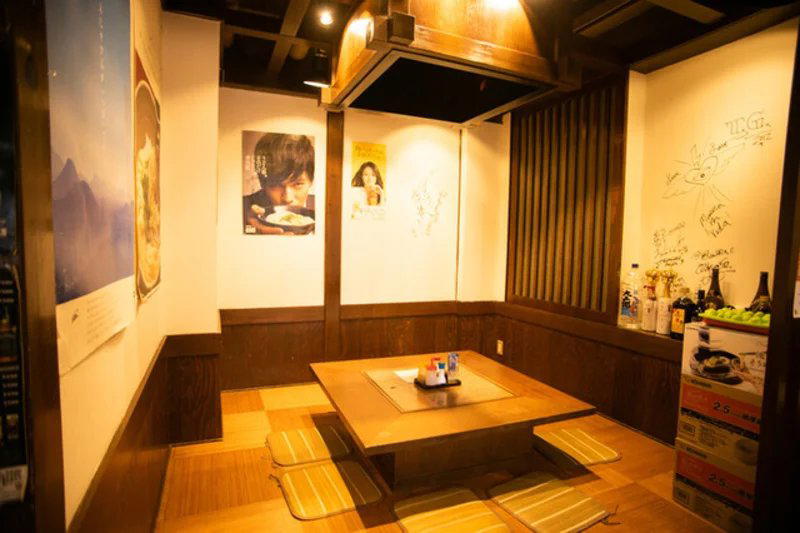
Kamiyamacho sits just beyond Osaka’s shinier dining circuits, where the city’s appetite becomes less theatrical and more useful: noodles at lunch, shared pots at night, a counter for solo diners, tables for groups, and a small tatami area that keeps the room from feeling anonymous. In that setting, Sanuki-style udon makes sense. It is a cuisine built on texture and restraint rather than spectacle, and Osaka is a city that understands the value of a meal that does not need to announce itself loudly.
Sanuki Udon Imayuki belongs to the part of Osaka dining that rewards repeat habits. The category is udon and udon-suki, not chef-led tasting-menu theatre, and that distinction matters. In Japan, udon can be a fast, functional bowl, a regional identity marker, or a communal hot-pot format; the Sanuki tradition from Kagawa is especially associated with noodle chew and a clear sense of wheat, broth, and topping discipline. Osaka’s own food culture, with its comfort-first pragmatism, gives that tradition a receptive stage.
Sanuki chew in a city built for practical eating
Osaka is often reduced to takoyaki and okonomiyaki, but its better everyday restaurants show a broader civic talent: turning modest formats into serious eating. Udon is central to that logic. It is affordable, fast when needed, and capable of careful craft without the social pressure of a formal counter. Sanuki Udon Imayuki’s inclusion in Tabelog 100 Udon WEST 2024 gives the room a public credential within western Japan’s noodle field, while its Tabelog score of 3.72 places it above the mass of casual noodle shops competing for attention across the city.
The useful comparison is not with kaiseki or sushi counters, but with Osaka’s other specialized casual rooms. Satch’s Curry occupies a similar low-price, high-frequency lane, while Dontaku sits in a slightly higher everyday bracket. Goichi, by contrast, moves toward a far costlier meal. Those differences clarify why a recognized udon address matters: it gives the traveler a way into Osaka’s food culture without defaulting to either street-snack shorthand or reservation-heavy dining.
Sanuki udon’s cultural importance is partly technical and partly social. The noodles carry the argument, but the format is democratic: a bowl can be lunch for one, while udon-suki turns wheat noodles and broth into a table meal. That flexibility explains why a 40-seat restaurant with counter seats, tables, and tatami seating can feel more Osaka than a polished dining room built around imported luxury signals. The point is not scarcity; it is usefulness executed with enough focus to be noticed.
Udon-suki shifts the meal from quick bowl to shared table
Udon-suki is the detail that widens the experience beyond a standard noodle stop. The format belongs to Japan’s broader nabe culture, where broth, noodles, and shared pacing matter as much as individual ordering. For travelers, this is a more revealing Osaka meal than another checklist snack because it shows how the city eats when convenience and sociability overlap. A counter bowl answers hunger; a shared pot answers the evening.
The drinks list also points to that broader use case. Sake, shochu, and cocktails are listed, with particular attention given to sake and shochu, which moves the room away from a pure lunch-counter identity. This is not fine dining disguised as noodles. It is a casual specialist format with enough range to handle a quick solo meal, a family table, or a group dinner built around udon-suki.
Recognition across multiple Tabelog 100 Udon selections, including 2017, 2018, 2019, 2020, 2022, and 2024, is the stronger signal than a single annual mention. In a category as crowded as udon, repeat selection suggests sustained relevance rather than a short burst of attention. That matters in Osaka, where local diners can be unforgiving about value and where casual restaurants compete not only with peers but with convenience-store excellence, station dining, and department-store basement food halls.
For wider Osaka context, Our full Osaka restaurants guide is the better next read, especially alongside citywide drinking, lodging, and cultural planning via Our full Osaka bars guide, Our full Osaka hotels guide, Our full Osaka wineries guide, and Our full Osaka experiences guide. Osaka’s casual spectrum also runs through bakery, café, Chinese-style takeaway, pizza, and Italian rooms such as.cafe, 52CHO-ME BAKERY, 551 Horai (551蓬莱), 99 Pizza Napoletana Gourmet, and a canto (Italian).
How to read it within Japan's casual specialist culture
The smarter way to approach a restaurant like this is to treat it as part of Japan’s specialist dining grammar. A single category, repeated daily, can carry as much authority as a long menu. That logic appears across the country in formats as different as -Grilled beef Sukiyaki- KAMAKURA TANUKIAN 鎌倉 たぬき庵 in Kamakura. 鮪と炭火焼き うお炭 秋葉原店 in Tokyo.know in Kumamoto, (Shoku) Vietnam in Kawasaki, [Curry Senmon Ten] Maruyama Kyoju. in Sapporo, and [ki:] in Kyoto. Even outside Japan, Japanese casual forms travel through focused concepts such as Jōdo Saké Bar in Los Angeles and Onigiri Time in Pasadena.
That broader frame helps prevent a common mistake: judging udon only by luxury cues. The measure here is not ceremony, plating drama, or a chef biography. It is whether a narrow format has enough identity to justify choosing it in a city full of easy alternatives. On the available signals, Sanuki Udon Imayuki clears that bar: repeated Tabelog 100 Udon recognition, a defined Sanuki and udon-suki focus, and a room format that suits Osaka’s everyday dining rhythm. For travelers who want the city’s food culture beyond its loudest symbols, this is the more instructive kind of meal.
Cuisine Context
Comparable venues for context, by category and price tier.
| Venue | Cuisine | Price | Notes |
|---|---|---|---|
| Sanuki Udon ImayukiThis venue — the venue you are viewing | Traditional Sanuki Udon | $ | Not listed |
| Sunshine | Retro Japanese kissaten & coffee shop | $ | Kita |
| Men Genso | Ramen & Tsukemen | $ | Kita |
| Menya Hanabusa | Nagoya Cochin chicken ramen & chuka soba | $ | Chūō |
| Honneri Kwashi Suiren isshin | Japanese traditional sweets (wagashi) & cafe | $ | Chūō |
| NAKAGAWA Wazu | Niboshi-focused Ramen Counter | $ | Higashiyodogawa |
Recognition history
Dated appearances from independent guides and award organizations, with the underlying list record or original source where available.
Tabelog 100 #22 · No. 22
Tabelog · Tabelog 100 - Udon - WEST - 2024
Continue exploring
More in Osaka
Restaurants in Osaka
Browse all →




Bars in Osaka
Browse all →




Hotels in Osaka
Browse all →



Wineries in Osaka
Browse all →
At a Glance
- Cozy
- Classic
- Solo
- Casual Hangout
- After Work
- Family
- Standalone
- Local Sourcing
Current opening hours
- Monday
- 11:30 AM–2:30 PM
- Tuesday
- 11:30 AM–2:30 PM, 6–9 PM
- Wednesday
- 11:30 AM–2:30 PM, 6–9 PM
- Thursday
- Closed
- Friday
- 11:30 AM–2:30 PM, 6–9 PM
- Saturday
- 11:30 AM–2:30 PM, 6–9 PM
- Sunday
- 11:30 AM–2:30 PM, 6–9 PM
Hours can change for holidays and private events. Last verified .
Small, casual neighborhood udon shop with a warm, no-frills atmosphere focused on the counter-and-table dining experience, bright enough for quick meals and relaxed solo or small-group visits rather than lingering fine dining.