
Tabelog 100 #60
Our verdict
Salamanger Hiro belongs to Sendai’s quieter yoshoku tradition, where Western-derived comfort dishes are treated with Japanese regularity, portion discipline, and a meal rhythm built around a single main plate. Its Tabelog 100 Yoshoku EAST 2025 selection places this suburban hamburger-steak specialist in a sharper competitive bracket than its modest format first suggests.

Pearl is the En Primeur Club membership app, where members save venues, book tables and use the concierge.
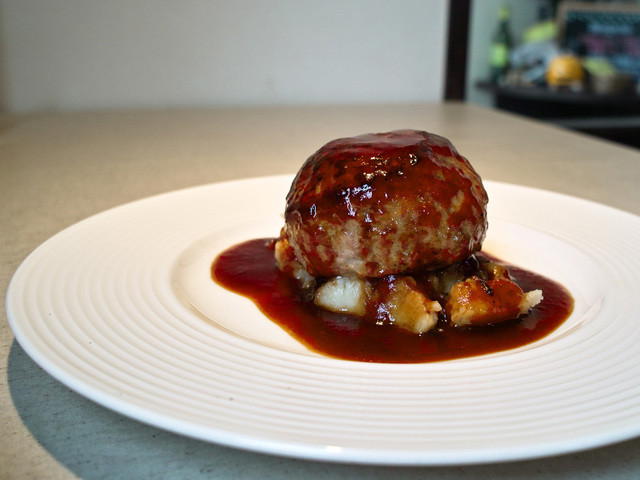
The menu
What to order
- Hamburger steak set
- Hamburger steak rice bowl
In Sendai, the dining rhythm can shift from station-side speed to a slower, more intentional routine. This is not only downtown counters, queues, and after-work drinking; it can also be a focused meal built around arrival, waiting, a main plate, and a clean finish, not grazing across a long menu.
Hamburger steak has its own place in Japanese everyday dining: familiar, filling, and dependent on texture, sauce, rice, and set-meal pacing. In Sendai, where other local foods draw much visitor attention, this specialist room speaks to another local appetite: familiar, repeatable, and judged by execution rather than novelty.
Hamburger steak as a Sendai dining ritual
The point of a hamburger-steak specialist is concentration. A broad menu can drift into nostalgia; a narrower room must make the central dish carry the meal. Salamanger Hiro is listed for hamburger steak and is recognized in the 2025 Tabelog Hyakumeiten context. That matters because Tabelog category lists are not Michelin-style luxury rankings; they are category signals, useful for seeing where everyday Japanese dining forms have earned sustained attention.
The restaurant’s public listing centers the category on hamburger steak rather than a sprawling menu of unrelated dishes. That places the meal closer to a focused set-meal experience than a steakhouse mindset. The appeal is not a luxury ingredient roll call, but the way a familiar main plate can carry a meal when the kitchen is judged on execution, timing, and consistency.
There is formality to this meal, even in a casual room. Hamburger steak rewards patience: order, wait for the main plate, eat while temperature and sauce are as intended, then leave the table for the next sitting. The custom is closer to lunch-counter discipline than a long celebratory dinner. For travelers mapping Sendai through food, it fills the gap between casual station eating and higher-spend evenings.
Sendai’s range makes the distinction clearer. achaar sits in a curry-and-spice lane, while Sumiyaki Okagesan occupies a different yakitori bracket. IL PIZZAIOLO points toward Italian and pizza dining, but a different culinary lineage. Salamanger Hiro sits in the middle: not a blowout counter, not a snack stop, but a focused hamburger-steak address with documented category recognition behind it.
The appeal is category precision, not spectacle
Sendai rewards diners who look beyond the obvious local checklist. The city has several well-known food associations, but a stronger itinerary also includes categories Japanese diners use in ordinary life. Hamburger steak is one of them. Its pleasures are structured, not theatrical: a plate composed for rice, sauce, and vegetables; a room that expects turnover; a dish dependent on consistency rather than reinvention.
That is why Tabelog recognition is a useful trust signal here. A score of 3.62 and 2025 category recognition place the restaurant inside a competitive regional field rather than a general tourist list. It does not make the meal fine dining, and that is the point: the value lies in a specialist format performing a familiar dish at a level category watchers noticed.
The Sendai setting also changes expectations. Central Sendai dining often runs on convenience: station proximity, late meals, compact counters, quick decisions. A destination meal asks for intention. That should not be confused with formality; better read it as part of a local circuit, where repeat customers judge whether the main plate is as steady as before.
For a broader Sendai map, this address works alongside other dining rooms showing different sides of the city’s appetite, from sweets and tea to casual counters and higher-spend meals. The fuller city context sits in Our full Sendai restaurants guide, with adjacent planning in Our full Sendai hotels guide, Our full Sendai bars guide, Our full Sendai wineries guide, and Our full Sendai experiences guide.
Where it fits in a Japan food itinerary
Travelers often build Japan dining plans around sushi counters, ramen shops, kaiseki rooms, and izakaya. Hamburger steak deserves a place in that sequence because it explains how imported forms became domestic habits. A hamburger steak in Sendai is not just an imitation of another country’s format; it belongs to Japanese set-meal culture, where the central protein is judged by texture, sauce balance, and how it works with rice and vegetables.
Salamanger Hiro is useful because it narrows the lens. The meal does not ask diners to decode a long regional menu, nor does it perform luxury through rare ingredients. It shows craft expectations inside a comfort category: a hamburger-steak focus, a format compact enough for regular use, and a budget range that keeps the experience closer to everyday dining than ceremony. That is serious dining literacy.
Readers building a cross-country comparison might place it beside regional specialists rather than luxury rooms: charcoal-grill counters, curry rooms, sweets, tea, and everyday international dining all show how Japanese cities turn familiar formats into local habits. Outside Japan, Japanese formats travel in many directions, but Sendai’s appeal here is domestic rather than export-facing.
The editorial case is simple: this is a category-driven meal for travelers who want Sendai beyond the headline foods. The reward is not ceremony. It is seeing how a modest Western-derived dish becomes local, repeatable, and exacting in Japanese hands.
Frequently asked questions
Is Salamanger Hiro expensive?
Pricing at Salamanger Hiro is listed as JPY 3,000 - JPY 3,999 JPY 2,000 - JPY 2,999 View spending breakdown.
Where is Salamanger Hiro in Sendai?
Sendai.
How hard is it to get a table at Salamanger Hiro?
Specific reservation and seating details are not provided here, so planning ahead is sensible. Check current information directly before going, especially if timing matters.
What makes Salamanger Hiro worth seeking out?
It has 2025 Tabelog Hyakumeiten recognition, which gives it clear third-party weight. The listing identifies hamburger steak as the category, with dinner budgeted at JPY 3,000 - JPY 3,999 and lunch at JPY 2,000 - JPY 2,999 in Sendai.
Is Salamanger Hiro allergy-friendly?
Those details are not provided here. Check the venue's official channels for the latest service, ingredient, and allergy information.
Is Salamanger Hiro child-friendly?
Specific child-friendly facilities are not provided here. Families should confirm current service details directly before visiting in Sendai.
Cuisine and Recognition
Comparable options at the same price tier.
| Venue | Cuisine | Price | Awards | Notes |
|---|---|---|---|---|
| Salamanger HiroThis venue (the venue you are viewing) | Yoshoku hamburger steak specialist | $10–20 | Tabelog 100 #60 | Not listed |
| Gout | Yoshoku Western-style Japanese | $20–30 | Tabelog 100 #97 | Ichibancho |
| Senrei Zushi JR sendai eki 3 kai ten | Standing sushi counter with Sanriku seafood | $30–50 | Tabelog 100 #58 | Aoba-ku |
| Sushi Yui | Traditional Sushi Omakase | $150–200 | Tabelog 100 #74 | Aoba-ku |
| Mizusawa Ya | Classic chuka soba ramen shop | $10–20 | Tabelog 100 #23 | Aoba Ward |
| Shirayuki | Japanese Izakaya | $30–50 | Tabelog 100 #71 | Aoba Ward |
Recognition history
Dated appearances from independent guides and award organizations, with the underlying list record or original source where available.
Tabelog 100 #60 · No. 60
Tabelog · Tabelog 100 - Yoshoku - EAST - 2025
Continue exploring
More in Sendai
Restaurants in Sendai
All restaurants in Sendai →
Hotels in Sendai
Browse all →

Wineries in Sendai
All wineries in Sendai →
Details
- Cozy
- Classic
- Solo
- Date Night
- Casual Hangout
- Standalone
- A La Carte
- Set Menu
A small, warm yoshoku dining room with a homely, understated classic feel where guests sit close together and watch carefully prepared hamburger steak and other Western‑style dishes being cooked to order.