
Tabelog 100 #23
Our verdict
Mizusawa Ya puts Sendai’s everyday ramen culture into a sharper frame: counter seating, low-ticket pricing, and recognition in Tabelog’s Ramen EAST “Tabelog 100” 2024 and 2025 selections. Its Kuryu setting makes the point even clearer, that serious bowls in Japan are not confined to station-front corridors or luxury dining districts.

Pearl is the En Primeur Club membership app, where members save venues, book tables and use the concierge.
The menu
What to order
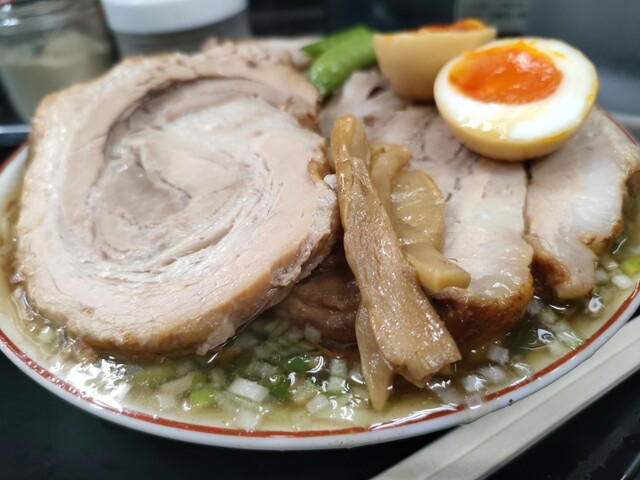
- Chuka soba (Chinese-style ramen)
- Chuka soba with seasoned egg and braised pork belly
- Kimchi fried rice
- Rice dishes with takeout option
Approaching a ramen shop in Sendai, the signals are modest by nature: a practical meal built around pace, repetition, and a bowl rather than ceremony. Sendai’s ramen culture rewards that kind of directness. The city has polished sushi rooms, grilled counters, coffee specialists, and higher-spend dining rooms, but the ramen shop works on a different contract with the guest: speed, heat, value, and a bowl whose impact is judged in minutes rather than courses.
Mizusawa Ya belongs to that category where the format says almost as much as the food. The ramen focus keeps attention on the bowl, while the category itself makes the priorities clear. Its 2025 Tabelog Hyakumeiten recognition gives it a useful external marker, not as luxury validation, but as evidence that a Sendai ramen address has entered a wider specialist conversation.
Sendai ramen judged by sourcing logic, not dining-room theatre
Ramen is often discussed through tare, broth, noodle texture, and regional style, but ingredient sourcing is the quieter engine of the genre. In northern Japan, the bowl sits close to strong agricultural and seafood regions, and Sendai’s food identity has long depended on the surrounding Tohoku pantry rather than imported spectacle. That matters because ramen’s apparent simplicity leaves little cover: stock depth, fat balance, seasoning, and noodle handling expose weak inputs quickly.
No chef biography is needed to understand the positioning here. The category is ramen, and the award context places the shop among specialist addresses rather than broad casual dining. That distinction is useful for travellers who usually read Japan through tasting menus. A ramen shop recognised by Tabelog operates in a peer group where consistency, local traffic, and repeatable craft carry more weight than tableware, wine service, or imported luxury ingredients.
Sendai’s broader dining map makes the contrast sharper. Higher-spend rooms such as Sumiyaki Okagesan pull attention toward special-occasion pacing, while Salamanger Hiro occupies a different bracket within the city’s restaurant economy. Baisaou, by comparison, shows another side of the city’s low-key specialist culture. Mizusawa Ya sits closer to that specialist end than to formal dining, a reminder that Sendai’s serious food culture is not only found in rooms designed for long evenings.
A ramen format built for regulars, solo diners, and close reading
The ramen format gives the experience a narrow focus. The transaction is compressed: order, wait, eat, leave. That discipline is part of the pleasure. It also makes the shop legible to solo diners and small groups in a way that many prestige restaurants are not. The absence of ceremony keeps the experience aligned with everyday eating rather than hosted occasions.
The details also point to a restaurant with a durable local function. The listed category is ramen, the public pricing sits in the low everyday bracket, and the 2025 recognition gives the address a current external signal. In ramen terms, that combination matters. Trends move quickly in Japan, from heavier styles to clearer broths and more specialised bowls, but a shop that holds attention usually does so through repeatability rather than novelty.
For visitors building a Sendai eating itinerary, the point is not to treat ramen as a cheap add-on after more expensive meals. It is to read it as a different measure of the city. Pairing a bowl with a tea or coffee stop at Baisaou, or comparing it against other casual local entries, gives a better sense of how Sendai eats outside formal restaurant narratives.
Where it fits in a Sendai itinerary
Mizusawa Ya works for travellers who value ingredient-driven casual food and are comfortable with a focused ramen format. Its 2025 Tabelog Hyakumeiten recognition and 3.71 score place it in a credible ramen shortlist, while the Sendai setting keeps it away from a simplified station-dining version of the city. The practical read is simple: this is a specialist ramen stop, not a leisurely multi-course meal, and the reward is in seeing how much a low-price category can carry when the fundamentals are taken seriously.
Those mapping a fuller trip should treat the city by category rather than by a single dining hierarchy. Use Our full Sendai restaurants guide for meal planning, then cross-check the wider city through Our full Sendai hotels guide, Our full Sendai bars guide, Our full Sendai wineries guide, and Our full Sendai experiences guide. For broader Japan and overseas context, compare how specialist casual formats appear across other cities, from quick-service rooms to low-key neighbourhood specialists built around repetition, value, and a tightly focused menu.
Frequently asked questions
What days is Mizusawa Ya closed?
Specific opening days and hours are not provided here. Check Mizusawa Ya directly before visiting, especially if you are planning around a short Sendai itinerary.
What's the price range at Mizusawa Ya?
Pricing at Mizusawa Ya is listed as - JPY 999 - JPY 999.
What's Mizusawa Ya's location?
Sendai.
What do critics highlight about Mizusawa Ya?
Mizusawa Ya is listed as a ramen specialist in Sendai, with 2025 Tabelog Hyakumeiten recognition and a listed score of 3.71. That places it in the city’s ramen conversation as a focused casual address rather than a formal dining room.
What if I have allergies at Mizusawa Ya?
Mizusawa Ya is a ramen house in Sendai, so diners with allergies should plan for a format built around a tight service rhythm. There is no menu detail in the public record here to map ingredients by dish. The safest course is to check directly before ordering, especially if the allergy involves broth, noodles, or toppings commonly used in ramen. Check the venue's official channels for the latest details.
Comparison Snapshot
Comparable venues by cuisine and price in the same metro.
| Venue | Cuisine | Price | Awards | Notes |
|---|---|---|---|---|
| Mizusawa YaThis venue (the venue you are viewing) | Classic chuka soba ramen shop | $10–20 | Tabelog 100 #23 | Not listed |
| Sendai Chuka Soba Meiten Kaichi Kokubuncho ten | Traditional chicken-based ramen (chuka soba) | $10–20 | Tabelog 100 #63 | Kokubuncho |
| Tai Kichi Nakakechou ten | Japanese Taiyaki & Obanyaki Shop | Not listed | Tabelog 100 #94 | Aoba Ward |
| Yakiniku Kotora - Clisroad | Premium Wagyu Yakiniku | $20–30 | Tabelog 100 #27 | Clisroad Shopping Street |
| Ako | Seasonal Charcoal-Grilled Japanese Izakaya | $50–100 | Tabelog 100 #5 | Kokubuncho, Aoba-ku |
| Shinogi | Traditional Japanese Izakaya | $20–30 | Tabelog 100 #42 | Aoba Ward |
Recognition history
Dated appearances from independent guides and award organizations, with the underlying list record or original source where available.
Tabelog 100 #23 · No. 23
Tabelog · Tabelog 100 - Ramen - EAST - 2025
Continue exploring
More in Sendai
Restaurants in Sendai
All restaurants in Sendai →
Hotels in Sendai
Browse all →

Wineries in Sendai
All wineries in Sendai →
Details
- Lively
- Classic
- Cozy
- Well Known
- Solo
- Family
- Casual Hangout
- After Work
- Group Dining
- Standalone
- A La Carte
- Counter Dining
Current opening hours
- Monday
- Closed
- Tuesday
- 11:33 AM–3:33 PM, 5:03–9:03 PM
- Wednesday
- 11:33 AM–3:33 PM, 5:03–9:03 PM
- Thursday
- 11:33 AM–3:33 PM, 5:03–9:03 PM
- Friday
- 11:33 AM–3:33 PM, 5:03–9:03 PM
- Saturday
- 11:33 AM–9:03 PM
- Sunday
- 11:33 AM–9:03 PM
Hours can change for holidays and private events. Hours as of .
A compact, counter‑only neighborhood ramen shop with a classic, lived‑in feel, bustling atmosphere, and bright, practical lighting focused on quick, hearty meals rather than design flourishes.