
Tabelog 100 #30
Our verdict
Hassen puts Sendai’s compact, everyday Chinese-dumpling culture into sharper focus: low-friction, award-recognised, and grounded in the drinking-dining rhythm of Ichibancho. Its Tabelog 100 selections for Chinese cuisine and earlier dumpling recognition make it a useful marker for travellers who want the city’s casual food intelligence rather than another formal tasting-menu appointment.

Pearl is the En Primeur Club membership app, where members save venues, book tables and use the concierge.
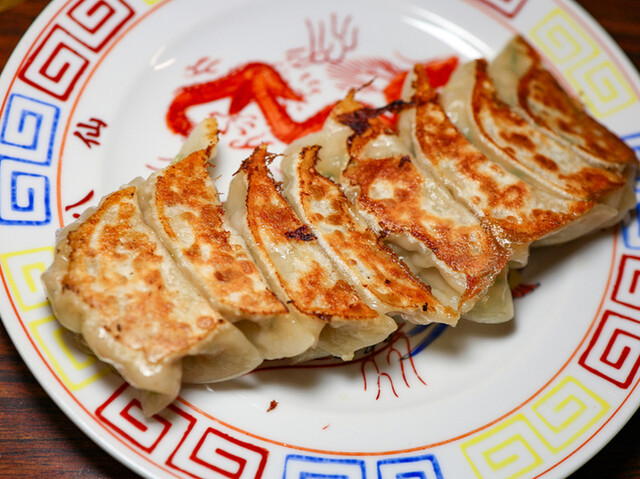
The menu
What to order
- Handmade pork gyoza (pan-fried)
- Boiled gyoza
- Steamed gyoza
Sendai’s evening dining often feels practical rather than theatrical: narrow rooms, close-set signs, and the low evening pressure of people moving between drinking rooms and counter restaurants. Here, Hassen’s Chinese-dumpling profile reads less as imported banquet culture than as urban habit: quick decisions, shared plates, drinks within reach, and a room for friends rather than ceremony. Hassen belongs to that register. The point is not spectacle, but how a modest Chinese and dumpling address carries enough local confidence to receive Tabelog Hyakumeiten recognition in 2026.
Sendai is often introduced through beef tongue, zunda, and Sanriku seafood, but city eating is broader and more practical than those labels suggest. Strong meals are often small-format, single-specialty, or neighbourhood-driven rather than hotel-polished. The comparison matters: Genji, Koban Zushi, hou, kazunori ikeda individuel Minamimachidoori ten, and DASHIRO Sendai minamimachidoori honten show different ways the city rewards focus and identity. Hassen fits the everyday end of that argument, with recognition attached to an accessible price band and a cuisine travellers too often treat as fallback.
Chinese dumplings in Sendai work as drinking food, not banquet theatre
Japanese Chinese cooking has its own grammar. It is not regional Chinese cuisine transplanted unchanged, but a long-running urban food culture shaped by gyoza counters, ramen shops, chuka set meals, beer, sake, and post-work groups. In northern Japanese cities, the Chinese-dumpling shop becomes democratic: filling, fast, social, and often more revealing of local taste than a formal restaurant with a long menu.
The useful signal is category overlap. Hassen is listed as Chinese and dumpling, placing it closer to Sendai’s evening rhythm than to white-tablecloth Chinese dining. That category mix suits solo diners, pairs, and small groups without turning dinner into an occasion. It also explains why a restaurant like this can matter to travellers: the format is built around shared appetite and close conversation, not extended ceremony.
Awards can distort casual restaurants if read too literally. Tabelog Hyakumeiten recognition does not make a dumpling room luxury dining; it shows that, within a crowded category, Japanese diners find enough consistency and character to keep it visible. Hassen’s 2026 Tabelog Hyakumeiten recognition is useful for exactly that reason: the address is read both as Chinese cooking and as a dumpling-focused stop, a distinction that matters in Japan’s segmented restaurant culture.
The value sits in category discipline, not luxury signals
For a Sendai itinerary, the question is not whether a casual dumpling restaurant competes with sushi counters or kappo rooms. It cannot, and need not. The better question is which meals explain how the city eats between showcase appointments. A low-spend, award-recognised Chinese-dumpling room in Sendai answers that better than another generic stop chosen only for convenience.
That value is cultural. Gyoza in Japan is after-work food, a drinking partner, and a regional obsession in several cities; it rewards repetition rather than ceremony. Japanese Chinese cooking sits between comfort and craft: familiar enough for weeknights, competitive enough for specialists to build reputations on narrow strengths. When a restaurant in this band earns Tabelog attention, the signal is concentration, not luxury. The kitchen needs no chef narrative, tasting menu, or imported prestige vocabulary.
There is also a useful Sendai price-tier contrast. A traveller could spend heavily elsewhere and learn the city’s formal end, but miss the everyday intelligence that makes Japanese regional cities rewarding after dark. Hassen sits in the JPY 1,000 - JPY 1,999 band, closer in commitment to casual stops than destination dining. That makes it an efficient second dinner, first-night landing point, or counterweight to a more expensive reservation elsewhere.
The physical context sharpens the choice. Sendai is central enough for visitors yet local enough not to feel like only a transit stop. Its shopping streets, dining clusters, and side-alley drinking culture let a small Chinese-dumpling restaurant draw both regulars and award-watchers. The appeal is public, compact, and social rather than sealed away or formal.
How to place it in a Sendai food itinerary
Use Hassen for the part of Sendai that does not need translation into luxury terms. It suits travellers wanting a city meal with local credibility, a Chinese-dumpling focus, and enough recognition to prioritise it over an anonymous convenience stop. It is less suited to diners seeking a quiet, formal evening, a chef-led counter narrative, or a long, wine-driven progression.
Planning should be practical, not precious. Hassen’s listed budget is Dinner: JPY 1,000 - JPY 1,999; Lunch: -, which keeps it firmly in casual territory. Its Tabelog score is listed as 3.72, useful as a signal of local visibility rather than a promise of luxury. The phone number provided is +81-22-262-5291. Treat the meal as a focused Sendai stop: easy to understand, modest in spend, and stronger for not pretending to be more elaborate than it is.
For context, compare it with other Sendai entries rather than forcing it into a national luxury frame: Genji, Koban Zushi, hou, kazunori ikeda individuel Minamimachidoori ten, and DASHIRO Sendai minamimachidoori honten show the city’s range across different formats and budgets. For trip planning beyond dinner, use Our full Sendai restaurants guide, Our full Sendai hotels guide, Our full Sendai bars guide, Our full Sendai wineries guide, and Our full Sendai experiences guide. Readers comparing Japanese casual formats further afield can also look generically at other regional dining rooms, bars, cafes, and counter-service venues without treating Hassen as part of a luxury circuit.
Frequently asked questions
Is Hassen suitable for children?
Hassen may work for families looking for a casual meal in Sendai, especially because its listed price range is JPY 1,000 - JPY 1,999.
Is Hassen better for a quiet night or a lively one?
Hassen is best understood as a casual Chinese and dumpling restaurant in Sendai rather than a formal dining room. Expect the kind of meal that suits shared appetite and an easy evening.
What should I budget for a meal at Hassen?
Pricing at Hassen is listed as JPY 1,000 - JPY 1,999.
What part of town is Hassen in?
Sendai.
Is Hassen reservation-only?
The provided information does not establish Hassen as reservation-only. Plan it as a casual Sendai dining option and confirm directly if timing matters.
What is Hassen known for?
Hassen is known as a Chinese and dumpling restaurant in Sendai, with Tabelog Hyakumeiten recognition in 2026.
Price and Recognition
Nearby venues at a similar price tier for orientation.
| Venue | Cuisine | Price | Awards | Notes |
|---|---|---|---|---|
| HassenThis venue (the venue you are viewing) | Gyoza-focused Chinese dumpling bar | $20–30 | Tabelog 100 #30 | Not listed |
| 扶餘 | Casual Korean home-style restaurant | $20–30 | Tabelog 100 #82 | 若林区, Korean Home Cooking |
| Murakamiya Mochi Ten | Dining | Not listed | Tabelog 100 #46 | Not listed |
| 鮨德 | Japanese Restaurant | Not listed | Tabelog 100 #73 | Sendai, Japanese Restaurant |
| Una Ki | Traditional Japanese Unagi | $30–50 | Tabelog 100 #33 | Kokubuncho, Traditional Japanese Unagi |
| Shiogama Sushi Tetsu S-PAL sendai ten | Traditional Sushi from Shiogama at Sendai Station | $30–50 | Tabelog 100 #98 | Aoba Ward, Traditional Sushi from Shiogama at Sendai Station |
Recognition history
Dated appearances from independent guides and award organizations, with the underlying list record or original source where available.
Tabelog 100 #30 · No. 30
Tabelog · Tabelog 100 - Chinese cuisine - EAST - 2026
Continue exploring
More in Sendai
Restaurants in Sendai
All restaurants in Sendai →
Hotels in Sendai
Browse all →

Wineries in Sendai
All wineries in Sendai →
Details
- Lively
- Cozy
- Classic
- Casual Hangout
- After Work
- Group Dining
- Solo
- Late Night
- Standalone
- A La Carte
- Small Plates
- Beer
- Sake