
A 28-seat Kitashinchi dining room where Korean cooking, chicken dishes, sake, shochu and wine meet Osaka’s after-dark business-dining culture. Sake to Onna to Tori to Men belongs to Tabelog’s Asian cuisine / Ethnic cuisine WEST 100 selection for 2024, with private rooms, counter seating and a reservation-only format that rewards punctual, tightly planned evenings.
Pearl is the En Primeur Club membership app — saves, bookings, and concierge access live there. Same editors, same standards.
- Address
- Japan, 〒530-0002 Osaka, Kita Ward, Sonezakishinchi, 1 Chome−5−21 MATSUKI KOSAN B.L.D 8F
- Phone
- +81 6-6467-8388
- Website
- saketori.jp
 Saves & bookings on Pearl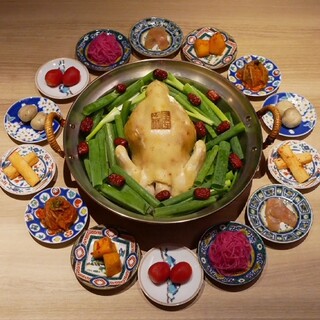
After office hours, Kitashinchi shifts: elevators open onto compact dining rooms, private rooms fill with business groups, and the city moves from casual speed to controlled pacing. Sake to Onna to Tori to Men fits a newer Osaka pattern: Korean and chicken-led cooking treated with the seriousness usually reserved for sushi counters, kappo rooms and high-priced yakiniku.
The format matters because this category depends on coordination. Chicken, noodles, Korean seasoning and a serious drinks program can become a loose izakaya spread; here the appeal is team rhythm: kitchen timing, sommelier presence, front-of-house pacing and private-room management. Built for groups wanting intensity without chaos, it sits with polished Kitashinchi dining rather than Osaka’s street-level snack culture or late-night convenience.
Korean chicken cooking enters Kitashinchi's polished dining circuit
Osaka has long embraced Korean flavours, but premium positioning changes expectations. At the lower end, gyoza counters and casual grill rooms trade on speed, price and repeatability; Kitashinchi Gyoza Ya Honten sits in that accessible orbit. Higher up, cooking must justify a longer evening, tighter booking and drinks conversation beyond beer. Sake to Onna to Tori to Men uses Korean and chicken-dish categories as the frame, not side notes.
The restaurant’s Tabelog Asian cuisine / Ethnic cuisine WEST 100 selection in 2024 is the cleanest external signal. Tabelog’s Hyakumeiten lists are not Michelin-style star systems, but in Japan they are meaningful category markers, identifying restaurants with specialist credibility beyond the mass of listings. For a Korean and chicken-focused Osaka address, that places the cooking in a competitive West Japan field, not only a neighbourhood conversation.
The title signals balance. Sake, women, chicken and noodles is direct, social and slightly theatrical, not a hushed kaiseki name. Yet the operating style is not casual sprawl. A 28-seat room with counter seating, sofa seating and private rooms for small groups gives the team several modes: couples at the counter, business tables behind doors, and groups needing pacing rather than interruption. In Kitashinchi, that flexibility often matters more than spectacle.
For readers mapping Osaka’s range, this is not a bakery stop such as 52CHO-ME BAKERY, a city snack institution like 551 Horai (551蓬莱), or coffee at .cafe. It belongs to dinner-only Osaka, where the table carries the evening. Italian rooms such as a canto (Italian) and specialist imports such as 99 Pizza Napoletana Gourmet show another side of the city: Osaka diners accept non-Japanese formats when execution meets local standards.
The drinks program is not an accessory
The clearest clue to positioning is the drinks spread: sake, shochu and wine, with particular attention to shochu and wine, plus sommelier availability. Korean food in Japan is often paired casually, but a premium chicken-and-noodle format needs beverages that handle heat, fat, broth, char, garlic, fermentation and savoury depth without flattening the meal. Sake brings texture and umami; shochu, cut and aromatic lift; wine, a business-dinner vocabulary familiar to Kitashinchi regulars.
This is where team dynamic becomes the story. Chicken and noodles can lean too heavily on the kitchen, but the stronger version depends on handoff: cooking arrives at the right temperature, drinks meet spice and richness without fighting them, and service keeps the table moving. The note that cooking starts all at once is more than a punctuality warning; it signals a synchronized format. Late arrivals disrupt not just reception, but the kitchen sequence and room pacing.
That sequence separates this address from Osaka’s looser eating styles. Oban, priced and positioned for a more casual dinner, serves another need; Sushi Murakami Jiro operates in the sushi bracket, where counter hierarchy and fish sourcing define the evening; KushinGarando points to higher-priced Chinese dining. Sake to Onna to Tori to Men occupies a narrower pocket: Korean-accented chicken and noodle dining with enough beverage structure for a planned Kitashinchi night.
Private-room availability also changes the restaurant’s function. Osaka business dining needs rooms where conversation can run without the performative hush of formal counters. Private rooms for two, four and six let the restaurant serve dates, small celebrations and corporate tables while keeping compact-floor intimacy. Children are welcome when arranged in advance, broadening the use case, though the mood remains adult evening dining rather than family casual.
How to place it within an Osaka itinerary
For travellers, the decision is less about checking off a famous dish than choosing a dining register. Osaka can be built around quick bites, department-store basement grazing and train-station convenience, but Kitashinchi asks for another tempo. This district is for committing to dinner: arrive on time, expect pacing, and treat the meal as the night rather than a prelude.
The restaurant suits diners wanting Osaka beyond takoyaki clichés and comfortable with an identity between Korean cooking, poultry specialization and drinks-led hospitality. The category helps visitors who have already booked sushi or kappo and want contrast without dropping into casual chains. It also suits small groups valuing a private-room option, non-smoking setting and drinks list with sake, shochu and wine rather than one beverage lane.
The practical caveat is discipline. Reservation-only dining, simultaneous cooking and a no-heavy-fragrance dress note all ask guests to fit the format. That is not stiffness; it is the operating logic of a compact premium restaurant. Credit cards are accepted; electronic money and QR payments are not, so payment planning should be as deliberate as booking.
For broader planning, use Our full Osaka restaurants guide to place this dinner among sushi, Chinese, Italian and casual city staples. Travellers pairing dinner with a wider stay can cross-reference Our full Osaka hotels guide, Our full Osaka bars guide, Our full Osaka wineries guide and Our full Osaka experiences guide. For wider Japan and overseas comparisons of specialist food formats, see -Grilled beef Sukiyaki- KAMAKURA TANUKIAN 鎌倉 たぬき庵 in Kamakura. 鮪と炭火焼き うお炭 秋葉原店 in Tokyo.know in Kumamoto, (Shoku) Vietnam in Kawasaki, [Curry Senmon Ten] Maruyama Kyoju. in Sapporo, [ki:] in Kyoto, Jōdo Saké Bar in Los Angeles and Onigiri Time in Pasadena.
Recognition, Side-by-Side
Comparable venues by cuisine and category.
| Venue | Cuisine | Price | Notes |
|---|---|---|---|
| Sake to Onna to Tori to MenThis venue — the venue you are viewing | Fusion Dakhanmari & Noodle Tasting (Japanese–Korean–Chinese) | $$$ | Not listed |
| Kosuda | Innovative Japanese Omakase Counter | $$$ | Kita |
| MAKE ONE TWO | Asian Stand Bar / Izakaya | $$ | Chūō |
| STUN.S | Innovative Japanese | $$ | Miyakojima |
| The Grand Cafe | Italian-style café and dining bar | $$$ | Kita |
| Shushi Mon | Traditional Japanese Izakaya | $$$ | Kita |
Recognition history
Dated appearances from independent guides and award organizations, with the underlying list record or original source where available.
Tabelog 100 #76 · No. 76
Tabelog · Tabelog 100 - Asian cuisine / Ethnic cuisine - WEST - 2024
Continue exploring
More in Osaka
Restaurants in Osaka
Browse all →




Bars in Osaka
Browse all →



Hotels in Osaka
Browse all →



Wineries in Osaka
Browse all →
At a Glance
- Elegant
- Intimate
- Cozy
- Date Night
- Business Dinner
- Special Occasion
- Group Dining
- After Work
- Standalone
- Design Destination
- Sake Program
- Craft Cocktails
- Local Sourcing
Current opening hours
- Monday
- 6–11 PM
- Tuesday
- 6–11 PM
- Wednesday
- 6–11 PM
- Thursday
- 6–11 PM
- Friday
- 6–11 PM
- Saturday
- 6–11 PM
- Sunday
- Closed
Hours can change for holidays and private events. Last verified .
Refined but relaxed Kitashinchi dining room with a calm, high-end feel; guests linger over a leisurely course meal in a quiet, polished space designed to feel like a second home.