Sai's Vietnamese Restaurant
Sai's Vietnamese Restaurant occupies 42 Columbus Ave in San Francisco's Financial District fringe, where Columbus Ave bridges North Beach's Italian corridor and the city's broader immigrant dining traditions. Among a San Francisco dining scene dominated by high-ticket tasting menus, Sai's represents the neighbourhood Vietnamese format: accessible, direct, and anchored to a specific culinary tradition rather than a fusion premise.
Pearl is the En Primeur Club membership app — saves, bookings, and concierge access live there. Same editors, same standards.
- Address
- 42 Columbus Ave, San Francisco, CA 94111
- Phone
- (415) 362-3689
- Website
- saisvietnameserestaurant.com
- Directions
- Get directions
 Saves & bookings on Pearl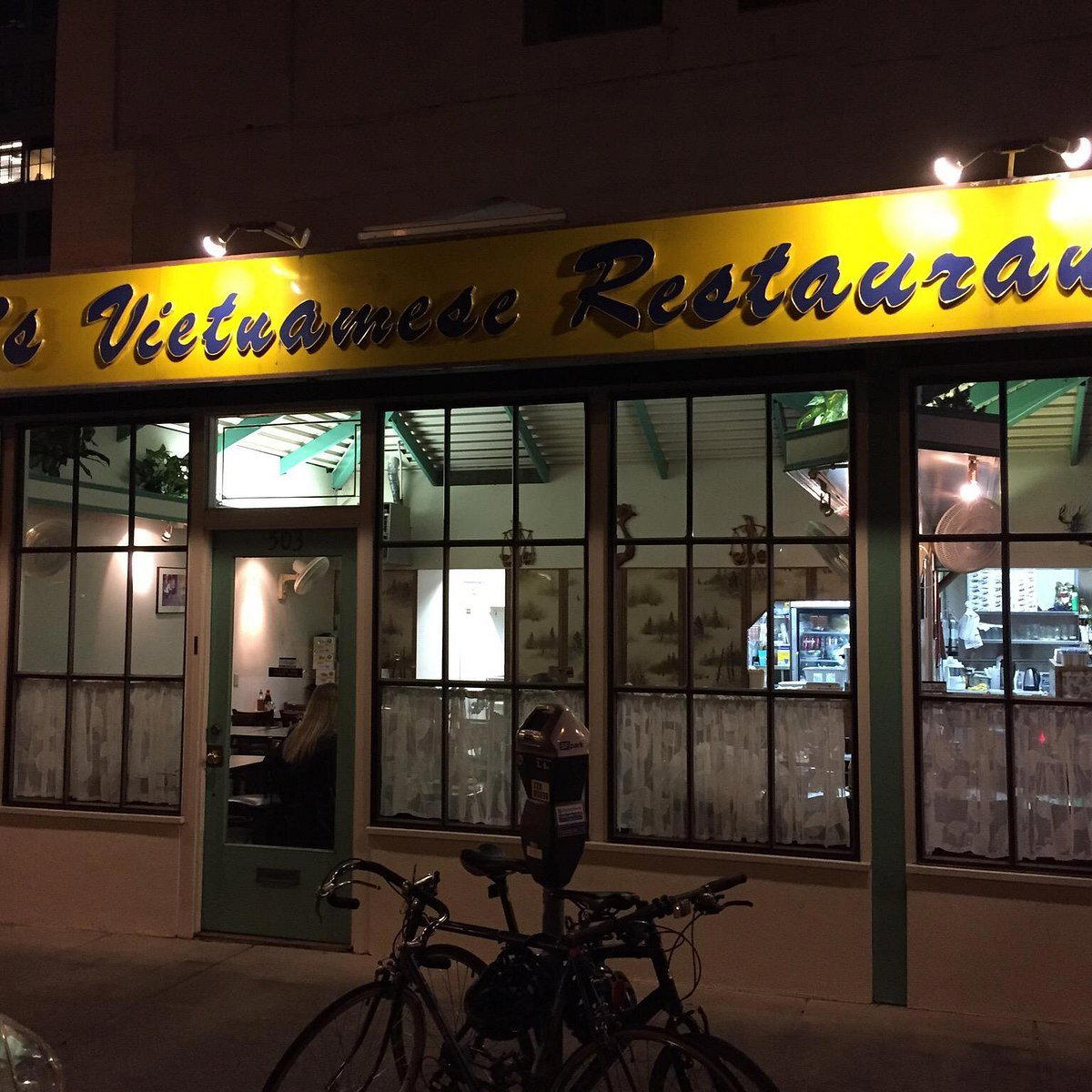
Columbus Ave and the Architecture of the Everyday Dining Room
Sai's Vietnamese Restaurant is a casual Vietnamese restaurant in San Francisco with. San Francisco's Columbus Avenue cuts diagonally through a neighbourhood that has always operated as a contact zone between cultures. North Beach built its identity on Italian-American institutions, but the blocks where Columbus approaches the Financial District have long accommodated a more varied cross-section of the city's restaurant economy. The physical containers on this stretch tend toward the honest: street-facing storefronts, modest signage, rooms that prioritise covers over ceremony. Sai's Vietnamese Restaurant at 42 Columbus Ave sits inside that tradition. The address places it within walking distance of some of the city's most technically demanding tasting-menu rooms, yet it occupies a different register entirely, one where the design logic is legibility and function rather than atmosphere-as-product.
That distinction matters for how you read the room. In a dining culture where San Francisco's high-end tier, represented by venues like Benu, Atelier Crenn, and Quince, has pushed interior design toward deliberate minimalism or theatrical staging, the Vietnamese restaurant format operates from a different spatial premise altogether. The room exists to support the food and the pace of service, not to frame a narrative. Lighting is functional. Tables are positioned for throughput. The absence of designed atmosphere is itself a design position, one that signals where the kitchen's priorities lie.
Vietnamese Dining in a City of Tasting Menus
San Francisco's restaurant identity has been shaped significantly by its Michelin-starred tier. Lazy Bear and Saison anchor the progressive American end; Benu bridges French and Chinese techniques under Corey Lee's direction. These rooms charge accordingly, and they have drawn the city's critical attention for the better part of two decades. The consequence is that San Francisco's mid-register and neighbourhood dining, where Vietnamese cuisine largely operates, receives less column space than its culinary contribution warrants.
Vietnamese cooking in San Francisco has a documented presence that predates the current fine-dining cycle. The city's Vietnamese community, concentrated historically in the Tenderloin and extending across multiple neighbourhoods, built a restaurant infrastructure grounded in regional specificity: pho from the north, broken rice plates from the south, banh mi pressed through a distinctly Californian filter. The cuisine's fundamentals, long-cooked broths, herb-forward garnish plates, the interplay of acid and fat, translate poorly to tasting-menu formats, which is part of why Vietnamese restaurants in American cities have remained neighbourhood-anchored rather than migrating upmarket at the rate of, say, Japanese or Korean cooking. Atomix in New York demonstrated that Korean fine dining can occupy a $$$$ tier with international recognition; Vietnamese cuisine in the United States has not produced an equivalent at scale, making the neighbourhood format not a default but a considered position.
The Space as Editorial Statement
The editorial angle on a room like Sai's is not the room itself but what the room communicates about its category. Vietnamese restaurants in American cities typically operate in one of two spatial registers: the large, brightly lit pho hall built for volume and family dining, or the smaller street-facing storefront designed for regulars and lunch traffic. Columbus Ave leans toward the latter. A street-level address on a diagonal avenue that sees both tourist and Financial District foot traffic creates a particular dynamic: the clientele is mixed by necessity, the pace is faster than a destination dining room, and the physical space reflects that reality.
Compare this to the spatial logic of the rooms that surround it in the city's fine-dining conversation. Single Thread Farm in Healdsburg and The French Laundry in Napa use their physical containers as deliberate extensions of the dining experience, where the room is part of the argument the kitchen is making. Blue Hill at Stone Barns in Tarrytown integrates architecture and agricultural setting as inseparable from the tasting menu's logic. Sai's makes no such argument. Its space is instrumental rather than expressive, which places it in a different competitive conversation, not with the city's tasting-menu rooms but with the broader category of Vietnamese restaurants that serve the city's working lunch and neighbourhood dinner economy.
Positioning in the City's Dining Spectrum
San Francisco diners who move between the city's price tiers will find that the contrast between a Vietnamese neighbourhood restaurant and the $$$$ rooms is more than a matter of cost. The experience architecture is different at every level: booking lead times, service choreography, course count, pacing, and the degree to which the room itself is stage-managed. Le Bernardin in New York City, Alinea in Chicago, and Providence in Los Angeles all operate within a framework where every physical and service element is calibrated to extend the kitchen's authorial statement. The neighbourhood Vietnamese room operates from the opposite premise: the food should speak without a designed context requiring it to do so.
That is not a criticism. It is a category distinction. The cities that have produced particularly compelling Vietnamese restaurant scenes, Ho Chi Minh City, Hanoi, and their diaspora extensions in San Jose and Houston, have done so precisely because the cuisine works well when it is not burdened with ambient theatre. The broth matters. The herbs matter. The room is a delivery mechanism, not a destination in itself.
Readers considering the city's fine-dining tier alongside neighbourhood options can also cross-reference venues like Addison in San Diego, Bacchanalia in Atlanta, Emeril's in New Orleans, The Inn at Little Washington, and 8 1/2 Otto e Mezzo Bombana in Hong Kong for a sense of how the international fine-dining framework compares to the neighbourhood format Sai's represents.
Planning Your Visit
Sai's Vietnamese Restaurant is located at 42 Columbus Ave, San Francisco, CA 94111, on the corridor that connects North Beach to the Financial District. The address is accessible by foot from the Embarcadero BART station and from the Financial District's transit hub. It is recommended to reserve ahead.
Address: 42 Columbus Ave, San Francisco, CA 94111
The Quick Read
Comparable venues nearby, for context on price, style, and recognition.
| Venue | Cuisine | Price | Notes |
|---|---|---|---|
| Sai's Vietnamese RestaurantThis venue — the venue you are viewing | Not listed | $$ | Not listed |
| Saigonese Café | Not listed | $$ | Embarcadero, Vietnamese café & bánh mì shop |
| Le Soleil | Lakeshore, Vietnamese Fusion | $$ | Not listed |
| Turtle Tower Restaurant | Not listed | $$ | Financial District, Authentic Northern Vietnamese Pho |
| Pho Golden | Not listed | $ | Excelsior, Authentic Vietnamese Pho & Grilled Pork |
| The Ramen Bar | Not listed | $$ | Financial District, Tokyo-Style Japanese Ramen |
Continue exploring
More in San Francisco
Restaurants in San Francisco
Browse all →
Bars in San Francisco
Browse all →
Hotels in San Francisco
Browse all →
At a Glance
- Classic
- Casual Hangout
- Standalone
Current opening hours
- Monday
- 10 AM–9 PM
- Tuesday
- 10 AM–9 PM
- Wednesday
- 10 AM–9 PM
- Thursday
- 10 AM–9 PM
- Friday
- 10 AM–9 PM
- Saturday
- 11 AM–9 PM
- Sunday
- Closed
Hours can change for holidays and private events. Last verified .
Bustling casual atmosphere with table service amid Financial District crowds.