Rouge Noir

Tucked into the first floor of the Neusacherhof hotel on the shores of the Weissensee, Rouge Noir operates as a private chef's table for just ten diners per sitting. Stefan Glantschnig and David Traun's 12-course tasting menu holds a Michelin star and draws on Carinthian produce alongside global technique, delivered in a room that feels more like a library than a restaurant.
Pearl is the En Primeur Club membership app — saves, bookings, and concierge access live there. Same editors, same standards.
- Address
- Techendorf 80, 9762 Techendorf, Austria
- Phone
- +43 4713 2356
- Website
- rougenoir.at
- Directions
- Get directions
 Saves & bookings on Pearl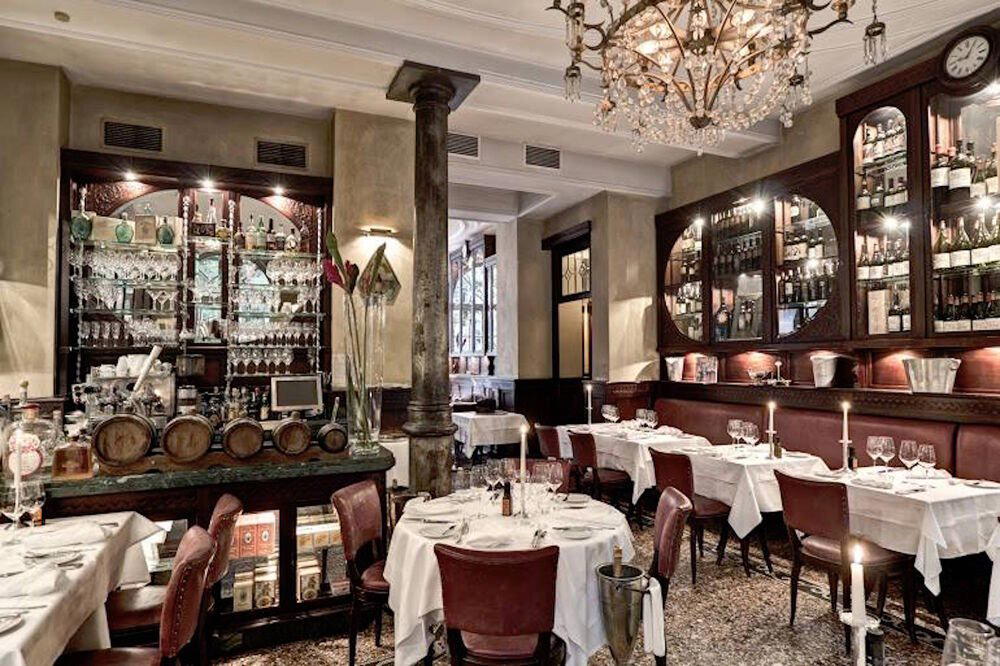
A Room Designed for Attention
The dining room on the first floor of the Neusacherhof does not announce itself. You arrive via the hotel, pass through a space that reads somewhere between a private library and a drawing room, cookbooks lining the walls in calm, deliberate rows, and settle into one of ten seats arranged around a chef's table. Through the large window, the Weissensee spreads out below, the lake and its surrounding meadows and mountains forming a frame that shifts with the evening light. In the Austrian Alps, views from restaurant windows are rarely in short supply, but the scale here is compressed in a way that makes the landscape feel personal rather than panoramic.
The capacity constraint is the point. At ten covers, Rouge Noir sits at the intimate end of a category that has grown considerably across Austria's alpine dining circuit. Where hotel restaurants in Carinthia have historically operated as large, service-heavy affairs drawing on the region's tourism trade, this format belongs to a different model entirely: the high-ratio, low-volume chef's table that prioritises a controlled experience over throughput. Comparable formats in the Austrian premium tier, Gourmetrestaurant Tannenhof in Sankt Anton am Arlberg and Griggeler Stuba in Lech, operate in similarly contained spaces where the room itself is part of the proposition.
How the Evening Unfolds
Ritual begins before the first course arrives. Freshly prepared popcorn and champagne mark the opening of the evening, a small gesture that signals the pacing to come: this is not a meal that rushes. The tasting menu proceeds at the tempo of a room designed for conversation and attention rather than turnover. Stefan Glantschnig serves and explains the dishes himself, collapsing the distance between kitchen and table.
That dual role, host and cook, gives the experience a coherence that is harder to manufacture at larger covers. The explanations are not performance; they are part of how the menu is meant to be read. Dishes like Amur carp with parasol mushroom, or langoustine with tomato, are composed around regional Carinthian produce and culinary references, then opened outward with technique and flavour profiles drawn from beyond the region. This is a recognisable structure in contemporary Central European tasting menus: the local ingredient as anchor, global method as commentary. Döllerer in Golling an der Salzach works a similar tension between Alpine rootedness and international range at the same price tier. Steirereck im Stadtpark in Vienna operates on a larger scale but with a comparable commitment to Austrian produce as the primary language of the menu.
For those who prefer to step away from wine, non-alcoholic pairings are available alongside the standard offering. This is no longer unusual at Michelin-starred tables across Europe, Ikarus in Salzburg and Kräuterreich by Vitus Winkler in Sankt Veit im Pongau both offer the format, but its presence here reflects a broader shift in how serious tasting menus are thinking about the full table experience rather than defaulting to the assumption that every diner drinks.
Where Rouge Noir Sits in the Austrian Fine Dining Picture
Austria's Michelin-starred circuit has historically clustered around Vienna, Salzburg, and the Vorarlberg ski towns. Carinthia, despite its lakes and summer tourism draw, has produced fewer entries in that tier. A starred restaurant at this level of format discipline, 10 covers, 12 courses, hotel-integrated but conceptually distinct, in a village of Techendorf's size positions Rouge Noir as part of a pattern visible elsewhere in Alpine Europe: the emergence of destination fine dining in locations that would previously have been considered too remote for the format to sustain itself.
The comparison set within Austria is instructive. Obauer in Werfen built its reputation over decades in a small Salzburg state town by making the journey part of the value. Ois in Neufelden occupies similar remote-destination territory in Upper Austria. Restaurant 141 by Joachim Jaud in Mieming operates in the Tyrolean countryside on comparable terms. The model depends on the meal being worth the distance, and the Michelin star awarded in 2024 signals that the case has been made. Internationally, the creative chef's table format at this scale finds parallels in Alléno Paris au Pavillon Ledoyen and Enrico Bartolini in Milan, though both operate at considerably larger footprints and in major urban settings.
The Weissensee itself has a character worth considering when placing the restaurant in context. Unlike the more heavily trafficked Carinthian lakes, the Wörthersee's summer crowds, the Millstätter See's resort infrastructure, the Weissensee has remained comparatively quiet and oriented toward a different kind of visitor: walkers, cyclists, winter cross-country skiers, and travellers who are actively seeking a reduction in pace. A restaurant that seats ten people in a library-like room above a lake is a coherent fit for that audience. For a broader view of what the area offers, see our full Weissensee restaurants guide, which covers the full range from casual lakeside dining at Die Forelle to the modern cuisine at Das Loewenzahn.
Planning a Visit
The restaurant operates within the Neusacherhof hotel at Techendorf 80, in the village of Techendorf on the Weissensee. The price tier is €€€€. Advance booking is essential. The format is a single tasting menu served at one sitting, with no à la carte option. For those planning a longer stay in the area, our full Weissensee hotels guide, bars guide, wineries guide, and experiences guide cover the surrounding options in detail.
Category Peers
Comparable venues nearby, for context on price, style, and recognition.
| Venue | Cuisine | Price | Awards | Notes |
|---|---|---|---|---|
| Rouge NoirThis venue — the venue you are viewing | Creative Modern Fine Dining | $$$$ | Michelin 1 Star | Not listed |
| Die Forelle | Alpine Regional Fine Dining | $$$$ | Michelin 1 Star | Techendorf |
| Wirtshaus by Stefan Glantschnig | Modern Carinthian Regional | $$$ | Michelin Plate | Weissensee |
| Das Loewenzahn | Modern French with Local Austrian Influences | $$$ | Michelin Plate | Weissensee |
| Moritz | Modern Regional Austrian | $$$$ | Michelin 1 Star | Grafenstein |
| Mesnerhaus | Modern Austrian Seasonal Fine Dining | $$$$ | Michelin 1 Star | Markt |
Recognition history
Dated appearances from independent guides and award organizations, with the underlying list record or original source where available.
Michelin 1 Star
Michelin
Michelin 1 Star
Michelin
Continue exploring
More in Weissensee
Restaurants in Weissensee
Browse all →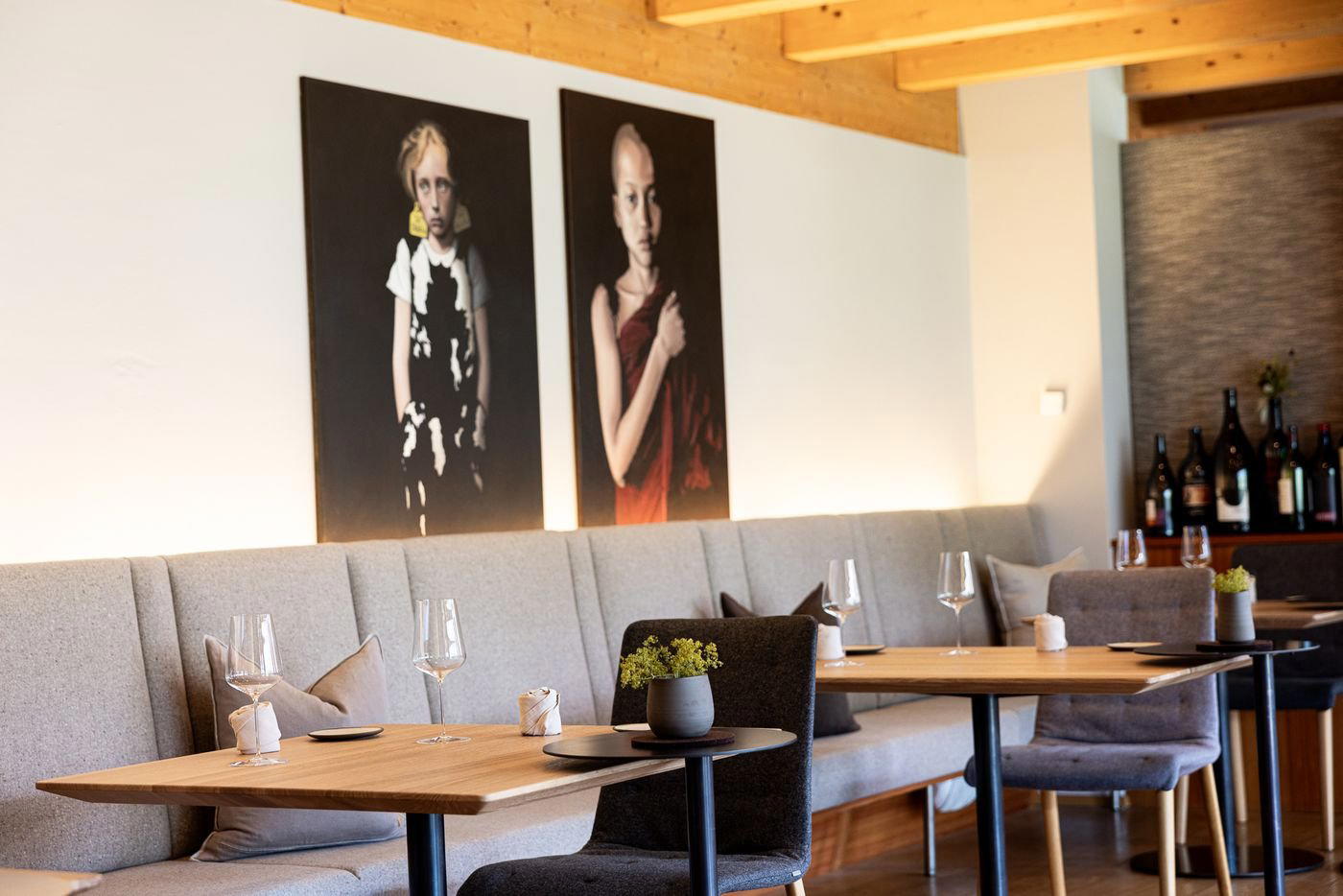
Bars in Weissensee
Browse all →
Hotels in Weissensee
Browse all →
Wineries in Weissensee
Browse all →
At a Glance
- Intimate
- Elegant
- Sophisticated
- Special Occasion
- Date Night
- Chefs Counter
- Panoramic View
- Extensive Wine List
- Local Sourcing
- Mountain
Intimate library atmosphere with cookbook displays, soft lighting, and large windows framing lake and mountain views, fostering quiet discovery and personal service.