Rooster's Wood-Fired Kitchen
Wood-fired cooking occupies a specific lane in Charlotte's downtown dining scene, and Rooster's Wood-Fired Kitchen on North College Street commits to that format with a focused menu built around live-fire technique. The address places it in the heart of Uptown, making it a practical choice before or after events at nearby venues. The kitchen's approach centers on smoke and char as primary seasoning tools rather than supporting flavors.
Pearl is the En Primeur Club membership app — saves, bookings, and concierge access live there. Same editors, same standards.
- Address
- 150 N College St, Charlotte, NC 28202
- Phone
- +17043707667
- Website
- roosterskitchen.com
- Directions
- Get directions
 Saves & bookings on Pearl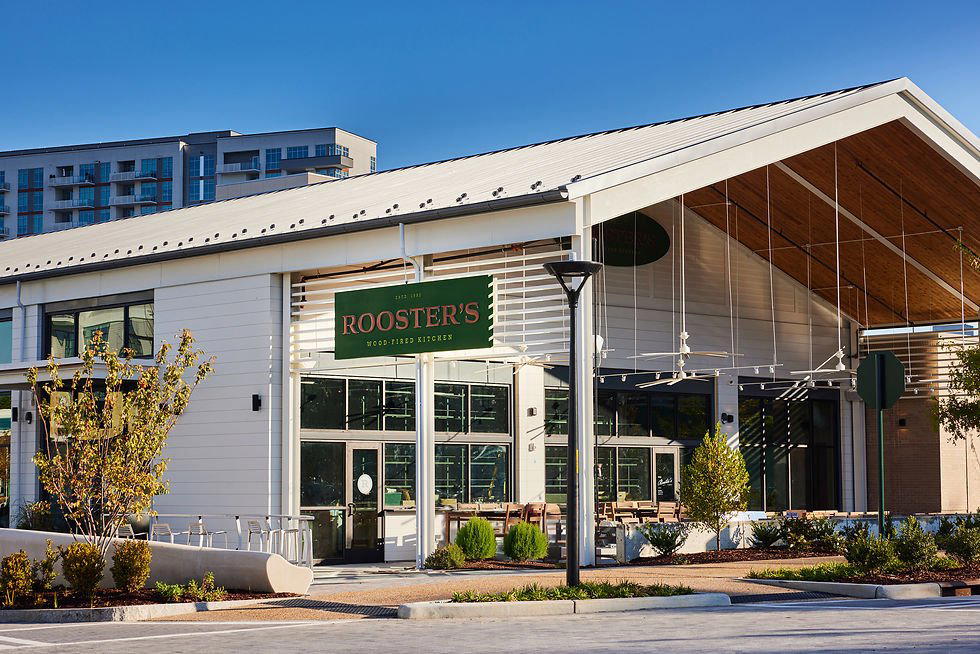
Fire as Method, Not Decoration
Wood-fired cooking has a clarifying effect on a menu. When a kitchen organizes itself around a live hearth, every dish on the list has to answer a basic question: does the fire make this better? At Rooster's Wood-Fired Kitchen, located at 150 N College St in Charlotte's Uptown district, that question shapes the architecture of what comes out of the kitchen. The address alone signals something about the intended audience: Uptown Charlotte draws office workers at lunch, pre-concert diners before shows at the Spectrum Center, and hotel guests looking for something with a sense of place rather than a chain fallback.
The physical context matters. North College Street runs through the commercial spine of Uptown, and restaurants here operate in a compressed dining window environment where timing and format have to work for people with somewhere else to be. A wood-fired kitchen introduces a pace and rhythm that differs from a conventional line: fire runs hotter and less predictably than gas, proteins take on color faster, and a skilled crew has to read the hearth in real time. That constraint, handled well, produces a consistency of char and smoke that gas simply cannot replicate at scale.
How the Menu Reveals the Kitchen
Wood-fired menus tend to sort themselves into a recognizable grammar: proteins anchored by the fire, sides calibrated to absorb or contrast with smoke, and starters that set expectations for what follows. That structure functions as an editorial statement about what the kitchen trusts itself to do well. When a restaurant names itself after its cooking method, the menu cannot afford to hedge: there is no diplomatic route where half the dishes avoid the hearth entirely.
Charlotte's dining scene offers useful comparisons. Counter- operates in the New American space with a tasting format that foregrounds technique. Customshop works the contemporary tier with a more composed, plated approach. Supperland has carved out a Southern steakhouse identity where the protein is the point. Rooster's sits in a different register from all of them: the wood fire is the organizing principle, which means the menu's coherence depends on the kitchen's confidence in that single method rather than range across cooking styles.
In the broader American live-fire category, this kind of menu architecture has precedents at higher price points. Restaurants like Lazy Bear in San Francisco and Blue Hill at Stone Barns in Tarrytown have used fire and seasonal sourcing as a narrative frame at the fine-dining tier. The approach at Rooster's is less ceremonial, more direct: the hearth as workhorse rather than theater. That distinction is meaningful. It places the restaurant in a more accessible bracket without abandoning the technical premise.
Uptown Positioning and Who This Is For
Uptown Charlotte's restaurant mix has matured considerably over the past decade. The neighborhood now supports a range of formats, from the Southern-inflected cooking at venues like Angeline's and the market-style format at 1897 Market to cocktail-forward rooms like 204 North Kitchen and Cocktails and the rooftop format at Aura Rooftop. Within that mix, a wood-fired kitchen offers something that format-driven competitors do not: a kitchen identity anchored in a physical piece of equipment rather than a cuisine category or a concept.
For out-of-town visitors, the North College Street location is logistically sound. LYNX Blue Line light rail stops nearby, the venue sits within walking distance of major Uptown hotels, and the surrounding blocks carry enough foot traffic that the area feels activated rather than deserted in the evenings. Visitors who have dined at fire-forward restaurants in other cities, such as Emeril's in New Orleans or experiential formats like The Inn at Little Washington, will recognize the structural logic of a kitchen organized around a single dominant technique, even if the price tier and formality differ significantly.
For local Charlotte diners, Rooster's occupies a niche that Gallery Restaurant's Southern American cooking and Ever Andalo's Italian-American format do not attempt to fill. The wood-fire premise creates a built-in point of differentiation that does not require elaborate concept layering. See also our full Charlotte restaurants guide for a broader map of where Rooster's fits within the city's dining tiers.
Live Fire in the American Context
The resurgence of wood-fired cooking in American restaurants over the past fifteen years reflects a broader turn toward technique transparency: diners have become increasingly interested in how food is cooked, not just what is on the plate. This shift has played out differently across price tiers. At the high end, fire becomes a statement, a nod to primal cooking methods dressed in precision, as seen at places like Alinea in Chicago or Providence in Los Angeles, where technique visibility is part of the experience's value. At the mid-market tier, fire functions differently: it communicates authenticity without ceremony, suggesting that the kitchen has nothing to hide about its process.
Rooster's operates in that mid-market register, which means the hearth is the kitchen's credential rather than its showpiece. Restaurants like Single Thread Farm in Healdsburg or Addison in San Diego deploy fire within a broader fine-dining apparatus. Rooster's strips that apparatus away and lets the cooking method carry the room on its own terms. Whether that trade-off works for a given diner depends largely on what they're looking for: occasion dining with full service architecture, or something more direct and less mediated.
Visitors curious about how Charlotte's dining scene positions itself relative to nationally recognized kitchens, from Le Bernardin in New York City to Atomix in New York City or The French Laundry in Napa, will find that Rooster's represents a different kind of ambition: not award-trajectory fine dining, but a committed, method-first approach that serves the city's working Uptown neighborhood effectively. For a venue like Afternoon Tea at Ballantyne, the proposition is ceremony. For Rooster's, the proposition is fire.
Planning Your Visit
The North College Street address puts Rooster's within easy reach of Uptown Charlotte's hotel cluster, making it a practical dinner option without requiring a car or rideshare. Uptown Charlotte venues at this location type typically fill quickly on event nights tied to the Spectrum Center or Bank of America Stadium, so timing your visit around the broader Uptown calendar will affect both wait times and the energy of the room. For visitors comparing options in the neighborhood, the live-fire premise at Rooster's sits in a different category from the Italian-American format at Ever Andalo or the contemporary plating at Customshop, making it worth a deliberate choice rather than a default.
Continue exploring
More in Charlotte
Restaurants in Charlotte
Browse all →
Bars in Charlotte
Browse all →

At a Glance
- Rustic
- Cozy
- Lively
- Date Night
- Business Dinner
- Group Dining
- Brunch
- Open Kitchen
- Craft Cocktails
- Extensive Wine List
- Farm To Table
- Local Sourcing
Current opening hours
- Monday
- 11 AM–10 PM
- Tuesday
- 11 AM–10 PM
- Wednesday
- 11 AM–10 PM
- Thursday
- 11 AM–10 PM
- Friday
- 11 AM–10 PM
- Saturday
- 11 AM–10 PM
- Sunday
- 11 AM–9 PM
Hours can change for holidays and private events. Last verified .
Warm and inviting with exhibition kitchen views, adult casual atmosphere, and rustic decor.
Know Before You Go
- Getting there
- 150 N College St, Charlotte, NC 28202