Ristorante Scala
Our verdict
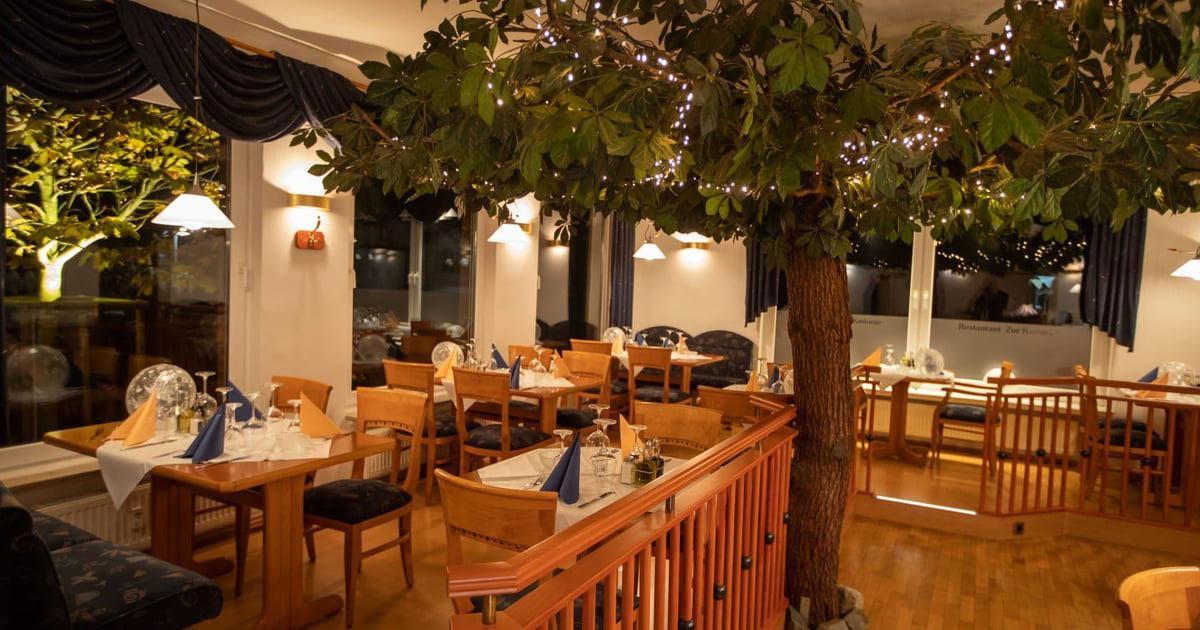
Ristorante Scala occupies a quiet address on Natruper Strasse in Hagen am Teutoburger Wald, a small town in Lower Saxony where Italian cooking has taken root well beyond the obvious urban centres. The restaurant sits in a region where sourcing discipline and seasonal rhythm matter as much as technique, placing it within a broader German tradition of producer-linked fine dining that has quietly spread far from the Michelin corridors of Munich, Hamburg, and Berlin.

Pearl is the En Primeur Club membership app — saves, bookings, and concierge access live there. Same editors, same standards.
The menu
What to order
- Scala Pizza
- Pistachio Pizza
- Margherita
Italian Cooking in the Teutoburg Forest: What Ristorante Scala Tells Us About Germany's Regional Dining Shift
There is a version of Italian dining in Germany that belongs entirely to city centres: polished rooms in Hamburg's Eppendorf, Frankfurt's Westend, or Munich's Maxvorstadt, where the fit-out is marble and the wine list runs to several hundred labels. Ristorante Scala operates in an entirely different register. Its address on Natruper Strasse 89 in Hagen am Teutoburger Wald places it in Lower Saxony's quieter interior, a range of farmland and forest where the Teutoburg hills form a long ridge to the south and where a restaurant of its name exists not to serve a tourist circuit but to serve a community. That positioning tells you something significant about how Italian cooking has spread through Germany over the past two decades: not just as an urban import, but as a genuinely embedded local institution in towns most visitors never consider stopping in.
The Regional Dining Shift That Explains Scala's Existence
Germany's serious dining scene is often mapped by its Michelin corridor: the concentrated stretch from Hamburg and Berlin in the north, through Frankfurt and Cologne in the west, down to Munich and the Bavarian south. Restaurants like Restaurant Haerlin in Hamburg, JAN in Munich, and Aqua in Wolfsburg anchor that map. But below that tier, and sometimes quietly adjacent to it, a second layer of dining has developed in smaller German towns: locally rooted, ingredient-focused, and sustained not by destination traffic but by repeat local custom. Ristorante Scala belongs to that second layer. Its longevity in Natrup Hagen, a community of several thousand people roughly fifteen kilometres from Osnabrück, reflects the kind of durable commitment to place that makes regional dining in Germany interesting beyond the starred circuit.
The broader European context matters here. Across northern Europe, Italian restaurants operating in small regional towns have often survived by doing one of two things: either they simplify aggressively to meet the lowest common denominator of local taste, or they take sourcing and technique seriously enough to hold an audience that could easily drive to a larger city. The ones that last tend to be the latter.
Ingredient Sourcing and the Italian Restaurant in Northern Germany
The central tension for any Italian restaurant operating outside Italy is the sourcing question. The cuisine's logic is inseparable from its raw materials: the DOP designations, the regional specificity of cured meats and aged cheeses, the olive oils tied to particular terroirs in Liguria, Tuscany, or Sicily. A restaurant in Natrup Hagen cannot sidestep this tension. It either commits to importing ingredients that carry the provenance the cuisine demands, or it adapts the cooking to what northern Germany can actually supply with integrity, or it does some combination of both. The most serious Italian kitchens operating in Germany, including those that have drawn comparison with the work at destinations like Schwarzwaldstube in Baiersbronn or Vendôme in Bergisch Gladbach in how they handle classical European technique, tend to answer this tension by treating it as a creative constraint rather than a problem. The Teutoburg region itself offers seasonal produce of real quality: root vegetables from the Münsterland plain, game from the surrounding forests, dairy from farms across Lower Saxony. A kitchen that connects to those local rhythms while maintaining fidelity to Italian structure has something to say that an urban Italian restaurant importing everything from the same wholesale distributor does not.
This sourcing conversation is happening across German fine dining at every price point. At the leading end, kitchens like ES:SENZ in Grassau and Waldhotel Sonnora in Dreis have built reputations partly on producer relationships and seasonal discipline. The same instinct, scaled to a regional Italian context, is what differentiates a restaurant worth travelling for from one that simply fills a local need adequately.
Natrup Hagen and the Osnabrück Dining Context
Hagen am Teutoburger Wald sits within commuting distance of Osnabrück, a city of roughly 160,000 that has its own modest but developing dining scene. The Teutoburg Forest area attracts weekend visitors for walking and cycling, particularly in spring and autumn when the ridge trails draw day-trippers from the Ruhr cities two hours to the southwest. A restaurant in this position has the option of orienting toward that weekend visitor trade or toward weekday regulars from the surrounding communities. The address on Natruper Strasse, a through road rather than a town-centre showpiece location, suggests the latter orientation, though this is inference from geography rather than confirmed operational detail. For context on how Italian and European fine dining operates at the sharper end of the German market, the full range runs from intimate regional rooms like this one through to formally awarded houses such as Schanz in Piesport, Bagatelle in Trier, and Victor's Fine Dining by Christian Bau in Perl. Scala does not compete in that bracket by price or by award standing, but it occupies a position that those restaurants do not: genuine embeddedness in a small community, with the accountability that brings.
Germany's more experimental dining formats, from CODA Dessert Dining in Berlin to ATAMA by Martin Stopp in Sankt Ingbert and AUGUST in Augsburg, represent one direction the country's dining is heading. Ristorante Scala represents something older and arguably more durable: a kitchen cooking a recognisable cuisine for people who live nearby and return regularly. Both matter to an honest account of how Germany eats.
Planning a Visit
Ristorante Scala is located at Natruper Strasse 89 in Hagen am Teutoburger Wald, accessible by car from Osnabrück in under twenty minutes, or from the A1 motorway via the Osnabrück-Nord junction. Hagen am Teutoburger Wald is also worth pairing with a broader exploration of the Teutoburg Forest region, particularly in the walking and cycling seasons of late spring through early autumn. For a broader map of worthwhile dining across Germany, our full Natrup Hagen restaurants guide provides additional context, and the EP Club coverage of AURA by Alexander Herrmann and Tobias Bätz in Wirsberg and ammolite in Rust illustrates the range of serious cooking available across the country's less-visited regions. For international reference points on how Italian-influenced cooking performs at the highest technical level, Le Bernardin in New York City and Atomix offer instructive comparisons in how European technique translates across cultural contexts.
Frequently asked questions
Is Ristorante Scala a family-friendly restaurant?
Ristorante Scala's location in Hagen am Teutoburger Wald, a small town rather than an urban dining district, suggests a neighbourhood restaurant format that typically accommodates families.
Is Ristorante Scala better for a quiet night or a lively one?
Hagen am Teutoburger Wald is a low-density municipality outside Osnabrück, which shapes the likely tempo of dining here. Restaurants in comparable small-town settings in Lower Saxony tend toward the relaxed and unhurried rather than the high-energy. Scala reads, contextually, as a destination for an evening that prioritises conversation over scene.
How far is Ristorante Scala from Osnabrück, and is it worth the drive?
Ristorante Scala sits on Natruper Strasse 89 in Hagen am Teutoburger Wald, a municipality that lies within roughly 20 minutes of central Osnabrück by car. For the Osnabrück dining scene, which remains modest in size relative to Germany's larger culinary cities, an Italian restaurant operating at the town's edge fills a gap that the city centre does not always cover. Whether the drive is warranted depends on what you are after: proximity to the Teutoburg Forest and a quieter setting are the clearest draws.
Fast Comparison
Comparable venues nearby, for context on price, style, and recognition.
| Venue | Cuisine | Price | Notes |
|---|---|---|---|
| Ristorante ScalaThis venue — the venue you are viewing | Neapolitan Pizza & Italian | $20–30 | Not listed |
| PALUMBO Restaurant | Authentic Italian | $50–100 | Mauritz |
| Forissimo Ristorante Italiano | Authentic Italian Ristorante | $50–100 | Zentrum |
| Tonis Gusto Italiano | Authentic Italian Trattoria | Not listed | Hörde |
| Marcellino Pane e Vino | Authentic Italian with Sicilian Influences | $50–100 | Neustadt/Nord |
| Tempaccio Ristorante | Modern Northern Italian | $30–50 | Palmengarten |
Continue exploring
More in Natrup Hagen
Restaurants in Natrup Hagen
All restaurants in Natrup Hagen →
Bars in Natrup Hagen
Browse all →
Hotels in Natrup Hagen
Browse all →
Wineries in Natrup Hagen
Browse all →
Details
- Cozy
- Classic
- Family
- Date Night
- Group Dining
- Terrace
- A La Carte
- Vegetarian Friendly
- Vegan Options
Current opening hours
- Monday
- 5–10 PM
- Tuesday
- 5–10 PM
- Wednesday
- Closed
- Thursday
- 5–10 PM
- Friday
- 5–10 PM
- Saturday
- 5–10 PM
- Sunday
- 5–9:30 PM
Hours can change for holidays and private events. Last verified .
Warm and welcoming family atmosphere with friendly service.