Rio occupies a waterfront position on Hornstulls strand in Södermalm, one of Stockholm's most food-dense neighbourhoods. The address places it within a casual-to-mid-range dining corridor that draws locals rather than tourists, making it a useful reference point for understanding how Stockholm eats outside the tasting-menu circuit. Specific menu, pricing, and format details are limited in current data.
 Discover on Pearl
Pearl is the En Primeur Club membership app — saves, bookings, and concierge access live there. Same editors, same standards.
- Address
- Hornstulls strand 3, 117 39 Stockholm, Sweden
- Phone
- +46 8 669 95 00
- Website
- biorio.se
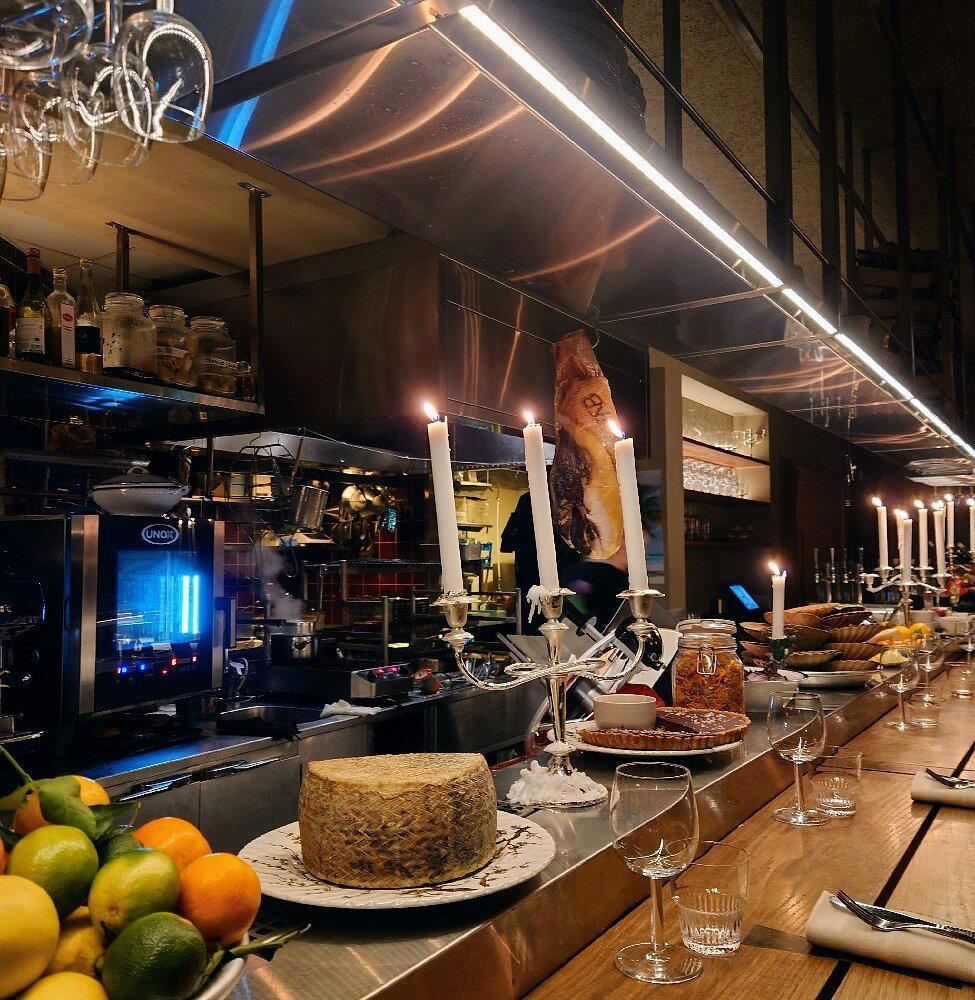
Waterfront Dining on Södermalm's Western Edge
Stockholm's dining scene has long been defined by a split between the high-formality tasting-menu circuit, anchored by addresses like Frantzén, AIRA, and Operakällaren, and a broader, more relaxed neighbourhood tier that actually accounts for how most Stockholmers eat on any given evening. Rio is a restaurant at Hornstulls strand 3 in Stockholm, serving Mediterranean Open-Fire Grill cooking at a price tier of 2. It sits in that second category. The address is specific: the strand runs along the Liljeholmsviken inlet on Södermalm's western waterfront, a stretch that trades the island's more tourist-facing eastern side for something quieter and more residential in character.
Approaching from the Hornstull metro station, the strand unfolds along the water's edge, with Långholmen island visible across the narrow channel. It is the kind of address that rewards a deliberate visit rather than a chance discovery, you come here because you know where you are going, not because you stumbled past on the way to something else. That geography, more than any individual detail about the venue, tells you something about its positioning within the city.
Space and Setting on the Strand
Waterfront dining in Stockholm operates differently depending on which body of water you are facing. The more polished addresses cluster around Strandvägen on Östermalm, where the architecture is grand and the price signals match. Hornstulls strand is a different register: industrial-residential in origin, with a neighbourhood rhythm that has absorbed creative businesses, market stalls, and casual hospitality over the past decade. A venue at this address is making an implicit statement about tone, it is not positioning against the white-tablecloth circuit, but against the kind of neighbourhood dining that Stockholm does well across its inner islands.
The physical relationship with the water is one of the defining features of any establishment on this stretch. Södermalm's western waterfront is oriented southwest, which in Stockholm's long summer evenings means extended natural light well into the evening, a significant atmospheric variable in a city where daylight is a seasonal luxury. The spatial logic of dining here in late spring or summer is genuinely different from what you get at an enclosed city-centre address. That said, Stockholm winters mean any waterfront position carries a very different character from October through March, when the canal freezes and the daylight window narrows sharply.
For editorial context on how Stockholm's neighbourhood dining tier compares to the city's formal end, the contrast with Aloë or Adam / Albin is instructive. Those addresses operate within a structured Nordic fine-dining framework, where the room, the service cadence, and the menu format are all calibrated together. Neighbourhood venues on the strand occupy a different space, one where the physical setting does more work and the format tends to be more flexible.
Södermalm as a Dining Neighbourhood
Understanding Rio requires understanding Södermalm's place in Stockholm's food geography. The island has functioned as the city's most creatively diverse dining district for the better part of two decades, absorbing both serious restaurant projects and the kind of casual neighbourhood operations that give a city its texture. Its western edge, around Hornstull and Liljeholmen, has developed more slowly than the busier eastern and central parts of Södermalm, which means addresses here tend to draw locals rather than visitors working through a city guide.
That local orientation is a meaningful distinction. In cities across Northern Europe, the most revealing dining is rarely in the tourist-facing centre, it is in the neighbourhoods where the price point and the format reflect what residents actually want. Sweden's broader restaurant scene, from the countryside addresses like ÄNG in Tvååker and Knystaforsen in Rydöbruk to urban neighbourhood operations, has consistently produced work that travels under the radar relative to its quality. The same pattern holds in Malmö, where Vollmers and Claesgatan 8 represent very different tiers of the same local-first mentality.
Rio's Hornstull address places it within that neighbourhood-first category in Stockholm's context, a venue whose primary audience is likely to be the residents of Södermalm's western side rather than visitors routing through a highlights list.
What the Address Signals
In Stockholm, address is a reliable proxy for format and audience. Strandvägen signals formality and expense. Östermalm broadly signals established, conservative dining. Södermalm signals diversity across price points and formats, with the western end leaning more casual and community-facing than the eastern. A venue on Hornstulls strand is operating within that framework.
For travellers building a Stockholm itinerary around the formal end of the dining spectrum, references like Signum in Mölnlycke or VYN in Simrishamn illustrate how seriously Sweden takes the destination-dining model even outside the capital. Within Stockholm, the contrast between a strand-side neighbourhood address and the structured formality of the tasting-menu tier is itself an editorial point about how the city has diversified its offer over the past decade.
Venues in comparable positions in other cities, neighbourhood waterfront addresses with a local audience and a casual physical format, tend to succeed on the strength of their regulars rather than on destination visits. The strand setting, the Södermalm neighbourhood character, and the Hornstull address together define the context more clearly than any single venue detail available in current data.
Planning a Visit
Rio's address at Hornstulls strand 3 is direct to reach via the Hornstull T-bana station on the green line, a short walk from the strand. The surrounding area supports a broader evening, with the Hornstull market and several other neighbourhood operations nearby. For a broader read on the Stockholm neighbourhood dining scene and how it maps against the city's formal dining circuit, the Hoze in Gothenburg and Bistro Jarlen in Halmstad offer useful comparisons for how Swedish neighbourhood venues at similar tiers operate across different cities. For international reference points on how waterfront neighbourhood dining positions against a city's formal tier, Le Bernardin in New York City and Lazy Bear in San Francisco represent opposite ends of that spectrum in their respective markets. Seasonal timing matters on Hornstulls strand: the southwest-facing waterfront position works well between May and September, when Stockholm's evening light is longest and any outdoor or window-adjacent seating pays its full dividend.
Cuisine and Credentials
Comparable venues nearby, for context on price, style, and recognition.
| Venue | Cuisine | Price | Awards | Notes |
|---|---|---|---|---|
| RioThis venue — the venue you are viewing | Mediterranean Open-Fire Grill | $$ | , | |
| Restaurang Nytorget 6 | Mediterranean-inspired Swedish Bistro | $$ | , | Södermalm |
| Bar Libertin | Modern Mediterranean Small Plates | $$ | 1 recognition | Aspudden |
| Grand Soleil | French & Italian Riviera Mediterranean Brasserie | $$$ | , | Skeppsholmen |
| Villa Dagmar | Mediterranean & Nordic Fusion | $$$ | 1 recognition | Östermalm |
| Kalf & Hansen | Nordic Organic Fast Food | $$ | , | Södermalm |
Continue exploring
More in Stockholm
Restaurants in Stockholm
Browse all →
Bars in Stockholm
Browse all →
At a Glance
- Cozy
- Modern
- Trendy
- Date Night
- Casual Hangout
- Open Kitchen
- Craft Cocktails
- Local Sourcing
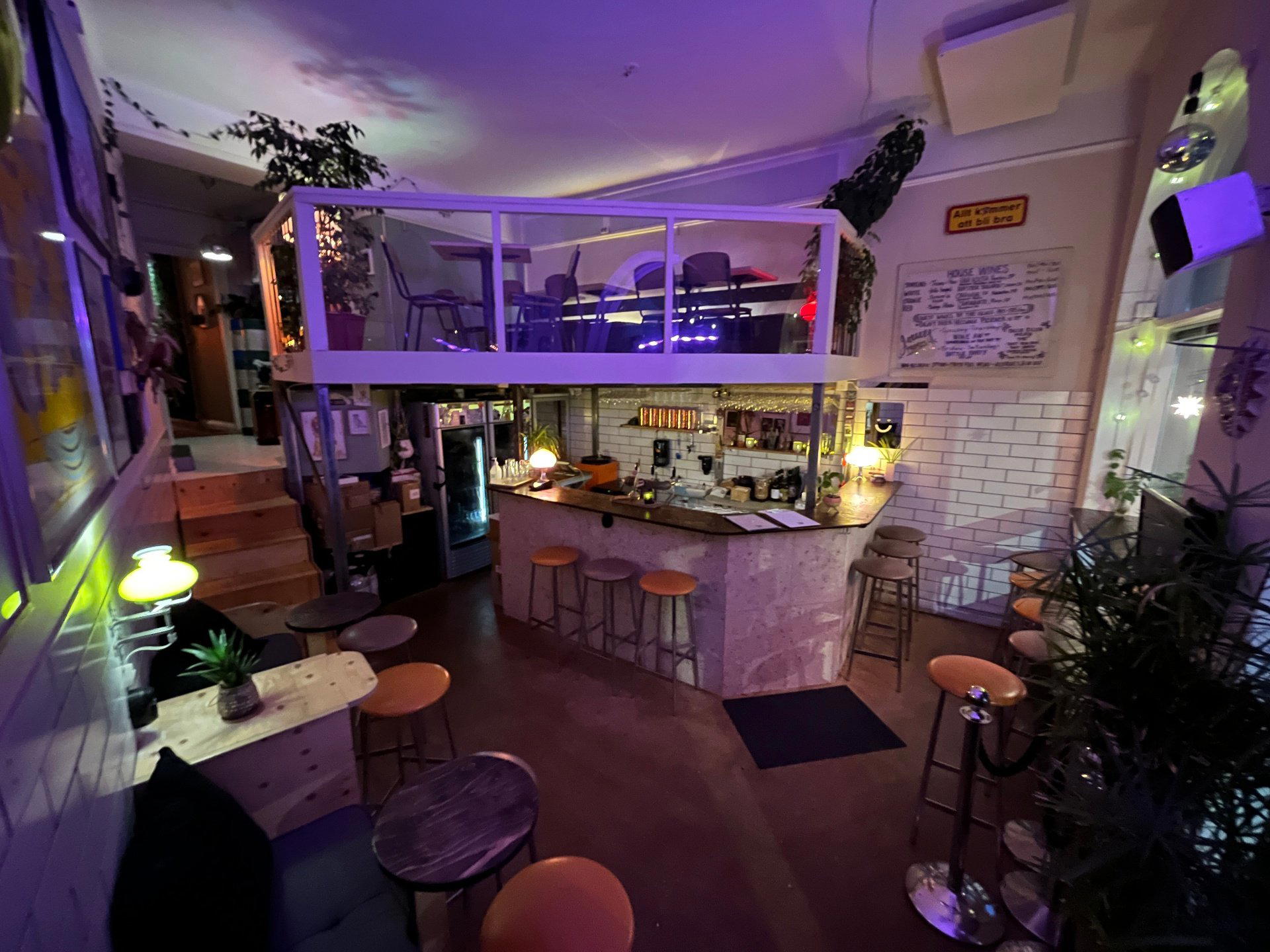
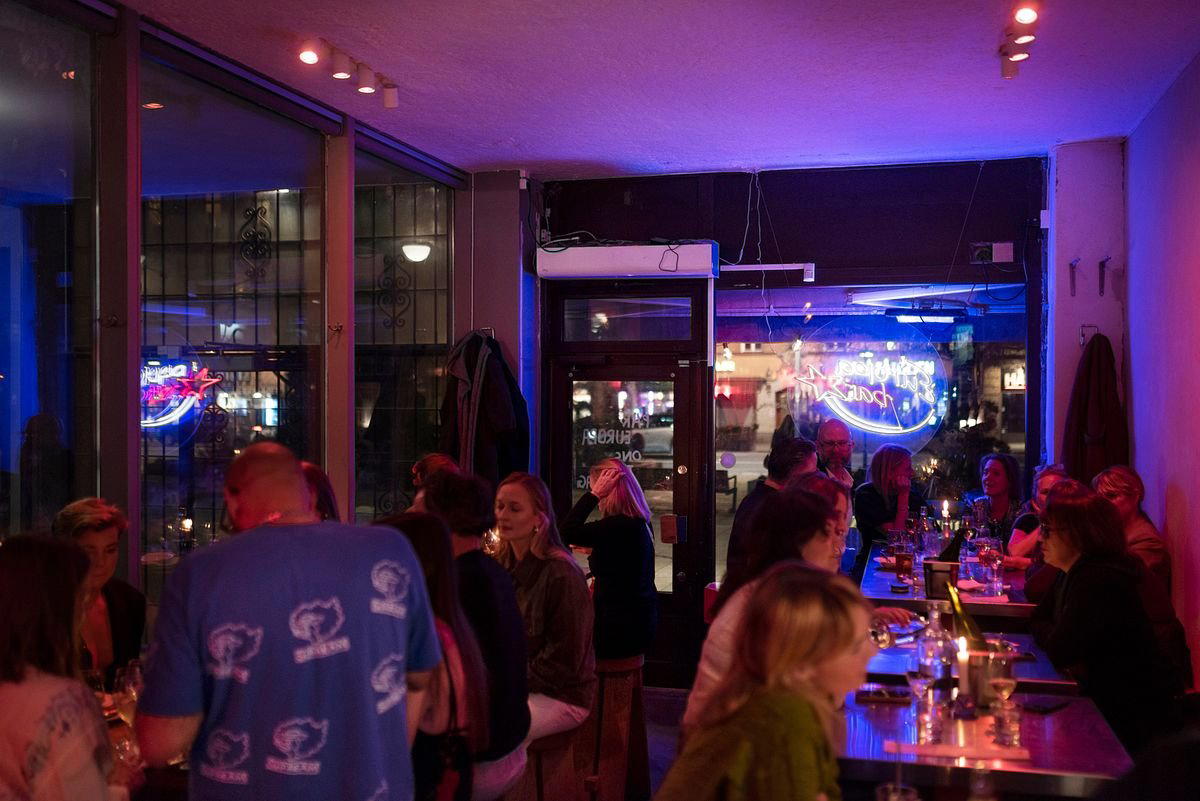
Warm and inviting atmosphere with 50s-inspired interiors, pastel hues, mirror-covered walls, and a cozy setting adjacent to an indie cinema.