Restaurant indien
Our verdict
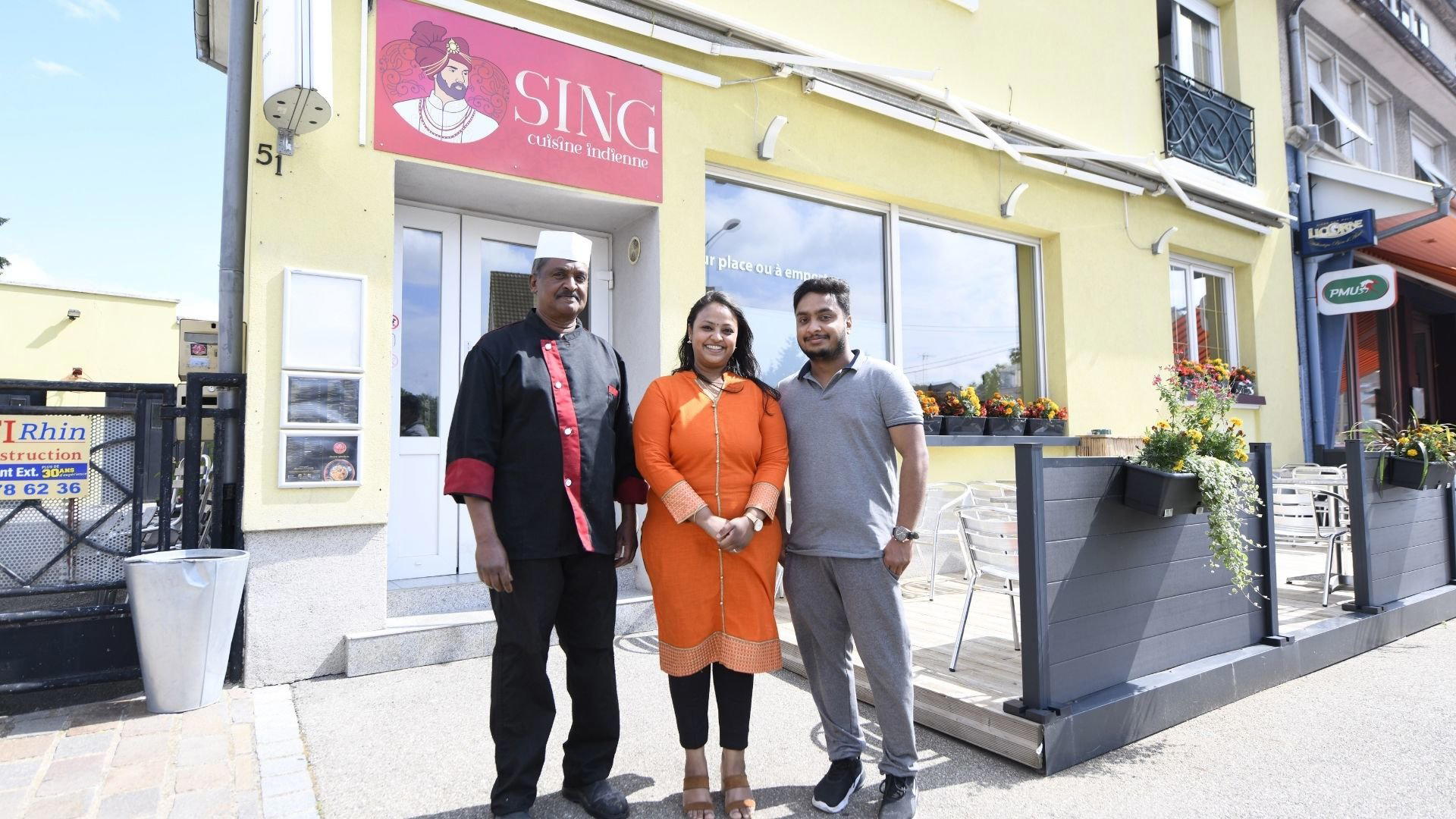
Indian cuisine has a quiet but persistent foothold in Alsace, and Lutterbach's Rue du Général de Gaulle is one address where that tradition plays out at a neighbourhood scale. Restaurant indien occupies the kind of local slot that serves a genuinely mixed clientele rather than a tourist circuit, making it a practical reference point for anyone spending time in the greater Mulhouse area.

Pearl is the En Primeur Club membership app — saves, bookings, and concierge access live there. Same editors, same standards.
The menu
What to order
- Poulet tikka massala
- Kothu rotti
- Biryani poulet
- Samossas
Indian Cooking in Alsace: A Different Kind of Border Cuisine
Alsace is a region defined by culinary boundary-crossing — the choucroute and Riesling traditions that have shaped addresses like Au Crocodile in Strasbourg or the Franco-German refinement at Auberge de l'Ill in Illhaeusern are themselves the product of centuries of cultural overlap. Indian restaurants in this part of France sit in a separate but parallel tradition: communities that arrived in French cities from the 1970s onward brought subcontinental cooking into neighbourhoods that had no prior reference point for it, and over time those restaurants became part of the local dining fabric in their own right. In smaller towns like Lutterbach, on the southwestern edge of the Mulhouse agglomeration, Indian restaurants tend to serve a genuinely mixed crowd rather than a tourist loop — which changes what gets cooked and how.
Restaurant indien at 29 Rue du Général de Gaulle is positioned squarely in that neighbourhood category. The address is a working commercial street rather than a destination dining strip, which tells you something about its function: this is a restaurant that earns its clientele through consistency rather than location advantage. For a broader sense of what else Lutterbach has to offer, our full Lutterbach restaurants guide maps the area's options across categories.
The Sourcing Logic Behind Indian Cooking in Provincial France
One of the least-discussed aspects of Indian restaurants in provincial French cities is the ingredient sourcing problem. The spice architecture of North Indian cooking, the dried whole spices, the particular grades of chilli, the ghee, the varieties of lentil, requires a supply chain that does not exist in local French wholesale markets. Operators either import directly, rely on specialist distributors in Lyon or Paris, or adapt with available substitutes. The quality gap between those approaches is detectable on the plate: a curry built on good-quality whole spices bloomed in fat tastes structurally different from one built on pre-ground blends.
This sourcing reality matters at a macro level because it explains why Indian cooking in France tends to cluster in cities large enough to sustain specialist import networks. Strasbourg, Mulhouse, Lyon, and Marseille all have the density. Smaller communes adjacent to those cities can access the same supply chains, but the individual operator has to be motivated to use them. The ingredient question, more than kitchen skill, tends to be the differentiating variable in this tier of the market. The comparison is instructive when you consider how differently the sourcing challenge plays out at the top of the French dining register: at Mirazur in Menton or Bras in Laguiole, the sourcing philosophy is the editorial subject of the entire restaurant. At a neighbourhood Indian in Lutterbach, it is simply the precondition for cooking food that tastes like what it is supposed to be.
What Alsace Does to the Indian Restaurant Format
The regional context shapes the dining format in ways that are not immediately obvious. Alsace has a strong lunch culture built around fixed menus and relatively rapid service, a habit reinforced by the industrial and commercial character of the Mulhouse belt, where midday eating is functional as much as social. Indian restaurants in this zone often adapt to that rhythm, offering lunch formulas alongside the à la carte dinner service that constitutes the core of their identity. The result is a format that can sit somewhere between a quick-service option at noon and a more considered dinner destination in the evening.
The bread question is also worth noting. Naan, roti, and paratha are made to order in kitchens that take the process seriously, and the quality of bread is often a more reliable indicator of kitchen discipline than the curry itself. A well-made naan, correctly charred from a genuine tandoor, with the right degree of chew, is harder to produce consistently than it appears, and in restaurants that use a conventional oven as a substitute, the difference is immediate.
Placing Lutterbach in the Broader Dining Map
For readers who approach France primarily through its three-star dining circuit, the Alsace region reads as a cluster of high-end addresses punctuated by long drives through vineyard country. That map includes references like Alléno Paris au Pavillon Ledoyen at the national summit, and regionally anchored institutions that have defined what serious French cooking looks like outside Paris. But most of what people actually eat in Alsace sits far below that tier, in the brasseries, winstubs, and neighbourhood restaurants that constitute the daily dining life of the region's residents.
Indian cooking occupies a specific slot in that everyday tier. It provides a genuine alternative to the pork-and-potato axis of traditional Alsatian food, it tends to be priced accessibly, and it serves a population that is more culturally mixed than the region's gastronomy guide would suggest. Lutterbach, as a commune of around 6,000 people immediately southwest of Mulhouse, reflects that demographic reality. The town's restaurant scene is built around daily utility rather than destination appeal, which makes a venue like Restaurant indien a functional rather than aspirational choice, but functional choices, when they are executed well, are the ones people return to every week rather than once a year.
For contrast, readers interested in what the destination end of the French dining scale looks like can cross-reference addresses like Flocons de Sel in Megève, Troisgros in Ouches, Paul Bocuse in Collonges-au-Mont-d'Or, Assiette Champenoise in Reims, AM par Alexandre Mazzia in Marseille, Christopher Coutanceau in La Rochelle, Georges Blanc in Vonnas, L'Oustau de Baumanière in Les Baux, La Marine in Noirmoutier-en-l'île, Auberge du Vieux Puits in Fontjoncouse, or internationally, Le Bernardin and Atomix in New York City. Those addresses represent the formal end of the spectrum; Restaurant indien operates in an entirely different register, and should be assessed on different terms.
Planning Your Visit
Frequently asked questions
What part of town is Restaurant indien in?
Restaurant indien is located at 29 Rue du Général de Gaulle, 68460 Lutterbach, France.
Can I walk in to Restaurant indien?
Contact the restaurant directly before visiting to ask about walk-ins.
How Restaurant indien Lutterbach compares with similar nearby venues.
| Venue | Cuisine | Price |
|---|---|---|
| Restaurant indienThis venue — the venue you are viewing | Indian & Sri Lankan | $20–30 |
| Il Cortile | Mediterranean Cuisine | Not listed |
| Le 4 | Modern Cuisine | Not listed |
| L'Estérel | Modern Cuisine | Not listed |
Continue exploring
More in Lutterbach
Restaurants in Lutterbach
All restaurants in Lutterbach →
Bars in Lutterbach
Browse all →

Details
- Cozy
- Family
- Casual Hangout
- A La Carte
- Vegetarian Friendly
Current opening hours
- Monday
- Closed
- Tuesday
- 11:30 AM–1:30 PM, 6:30–9:30 PM
- Wednesday
- 11:30 AM–1:30 PM, 6:30–9:30 PM
- Thursday
- 11:30 AM–1:30 PM, 6:30–9:30 PM
- Friday
- 11:30 AM–1:30 PM, 6:30–10 PM
- Saturday
- 11:30 AM–1:30 PM, 6:30–10 PM
- Sunday
- Closed
Hours can change for holidays and private events. Last verified .
Warm and welcoming family atmosphere with friendly service.