
1 Michelin Star
Our verdict
Set high in the Vosges mountains on the former site of a monastic hermitage, Le M brings Michelin-pedigreed cooking to one of France's least expected fine dining addresses. Chef Benoit Potdevin, behind the starred Le K at Domaine de la Klauss in Moselle, anchors the menu in local terroir, Vosges pigeon, chanterelles, trout from cold mountain streams, with results that reward the drive considerably.

Pearl is the En Primeur Club membership app, where members save venues, book tables and use the concierge.
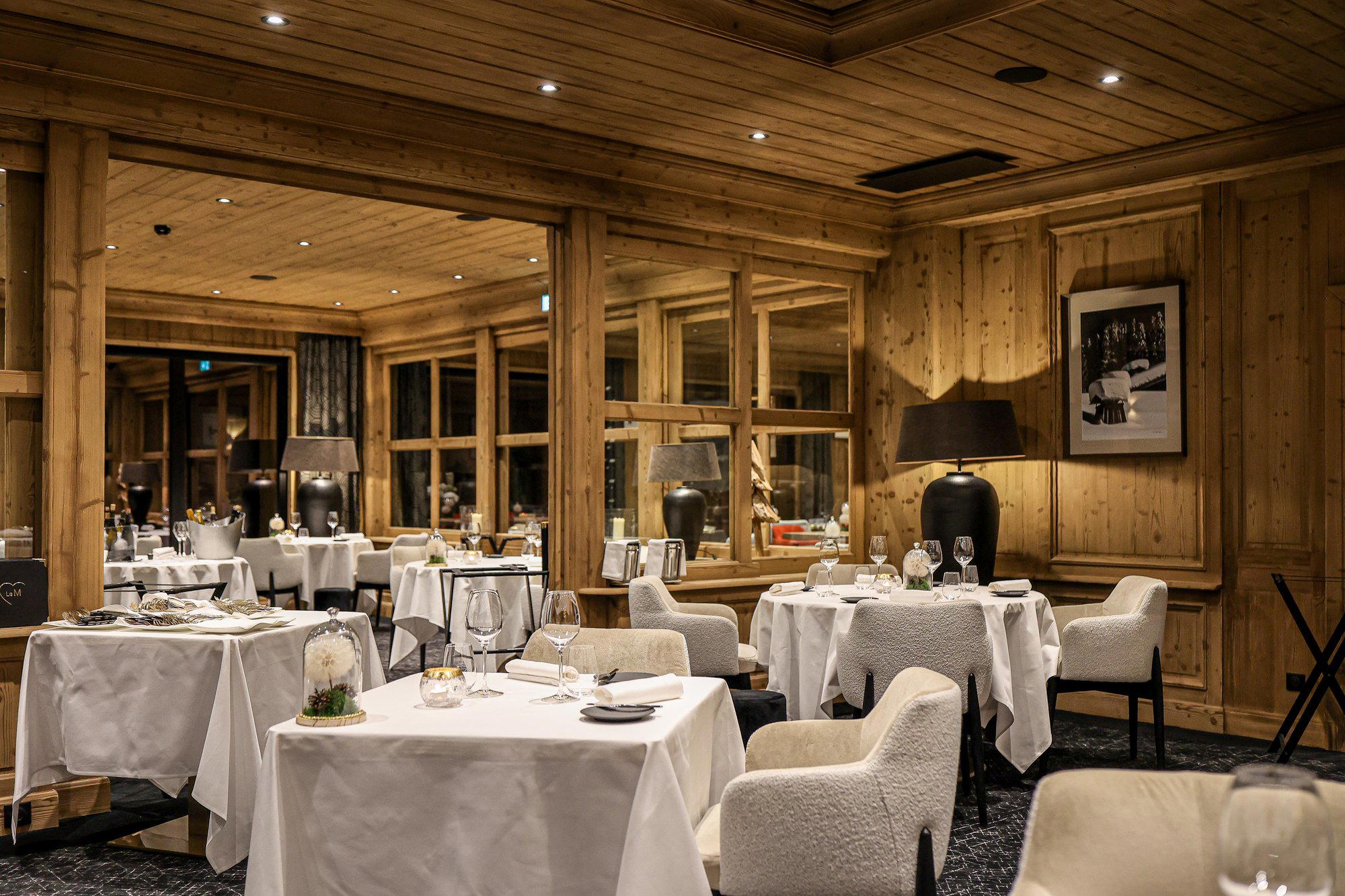
A Former Hermitage, High in the Vosges
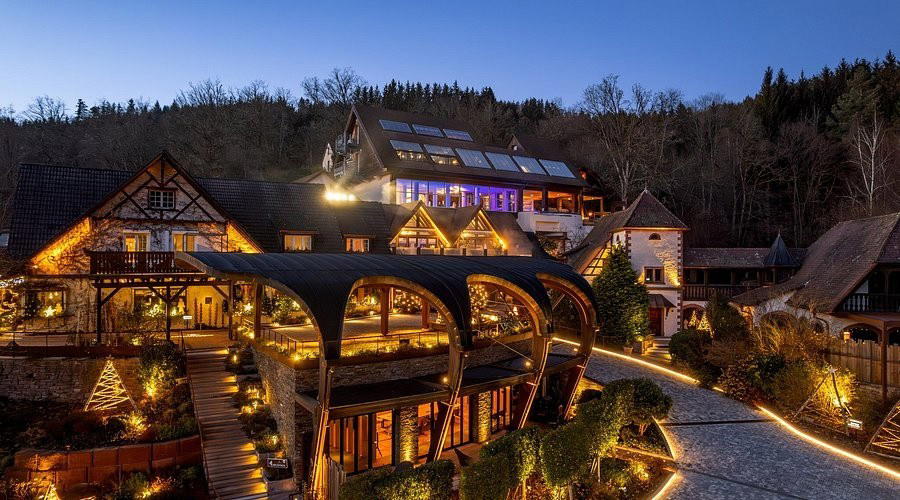
The road to Ventron climbs steadily through dense fir forest, and by the time you reach the Domaine de Montagne at 5001 route de Frère-Joseph, the altitude has already done something to the air. It is thinner, quieter, and faintly resinous. The site carries its history without effort: before it became a small ski resort, this was the Ermitage du Père Joseph, a place of deliberate withdrawal from the world. That monastic quality has not entirely left. The chalet hotel and spa retain an atmosphere that sits somewhere between mountain refuge and contemplative retreat, which turns out to be an unlikely but effective setting for serious cooking.
The Vosges are not a region that announces itself in the way that Alsace does to the east, with its well-worn wine route, its half-timbered towns, its tourist infrastructure. This part of the massif is quieter, less trafficked, and the terroir it produces reflects that interiority: cold-water trout from fast mountain streams, chanterelles pushed up through forest floors, wild pigeon from the surrounding woodland. Fine dining in this kind of altitude tends to work leading when it takes those materials seriously, rather than importing ambition from somewhere else. Le M does the former. For more on what Ventron offers beyond this table, see our full Ventron restaurants guide.
The Sourcing Argument
Mountain terroir in eastern France has a specific character that distinguishes it from the Burgundian or Atlantic larders more commonly associated with French haute cuisine. The Vosges sit at a biogeographical crossroads: their western slopes feed rivers running toward the Loire basin, while the eastern face drains into the Rhine plain and the Alsatian corridor. What grows here, and what is raised here, carries the influence of both. Trout from cold upland rivers, game birds from high forest, fungi from the forest floor in autumn: these are ingredients that reward slow, attentive cooking rather than aggressive technique.
At Le M, the kitchen's stated orientation toward regional terroir is not merely a marketing position. The menu documentation references gently cooked trout with chanterelles and a silky vin jaune sauce, a preparation that depends entirely on the quality of the local fungi and the trout's texture, and which would be blunted by inferior sourcing. Vin jaune, the oxidative Jura wine that appears in the sauce, is itself a regional reference point, drawing a line between these mountains and the neighbouring winemaking culture to the south. It is the kind of pairing that reflects genuine geographical literacy rather than a checklist approach to local ingredients.
The Vosges pigeon, served across two courses with turnips and cherry condiment, is a similarly place-specific proposition. Pigeon preparation across two services is a format found at a handful of destination restaurants in France, among them Alléno Paris au Pavillon Ledoyen and Mirazur in Menton, where it signals both confidence in the ingredient and a kitchen willing to extract from it rather than simply present it. In Ventron, at this altitude, that same format reads differently: the pigeon here is local in a way that those urban references cannot replicate.
The Kitchen's Credentials and What They Signal
The Michelin-starred Le K at Domaine de la Klauss in Moselle represents a specific model of destination dining in the Grand Est: a hotel-anchored restaurant with regional ambition, drawing guests willing to travel for the combination of setting and cooking. Benoit Potdevin, who built that reputation in Moselle, is the consulting force behind Le M's kitchen, supported by a local chef embedded in the Vosges context. This is a credentialing structure that carries meaningful information for diners. It places Le M in a peer conversation with destination addresses elsewhere in the region, including Auberge de l'Ill in Illhaeusern, one of the most enduring fine dining institutions in Alsace, and, further afield, addresses like Au Crocodile in Strasbourg and Assiette Champenoise in Reims.
What distinguishes the Le M format from those urban or semi-urban counterparts is the role the setting plays in the meal. At a restaurant like Flocons de Sel in Megève, Emmanuel Renaut's three-starred address in the French Alps, the mountain environment is not background but argument: the altitude, the foraging, the seasonal calendar are built directly into the kitchen's logic. Le M operates in a similar register, at a smaller scale and a less publicised postcode, but with comparable seriousness about what the surrounding landscape contributes to the plate.
The vegetarian menu option is worth noting as a structural commitment rather than an afterthought. In a regional French tradition where meat and game have historically anchored tasting menus, maintaining a parallel vegetarian menu requires genuine kitchen investment in the plant and fungi material available locally. It suggests the kitchen takes the Vosges terroir seriously across its full range, not just in its proteins.
Service, Atmosphere, and What Kind of Trip This Makes Sense For
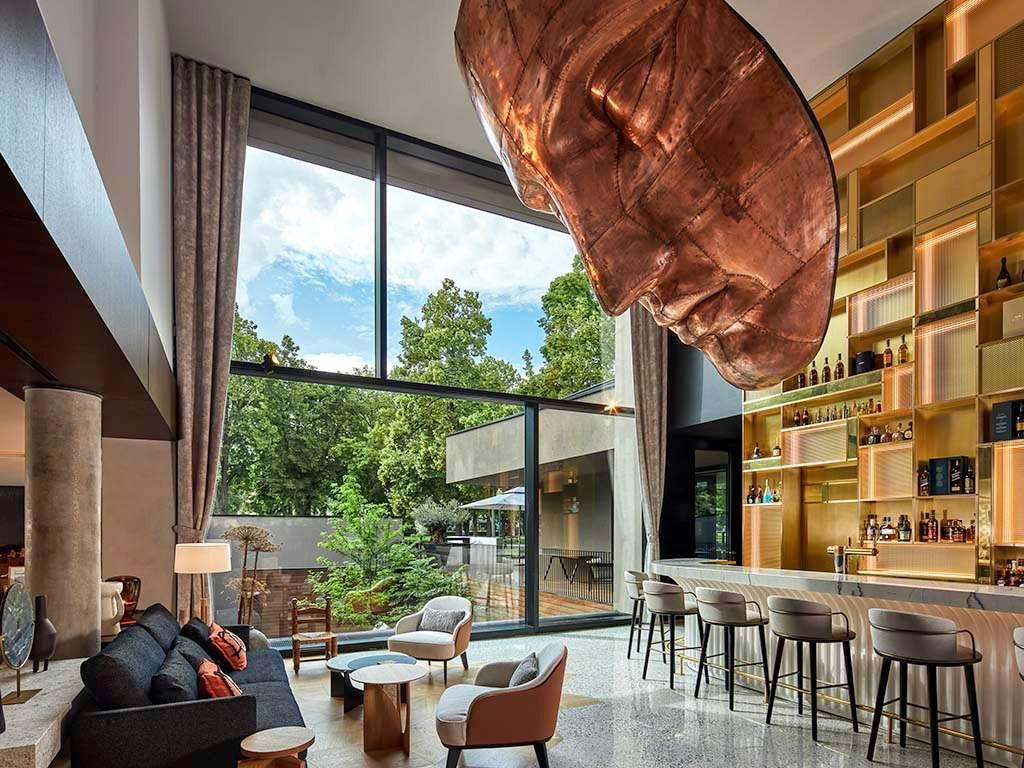
The dining room operates within a chalet hotel that includes a spa, which shapes the rhythm of a visit here. This is not a destination at which you arrive for dinner and leave; the full proposition is a stay, with the meal as the centrepiece of a slower, more deliberate pace. The service is described as congenial and efficient, a combination that matters more than it might seem in a remote mountain setting, where isolation can tip either into warmth or into indifference. Here it reads as the former.
Almost monastic quality of the site, traceable directly to its origins as the Ermitage du Père Joseph, is either the point or the problem, depending on what you are looking for. For guests arriving from Strasbourg, Mulhouse, or Nancy, this is a genuine withdrawal from urban pace. For context on where else to stay in the area, our full Ventron hotels guide maps the options, and our full Ventron experiences guide covers what to do between meals. The Ventron bars guide and wineries guide round out the planning picture for a longer stay.
Le M sits in a tradition of French destination restaurants that are inseparable from their geography, addresses like Bras in Laguiole, where the Aubrac plateau is as much the subject as the plate, or Auberge du Vieux Puits in Fontjoncouse, whose remoteness is part of its identity. The Vosges have produced less of this kind of dining than they deserve, and Le M represents a serious attempt to change that.
Frequently asked questions
Is Le M - Domaine de Montagne okay with children?
The Domaine de Montagne is a chalet hotel with a spa set in a former mountain hermitage, and the dining room reflects that calm, retreat-oriented atmosphere. The menu precision and formal service style suggest a setting better suited to adults or older children who are comfortable in a structured fine dining environment. Families with young children may find the monastic pace of the property a poor match for their needs.
How would you describe the vibe at Le M - Domaine de Montagne?
Quiet and deliberately unhurried. The property occupies a former hermitage site high in the Vosges, and that history shapes everything: the atmosphere is close to monastic, reinforced by the surrounding forest and the spa-hotel format. Dinner here is not a social scene but a composed, focused experience delivered by a team described as congenial and efficient.
What distinctions does Le M - Domaine de Montagne have?
Le M - Domaine de Montagne has received recognition including: Set in the Vosges mountains, surrounded by pristine wilderness, this luxurious chalet hotel complete with a spa is conducive to truly unwinding and recharging. High up in these mountains, tranquillity, and an almost monastic atmosphere reig….
What's the signature dish at Le M - Domaine de Montagne?
The kitchen's documented range includes gently cooked trout with chanterelles and vin jaune sauce, and Vosges pigeon served across two courses with turnips and cherry condiment. Both reflect the regional terroir focus that defines the menus. A vegetarian menu is also available, indicating that the kitchen's commitment to precision extends beyond protein-centred cooking.
Where do I go for Le M - Domaine de Montagne?
Le M - Domaine de Montagne is located at 5001 route de Frère-Joseph, Ventron.
Is Le M - Domaine de Montagne reservation-only?
Given that the restaurant operates within a destination chalet hotel at 5001 route de Frère-Joseph in Ventron, a location requiring deliberate travel through the Vosges mountains, advance booking is the practical approach for any visit. Walk-in dining at a property of this format and remoteness is not a realistic expectation.
What has Le M - Domaine de Montagne built its reputation on?
The kitchen's credibility rests on the involvement of Benoit Potdevin, whose Le K at Domaine de la Klauss in Moselle holds a Michelin star. Potdevin and a local chef work from Vosges terroir, producing menus that include a vegetarian option alongside dishes built around regional ingredients such as chanterelles, vin jaune, and Vosges pigeon. The setting, a former hermitage converted into a spa resort, adds a specific identity that separates it from conventional mountain dining.
How It Stacks Up
Comparable venues nearby, for context on price, style, and recognition.
| Venue | Cuisine | Price | Awards | Notes |
|---|---|---|---|---|
| Le M - Domaine de MontagneThis venue (the venue you are viewing) | Modern French Fine Dining | $50–100 | 1 Michelin Star | Not listed |
| Le Valtrivin | Contemporary Alsatian Bistro | $50–100 | Michelin Plate | Ammerschwihr |
| Le Karelian | Modern French Gastronomique | Not listed | Michelin Plate | Dommartin-lès-Remiremont |
| La Table du Tillau | Modern French Fine Dining | $50–100 | Michelin Plate | Verrières-de-Joux |
| La Source des Sens | Modern French Fine Dining | $50–100 | Michelin Plate | Morsbronn-les-Bains |
| Transparence - La Table de Patrick Fréchin | Modern French Fine Dining | $50–100 | Michelin Plate | Place Stanislas |
Recognition history
Dated appearances from independent guides and award organizations, with the underlying list record or original source where available.
Michelin 1 Star
Michelin
Continue exploring
More in Ventron
Restaurants in Ventron
All restaurants in Ventron →
Bars in Ventron
Browse all →

Details
- Romantic
- Quiet
- Elegant
- Cozy
- Rustic
- Intimate
- Sophisticated
- Date Night
- Special Occasion
- Hotel Restaurant
- Historic Building
- Local Sourcing
- Mountain
- Tasting Menu
- Vegetarian Friendly
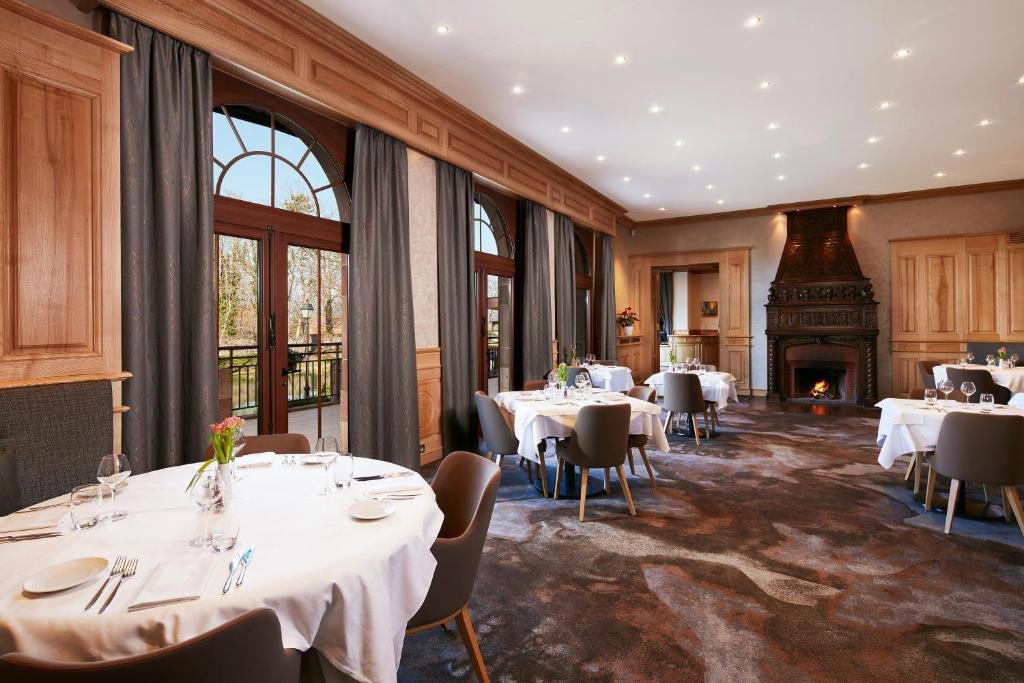
Hushed, tranquil, and almost monastic atmosphere in a luxurious chalet with a feutrée (dimly lit) setting conducive to unwinding.