Our verdict
Restaurant de la Ferme serves French Steakhouse with Wood-Fire Grills in Yerres, with Côte de bœuf and an extensive wine list; smart casual, conversational.

Pearl is the En Primeur Club membership app, where members save venues, book tables and use the concierge.
The menu
What to order
- Côte de bœuf
- Foie gras
- Coquilles Saint-Jacques grillées
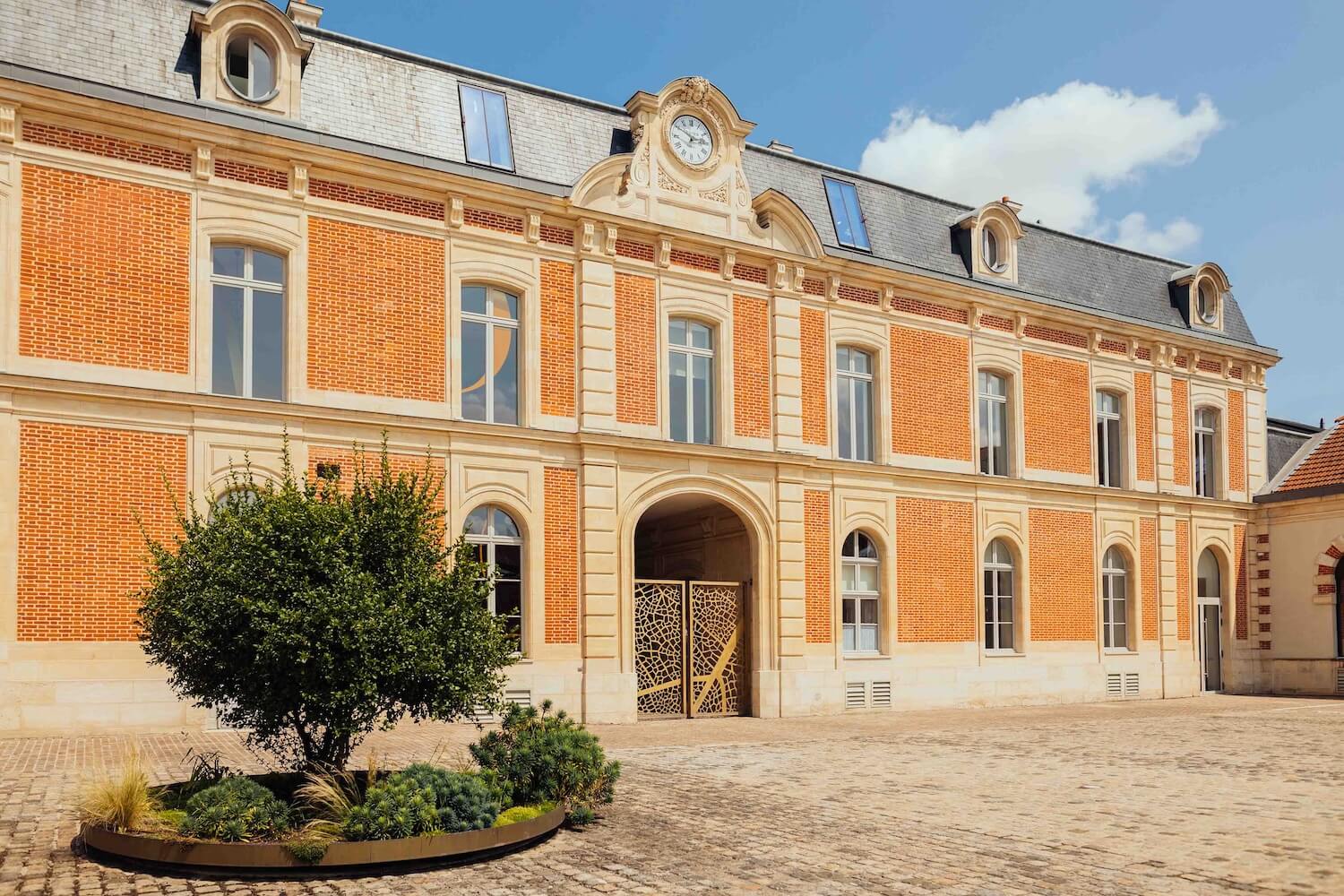
Where the Farm Comes to the Table in the Essonne Valley
The Allée de la Ferme in Yerres carries a particular kind of quiet that the Île-de-France suburbs rarely preserve. Approaching Restaurant de la Ferme, the sense is less of arriving at a dining room and more of arriving at a working property that happens to feed people with care. That distinction matters in French provincial cooking, where the line between agricultural source and kitchen has historically been the measure of a house's seriousness. In the broader sweep of the Paris basin, where farm-to-table rhetoric has largely become a marketing gesture, venues that maintain genuine proximity to their supply chain occupy a different tier of credibility.
Yerres itself sits roughly 20 kilometres southeast of central Paris, in a corridor of the Essonne department that retains patches of cultivated land and market garden tradition uncommon this close to the capital. The town's culinary scene is small but increasingly coherent: Bird (Farm to table) operates in the farm-to-table register at a €€ price point, while Café Gustave Maison Caillebotte and Le 330 round out a local dining offer that punches above what you might expect from a town of this size. Restaurant de la Ferme sits within that compact set, but its address, and the name itself, signals a particular relationship to place that the others do not claim as directly.
The Sourcing Argument at the Heart of French Provincial Cooking
Across France's most respected kitchens, proximity to the source has long been an organizing principle rather than a trend. Bras in Laguiole built its identity on the Aubrac plateau's wild herbs and pasture-fed beef. Flocons de Sel in Megève has drawn from alpine terroir with the same intentionality. Even at the level of Mirazur in Menton, where the kitchen garden occupies the hillside directly above the dining room, the argument is the same: the shorter the distance between growing and cooking, the more honest the plate. Restaurant de la Ferme, occupying a farm-adjacent address in a part of the Île-de-France that still supports agricultural activity, enters that conversation at a distinctly local register.
This is not the rarefied precision of Alléno Paris au Pavillon Ledoyen or the coastal sourcing discipline of Christopher Coutanceau in La Rochelle. What a venue like Restaurant de la Ferme offers is something structurally different: a provincial directness, a cooking mode shaped by what is available nearby rather than what can be assembled from across the country. That mode has its own rigour. It demands that the kitchen work with seasonal constraint and local variety, which tends to produce menus that read as genuinely responsive rather than constructed.
French dining culture has a long tradition of the ferme-auberge format, in which the farm and the table are functionally unified. Auberge de l'Ill in Illhaeusern and Troisgros - Le Bois sans Feuilles in Ouches both evolved from rooted, place-specific origins into reference-level houses. The lesson from those trajectories is that locality, handled with consistency over time, becomes a form of authority in its own right.
Reading the Room: What the Address Tells You
In the Île-de-France context, a farm address in a suburban commune is a meaningful signal. The region's remaining agricultural pockets, Essonne, Seine-et-Marne, Val-d'Oise, supply a mixture of market garden produce, cereals, and some livestock operations. A kitchen genuinely embedded in that supply network has access to product that does not pass through Rungis or the standard wholesale channels, which affects both freshness and variety. The difference between a vegetable pulled that morning and one distributed through a central market hub is measurable in texture and density of flavour, particularly for brassicas, root vegetables, and soft herbs.
That specificity is what distinguishes venues that invoke sourcing as identity from those that use it as positioning. The former group builds menus around what is actually available from known suppliers at a given moment; the latter lists provenance on the menu without it materially shaping what is cooked. Restaurant de la Ferme's name and address place it in the former category as a claim, though the depth of that commitment is, as with any venue, something a visit must verify.
Placing Restaurant de la Ferme in the Wider French Register
The French restaurant spectrum runs from neighbourhood bistros operating on tight margins to multi-starred houses with national reputations. Venues like Auberge du Vieux Puits in Fontjoncouse, Assiette Champenoise in Reims, and Au Crocodile in Strasbourg occupy the upper middle tier, where regional identity and technical ambition coexist. AM par Alexandre Mazzia in Marseille and Paul Bocuse - L'Auberge du Pont de Collonges in Collonges-au-Mont-d'Or represent the category's historical weight. Restaurant de la Ferme does not operate in those registers, nor does it need to.
For visitors making the journey from Paris, the comparison that matters most is not with the city's starred dining but with what a 30-minute RER or car journey southeast can deliver that the capital cannot: a slower rhythm, a more direct relationship between the countryside and the plate, and a dining room whose context is the land around it rather than an urban dining market. Le Bernardin in New York City or Atomix in New York City represent what urban fine dining looks like at its most technically refined; Restaurant de la Ferme offers something in a different register entirely, and the two are not in competition.
Planning Your Visit
Yerres is accessible from central Paris via the RER D line, with Yerres station a short distance from the Allée de la Ferme address. For those driving, the A6 provides a direct route south from the périphérique. The town's dining options are concentrated enough that a visit to Restaurant de la Ferme pairs naturally with time at the Maison Caillebotte, the impressionist estate whose gardens Gustave Caillebotte painted repeatedly and which remains one of the more coherent historic properties in the Essonne. Given the limited publicly available booking information arriving with flexibility on timing is advisable; smaller farm-adjacent restaurants in this part of France often operate on hours shaped by service and season rather than fixed schedules. Our full Yerres restaurants guide covers the broader local dining picture and can help structure a day in the area.
Frequently asked questions
Where exactly is Restaurant de la Ferme?
Restaurant de la Ferme is located at All. de la Ferme, 91330 Yerres, France, Yerres.
Is Restaurant de la Ferme in Yerres suitable for a lunch outing from Paris?
Geographically, yes: Yerres sits on the RER D line, placing the Allée de la Ferme address within practical reach of central Paris for a midday meal without an overnight stay. The farm setting in the Essonne commune makes it a different proposition from a Left Bank brasserie, quieter surrounds, a rural address, and a kitchen context shaped by proximity to agricultural land. Confirm current lunch service hours directly with the restaurant before making the journey.
What do regulars order at Restaurant de la Ferme?
In that tradition, common to the Essonne agricultural pocket of Île-de-France, expect seasonal plates shaped by what is available rather than a static carte. Asking the staff what came in that day is the most reliable approach.
How far ahead should I plan for Restaurant de la Ferme?
No booking window data is currently documented for Restaurant de la Ferme. Farm-address venues in the Île-de-France suburbs often operate on smaller covers than urban bistros, so contacting the restaurant directly well in advance of a weekend visit is a sensible precaution. Yerres is reachable from central Paris on the RER D line, which makes a same-day decision feasible if a table opens up.
What's Restaurant de la Ferme best at?
The address itself is the clearest statement of intent: a farm setting in Yerres, within the Essonne agricultural corridor that remains one of the few genuinely rural pockets of the greater Paris region. Venues operating from this kind of location typically anchor their kitchen in proximity to the source, a principle with deep roots in French provincial cooking. That structural commitment to place is what distinguishes a restaurant on the Allée de la Ferme from a standard suburban dining room.
What if I have allergies at Restaurant de la Ferme?
Given the farm context in Yerres, the kitchen almost certainly works with fresh, variable produce, which means the exact composition of dishes may shift by service. check the venue's official channels before visiting to discuss specific dietary requirements, this is especially important at venues where the menu follows what is seasonal and available.
Is Restaurant de la Ferme worth it?
The case for the detour rests on context rather than awards: no Michelin recognition or published star rating is currently attributed to Restaurant de la Ferme, so the draw is the setting itself, a farm address in Yerres, inside one of Essonne's last agricultural corridors, a 35-minute RER D ride from central Paris. For a meal that trades the urban dining room for a quieter, more grounded frame, that geography makes the proposition coherent. Whether the kitchen delivers on it is a question the venue's direct contact can help you assess before you commit.
Comparison Snapshot
Comparable venues nearby, for context on price, style, and recognition.
| Venue | Cuisine | Price | Awards | Notes |
|---|---|---|---|---|
| Restaurant de la FermeThis venue (the venue you are viewing) | French Steakhouse with Wood-Fire Grills | $30–50 | Not listed | Not listed |
| Café Gustave Maison Caillebotte | French Bistronomic | $30–50 | Not listed | Yerres |
| Le 330 | Traditional French Brasserie | $20–30 | Not listed | Yerres |
| Bird | French Market Bistro | $30–50 | Michelin Bib Gourmand | Yerres |
| Chez Marcel | French Bistro | $30–50 | Not listed | Saint-Mande |
| Le 6 Paul Bert | Modern French Bistro | Not listed | Not listed | 11th Arr. |
Continue exploring
More in Yerres
Restaurants in Yerres
All restaurants in Yerres →
Bars in Yerres
Browse all →



Details
- Rustic
- Cozy
- Classic
- Group Dining
- Family
- Casual Hangout
- Open Kitchen
- Extensive Wine List
- A La Carte
Current opening hours
- Monday
- 12–2 PM
- Tuesday
- 12–2 PM, 7:30–10 PM
- Wednesday
- 12–2 PM, 7:30–10 PM
- Thursday
- 12–2 PM, 7:30–10 PM
- Friday
- 12–2 PM, 7:30–10 PM
- Saturday
- 12–2 PM, 7:30–10 PM
- Sunday
- Closed
Hours can change for holidays and private events. Hours as of .
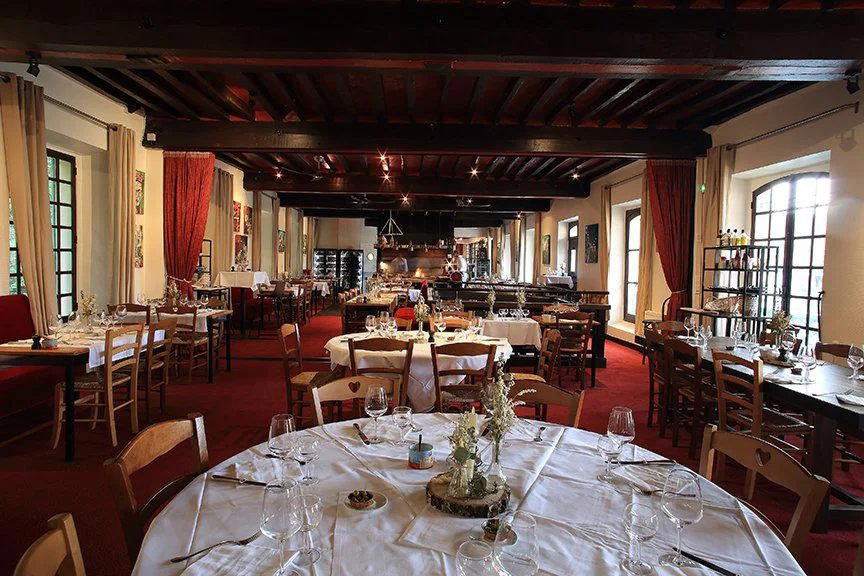
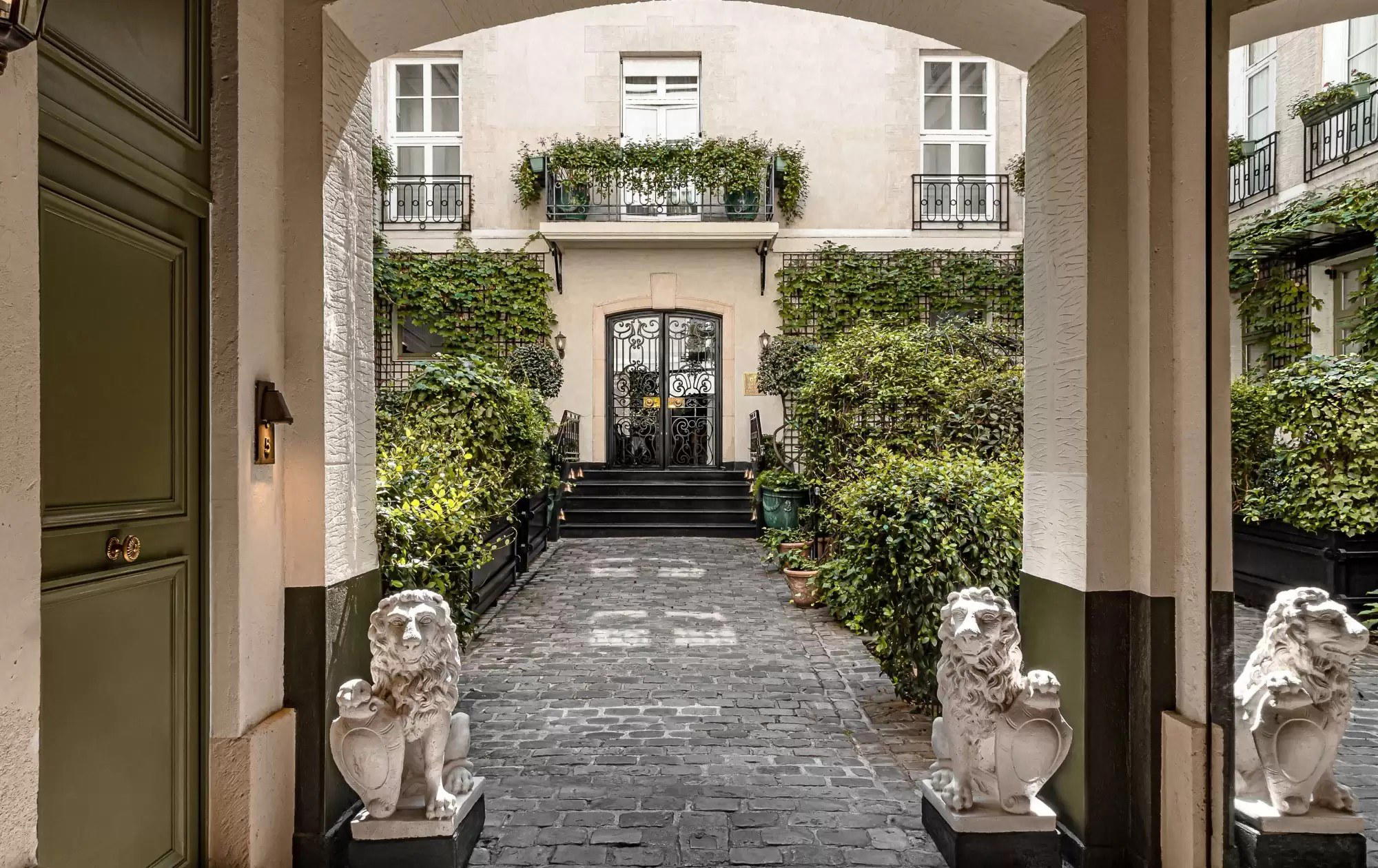
Ambiance chaleureuse et conviviale avec éclairage cosy dans un vieux corps de ferme.