René socca occupies a counter on Rue Miralheti in the old town quarter of Nice, serving socca, the chickpea flour flatbread that defines street food along this stretch of the Ligurian coast. Where Michelin-tracked dining rooms like Flaveur and L'Aromate represent Nice's formal register, René socca holds a different kind of authority: the unmediated, ingredient-forward tradition that the city's visitors consistently seek out first.
Pearl is the En Primeur Club membership app — saves, bookings, and concierge access live there. Same editors, same standards.
- Address
- 2 Rue Miralheti, 06300 Nice, France
- Phone
- +33 4 93 92 05 73
- Website
- rene-socca.shop
- Directions
- Get directions
 Saves & bookings on Pearl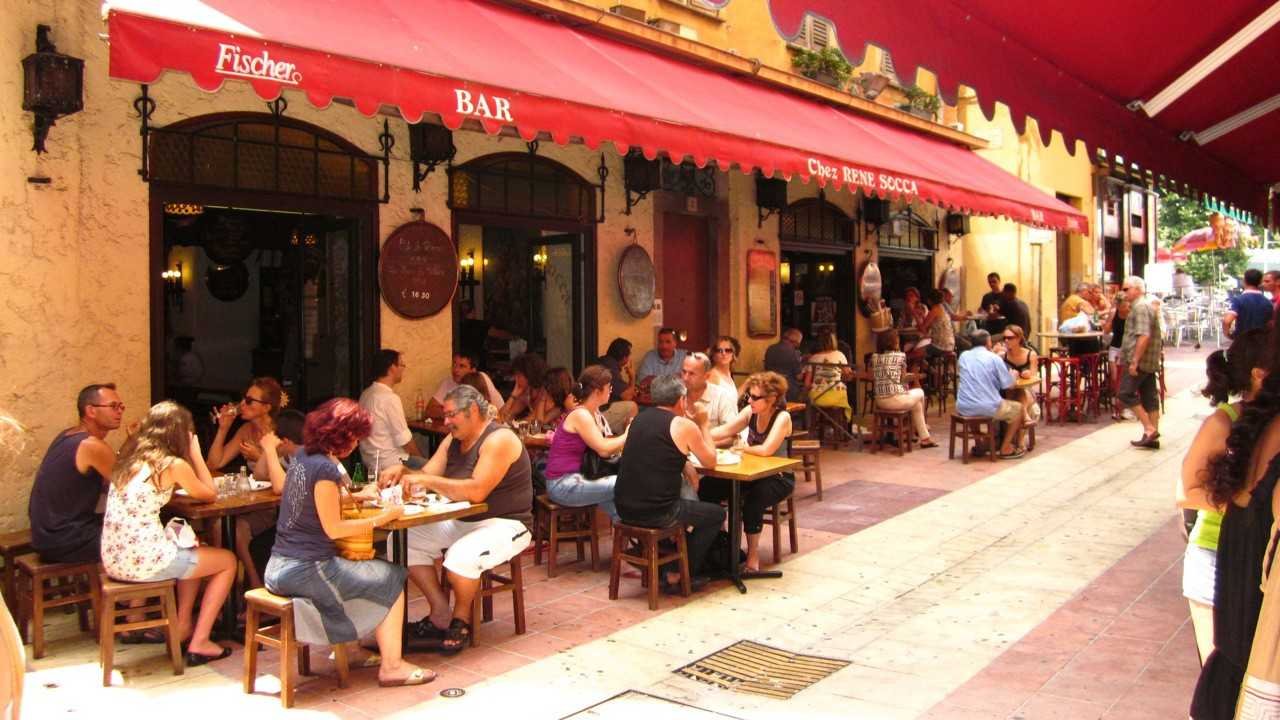
A Flatbread With a Postal Code and a History
The Cours Saleya market opens before most restaurant kitchens in Nice have fired their first burners. By mid-morning, the old town's pedestrian lanes are already warm, and the smell of chickpea batter hitting a wood-fired or gas-heated copper pan reaches the street before you locate the source. Socca, Nice's singular street food contribution to French culinary geography, is one of the few dishes that demands a specific geography to taste correctly: the flour, the olive oil, the heat, the speed of service, and the open-air context are all load-bearing.
René socca is a casual, walk-in-friendly restaurant at 2 Rue Miralheti, 06300 Nice, France, serving traditional Niçoise socca for about $10 per person. It sits within that context. The address places it in the Vieux-Nice quarter, the tightly gridded old town grid where the Baroque street plan and the produce market define the rhythm of the day. This is not the Nice of the Promenade des Anglais hotel terraces, it is the Nice where the cooking is fast, inexpensive, and rooted in a supply chain that runs directly from the Cours Saleya stalls to the pan.
Chickpea Flour, Olive Oil, and the Logic of Simple Ingredients
Socca is a regional lesson in ingredient sourcing distilled to its minimum. The batter requires three things: chickpea flour, water, and olive oil, with the proportions and the heat of the pan doing the rest of the work. In Nice, the chickpea connection traces back to Genoese influence along the Ligurian coast, the same geographical corridor that gives the dish its cousin preparations in Liguria (farinata) and further west in Marseille (panisse, which is fried rather than baked). The version sold in Nice's old town is cooked in wide, shallow copper pans at high heat, producing a blistered surface with a creamy, slightly yielding interior, a texture that disappears within minutes of leaving the oven.
The sourcing logic matters here. Chickpea flour that travels well and stores easily made this a viable street food for centuries before refrigeration or complex supply chains existed. The olive oil is the variable that separates good socca from indifferent socca: the quality and character of the oil comes through at the simplicity of the format, where there is nowhere for a lesser ingredient to hide. The same principle governs the Niçoise kitchen more broadly, pissaladière depends on the onion, salade niçoise depends on the tuna and the anchovy, pan bagnat depends on the bread and the olive. In this culinary tradition, the sourcing is the technique.
This is the register that distinguishes street-level Niçoise dining from the modernist or haute Provençal cooking at addresses like Les Agitateurs or ONICE. Those kitchens interpret and transform regional ingredients; the socca counter presents them at face value, with the quality of the sourcing fully exposed.
Where René Socca Sits in Nice's Dining Spectrum
Nice's restaurant scene in 2024 is split between two reasonably distinct registers. At the leading end, a cluster of creative and modern French addresses, Flaveur, L'Aromate, Le Chantecler, operate at the €€€€ tier with tasting menus and wine programs calibrated to the Riviera's international visitor base. At the street level, a smaller set of addresses maintains the Niçoise and Provençal format at the €€ range or below, serving locals and informed visitors who know that the region's most compelling food does not always arrive on white tablecloths. La Merenda on Rue de la Préfecture is one discussed address in that lower tier for sit-down Niçoise cooking. René socca operates in the stand-and-eat or take-away register immediately below that.
For context on the broader French culinary conversation, consider what drives diners to places like Mirazur in Menton or Flocons de Sel in Megève, ingredient provenance, regional specificity, and a cooking language that reflects a particular place. The restaurant answers the same criteria at a different price point and without the formality. The argument for stopping here is the same as the argument for booking a table at Bras in Laguiole or Auberge de l'Ill in Illhaeusern: the food is inseparable from its geography, and you cannot replicate it elsewhere.
Timing, Access, and What to Expect
Socca is a morning and midday food. The tradition in Nice is to serve it from mid-morning through early afternoon, and most counters in the old town stop when the day's batter is finished, which can be earlier than visitors expect. Arriving after 1:30 p.m. on a busy market day carries risk. The Cours Saleya market runs Tuesday through Sunday mornings, concentrating foot traffic and demand around the adjacent streets, including Rue Miralheti.
Service at socca counters is fast and informal. Portions are cut from the pan and served on paper or in small trays, eaten standing or at basic seating if available. It operates on a first-come basis. The queue, if there is one, moves quickly.
Know Before You Go
- Address: 2 Rue Miralheti, 06300 Nice, France
- Ideal time to visit: Mid-morning to early afternoon; arrive before 1:00 p.m. on market days
- Booking: Walk-in only; no reservation system
- Access: On foot from Place Masséna or tram stop; car access restricted in Vieux-Nice
- Market days: Cours Saleya market runs Tuesday to Sunday mornings, busiest and most atmospheric days to visit
At a Glance
Comparable venues nearby, for context on price, style, and recognition.
| Venue | Cuisine | Price | Notes |
|---|---|---|---|
| René soccaThis venue — the venue you are viewing | Not listed | $ | Not listed |
| Lavomatique | Not listed | $$ | Nice Historique, Modern French Small Plates |
| Le Bistrot des Serruriers | Nice Historique, Niçois Bistro | $$ | Not listed |
| Chez Thérésa | Nice Historique, Traditional Niçoise | $$ | Not listed |
| Le clin d'œil | Cœur de Nice, Niçois Bistronomie | $$ | Not listed |
| Socca'Tram | Cœur de Nice, Niçoise Socca Street Food | $$ | Not listed |
Continue exploring
More in Nice
Restaurants in Nice
Browse all →
Bars in Nice
Browse all →
Hotels in Nice
Browse all →
Wineries in Nice
Browse all →
At a Glance
- Classic
- Rustic
- Cozy
- Casual Hangout
- Terrace
- Open Kitchen
- Historic Building
- Beer Program
- Street Scene
Current opening hours
- Monday
- Closed
- Tuesday
- 9 AM–9 PM
- Wednesday
- 9 AM–9 PM
- Thursday
- 9 AM–9 PM
- Friday
- 9 AM–9 PM
- Saturday
- 9 AM–9 PM
- Sunday
- 9 AM–9 PM
Hours can change for holidays and private events. Last verified .
Casual rustic street-side seating with a lively local atmosphere.