Ratto's
One of Oakland's oldest continuously operating delis, Ratto's on Washington Street has anchored the Old Oakland neighborhood since 1897. Where many Bay Area institutions have modernized into something unrecognizable, Ratto's holds its position as a working Italian-American grocery and sandwich counter, drawing a cross-section of downtown Oakland that few newer restaurants manage to attract.
Pearl is the En Primeur Club membership app — saves, bookings, and concierge access live there. Same editors, same standards.
- Address
- 821 Washington St, Oakland, CA 94607
- Phone
- +1 510 832 6503
- Website
- rattos.com
- Directions
- Get directions
 Saves & bookings on Pearl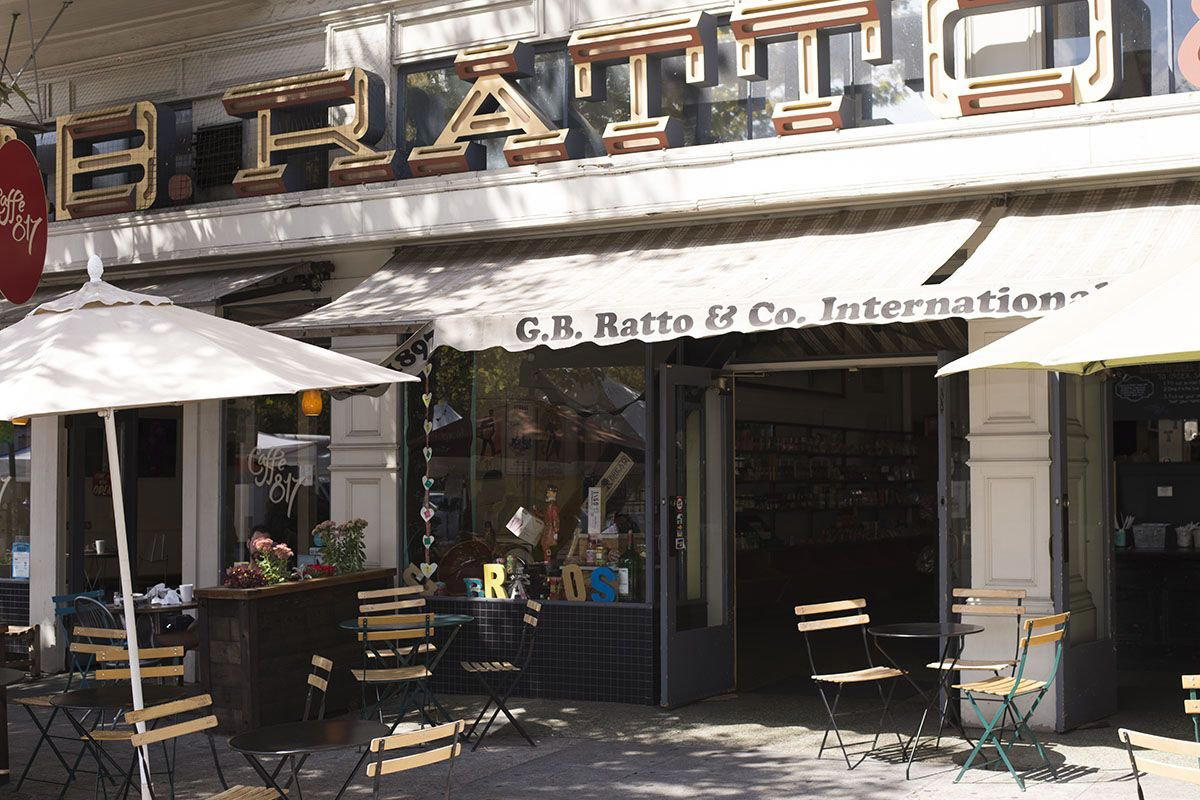
Old Oakland's Long Game
There is a particular kind of institution that survives not by reinventing itself but by refusing to. Washington Street in Old Oakland has cycled through waves of redevelopment, demographic shift, and the relentless churn of Bay Area real estate, and Ratto's has remained at 821 Washington St through most of it. The building itself signals what kind of place this is before you step inside: a street-level storefront with the low-key permanence of a spot that has never needed a rebrand. In a region where restaurants like Lazy Bear in San Francisco or Single Thread Farm in Healdsburg define one end of the dining spectrum with tasting menus and reservation infrastructure, Ratto's occupies the opposite pole, a counter-service institution where the menu architecture has changed less in decades than most restaurants change their seasonal specials.
Oakland's food culture has always been more pluralistic than its Bay Area neighbors tend to acknowledge. The city that produced alaMar Dominican Kitchen and Agave Uptown is also the city that kept Ratto's in business for well over a century.
What the Menu Structure Reveals
The architecture of the restaurant menu is itself an argument about what an Italian-American deli is supposed to do. Italian-American grocery culture in the United States developed as a practical infrastructure for immigrant communities, a place to source cured meats, imported pantry goods, and prepared foods that the surrounding American market did not stock. The sandwich, in that tradition, is not a simplified dish but a concentrated expression of the larder: what you build with house-cured or imported product says as much about the sourcing as it does about the assembly.
At the restaurant, the grocery component and the prepared food side have operated in tandem for most of the restaurant's history. That dual structure, grocery shelves alongside a sandwich and hot food counter, is rarer than it used to be. Most operations have collapsed into one or the other: either a specialty food shop with no seating or a deli-themed restaurant with decorative cans on shelves. The restaurant maintains the older integrated format, which means the menu reads as an extension of the inventory rather than a separate creative exercise. In an era when tasting-menu restaurants like Smyth in Chicago or Atomix in New York City construct menus as conceptual statements, the restaurant counter operates on an entirely different logic, one rooted in availability, tradition, and the kind of repetition that builds loyalty over generations.
This is not a criticism of either model. It is simply useful to understand that a menu built around deli staples and house provisions tells you something different than a tasting menu does. It tells you about continuity, about what a community has wanted from a place across long stretches of time, and about which culinary traditions survive outside fine-dining circuits.
Context Inside Oakland's Broader Food Scene
Old Oakland as a neighborhood sits in an interesting position relative to the city's dining geography. The blocks around Washington and 9th have seen significant investment in recent years, with newer restaurant openings targeting a different price bracket and customer profile than the institutions that predate the redevelopment. The restaurant coexists with that newer layer rather than competing with it directly, drawing a customer base that ranges from longtime neighborhood regulars to downtown office workers to visitors specifically seeking out the older stratum of Oakland food culture.
Elsewhere in Oakland, places like 3 Bottled Fish and 8th St Cafe represent the city's appetite for specialty and heritage-driven formats, while spots like Alem's Coffee anchor the neighborhood's community infrastructure at a different price point. The restaurant fits into the latter category in terms of accessibility, though its age and category make it something of a standalone reference point rather than part of any current trend.
For context on how Oakland compares to the wider California and national fine-dining conversation, the gap between the restaurant and, say, The French Laundry in Napa, Providence in Los Angeles, or Addison in San Diego is not just about price or format, it reflects two entirely different theories of what a restaurant is for. Fine-dining at that tier, like Le Bernardin in New York City or Blue Hill at Stone Barns in Tarrytown, operates as an event, a destination, a proposition. The restaurant operates as infrastructure, a place the neighborhood uses rather than visits. Both have value. They are simply solving different problems.
Planning a Visit
The restaurant address at 821 Washington Street puts it squarely in Old Oakland, walkable from the 12th Street BART station and accessible from downtown without a car. The restaurant is open Mon to Fri from 8 AM to 3 PM, Saturday from 10 AM to 3 PM, and closed Sunday. There is no tasting menu here, and the dress code is casual. The practical entry point is a walk-in, and the format rewards arriving with a clear sense of what you want at the counter.
A Lean Comparison
Comparable venues nearby, for context on price, style, and recognition.
| Venue | Cuisine | Price | Notes |
|---|---|---|---|
| Ratto'sThis venue — the venue you are viewing | Not listed | $ | Not listed |
| Parlour | Downtown, Cal-Italian | $$ | Not listed |
| Enoteca Molinari | Not listed | $$ | Rockridge, Italian House-made Pasta & Wine Bar |
| Grand Opening | West Oakland, Artisanal Neapolitan Pizza | $$ | Not listed |
| B-Dama | Old Oakland, Japanese Izakaya | $ | Not listed |
| Trueburger | Waverly, Classic American Burgers | $ | Not listed |
Continue exploring
More in Oakland
Restaurants in Oakland
Browse all →
Bars in Oakland
Browse all →
Hotels in Oakland
Browse all →



At a Glance
- Classic
- Well Known
- Rustic
- Casual Hangout
- Solo
- Family
- Group Dining
- Live Music
- Historic Building
- Street Scene
Current opening hours
- Monday
- 8 AM–3 PM
- Tuesday
- 8 AM–3 PM
- Wednesday
- 8 AM–3 PM
- Thursday
- 8 AM–3 PM
- Friday
- 8 AM–3 PM
- Saturday
- 10 AM–3 PM
- Sunday
- Closed
Hours can change for holidays and private events. Last verified .
Old-fashioned, vintage grocery store aesthetic with bright, colorful imported goods lining the shelves; warm, nostalgic atmosphere reminiscent of early 20th-century Italian delis.