Rang Dong
Rang Dong sits on Webster Street in Oakland's Chinatown-adjacent corridor, representing the kind of neighborhood Vietnamese presence that anchors a block before any critic notices. With minimal available data in the public record, the restaurant rewards those who approach it the way Oakland's best dining often works: walk in, read the room, and let the menu do the talking.
Pearl is the En Primeur Club membership app — saves, bookings, and concierge access live there. Same editors, same standards.
- Address
- 1002 Webster St, Oakland, CA 94607
- Phone
- (510) 465-6544
- Directions
- Get directions
 Saves & bookings on Pearl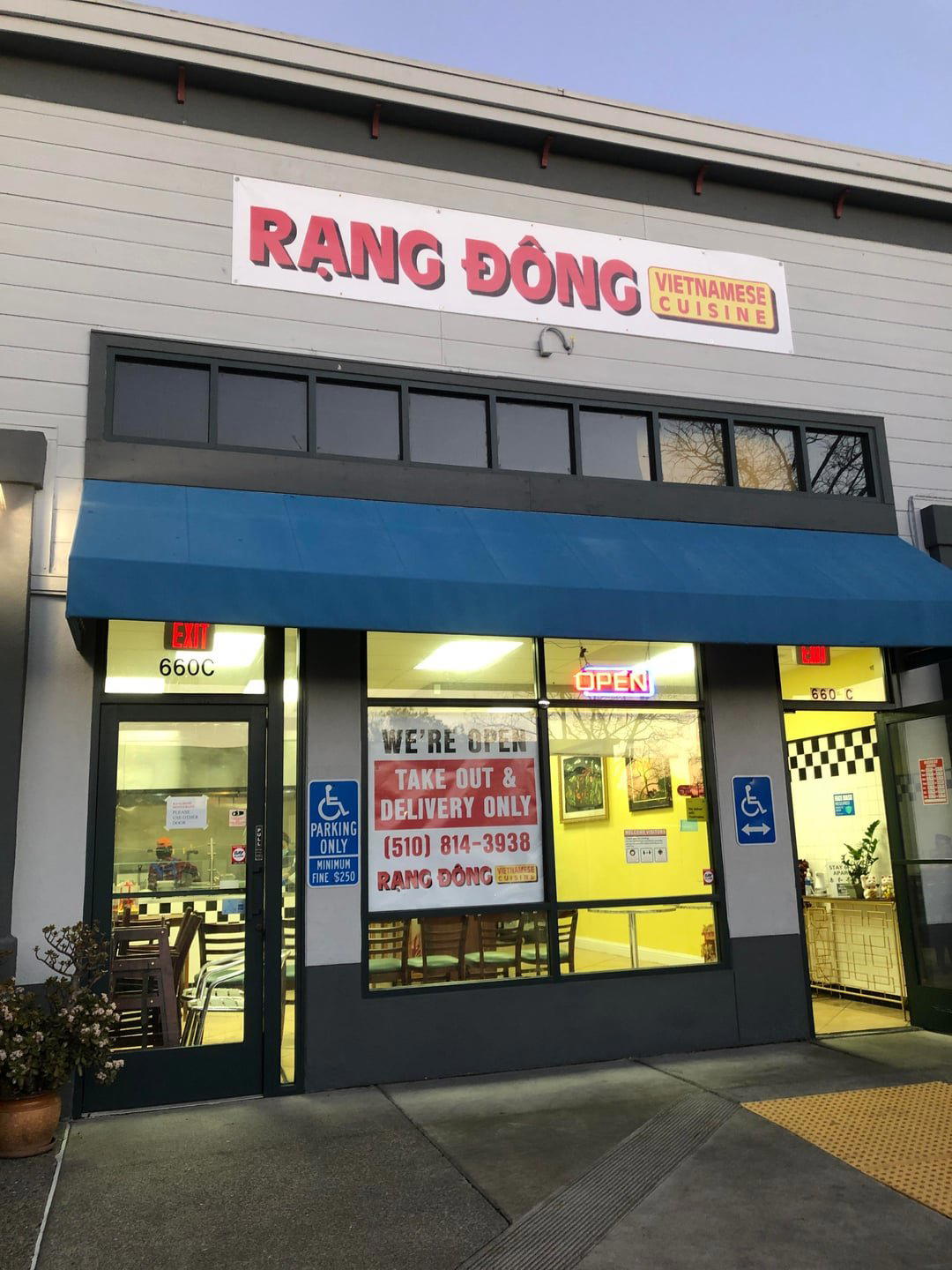
Webster Street and the Vietnamese Dining Tradition It Carries
Oakland's Chinatown corridor along Webster Street operates on different terms than the city's more publicized dining neighborhoods. The blocks between 10th and 12th streets hold a concentration of Southeast Asian restaurants, produce markets, and lunch counters that have served the surrounding community for decades without much attention from the food press. Rang Dong, at 1002 Webster St, sits inside that pattern: a Vietnamese restaurant in a part of Oakland where Vietnamese cooking is not a trend but a continuous presence, shaped by immigrant communities who arrived in waves from the late 1970s onward.
That context matters when you're deciding how to approach a meal here. It follows the logic of Vietnamese communal eating: dishes arrive as they're ready, the table fills incrementally, and the pacing is yours to set. This is a format that rewards ordering more than you think you need, because the point is accumulation rather than sequence.
The Neighborhood That Frames the Meal
The Webster Street stretch where Rang Dong operates is part of a commercial zone that blends Chinatown's historical retail infrastructure with a newer layer of East and Southeast Asian businesses that consolidated here from the 1980s onward. The result is a block that feels functional before it feels curated, which is not a criticism. It is precisely this quality that distinguishes Oakland's immigrant-food corridors from the more manicured versions found in San Francisco's Tenderloin or the restaurant rows that have developed in San Jose's Little Saigon district.
Nearby, 8th St Cafe 文記茶餐廳 represents the Hong Kong-style café tradition that runs parallel to Vietnamese presence in this corridor, while Alem's Coffee marks the East African dining presence that makes Oakland's food geography considerably more layered than any single-cuisine framing would suggest. The proximity of these places to one another is not accidental; it reflects settlement patterns and the way immigrant food businesses cluster around established community infrastructure.
How Vietnamese Restaurants Like This One Operate
Vietnamese restaurants in this price and format tier across the Bay Area share a set of operating conventions that are worth understanding before you arrive. The menu is typically broad rather than focused: a long list of pho variants, rice plates, vermicelli bowls, and appetizers designed to accommodate a table that might include multiple generations with different preferences. Ordering at these restaurants is less about editing and more about building a spread that covers textures and temperatures across the table.
Dining here is communal: a bowl of pho is singular by necessity, but spring rolls, grilled meats, and vegetable dishes are shared instinctively. This is a format that sits in direct contrast to the tasting-menu structures at high-investment restaurants like Lazy Bear in San Francisco or Alinea in Chicago, where pacing is controlled and sequence is non-negotiable. The Vietnamese communal format asks something different of the diner: participation in the spread rather than passive receipt of a fixed program.
Comparisons to farm-to-table or tasting-counter formats like Single Thread Farm in Healdsburg or Blue Hill at Stone Barns in Tarrytown illuminate what Vietnamese neighborhood restaurants are not doing rather than what they are. The value proposition here is different: continuity of tradition, community function, and the kind of consistency that comes from feeding the same neighborhood for years. That consistency is its own form of credibility, even if it doesn't translate into award citations.
What to Eat at Rang Dong
Specific dish recommendations cannot be made with confidence. What the address and neighborhood context do confirm is that the restaurant operates within a Vietnamese dining tradition where certain categories are almost invariably present: pho in multiple protein configurations, bun dishes with grilled meat, com tam (broken rice plates), and appetizer formats like cha gio and goi cuon.
For Vietnamese restaurants in Oakland's Chinatown corridor, the ordering approach that yields one from a meal is lateral rather than vertical: order across categories rather than multiple items from one section. A pho alongside a rice plate alongside a shared appetizer covers more of what the kitchen does than three pho variants at a single table.
Context from nearby Oakland dining, including the home-style Mexican format at places like Cenaduria Elvira (tacos dorados, tostada raspada) and the seafood-forward approach at 3 Bottled Fish, reinforces the broader point that Oakland's most interesting neighborhood dining operates through specificity and community function rather than critical positioning. The same logic applies here.
Rang Dong in the Wider Bay Area Vietnamese Picture
The Bay Area's Vietnamese restaurant ecosystem is shaped by the concentration of Vietnamese-American communities across Oakland, San Jose, and the South Bay. Oakland's version of this is smaller and less formalized than San Jose's Eastside or the Little Saigon districts in Westminster and Garden Grove, but it carries the same foundational logic: restaurants built to feed communities, not to attract critics.
Restaurants in this category sit in a different competitive frame than the fine-dining addresses Oakland shares the conversation with nationally, including the kind of technically ambitious cooking associated with Providence in Los Angeles or Le Bernardin in New York City. That separation is structural. The dining rituals, the community role, and the economic logic of a Webster Street Vietnamese restaurant are simply different categories of experience, each valid on its own terms.
Atomix in New York City represents one end of the Asian-cuisine tasting-counter spectrum. The restaurant represents the other: a neighborhood fixture where the ritual is communal, the format is open, and the expertise is expressed through consistency rather than curation.
Know Before You Go
Address: 1002 Webster St, Oakland, CA 94607
Neighborhood: Chinatown / Downtown Oakland
Reservations: Walk-in friendly.
Price range: About $20 per person.
Getting there: Street parking is available but variable during peak hours.
Ideal time to visit: Lunch service at Vietnamese restaurants in this corridor tends to run at full volume on weekdays when the surrounding community is most active. If you want the room at its most engaged, midday on a weekday is the time to go.
Nearby: 8th St Cafe 文記茶餐廳 | Alem's Coffee | Agave Uptown
City Peers
Comparable venues nearby, for context on price, style, and recognition.
| Venue | Cuisine | Price | Notes |
|---|---|---|---|
| Rang DongThis venue — the venue you are viewing | Authentic Vietnamese Pho and Banh Mi | $$ | Not listed |
| Pho Huong Que | Authentic Vietnamese Pho | $$ | Merritt |
| Wing Wah Pho Ga | Vietnamese Chicken Pho | $$ | East Peralta |
| Phuong Nam | Vietnamese Noodles | $ | Oakland |
| Thanh Ky Restaurant | Vietnamese-Chinese Noodle House | $$ | East Peralta |
| Kim Huong | Vietnamese (Hue-style) | $$ | Chinatown |
Continue exploring
More in Oakland
Restaurants in Oakland
Browse all →
Bars in Oakland
Browse all →
Hotels in Oakland
Browse all →

At a Glance
- Cozy
- Casual Hangout
Current opening hours
- Monday
- 9:30 AM–3:30 PM
- Tuesday
- 9:30 AM–3:30 PM
- Wednesday
- 9:30 AM–3:30 PM
- Thursday
- 9:30 AM–3:30 PM
- Friday
- 9:30 AM–3:30 PM
- Saturday
- 9:30 AM–3:30 PM
- Sunday
- 9:30 AM–3 PM
Hours can change for holidays and private events. Last verified .
Casual and inviting with a relaxed hole-in-the-wall atmosphere.