Ran Baas The Palace

A historical palace in the Moonak area of Punjab's Qila Mubarak, Ran Baas The Palace sits well off the main tourist circuits and offers a window into regional hospitality traditions that urban dining rooms rarely replicate. The architecture is the draw as much as the food, placing visitors inside a structure where spice-driven cooking and ceremonial hosting have long been intertwined.
 Discover on Pearl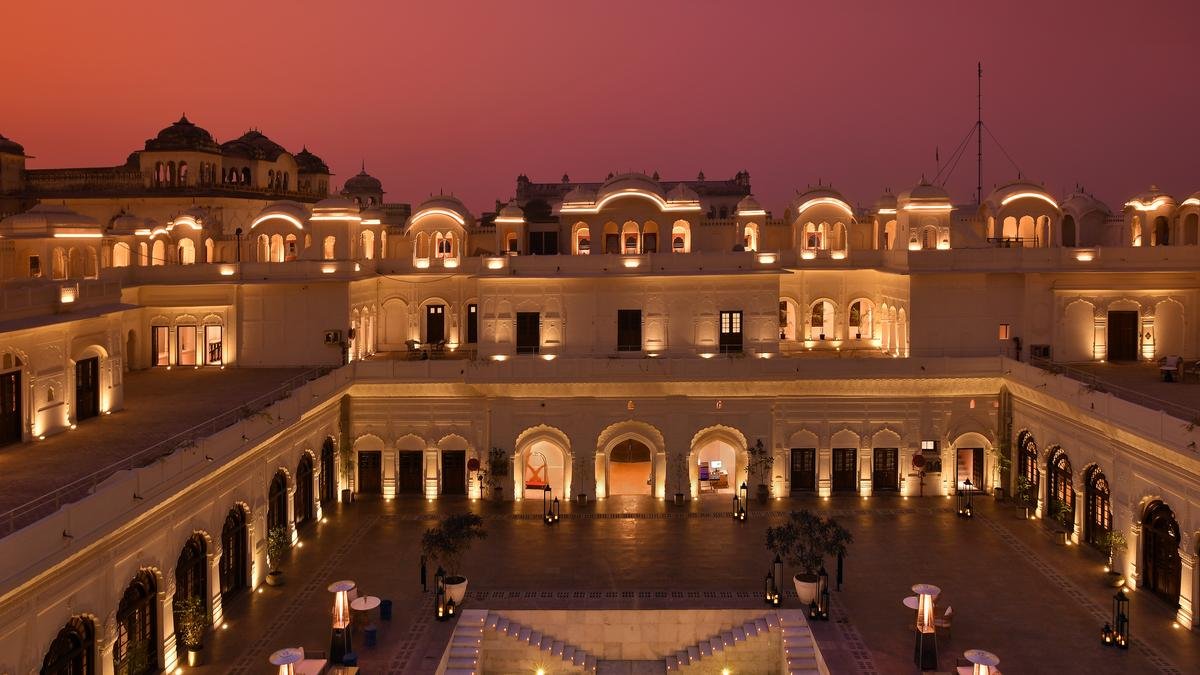
A Palace Setting, a Punjab Kitchen
Punjab's culinary identity is inseparable from its architecture of hospitality. The region's great kitchens were not restaurants; they were extensions of haveli courtyards and royal guesthouses, places where the logic of feeding large gatherings shaped everything from the size of the deghs to the layering of spice. Ran Baas The Palace, located in the Moonak area near Qila Mubarak, sits within that older model. The building is not backdrop — it is the reason the cooking here reads differently from the Punjabi food served in Chandigarh hotel dining rooms or Delhi's interpretation of the same tradition. For more on how this region compares across dining formats, see our full Qila Mubarak restaurants guide.
The Spice Architecture of a Punjab Table
What separates historically rooted Punjab cooking from its urban copies is the sequencing of spice rather than its quantity. In palace-kitchen traditions, whole spices — black cardamom, long pepper, dried rose petals, cloves , enter hot fat first, releasing fat-soluble compounds before anything else joins the pot. Ground spices arrive later, cooked until their raw edge disappears but not so long that their volatile aromatics burn off. This two-stage process is not decorative; it creates a base that carries the dish's structure. What diners notice as depth or warmth is largely the result of that sequencing, which takes patience and fuel, both of which were abundantly available in a palace kitchen but are routinely shortcut in high-turnover commercial kitchens.
The shortlist, unlocked.
Hard-to-book tables, cellar releases, and concierge-planned trips.
Get Exclusive Access →The third layer , tempering, or tadka , often arrives at the end in Punjab cooking rather than solely at the beginning. A spoonful of ghee carrying bloomed cumin or dried red chillies is poured over a finished dal or sabzi to add a layer of fresh, sharp aromatic on leading of the slower base. The effect is a dish with two distinct registers: the slow-cooked foundation and the bright, immediate leading note. This structural approach connects Ran Baas to a broader palace-kitchen lineage, one you also encounter at Adaa at Falaknuma Palace in Hyderabad and, in a different regional idiom, at Dum Pukht in New Delhi.
Off the Main Circuit
India's premium dining conversation runs through a handful of cities: Delhi, Mumbai, Bangalore, Hyderabad, Kolkata. Venues like Farmlore in Bangalore, The Table in Mumbai, and Jamavar Delhi operate within that circuit, with the review infrastructure, booking platforms, and international traveller footfall that those cities generate. Ran Baas The Palace operates entirely outside it. The GPS coordinates place it at 30.3200°N, 76.4000°E , deep in rural Punjab, well beyond the Chandigarh day-tripper radius. There is one Google review on record, rating it five stars, which tells you something precise: this is a place that locals know and visitors rarely reach, not a place that has been overlooked by critics and found wanting.
That distinction matters when setting expectations. You are not arriving at a curated experience designed for first-time visitors. You are arriving at a place with its own logic, its own timing, and its own standards , standards calibrated for a different kind of guest than those who might be comparing it to Jamavar at the Leela Palace in Bangalore or Chandni in Udaipur. The experience here is less structured and more contingent on showing up with the right orientation. See also Naar in Kasauli for another north Indian venue that operates away from the main dining circuits.
The Architecture as Context
Traditional palace architecture in Punjab follows specific spatial logic: outer courts for arriving guests, inner rooms reserved for household or closer circles, kitchens positioned to allow smoke and heat to dissipate without travelling through the main living quarters. That layout influenced how food was transported, plated, and served , typically in covered vessels, carried distances, arriving at the table in a sequence that preserved heat rather than prioritised visual drama. The food at such sites was designed to travel. The spice architecture was built accordingly: strong enough to hold across distance and delay, aromatic enough to announce arrival even under a metal lid. For those interested in how traditional architecture and hospitality intersect across India, our full Qila Mubarak experiences guide covers the wider context.
Getting There and Practical Notes
Access to Ran Baas The Palace follows the standard logic for rural Punjab destinations. Chandigarh Airport (IXC) is the nearest air connection, and Patiala Railway Station (PTA) is the closest rail access point, with Moonak reachable from either by road. The venue sits within the Qila Mubarak area, which is better served by private car than by public transport , hiring a driver from Chandigarh or Patiala for a half-day or full-day circuit is the practical approach. Phone and website details are not publicly listed, which means advance contact requires local knowledge or in-person enquiry. Given its position away from standard booking infrastructure, planning through a regional fixer or hospitality contact is advisable. Price range and hours are not listed in public records, which reinforces the approach of confirming directly before arriving.
For those building a broader Punjab itinerary, our full Qila Mubarak hotels guide, bars guide, wineries guide, and experiences guide cover the surrounding area. Further afield, the palace-kitchen tradition appears in different regional forms at Dining Tent in Jaisalmer and in Goa's more coastal idiom at Bomras in Anjuna. For a sense of how Indian cuisine is being reframed in different urban contexts, da Susy in Gurugram, Baan Thai in Kolkata, and Izumi Bandra in Mumbai show the range of directions the country's dining scene is moving.
Frequently Asked Questions
- Does Ran Baas The Palace work for a family meal?
- Given the palace setting and Punjab hospitality tradition, family visits fit naturally here , though confirm capacity and availability in advance, since no public pricing or booking system is listed for Qila Mubarak.
- What's the vibe at Ran Baas The Palace?
- Ran Baas sits in a category common to rural north India: historically significant venues where the atmosphere is shaped by the architecture rather than by deliberate hospitality design. The single five-star Google review signals local regard rather than tourist-circuit recognition, and the setting , a traditional palace in a small Punjab town , gives it a register closer to a heritage homestay or private haveli than a formal restaurant. Do not expect the production values of Qila Mubarak's urban peers.
- What's the must-try dish at Ran Baas The Palace?
- Specific menu items are not documented in public records, but the kitchen sits within the Punjab palace-cooking tradition, where slow-cooked meat preparations and spice-layered dals form the core. Dishes built around that whole-spice-to-ground-spice-to-tadka sequence , the structural backbone of this cuisine , are worth asking about directly when you arrive.
A Quick Peer Check
These are the closest comparables we have in our database for quick context.
| Venue | Cuisine | Price | Awards | Notes |
|---|---|---|---|---|
| Ran Baas The Palace | Indian Cuisine | HIGHLIGHTS: • HISTORICAL PALACE • OFF THE BEATEN TRACK • TRADITIONAL ARCHITECTUR… | This venue | |
| Dum Pukht | Indian | World's 50 Best | Indian | |
| Bukhara | Modern Indian | World's 50 Best | Modern Indian | |
| Indian Accent | Indian | World's 50 Best | Indian | |
| Karavalli | Indian | Indian | ||
| O Pedro | Goan | Goan |
Need a table?
Our members enjoy priority alerts and concierge-led booking support for the world's most difficult tables.
Get Exclusive AccessThe shortlist, unlocked.
Hard-to-book tables, cellar releases, and concierge-planned trips.
Get Exclusive Access →