Our verdict
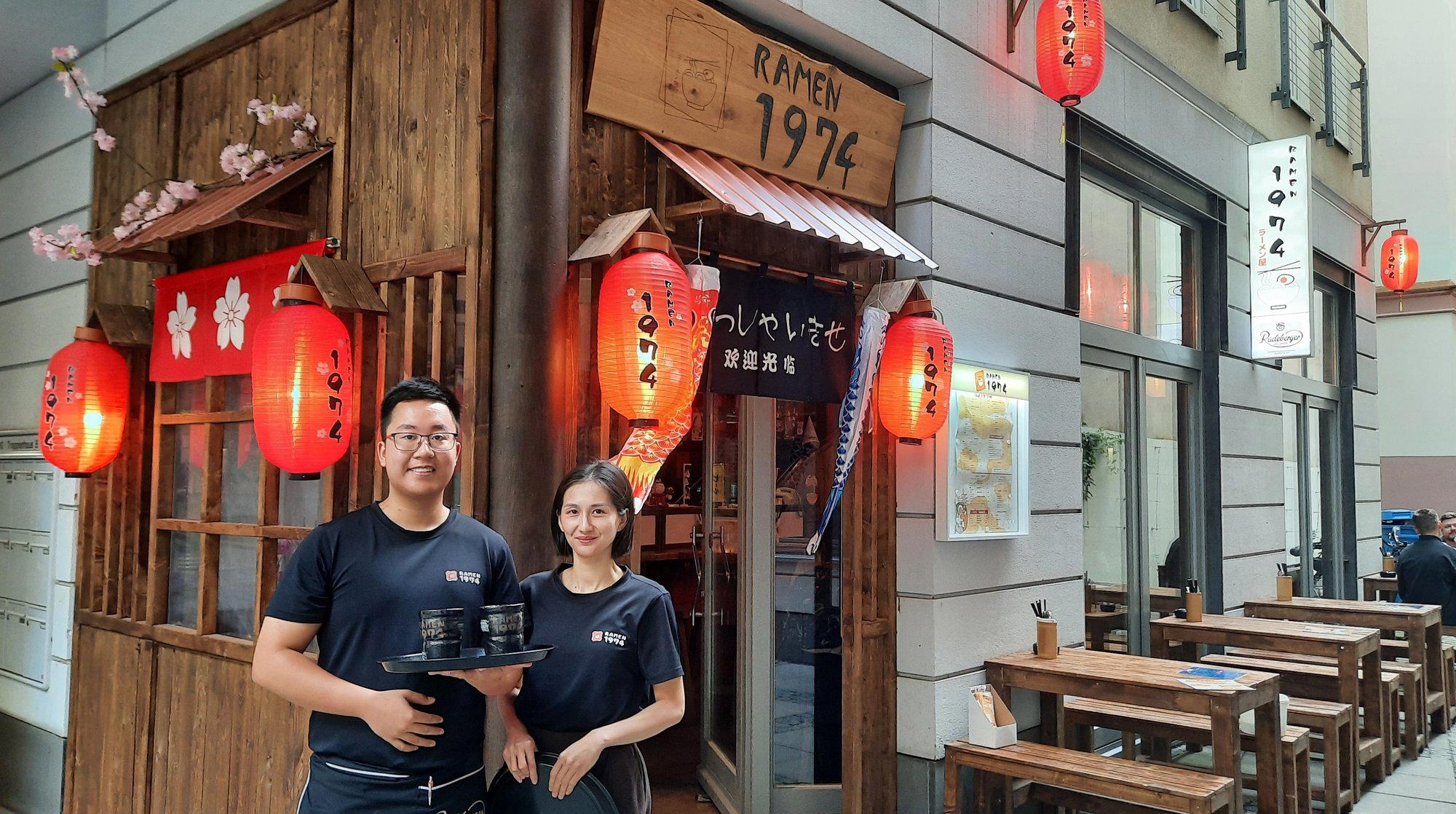
The name anchors the restaurant to a specific moment in ramen's commercial history, signalling an interest in tradition over novelty. For a city still building its Asian dining infrastructure, it occupies a distinct position in the mid-range bracket.

Pearl is the En Primeur Club membership app — saves, bookings, and concierge access live there. Same editors, same standards.
- Address
- Karl-Liebknecht-Straße 97, 04275 Leipzig, Germany
- Phone
- +4934130677090
- Hours
- Mon–Fri 11:30 AM–2:30 PM, 5–10 PMSat–Sun 12–10 PM
- Website
- ramen1974.de
- Directions
- Get directions
The menu
What to order
- Tonkotsu Ramen
- Miso Ramen
- Tantan Ramen
- Veggie Tantan Ramen
A Name With a History Built In
The decision to anchor a ramen restaurant's identity in a specific year is an editorial choice about how the format has evolved. Nineteen seventy-four sits at a meaningful point in ramen's commercial timeline: it predates the global proliferation of instant noodles into every convenience shelf on earth, and it sits close to the period when regional Japanese ramen styles were beginning to formalise into recognisable schools. Tonkotsu from Fukuoka, shoyu from Tokyo, shio from Hakodate, miso from Sapporo: these identities were crystallising through the 1960s and 1970s, and a restaurant referencing that era is making an implicit claim about authenticity and lineage rather than trend-chasing.
In European ramen culture, this framing matters. A restaurant that names itself after a moment in that history is speaking to the latter audience. Whether the execution matches the framing is a question leading answered on the ground, but the positioning itself is deliberate and legible to anyone paying attention to how the category has developed. At the upper end, Aqua in Wolfsburg, Schwarzwaldstube in Baiersbronn, and JAN in Munich, ES:SENZ in Grassau, Victor's Fine Dining by Christian Bau in Perl, Waldhotel Sonnora in Dreis, Restaurant Haerlin in Hamburg, Schanz in Piesport, and the experimental format of CODA Dessert Dining in Berlin, represents one end of a market. The informal but deliberate neighbourhood restaurant represents another, and in terms of covers served and meals that matter to working residents, the latter is arguably the more consequential part of any city's eating life.
Internationally, ramen's shift from street-food category to serious restaurant subject has been documented in cities from New York to London. Atomix in New York City and Le Bernardin represent how far Asian-influenced and French seafood formats can travel up the formality register; ramen, by contrast, has largely resisted that migration. Its identity is bound up with affordability, speed, and the precision of a bowl executed correctly at volume. The restaurants that have tried to take it upmarket have mostly made their point and moved on. What survives is the neighbourhood format: a focused menu, a properly built stock, and a room that fills quickly on cold evenings. The street has enough eating and drinking options that it rewards arriving early and leaving late.enprimeurclub.
Frequently asked questions
Where is Ramen 1974 located?
Ramen 1974 is located at Karl-Liebknecht-Straße 97, 04275 Leipzig, Germany, Leipzig.
How does Ramen 1974 fit into Leipzig's wider dining scene?
Leipzig's restaurant range in 2024 runs from Stadtpfeiffer at the formal end down to a growing number of specialist casual addresses in Südvorstadt. Ramen 1974 occupies the niche end of that casual tier: a cuisine-specific format on a street, Karl-Liebknecht-Straße, that has become one of the city's more active corridors for independent restaurants. For a city of Leipzig's size, a dedicated ramen address is a meaningful addition rather than a given.
What should I order at Ramen 1974?
Specific menu details for Ramen 1974 at Karl-Liebknecht-Straße 97 are not published in current listings, so the safest approach is to check the counter or any posted board on arrival. As a ramen-specialist address, the core bowls are the reason to visit. Ask staff what is running that day, since ramen kitchens in this format typically rotate broth styles by season or supply.
Should I book Ramen 1974 in advance?
No reservations contact or booking system is listed for Ramen 1974 at Karl-Liebknecht-Straße 97. Karl-Liebknecht-Straße draws consistent foot traffic in the evenings, so arriving early or during off-peak hours reduces waiting time. Checking for any social presence under the Ramen 1974 name before visiting is the practical move.
What's the standout thing about Ramen 1974?
The name itself makes a statement: anchoring a Leipzig ramen restaurant to 1974 is a deliberate reference to the period when ramen was codifying as a serious Japanese culinary format, not just fast food. That positioning sits with some intention on Karl-Liebknecht-Straße, a street that now holds some of the more considered casual dining in Südvorstadt. Within Leipzig's eating map, a ramen-focused venue is a specific commitment rather than a broad crowd-pleaser.
Is Ramen 1974 good for vegetarians?
Traditional ramen broths are often pork- or chicken-based, though many German ramen venues now run at least one plant-based option alongside. Contacting the restaurant directly before visiting at Karl-Liebknecht-Straße 97 in Leipzig is the reliable way to confirm.
Compact Comparison
Comparable venues nearby, for context on price, style, and recognition.
| Venue | Cuisine | Price | Notes |
|---|---|---|---|
| Ramen 1974This venue — the venue you are viewing | Authentic Japanese Regional Ramen | $10–20 | Not listed |
| Umaii Ramenbar | Authentic Japanese Ramen | $10–20 | Zentrum, Authentic Japanese Ramen |
| Karli61 | Lebanese | $10–20 | Südvorstadt, Lebanese |
| Pata Negra | Spanish Tapas | $20–30 | Südvorstadt, Spanish Tapas |
| Alfa Restaurant | Authentic Greek | $20–30 | Zentrum, Authentic Greek |
| Caracan | Spanish-Mediterranean Tapas | $20–30 | Connewitz, Spanish-Mediterranean Tapas |