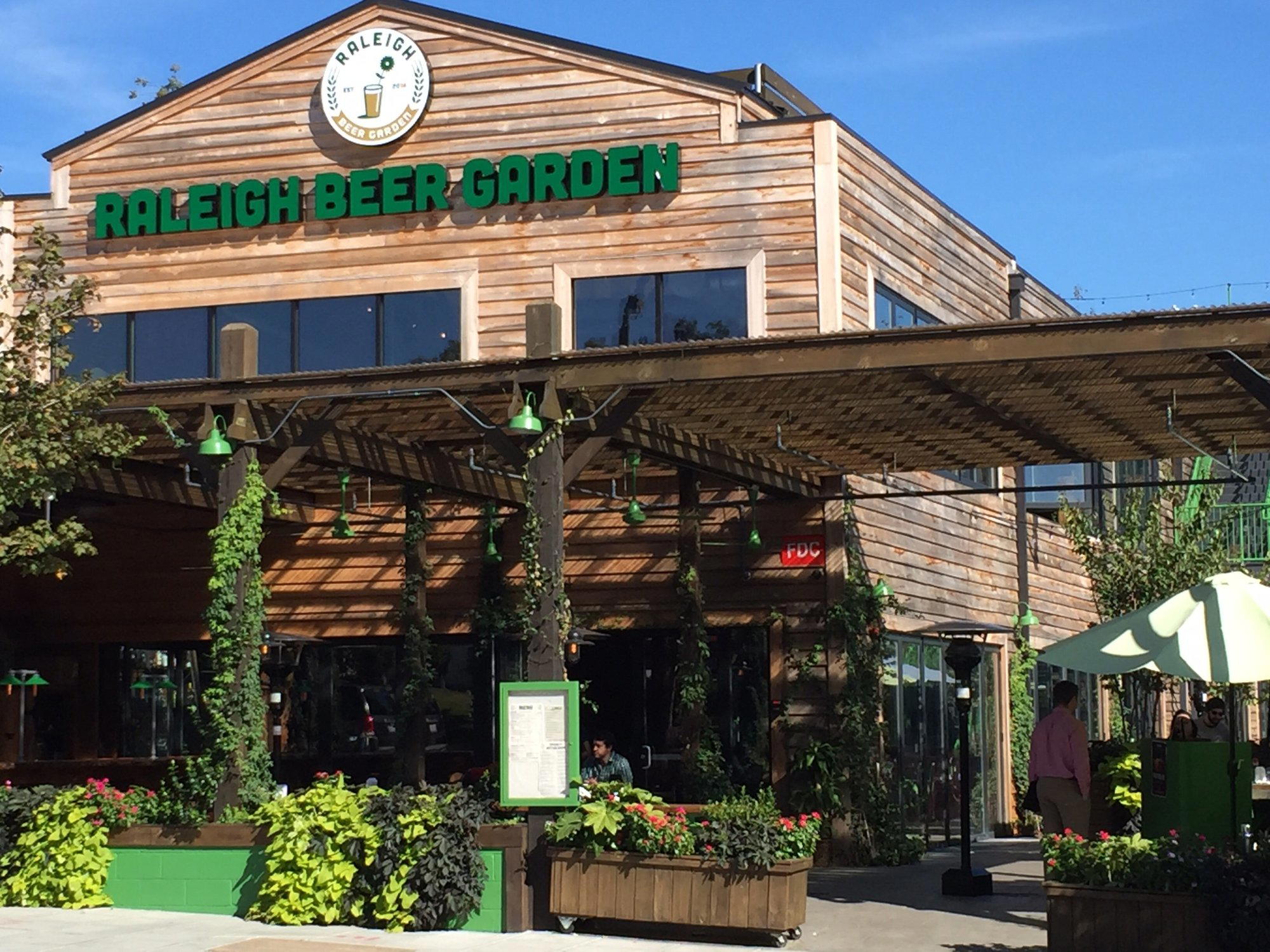
Raleigh Beer Garden
Our verdict
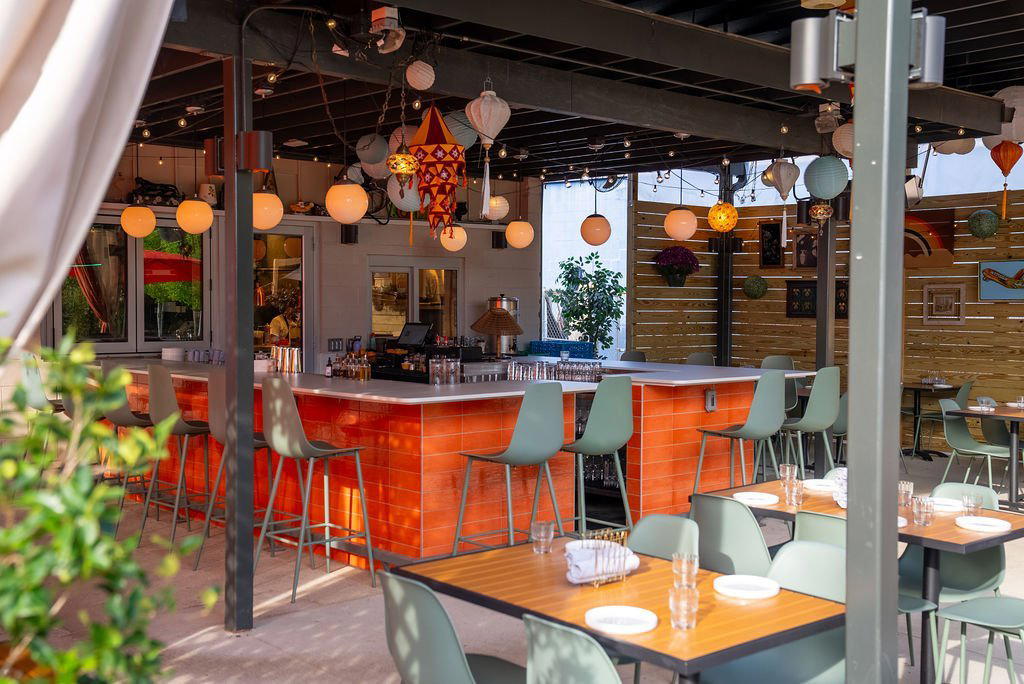
Raleigh Beer Garden anchors the Glenwood South corridor with one of the largest draft selections in North Carolina, drawing a broad crowd from post-work regulars to weekend explorers. The open-air format suits the city's warm-season calendar, and the address on Glenwood Ave places it within walking distance of some of Raleigh's most active dining and bar blocks. It fits a city increasingly confident in its own drinking culture.

Pearl is the En Primeur Club membership app — saves, bookings, and concierge access live there. Same editors, same standards.
- Address
- 614 Glenwood Ave Suite B, Raleigh, NC 27603
- Phone
- (919) 324-3415
- Hours
- Mon–Fri 11 AM–2 AMSat–Sun 10 AM–2 AM
- Website
- theraleighbeergarden.com
- Directions
- Get directions
- Booking
- Book on OpenTable
The menu
What to order
- Beer Garden Burger
- Smoked Salmon BLT
- Street Arnold Burger
Glenwood South and the Rise of the Beer Garden Format
American cities have cycled through several dominant bar formats over the past two decades: the craft cocktail den, the rooftop lounge, the taproom attached to a production facility. The beer garden, by contrast, draws on an older European model, one built around communal seating, volume of choice, and outdoor exposure rather than theatrical mixology or small-batch exclusivity. In Raleigh, where warm weather extends the outdoor dining and drinking season well into autumn, that format has found particularly fertile ground. Raleigh Beer Garden, at 614 Glenwood Ave in the Glenwood South neighborhood, operates squarely within that tradition, functioning less as a destination for a single curated experience and more as a civic gathering point on one of the city's most active commercial corridors.
Glenwood South itself has matured considerably over the past decade. What was once a stretch of mid-tier bars and restaurants has consolidated into a block-by-block mix of wine bars, chef-driven kitchens, and higher-concept drinking programs. Barcelona Wine Bar Raleigh represents the wine-forward end of that corridor; Ajja (Mediterranean-Indian Fusion) and Azitra signal the neighborhood's expanding appetite for ambitious food alongside its drinking culture. Raleigh Beer Garden sits within that mix but occupies a distinct register: scale and accessibility over curation and constraint.
Draft Selection as Editorial Statement
The beer garden format's core proposition is breadth. Where a craft taproom typically limits its list to house-produced beers and a handful of guest taps, a beer garden stakes its identity on the range of what it pours. North Carolina's craft brewing sector has grown substantially over the past fifteen years, with the Triangle region producing a concentration of production breweries and taprooms that rivals markets like Asheville. A venue positioned on Glenwood South with a large draft list draws from that supply base, which means the tap handles at any given time reflect both the seasonality of local brewing and the distribution reach of breweries beyond the state.
That sourcing geography matters for how to read the experience. Beer gardens in the American model tend to operate as aggregators, pulling from multiple producers rather than championing a single provenance story. The editorial interest lies in what that aggregation reveals about the local and regional brewing scene at any given moment. Spring and summer rotations in North Carolina lean toward lighter lager formats and session ales suited to outdoor heat; the autumn months bring heavier malt-forward styles as temperatures drop and the outdoor season winds down. The address on Glenwood Ave, with its heavy foot traffic from early evening onward, means the selection at peak hours functions almost as a real-time index of what the Triangle's drinking public is reaching for.
This aggregator model differs substantially from what you find at destination-level beverage programs like Single Thread Farm in Healdsburg, where the beverage list is tightly curated around a specific culinary and agricultural thesis, or Blue Hill at Stone Barns in Tarrytown, where ingredient sourcing anchors every element of the experience. The beer garden operates on a different logic entirely: democratic access to a wide range of choices, with the outdoor communal format doing the atmospheric work that a tasting menu or omakase counter does elsewhere.
Raleigh's Drinking Culture in Context
To understand what a venue like Raleigh Beer Garden represents, it helps to map it against the broader arc of Raleigh's hospitality development. A decade ago, the city's dining and drinking identity was heavily weighted toward casual Southern fare and chain-adjacent concepts. The subsequent wave of chef-driven restaurants, including Anthony's La Piazza, Anthony's La Piazza Prime, and the Southern-inflected programs that positioned Raleigh alongside cities like Charleston and Nashville in the regional food conversation, created a second tier of serious dining beneath the casual majority.
The drinking culture has followed a parallel track. Cities like New York and San Francisco moved from craft beer enthusiasm toward natural wine and technical cocktail programs as their primary markers of beverage sophistication. Restaurants at the level of Le Bernardin in New York City, Alinea in Chicago, or Atomix in New York City anchor their beverage programs around sommelier-driven lists and precision cocktail menus. Raleigh is still calibrating where it sits on that spectrum. The beer garden format, with its emphasis on volume and outdoor sociability rather than program depth, reflects a stage of that calibration: a city confident enough in its drinking culture to sustain a large-format venue on a premium block, but one where the primary social contract remains accessibility rather than expertise.
For context on Raleigh's full restaurant range, see our full Raleigh restaurants guide.
Planning Your Visit
Raleigh Beer Garden occupies Suite B at 614 Glenwood Ave, placing it within easy walking distance of the rest of the Glenwood South corridor. The outdoor format means the experience is most rewarding from spring through early autumn, when Raleigh's evenings stay warm enough for extended time outside. Weekday early evenings tend to draw a post-work crowd from the surrounding office and residential density; weekends shift toward a more mixed group, including visitors moving along Glenwood from dinner at neighboring restaurants. No specific booking data is publicly confirmed, so arriving during off-peak hours on weekdays is the lower-friction approach if a particular spot or section matters to you.
The venue fits naturally into a Glenwood South evening that might begin with dinner at a nearby kitchen and end with a wider range of pours than most single-producer taprooms can offer. For those building a full Raleigh itinerary around food and drink, the corridor also connects to the broader Triangle scene, which includes restaurants with the kind of kitchen ambition you associate with Lazy Bear in San Francisco, Providence in Los Angeles, or Addison in San Diego at the upper end, and Southern-rooted programs closer to home.
Frequently asked questions
What's the address for Raleigh Beer Garden?
Raleigh Beer Garden is located at 614 Glenwood Ave Suite B, Raleigh, NC 27603, Raleigh.
How does Raleigh Beer Garden compare to other outdoor bars on Glenwood South?
Raleigh Beer Garden at Suite B, 614 Glenwood Ave positions itself around draft selection scale rather than a cocktail program or single-brewery identity, which distinguishes it from the taproom and rooftop bar formats concentrated on the same corridor. Glenwood South has become Raleigh's most developed entertainment strip over the past decade, and the beer garden format here fills a gap between the curated craft taproom and the generic sports bar. For drinkers oriented around exploring beer styles across multiple producers, the format is more practical than a single-producer taproom.
What do regulars order at Raleigh Beer Garden?
The draw at 614 Glenwood Ave is the rotating draft list, which spans regional North Carolina breweries alongside national and international selections. Regulars tend to work through the tap list systematically rather than defaulting to a house staple, making the draft board itself the de facto menu. Arriving with an open style preference rather than a fixed order is the practical approach here.
Can I walk in to Raleigh Beer Garden?
Raleigh Beer Garden is a walk-in format venue on Glenwood South, one of Raleigh's most pedestrian-friendly bar corridors. Suite B at 614 Glenwood Ave sits within the broader strip, so dropping in between other stops on the street is a common pattern. During peak weekend hours, the outdoor seating fills quickly, so arriving early gives the best pick of the garden.
What's the signature at Raleigh Beer Garden?
The defining characteristic is draft volume: the garden maintains one of the widest tap selections in the Raleigh market, covering styles from sessionable lagers to high-ABV stouts and sours. That breadth, rather than any single house pour, is what separates it from the focused taproom model common elsewhere in North Carolina. The outdoor format amplifies the appeal, particularly in the city's long warm season.
Is Raleigh Beer Garden good for vegetarians?
Beer gardens as a format typically accommodate vegetarians without difficulty given the drink-forward nature of the experience, but confirming current food offerings directly with the venue before visiting is advisable.
Peers You’d Cross-Shop
Comparable venues nearby, for context on price, style, and recognition.
| Venue | Cuisine | Price | Notes |
|---|---|---|---|
| Raleigh Beer GardenThis venue — the venue you are viewing | American Gastropub | $20–30 | Not listed |
| Braise | Contemporary Southern with American Influences | $30–50 | Crabtree Valley |
| Bittersweet | Dessert & Cocktail Lounge | $20–30 | Fayetteville Street |
| Flask & Beaker | Modern American Gastropub | $30–50 | Trailwood |
| Northside Bistro Raleigh | Refined New American Bistro with Italian & French Influences | $30–50 | Wakeview |
| Simply Crepes Cafe of Raleigh | Crepes & American Comfort | $20–30 | North Raleigh |